List of Phones with IMX586 Sony Sensor – Budget and Premium Segments

The usefulness of your smartphone is judged by the great features it offers. Your investment in a smartphone may prove futile if it does not provide the essential snap shooting features you need. One of the crucial elements every smartphone buyer takes into consideration is the photography. With the gradual advancements in the technology implemented, photo capturing, and video recording has been made to a new level. The included sensors play a vital role to take smartphone photography to the next level. The present article is focused on phones with the IMX586 sensor. This sensor will facilitate the users with the ability to record 4K (4096 × 2160 pixels) videos at 90 fps (frames per second). At the time of release, this is the only sensor to do so. This sensor will boost the picture quality and ensure flawless video recording. Do note that a high-end SOC is also crucial to support these top camera sensors.

List of phones with IMX586 Image Sensor by Sony:

In the present market, there are many different phone models with the IMX586 sensor. To get details on the best phones with IMX586 sensor, read below:
Sr. No. Image Product Name Manufacturer Buy Now
1 Xiaomi Mi A3 Xiaomi   Buy from Amazon
2 IMX499 vs IMX519 vs IMX586 Redmi Note 7 Pro Xiaomi Buy from Amazon
3 Honor View20 Honor Buy from Amazon
4 Redmi K20 Pro Xiaomi Buy from Amazon
5 Samsung Galaxy A80 Samsung Buy from Amazon
6 OPPO Reno 10x Zoom OPPO Buy from Amazon
  Some new phones which use the same sensor are as follows: 6. OPPO Reno 10x Zoom:

Check on Amazon India

The Oppo Reno is intended to capture the scene from new perspectives. The implemented technology in the Oppo Reno phones lifts photography and mobile entertainment to an entirely new level. The Oppo Reno 10x Zoom phone is dedicated to bringing you closer to the world you see. In this phone, there is a 48MP ultra-clear primary camera, an 8MP Wide-angle lens, and a 13MP telephoto lens. All of them make a complete photography system. Now you will be able to explore your creativity in terms of photography using this phone. In this Oppo phone, there is an upgraded recognition structure. It is being combined with an efficient algorithm that allows 28.5% faster unlocking.  In terms of design, this phone appears beautiful with a curved display and elegant color. The hidden fingerprint unlocks unlocking this phone at the lightening speed. Along with the purchase of this phone, you will get a 1-year manufacturer warranty for the device. Also, you will get 6 months manufacturer warranty for the accessories in the box like included batteries from the date of purchase. In the box, you will find a USB-C charge cable, headset, adapter, case, SIM card tray ejector, quick start guide, and essential information booklet with a warranty card.

Features:

  • The Oppo Reno 10x Zoom phone has 48MP + 8MP + 13MP primary camera. The camera comes with functionalities like Photo, Video, Time-lapse, Expert, Pano, Portrait, and Night. Also, there is a 16MP front-facing camera. The triple camera setup comes with OIS and EIS.
  • The implemented tri-lens full focal length system adjusts to all types of photography. These types are portrait, wide-angle, 10x Zoom, and 4K video filming.
  • There is a 6.65-inch AMOLED capacitive touchscreen possessing 2340 x 1080 pixels resolution, 16M color support, and 387 PPI pixel density.
  • It comes with 8GB RAM and 256GB storage which can be expanded up to 256GB.
  • This phone has Android v9 Pie based Color OS 6.0 operating system along with Qualcomm Snapdragon 855 octa-core processor at 2.8 GHz.
  • The built-in 4065mAH lithium-polymer battery presents the talk-time of 40 hours, and it comes with a standby time of 331 hours. 

5. Samsung Galaxy A80:

Check on Amazon India

In order to capture live scenes, this phone comes equipped with a rotating camera. The A80 phone comes with the triple 48MP swiveling camera, 8MP ultrawide camera, and a depth camera as well. It is possible to match the quality of front camera shots with the quality of the rear camera. Samsung considered placing a 48MP sensor in the rotating module. Instead of using its GM1 or GM2, the brand considered implementing Sony’s IMX586 sensor. In addition to that, it incorporated an 8MP f/2.2 ultra-wide-angle camera as well as a ToF sensor. Through its impressive 123-degree field of vision, the included ultra-wide camera is dedicated to capturing the most extensive scene possible. Therefore, you will be able to see more and share more. The efficient Snapdragon 730G Octa-core processor and the 8GB RAM allow you to stream content, play games and use many other functionalities with superior performance.

Features:

  • The Galaxy A80’s operation is based on Qualcomm’s gaming-centric chipset, i.e., Snapdragon 730G.
  • This Samsung phone comes with 128 GB of internal storage and 8 GB of RAM. The internal memory is expandable up to 512 GB.
  • The OS used is Android Pie v9.0 with 2.2GHz+1.8GHz Qualcomm SM7150 Octa-core processor
  • There is a built-in 3,700mAh battery that also supports the 25W fast charging while connected with Type-C. This battery allows you to connect, stream, and share the content.
  • The screen size is 6.7 inches with the Full HD+ sAMOLED New Infinity display. This display is nearly bezel-less, and it is devoid of distractions. As a result, it offers a broad and vivid canvas to use the stories, content, connection, etc.

4. Redmi K20 Pro:

Check on Flipkart

The K20 Pro from Redmi explores new possibilities for photography. In this phone, the peak performance is attained by the efficient processor Qualcomm Snapdragon 855, whereas a 48 MP triple camera setup allows the user to observe scenes from diverse viewpoints. Whether to perform routine tasks or gaming, this phone is capable of working flawlessly. It will be quite easy to view content instantly on the go. This is because the phone incorporates a 6.39-inch horizon AMOLED display. Besides, this phone is made exceptional in appearance by the Aura Prime design. The presence of the Corning Gorilla Glass 5 on the front and rear improves the user experience. In the box, you will find all necessary accessories –a protective cover, power adapter, SIM eject tool, USB Type-C cable, user guide, and warranty card.

Features:

  • Its multi-touch capacitive touch screen comes with 2340 x 1080 pixels resolution and 403 PPI pixel density.
  • The memory and storage are respectively 6GB RAM and 128GB internal memory.
  • It supports dual SIM, i.e., two nano-SIM cards with the dual-standby (4G+4G).
  • There is an Android Pie v9.0 OS built-in along with 2.84GHz Kryo 485 + 3×2.42GHz Kryo 485 + 4×1.8GHz Kryo 485 Qualcomm Snapdragon 855 Octa-core processor.
  • For photography, there is a 48+13+8MP triple rear camera along with the IMX586 sensor.
  • There is a 20MP front-facing popup camera having an aperture of f2.2 and a pixel size of 0.8 micrometers. 
  1. Honor View20:
Check on Amazon India Whether you want to play games, watch movies, or surf content, you can experience all of them on this Honor phone. The Honor View20 certainly allows you to experience gaming and graphics performance to the next level. All these are possible with the Mali G76 GPU. The built-in LPPDDR4X RAM supports 2133MHz. It allows you to quickly switch through your apps, games, emails, etc. While swiping between different programs, there will be no lag. You will be able to capture incredible details with the built-in 48MP AI camera and the IMX586 sensor. The photography is further enhanced by the dual-NPU and dual-ISP. This technology makes sure every aspect is confined with exceptional clarity. Also, it makes sure there is no pixelation regardless of how many times a scene is being zoomed. The two significant aspects of the Honor View 20 phone are GPU Turbo 2.0 and the NINE water cooling technology. Both of them are dedicated to presenting a quick, smooth, and seamless user experience. This Honor phone comes in two variants i.e. 6GB RAM + 128GB storage and the other is 8GB RAM + 256GB storage. There is a built-in 4000mAh battery to support all-day use. This battery comes with supercharge technology.

Features:

  • The Kirin 980 AI Chipset is driving the Honor View 20. It is the world’s first chipset being made with a 7nm process. This processor comes with the dual NPU that noticeably enhances the overall performance and proves to be energy efficient. This dual NPU is being made by the7nm process, Cortex-A76 based CPU.
  • It comes with the 48MP AI and TOF 3D camera. This camera is equipped with a cutting-edge AI capability. This allows the phone to recognize more than 1,500 scenarios in 60+ categories. You can play 3D games with this primary AI camera. Furthermore, the phone also houses a 25MP AI in-screen front camera.
  • There is a magic UI2.0.1 running on Android v9 Pie OS along with the 2.6 GHz Kirin 980 AI Octa-core processor.
  • For excellent photography experience, this phone comes with a 16.25cm Full View display. This display supports a 91% screen to body ratio.
  • There is a facility of triple WiFi for presenting the superb gaming experience. 

2. Redmi Note 7 Pro:

IMX499 vs IMX519 vs IMX586

Check on Flipkart

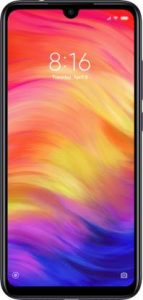
The unique specialty of the Redmi Note 7 Pro phone is its 6.3-inch FHD screen with a Dot Notch display. The major part of this Redmi phone’s operation is based on a 2.0 GHz Qualcomm Snapdragon 675 processor. With the help of this processor, this phone lets you feel the extraordinary level of performance that is flawless. Through a 48 MP + 5 MP dual-rear camera, and a 13 MP front camera, you will be able to capture the scenes or record videos in the desired manner. The advanced features packed inside include the face unlock and 4K video recording. Whether you intend to watch videos, play games, or browse the Internet, this Redmi phone conveys a blazing-fast performance. Since it comes with 64 GB of storage capacity, you will be able to store all your favorite pictures and music files.

Features:

  • The dual-camera setup allows you to click elegant pictures to capture every minute detail.
  • It comes with a 48MP Sony IMX586 sensor, and there is an Electronic Image Stabilization feature. These features allow you to shoot videos without any shaky effects.
  • There is an AI Light Trails and AI Studio Lighting feature. This feature gives an assurance that your portrait pictures appear unique. It allows for easy recognition between your subject and the background.
  • Its rear camera is capable of combining multiple images into a decent quality photo.
  • Stunning Night Photography The Redmi Note 7 Pro’s rear camera combines
  • With the use of high sensitivity mode, this phone will connect 4 pixels into a single Super Pixel. This mode assists you to click awesome shots irrespective of the lighting.
  • The 4K video recording allows you to record and look through all your beautiful moments with exceptional 4K clarity. 

1. Xiaomi Mi A3:

Check on Amazon India

There are myriad benefits when you use this Xiaomi phone, and the foremost of them includes excellent photography through the IMX586 sensor. In Mi A3, the included processor and storage options are decent enough. The design is made compact, and it feels comfortable in your hand.  There is a gorilla glass used on the front and back. Not just features, but this Xiaomi phone is also praiseworthy from the design viewpoint. All Mi phones do not come with 3.5mm jack, but this one contains it. The included IR blaster is a handy option to control different devices in your home seamlessly. There is a fingerprint scanner positioned beneath the screen. Furthermore, there is an AI face unlock, allowing you to unlock the phone without wasting time on entering the password. There is an in-display fingerprint scanner as well. Though the Mi A3 phone is not waterproof, it is equipped with the P2i coating. This coating defends the unit against accidental spills.

Features:

  • In the Xiaomi Mi A3 phone, there is a Qualcomm Snapdragon 665, 2.0 GHz processor. This processor drives the significant operations of this phone.
  • The size of its HD display is 6.088 inches.
  • This variant has 4GB RAM and 64 GB flash memory. The internal memory is expandable up to 256GB.
  • The operating system incorporated is Android Pie 9.0.
  • For stunning photography, there is a 48MP Sony IMX586 sensor, an 8MP (wide angle), and a 2MP triple rear camera included. Also, there is a 32 MP front camera added. These cameras are equipped with ambient light sensor, portrait mode, e-compass, proximity sensor, accelerometer, gyroscope, and IR blaster.
  • The AI scene detection feature will detect up to 27 diverse scenes.
  • The battery included is a 4030 mAH lithium-ion battery. 

Conclusion:

Picking any of the discussed phones will let you capture scenes and record videos in excellent quality. In addition to that, they are packed with lots of other useful features to deliver powerful performance.

List of Phones with ISOCELL GW1 64 MP Sensor – Budget and Premium

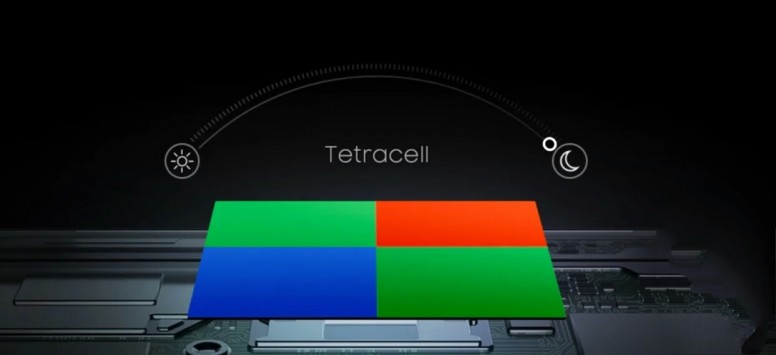
Not just the physical appearance and the storage capacity, but even other features matter a lot while deciding for a smartphone. There are many different sensors packed inside a phone to accomplish different functionalities with ease. One of the most significant improvements in image sensors allows you to enhance your photography experience. The present article is emphasized on the ISOCELL Bright GW1 64 MP sensor. This high-resolution sensor is exclusively designed to capture bright and sharp photographs regardless of the lighting conditions.  It comes implemented with Tetracell and 3D HDR technology. It is known that the sensor features 0.8um pixels with ISOCELL Plus technology. This assists it to increase light sensitivity as well as color fidelity considerably. Consequently, the captured photos will be more precise and more transparent. The implementation of the Tetracell technology conveys a dazzling picture of 16MP in low light conditions. Furthermore, the mosaic algorithm generates more detailed 64 MP photos in daylight. Execution of the 3D HDR technology allows the users to capture more detailed images and videos. This is applicable in any lighting condition.​

List of Phones with ISOCELL GW1 64 MP Sensor

You will get to know more about the phones with ISOCELL GW1 64 MP sensor when you read below: 
  1. Realme XT:

Check on Flipkart

The world’s first smartphone equipped with a 64MP camera is the Realme XT. The popular Oppo sub-brand Realme has launched this phone in August 2019. It has quickly attained popularity because it comes with a quad-camera module at the rear. The primary camera features the 64MP GW1 sensor from Samsung. This sensor is being paired with 8MP ultra-wide-angle sensor, 2MP macro sensor, and 2MP depth sensor. Whether you want to capture excellent photography or video recording or web surfing or game playing –all that can be done seamlessly, this is because this phone comes with a 6.4-inch full-HD+ Super AMOLED display. This display possesses an in-screen fingerprint scanner, and there is a waterdrop notch too. This large-sized display comes with the Gorilla Glass 5 protection. Besides, the panel generates vibrant colors. The principal attraction of this Realme phone is its 64 MP camera. This camera is dedicated to capturing detailed landscapes in the majority of the lighting conditions. It is possible to perform video shooting at the full resolution. This will allow you to zoom more than the full 48-megapixel stills. During the zooming process, the details of the scene will be maintained. This device is nearly identical to the Realme 5 Pro; the key differences are a 64MP primary camera, and there is an in-display fingerprint sensor. There is the provision for a USB Type-C port, a microSD card, and a triple slot for holding two nano-SIM cards. This Realme phone is assured of receiving the Android 10 update in Q1 2020. It is inferred that Realme will launch the phone’s upgraded version in December. This new version will have a Snapdragon 730G processor along with 30W fast charging.

Features:

  • Qualcomm’s Snapdragon 712 SoC drives the primary operation of Realme XT. It is supported by the memory capacity of 8GB RAM and storage capacity of 128GB.
  • This Realme phone comes implemented with the Android 9 Pie-based ColorOS. It is this OS that will look after the software installed inside.
  • To let this phone work longer throughout the day, Realme considered including the 4000mAh battery. This built-in battery will allow this phone to last one full day through a single charge.
  • This battery comes with a fast-charging mechanism. It can quickly charge the battery in an hour. 
  1. Realme XT 730G:

Check on Flipkart

There are some features in the Realme XT 730G that resemble the Realme XT. The 730G comes with a powerful Snapdragon 730 G processor; it is not found in Realme XT. Moreover, this handset’s unique specialty is it comes with a 64MP quad-camera setup. The noteworthy aspects include chipset and selfie camera. Realme XT 730G is the forthcoming smartphone from Realme with some advanced functionalities. The announcement of this handset was made during the Realme XT launch event, and it will launch in December. Some of the prominent traits of this handset incorporate 64MP quad-camera, 30W VOOC flash charge, and the Snapdragon 730G processor. Exclusively designed for the game fanatics, this device is capable of supporting the high graphic-intensive games. For example, it can help games like Fortnite, PUBG, and Asphalt 9. All these games will run smoothly and will elevate the entertainment to the next level. Taking a look at the connectivity options, they include GPS, Wi-Fi 802.11 a/b/g/n/ac, 3G, and 4G, Bluetooth v5.00, and USB Type-C. On both its SIM cards, there is a support for the 4G. It is expected that this device will have many sensors. It will have an accelerometer, compass/ magnetometer, ambient light sensor, proximity sensor, gyroscope, and fingerprint sensor.

Features:

  • In Realme XT 730G, there is a 6.4-inch super AMOLED display. This bright display comes with an optical fingerprint scanner.
  • A 4000mAh non-removable battery drives its operation, and it also supports VOOC fast charging.
  • The operating system used is Android 9 Pie-based ColorOS 6.
  • The aperture and pixel size of its primary camera is f/1.8 aperture and 0.8-micron, respectively. Its second camera i.e., 8-megapixel camera, comes with an f/2.25 opening and 1.12-micron pixel size. The 2-megapixel camera is the third camera with an aperture of f/2.4 aperture and a pixel size of 1.75-micron. The fourth camera is a 2-megapixel camera equipped with an f/2.4 opening and 1.75-micron pixel size. For selfies, there is a 16-megapixel camera included on the front. 
  1. Redmi Note 8 Pro:

Check on Amazon India

The 64MP shooting capabilities are installed inside the Redmi Note 8 Pro. Similar to its competitor Realme XT, the Redmi Note 8 Pro is packed with the quad-rear camera setup. The secondary camera is of 8MP, and there are several 2MP sensors included. These sensors are useful for capturing close shots and depth-effect. On top of the LCD screen, there is a 20MP front camera. You can capture selfies and perform video calling with this front camera. In the market, the Redmi Note 8 Pro is considered as a mid-range segment device with the unique aspect being a flawless display. Through the included pop-up selfie lens and high-resolution camera, anyone can capture high-quality photography. Not just photography, but the Note 8 Pro also excels in terms of performance as well. With the appropriate blend of software and hardware, this handset is designed to fulfill the usual expectations of customers. In this device, you will find a hybrid slot that may pose an issue for a few consumers. There will be no compromise with the connectivity because Note 8 Pro supports 4G VoLTE networks. Different other connectivity options supported are Wi-Fi 802.11, b/g/n, Bluetooth, mobile hotspot, GPS with A-GPS, USB Type-C, and Glonass, etc.

Features:

  • The basic operations of the Xiaomi Redmi Note 8 Pro are based on the cutting-edge MediaTek Helio G90T chipset. This chipset is incorporated to convey a steady performance. The corresponding performance will be suitable for basic operations, gaming, and even multitasking.
  • Inside its configuration, there is an octa-core processor setup comprising of a 2.05GHz Cortex A76 dual-core as well as 2GHZ Cortex A55 hexacore processors.
  • A Mali-G76 MP4 GPU conveys outstanding graphics.
  • All the functions are handled flawlessly by the 6GB RAM.
  • The software running is MIUI 10, with the Android 9 Pie operating system.
  • Its 64GB internal memory will prove sufficient in most cases. But if you want more, you can expand it up to 256GB by using a microSD card.
  • The Redmi Note 8 Pro houses a Lithium-ion battery with 4,500mAh capacity. This built-in battery is capable of delivering a plentiful amount of power backup. So, the users will always stay charged throughout the day.
  • With the implementation of the fast charging technology, its battery can quickly attain full charge status in a short duration.
  1. Vivo NEX 3:

Check on Amazon India

The Vivo NEX3 is the first phone from Vivo with the 64MP camera. The reason behind the wide fame of this device is it has a triple camera setup. The cameras are not the only prominent aspects of this Vivo device. This is because it will amaze you with its large screen size of size 6.89-inch. It comes with a super AMOLED screen having an incredible 99.6% screen-to-body ratio. Furthermore, the ample memory capacity and storage makes this phone a recommended choice among people irrespective of their occupation. In most cases, you will not experience connectivity issues because it comes with 5G connectivity. One more key reason behind the wide fame of this device is that it utilizes a waterfall display panel. This kind of display will present an infinite vision. Furthermore, this phone has a powerful configuration supported by an efficiently working battery and flash charging speed. All three cameras included are working superbly to present a powerful photoshoot experience. Display and Camera

Features:

  • The show comes with the 1,080 x 2,256 pixels screen resolution, and the pixel density is 363 PPI. This super AMOLED display possesses immersive viewing quality through the use of E3 screen material.
  • The NEX 3 comes with the triple rear cameras. They are Samsung GW1 64MP primary sensor, 13MP telephoto lens with support for up to 20x digital zooming, and last is a 13MP super wide-angle lens. The apertures of the second and third cameras are respectively f/2.48 and f/2.2. To capture selfies, for facial recognition or video calling, there is a 16MP front camera with f/2.09 aperture.
  • In the core of Nex3, there is an octa-core Qualcomm Snapdragon 855 Plus. This processor executes its operation at a clock speed of 2.96GHz and is further assisted by an Adreno 640 GPU.
  • For flawless game playing and multitasking, the 8GB RAM is sufficient. It will make sure there will be no lag issues. The storage capacity is 128GB and this non-expandable. This ample storage capacity allows users to save all their data and files.
  • The built-in Li-ion battery with a 4,500mAh capacity makes sure this phone keeps working throughout the day. This battery’s unique aspect is it comes implemented with the Flash Charging technology. There is a 5W fast charging support provided. 
  1. Samsung Galaxy A81:

Check on Amazon

Looking at the Galaxy A-series 2020 roadmap, it is assumed that Samsung may launch the Galaxy A81 phone the next year. The Samsung Galaxy A81 belongs to Samsung’s A-series line-up for the year 2020. This phone is the successor of the Galaxy A80. The critical aspect of this phone from the Galaxy series would be its 64MP camera. In addition to that, this Samsung handset is dedicated to offering tons of other useful functionalities. It is alleged that this handset would be an upper mid-range phone. One of the most enticing aspects is the presence of the four cameras at the back. In addition to the Samsung GW1 sensor, this phone’s setup may contain something more. This will include a 16MP wide-angle lens, ToF (Time-of-Flight) sensor, and12MP telephoto lens with 2x or 5x optical zoom. With the help of an integrated 4000mAh battery, the Samsung Galaxy A81 can be charged through its type C USB port. Besides, there is the availability of 30W fast charging support. It is essential to take a look at its connectivity features. These include dual-band Wi-Fi 802.11 a/b/g/n/ac, AGPS, Bluetooth 5.0, and radio FM.

Features:

  • This device runs Android 9 Pie through One UI.
  • The Galaxy A81 features a 7-inch notch-less super AMOLED display. This display is embodied with a resolution of 1080 x 2400 pixels.
  • There is an Octa-core Qualcomm Snapdragon 730G chipset included.
  • The memory and storage included are 8GB RAM and 128GB of storage, respectively.
  • In this Galaxy series phone, the graphics are effectively managed by the Adreno 618 GPU of the chipset.
  • With the implementation of the flip mechanism, the camera functions on both front and rear cameras. There is a 48MP primary camera along with a 12MP secondary camera to present benefits of the ultrawide camera and a 3D TOF camera.

1. Samsung Galaxy A70s:

Check on Amazon

The Galaxy A70s is Samsung’s first and India’s second smartphone equipped with the 64MP camera. For excellent photography experience, Samsung has included the in-house ISOCELL Bright GW1 64MP primary sensor. This sensor is paired with a 5MP depth sensor and an 8MP ultra-wide lens available at the triple camera sensors at the rear part.  The Android 9 Pie-based OneUI manages all the software functionalities. For everyday use at the office or for game playing or video watching, this Galaxy series phone is merely superb. Since the camera output is always excellent, the photography enthusiasts need not look somewhere else. In the box, you will find an earphone, USB cable, travel adapter, and user manual.

Features:

  • There is a 64+5+8MP triple rear camera setup. The apertures of each of these cameras are respectively f1.8, f2.2 wide-angle, and f2.2 with flash. Also, there is a 32MP front camera having an aperture of f2.0.
  • It comes with large sized FHD+ multi-touch capacitive touchscreen display. Its size is 6.7-inches with the 1080 x 2400 pixels resolution, and there is a 16M color support as well. The bright and clear display output is represented because it is an Infinity-U Super AMOLED display.
  • The memory capacity and storage are respectively 8GB RAM and 128GB internal memory. This internal memory can be expanded up to 512GB. There is dual SIM support so that it can run two nano SIMs.
  • The operating system and processor used are respectively Android Pie v9.0 and 2.7 GHz SM6150 Octa-core processor from Qualcomm.
  • The built-in 4500mAH Li-ion battery supports type-c fast charging. You can charge this device by using the 25W charger available in the box. 

Conclusion:

These phones with ISOCELL GW1 64 MP sensor will amaze you with their incredible photography capabilities. Regardless of the lighting conditions, these phones are suitable to capture and record any scene with high-quality output.

Nikon Coolpix P950 VS P900 VS P1000 Specifications Comparison

0
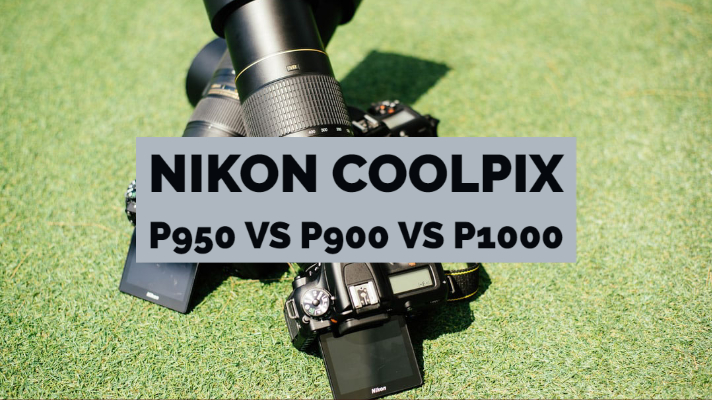
Nikon has been a clear leader in the superzoom bridge category of cameras. The Nikon Coolpix P950 VS P900 VS P1000 has been a few exciting choices when you are looking for the best superzoom selections ever. How do they compare themselves? Well, we will check out the three competing cameras from Nikon and compare their features to arrive at the best functions offered by each of them.
Related: Best 4K Superzoom Cameras

Nikon Coolpix P900 – A Sneak Peek

P950 VS P900 VS P1000

Check on Amazon

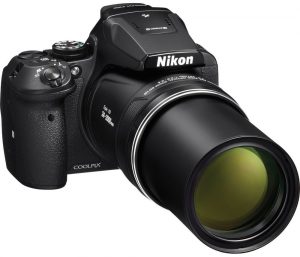
Although a bit dated, the camera provides you access to an unprecedented zoom range, but the image quality is stated to be not proper enough. It offers you a whopping 83x zoom capability that starts right from 24 mm ultrawide to an enormous 2000 mm. The exceptional dynamic zoom capability is in the range of 4000 mm. Of course, that sort of zoom is not something you would be comfortable with. If you are into sporting events or bird/wildlife photography, that would be an excellent option, though. The considerable zoom capability does not translate into better image quality, though. It has a small 1/2.3-inch 16-megapixel BSI CMOS sensor. That would mean you cannot expect a DSLR like picture quality. It comes with a Dual Detect Optical VR technology. That does away the need for a tripod. Video shooting quality is one of the excellent options. Low contrast objects can produce low-quality results, though. You have access to both WiFi and NFC. You would be able to transfer the photos and images to your devices, and can even be used to control your camera remotely.

Nikon Coolpix P950 – A Concise Review

P950 VS P900 VS P1000

Check on Amazon

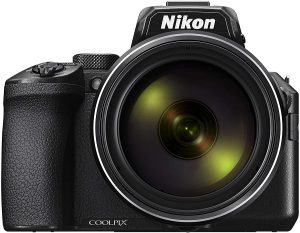
If you are someone impressed with the Nikon Coolpix P900 and its high end zooming features, the P950 brings in new capabilities. It uses the same zoom range and the same small 1/2.3-inch 16-megapixel BSI CMOS sensor. So, What’s really new then on the upgraded version of the Coolpix P950? Well, the new P950 adds up the 4K Ultra HD resolution to its kitty. It can now capture RAW images as well. There is an inclusion of a high-resolution electronic viewfinder. You will also find a new mic jack that was not available on the previous version. Yet another addition you would find on the new P950 is the introduction of the SnapBridge wireless system. This will help transfer your photos from your camera to your compatible devices. An upgrade to the 2015 camera in 2020 is a clear indication that Nikon never stops working on bringing in new features to its bridge cameras.

Nikon Coolpix P1000- An Overview

P950 VS P900 VS P1000

Check on Amazon

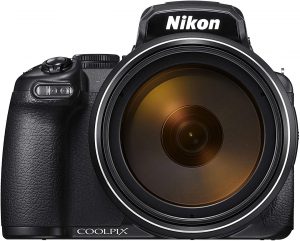
The Nikon Coolpix P1000 is a new evolution among the superzoom cameras from Nikon. It is the best superzoom camera ever and offers you outstanding zoom functionality and comes with an eternal focal range ever on a camera as yet. The camera features a 125X zoom capability. But, once again, this excellent zoom lens has a typical point and shoot sensor. That would be something likely to defeat the very purpose of the superzoom camera. You get a 16-megapixel, 1/2.3-inch sensor on the camera. That would mean while the lens is just out of this world, the picture quality may not be something you would be happy with. The camera shoots in 4K ultra HD resolution. And then, there is a powerful optical stabilization option. The mammoth lens on a compact camera has made it a little overweight. So handling it would be easy? Well, the experts will have to shed light on the exact condition.

Spec Comparison between the three competing cameras from Nikon – Nikon Coolpix P950 VS P900 VS P1000

Well, that was all about the best features offered by the three superzoom cameras from Nikon. If you are still undecided and want to undertake a spec comparison of the three Nikon Coolpix cameras, the following head to head comparison chart should be helpful enough in arriving at the right decision.
Features and Particulars

Nikon Coolpix P900

P950 VS P900 VS P1000 Check on Amazon

Nikon Coolpix P950

Check on Amazon

Nikon Coolpix P1000

Check on Amazon
Maximum Resolution 4608 x 3456 – Image Full HD: 1920×1080/ 60p – Video ISO Hi 1 (equivalent to ISO 12800) (available when using High ISO monochrome in special effects mode) 4608 x 3456 4608 x 3456
Body type SLR-like (bridge) SLR-like (bridge) SLR-like (bridge)
Image ratio 4:3 4:3 4:3
Effective resolution in pixels 16 MP Total Pixels: 16.76 million (approx.) 16 MP Total Pixels: 16.76 million (approx.) 16 MP Total Pixels: 16.76 million (approx.)
Sensor size 1/2.3″ (6.17 x 4.55 mm) 1/2.3″ (6.17 x 4.55 mm) 1/2.3″ (6.17 x 4.55 mm)
Sensor Type BSI-CMOS ISO Sensitivity: ISO 100  1600 ISO 3200, 6400 (available when using P, S, A or M mode) CMOS BSI-CMOS
Processor EXPEED 2 Nikon EXPEED
Colour Space sRGB sRGB sRGB
Color filter array Primary color filter Primary color filter Primary color filter
ISO Auto, 100-6400, expandable to 12800 (B&W only) Auto, 100-6400 Auto, 100-6400
Lens
  • NIKKOR lens with 83 x optical zoom
  • Focal Lenght: 4.3 to 357 mm (angle of view equivalent to that of 24 to 2000 mm lens in 35mm [135] format)
  • f/ 2.8 to 6.5
  • 125x optical Zoom-NIKKOR ED glass lens
  • Lens Focal Length

    4.3-539mm (angle of view equivalent to that of 24-3,000mm lens in 35mm [135] format)
  • Lens f/-number

    f/2.8-8
  • Lens Construction

    17 elements in 12 groups (5 ED lens elements and 1 super ED lens element)
White Balance Presets 5 5 5
Image stabilization Optical Lens shift VR (still pictures) Lens-shift and Electronic VR (movies) Optical
  • Lens shift (still images) Combination of lens shift and electronic VR (movies)

Optical Lens shift VR (still pictures) Lens-shift and Electronic VR (movies)
RAW Support No Yes Yes
Image file format JPEG (Exif v2.3) JPEG Raw (NRW) JPEG (Exif v2.31) Raw (NRW)
Focal Length 24–2000 mm 24–2000 mm 24–3000 mm
Optical Zoom 83.3x 83.3x 125x
Maximum Aperture F2.8–6.5 F2.8–6.5 F2.8–8
Autofocus options Contrast Detect (sensor) Multi-area Center Selective single-point Tracking Single Continuous Face Detection Live View Contrast Detect (sensor) Multi-area Center Selective single-point Tracking Single Continuous Touch Face Detection Live View Contrast Detect (sensor) Multi-area Center Selective single-point Tracking Single Continuous Face Detection Live View
Digital Zoom Yes, 4X Yes, 4X Yes, 4X
Macro Focus range 1 cm (0.39″) 1 cm (0.39″) 1 cm (0.39″)
Normal focus range 50 cm (19.69″) 50 cm (19.69″) 30 cm (11.81″)
Screen Fully articulated – 3.” diagonal Fully articulated – 3.” Fully articulated – 3.2.”
Screen resolution 921,000 dots 921,000 dots 921,000 dots
Minimum shutter speed 15 sec 300 sec 60 sec
Maximum shutter speed 1/4000 sec 1/4000 sec 1/4000 sec
Exposure modes Auto Program Aperture priority Shutter priority Manual Program Aperture priority Shutter priority Manual Program Aperture priority Shutter priority Manual
Flash No Yes, through Hot Shoe Yes, through Hot shoe
Continuous shooting 7.0 fps 7.0 fps 7.0 fps
Video formats MPEG-4, H.264 MPEG-4, H.264 MPEG-4, H.264
Storage types SD, SDHC, and SDXC SD, SDHC, and SDXC SD, SDHC, and SDXC (UHS-I support)
Battery EN-EL23 lithium-ion battery & charger EN-EL20a lithium-ion battery & USB charger EN-EL20a lithium-ion battery & USB charger
Battery Backup 360 290 250
Physical Dimensions 140 x 103 x 137 mm (5.51 x 4.06 x 5.39″) 140 x 110 x 150 mm (5.51 x 4.33 x 5.91″) 146 x 119 x 181 mm (5.75 x 4.69 x 7.13″)
Weight 899 g (1.98 lb / 31.71 oz) 1005 g (2.22 lb / 35.45 oz) 1415 g (3.12 lb / 49.91 oz)

Conclusion

Well, that was a complete comparison between the three competing siblings from Nikon. The three superzoom cameras offer you an excellent option and provide you with equivalent features. Check out those features and find the best one that meets your needs.

More on Superzooms

Best Budget Outdoor Security Cameras in 2019 – DVR & Wireless Options

If you are looking for the best budget Outdoor Security cameras then this article might help you arrive at a buying decision. Security is one of the most crucial aspects of any place, and gradually, there have been improvements brought to improve security. The conventional idea of hiring a security guard may not guarantee comprehensive security. There must be some approaches to make sure there are zero instances of robbery or insecurity. Fortunately, with the advancement in technology, sophisticated security systems are being devised to present a safe and pleasurable lifestyle indirectly. Gone are the days when facial recognition systems, security cameras, and sirens were reserved only for affluent homeowners or businesses. Presently, the security cameras are made available at affordable price tags along with advanced techniques to guarantee thorough security. To ensure the complete security of your home or office, it is crucial to make sure there are no intruding elements present outdoors. Therefore, it is best to install outdoor security cameras. Now you, your family, kids, and pets can live stress-free inside your place without worrying about the intruders or thieves. In addition to the level of security offered, there are few other factors to consider as well. For instance, the simplicity of installation, size & design, the strength of wireless connectivity, resolution, durability, and many more need to be considered.

Best Budget Outdoor Security Cameras:

We are hopeful that you will be able to come out of confusion when you go through our recommended list of budget outdoor security cameras:
Sr. No. Image Product Name Manufacturer Buy Now
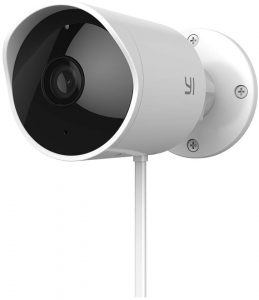
1 YI Outdoor Security Camera, Night Vision Surveillance System YI   Buy from Amazon
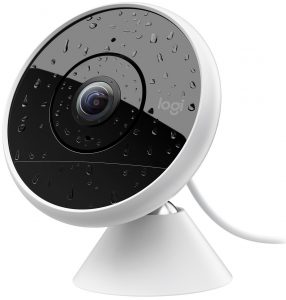
2 Logitech Circle 2 Indoor/Outdoor Home Security Camera Logitech Buy from Amazon
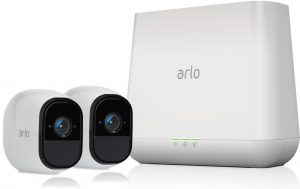
3 Arlo Pro – Wireless Home Security Camera System Arlo Technologies, Inc Buy from Amazon
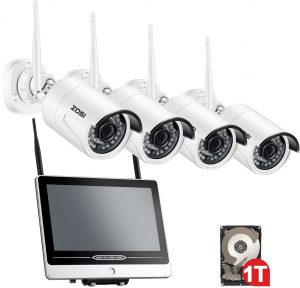
4 ZOSI 4CH 1080p Wireless Security Camera ANSJER Buy from Amazon
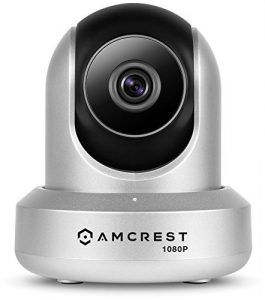
5 Amcrest ProHD Wireless IP Security Camera Amcrest Buy from Amazon
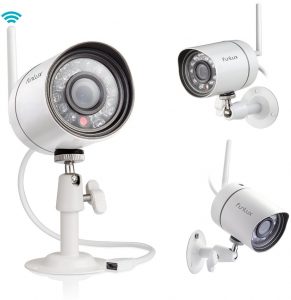
6 Funlux Smart Wireless Security Camera System Funlux Buy from Amazon
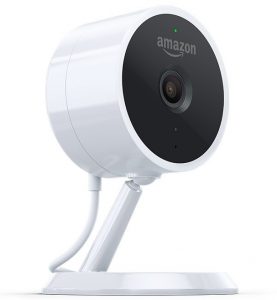
7 Amazon Cloud Cam Security Camera Amazon Buy from Amazon
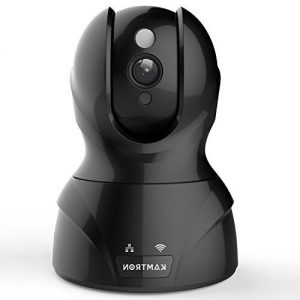
8 KAMTRON 1080P HD WiFi Security Camera KAMTRON Buy from Amazon
9 Reolink Argus 1080p HD Security Camera Reolink Buy from Amazon
10 Lynx Solar Outdoor WiFi Surveillance Camera Chamberlain Buy from Amazon

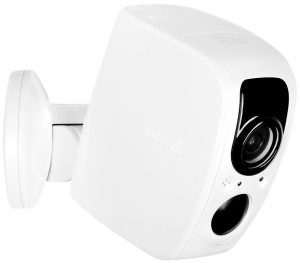
10. Lynx Solar Outdoor WiFi Surveillance Camera:

Check on Amazon

Now you and your belongings will always stay secure regardless of the daunting activities of the external factors. It is also recognized as the first fully integrated solar-powered camera on the present market; the Lynx Solar™ camera requires just one sunlit day to drive the camera for a duration of up to 7 days. In addition to securing your place, there are tons of advanced features packed inside this surveillance camera. In case there is an outage of internet connection or power, Lynx Solar camera would store up to 3 days of data. Whenever the power or internet connectivity resumes, the local data gets uploaded to the cloud. One of the appealing aspects to note about this WiFi surveillance camera is its intelligent facial recognition. With this technique, you can quickly and precisely identify who is present at your home. It would be possible to upload pictures of friends and family into your facial recognition library. Furthermore, you can avail check-in notifications from acquainted faces. In case there is a stranger, alert notifications would show up. All these advanced functionalities indicate that Lynx Solar camera guarantees comprehensive protection of you, your family, and your home.

Features:

  • This outdoor surveillance camera facilitates crystal-clear real-time live video streaming as well as recording in HD quality. The streaming and recording are accomplished from your mobile device through the Tend secure app which can be used at any location
  • The network security implemented is either WEP (40-bit, 128-bit) or WPA (TKIP, AES) or WPA2 (TKIP, AES).
  • It lets you enjoy wireless connectivity, the camera provides built-in support for 802.11b/g/n 2.4Ghz WiFi band.
  • Along with the purchase of this surveillance camera, you will get free cloud storage in order to backup and review videos through cloud storage. Since it is free to access, you can see the activities happened during the past 7 days.
  • For events enthused by motion detection, you will instantly get notifications on your mobile devices.

Pros:

  • Super easy to set up
  • Durable build quality

Cons:

  • The built-in app is easy to use
  • Stays unaffected by outdoor weather conditions

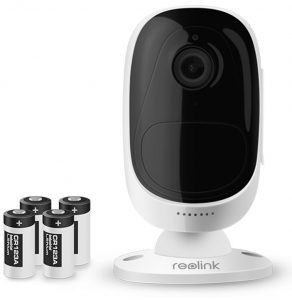
9. Reolink Argus 1080p HD Security Camera:

Check on Amazon

To guarantee the security of your home or office, in recent times, it is not mandatory to be present there. Even when you are away from your home or office, you can still check out what’s going on. This will give you a sigh of relief and make sure everything is protected. Keeping in mind this thing, Reolink devised this security camera uniquely. The surrounding views will be clearly displayed on its 1080p HD display. Being battery powered and completely free from wires, there will be no installation hassles. The users will stay stress-free from mess due to cords or wiring. According to the available space, you can effortlessly place this camera in any corner or place. Whenever you view live streaming or when the smart PIR motion sensor senses motion events, this security camera would wake up. During the situations of perils, you will receive app push notifications, voice alerts, and email snapshots. When the live view is enabled, you can see activities going on and can also communicate with the incorporated mic & speaker. It is possible to use Reolink Argus in the form of a webcam even if there is an absence of power outlets. This will allow you to view your home or office through a free Reolink app whenever and wherever you wish.

Features:

  • The 1080p full HD resolution and outstanding night vision allow you to clearly see everything during day and night.
  • Regardless of the outdoor or indoor weather conditions, this Reolink Argus camera would stay unaffected.
  • The presence of the sensitive and 130° wide-angle sensor effortlessly detects different human movements. Moreover, this sensor provides real-time and precise alerts like email, siren, app push notifications, etc.
  • The incorporated mic & speaker enable the user to see and listen to the activities going on in their home or office.

Pros:

  • No technical issues while setting up
  • Comes with heavy and balanced magnetic base

Cons:

  • Quick start guide is not available
  • No Mac or PC interface available

8. KAMTRON 1080P HD WiFi Security Camera:

Check on Amazon

The WiFi security camera from KAMTRON is widely popular due to its tons of advantages. First of all, you will be able to stay in touch with your home whenever and wherever you want. Through its quick mobile setup process, it is certain that you will avail safe access to your camera’s video stream without wasting time. There is the facility of remote live video streaming through PC app, smartphone, and tablet. Alternatively, you can also watch via the browser.  Whether you are on a trip or located at home or office, you can control the camera’s functionalities by cell phone. The exquisite HD video quality at 1080P resolution delivers a crystal-clear picture with sufficient details. There is excellent support provided for record and playback via the local micro SD card with a maximum storage capacity of up to 128GB.

Features:

  • This KAMTRON WiFi security camera allows multiple users to watch the same camera concurrently with diverse devices.
  • There would be no troubles to tilt, pan, zoom, and capture the action from diverse vantage points from a far distance. All these can be done with MIPC app.
  • It is quite simple to set up –just scan the QR Code in order to download the MIPC View App; this app is available on Google Play or App Store.
  • It is flawless to stream HD videos and allow two-way audio through your PC, Mac, smartphone, and tablet.
  • With the assistance of a 62-degree viewing angle, this security camera would encompass almost every corner of your home.
  • There is one super IR LED included to let you observe the views during the night up to 20 feet.
  • The app alerts along with snapshot and recording into your mobile device so you could instantly inform the intruder with the speaker.

Pros:

  • Operation is quiet
  • Picture quality is crystal clear

Cons:

  • Cannot connect to a cloud database
  • Lacks an internal battery

7. Amazon Cloud Cam Security Camera:

Check on Amazon

To instantly catch any suspicious activities inside and around the doors of your home, precise monitoring is inevitable. The same is facilitated through this Amazon Cloud cam. The supervising is accomplished in 1080p full HD, and it would be straightforward to check in on your home through the use of the Cloud Cam mobile app. Some of the significant functionalities including watching live video streams and replaying motion alert clips. Users would be able to view, download, and share the recent 24 hours of clips without paying anything. If you want to avail of advanced monitoring features, you can upgrade to a Cloud Cam subscription. Once subscribed, you will be benefited from advanced monitoring features like person detection, allowing you to know the instant when Cloud Cam watches a person. In recent times, Cloud Cam is continuously upgrading to be smarter and it incorporates several advanced notifications, features, and detection. Whenever any sound is detected, you will be notified.

Features:

  • Even in dark, it is possible to clearly see the output. This is because the night vision allows you to detect the activities taking place throughout the day and night. From the Cloud Cam app, you can easily turn on/off night vision LEDs.
  • You will be able to stay connected 24/7 and the activities will be detected in 1080p Full HD.
  • One of the smart functionalities of this Cloud Cam includes its compatibility with Alexa. You only need to ask Alexa to display your live feed on your Amazon Fire TV, Echo Show, Fire Tablet, or Echo Spot.

Pros:

  • Compact size is suitable for easy mounting
  • Within a few minutes, set up can be easily completed

Cons:

  • Poor build quality
  • Cannot sign up for advanced features on the app

6. Funlux Smart Wireless Security Camera System:

Check on Amazon

What sets this wireless security camera system unique from the rest is its contemporary Smartlink wireless setup technology. Implementation of this technology enables you to effortlessly set up your security system in few minutes. You will get rid of manual configuration. This is due to the fact that the Smartlink automatically establishes communication between your smartphone and your system. Funlux uniquely prepared this wireless security camera system to encompass your whole home with a powerful WiFi range. There will be no concerns regarding compatibility because the system supports Android 4.0 and higher; it also supports iOS 7 and higher. The incorporated HD cameras work exceptionally smooth in order to offer vivid color and detail at the output. At the output, you will see sharp pictures and videos because the camera would capture more details in a huge area. Due to the facility of remote viewing, it is possible to remotely view the cameras anywhere, anytime. You may view it on your smartphone, PC or iPad.

Features:

  • Regardless of the outdoor settings, the enhanced WiFi technology permits you to set up the cameras anywhere. The wireless connectivity is supported within the range of 170 meters in an open area.
  • Through HDMI Output and 720P HD, you can view the megapixel video on monitor or HD TV.
  • To avoid looking at the video feed frequently, the Funlux smart wireless IP camera system will send you a screenshot alert whenever the camera senses motion.

Pros:

  • Very easy to set up
  • Wireless connectivity is powerful

Cons:

  • Camera fails to capture pictures in high quality
  • Motion detection does not work perfectly

5. Amcrest ProHD Wireless IP Security Camera:

Check on Amazon

There are several customers around the globe who mentioned that this wireless IP security camera is cost-effective and offers tons of useful features. You can remotely view your house or office via the easy to use the app. The included night vision feature works great and it is not at all tricky to use. It is easily perceptible that Amcrest always dedicates its effort towards excellence. This is inferred from the fact that the brand updates the camera firmware on a consistent basis. Discussing the video quality of the camera, it is excellent and you can easily control the swivel and tilt via the Amcrest app. One of the alluring aspects of this ProHD camera is it houses a mic and speaker. Therefore, you can communicate with the person via your smartphone or tablet. Without any worries, you will always stay in touch with two-way talk, smart motion alerts, snapshots, and also using the Mobile and Web Apps.

Features:

  • This Amcrest ProHD camera facilitates an extraordinary field of view through a super-wide 90-degree viewing angle.
  • The IR LED night vision will work up to 32 feet.
  • The process of WiFi setup is quick through an Android smartphone or iPhone when you use the included Amcrest View App. It will be a direct process to stream video and two way audio to your smartphone, tablet, Windows PC or Apple Mac.
  • It can function with Alexa for voice control.

Pros:

  • High range of motion Operation is quiet

Cons:

  • Can occasionally lag depending on the connection
  • Some connection issues because the camera only uses 2.5 GHz signal

4. ZOSI 4CH 1080p Wireless Security Camera:

Check on Amazon

Identified as an all-inclusive system, the ZOSI 1080p wireless surveillance camera system incorporates all the essential components. For instance, the camera system is successfully equipped with a 12.5″ HD LCD monitor that supports 1280*1024 resolution. Actually, this LCD monitor ha substituted the conventional NVR System. This suggests that you need not purchase an additional monitor for making the connection. To make sure there is no break in recording, the camera packs in the 1TB hard disk. Using this hard disk, you can allow the camera to continuously record videos 24/7. In case the memory gets full, it will automatically overwrite. Viewing the remote scenes is now simplified by connecting the camera unit to the monitor, and subsequently connecting the monitor to the router through Ethernet cable. For seamless remote viewing, you just need to download the IP Pro APP and include device ID. There will be no troubles to view, playback or record on PC or mobile devices with WiFi connectivity or 3G/4G network. When the motion detection is set, it would send push alarm and email alerts directly to your phone whenever it detects motion.

Features:

  • Inside this 4CH 1080p wireless security camera system, there are 4 HD 1080p network cameras included. The resolution of each of these cameras is 1920 x 1080 and there is a total of 24LEDs included. These LEDs facilitate night Vision up to 65 feet.
  • To resist corrosion and to last long, the 4 cameras are prepared from IP66 heavy-duty aluminum housing material. This material allows these weatherproof cameras to be installed in any indoor or outdoor settings.
  • The built-in 3.6mm lens is sufficiently wide to encompass 72° view.
  • The supported wireless transmission distance is up to 1000ft with the implementation of 2.4GHz digital wireless cascading technology.

Pros:

  • All 4 cameras seamlessly detect the views
  • Remote viewing is easy and clear

Cons:

  • Set up may seem tricky
  • The overall system is bulky

3. Arlo Pro – Wireless Home Security Camera System:

Check on Amazon

Alleviating the cable mess, the Arlo Pro security camera allows you to view the complete scene from any angle. You can use this home security camera system indoors and outdoors, during daytime and night time. Without relying on the electric power outlet, the Arlo Pro comes with rechargeable batteries. You will be instantly notified whenever any intruders arrive because of the system packs in motion and sound-activated alerts. Once installed properly, you can stay stress-free about safety. It will not hassle to view live and seamlessly record videos anytime, anywhere. There is no need to pay for cloud storage because the security camera system comes with free 7 days of motion- and sound-triggered recordings with Arlo. It is possible to simultaneously talk and listen. This is made possible with the 2-way audio system implemented through built-in speaker and mic.

Features:

  • Arlo Pro prepared this wireless HD security camera IP65-certified weatherproof, so there is no need to worry about the harmful effects of rain, heat or snow.
  • The built-in long-lasting rechargeable batteries facilitate uninterrupted security and quick charging.
  • Occurrences of crime are controlled by the included 100+ decibel siren; this siren can be regulated remotely.
  • All the recordings can be safely stored inside a USB drive local backup storage option.

Pros:

  • Installation is a piece of cake
  • Alerts will be sent immediately

Cons:

  • Audio quality is not excellent
  • Build quality is not durable

2. Logitech Circle 2 Indoor/Outdoor Home Security Camera:

Check on Amazon

Logitech is a prevalent brand name when it comes to electronic gadgets. Right from keyboards for the computer to outdoor security cameras, the brand excels in all its produce. The Circle 2 indoor/outdoor security camera is essentially a Wi-Fi-connected home security camera unit that is easy to install. Whenever motion is detected, the camera unit would begin recording and saves the footage in your secure cloud. Furthermore, Logitech prepared this camera unit with smart functionalities to let it work with Apple HomeKit, Amazon Alexa, and the Google Assistant. For day-to-day use, this home security camera is considered as a preferred choice. With the facility of two-way talk, necessary action can be taken by using the incorporated speaker and microphone. Therefore, it will be easy to monitor activities going on in your home.

Features:

  • In this Circle 2 security camera, there is a special provision made for full HD wide-angle video along with night vision. Hence, it is quite simple to capture the big picture through a 180-degree wide-angle lens. At any time of day or night, the camera is proficient to record full 1080p HD video. The night vision feature will work up to 15-feet.
  • It is capable to store motion-based videos up to the maximum duration of 24-hours. These videos will be saved in your private cloud for free.
  • When any intruders’ activities are detected, you will receive mobile app notifications accompanied by a thumbnail image of the detected motion.
  • It is sufficiently tough to work in any outdoor weather conditions.
  • With advanced analytics, this Logitech camera allows you to get details about when an individual is detected at home.

Pros:

  • Set up process is quite easy
  • Quality of recording is decent enough

Cons:

  • The web app does not function flawlessly
  • Weak night-time quality

1. YI Outdoor Security Camera, Night Vision Surveillance System:

Check on Amazon

To fulfill different outdoor surveillance needs, the YI outdoor security camera is a versatile device. The camera unit is accomplished to record clear images in 1080p resolution with great safety and reliability. Generally, there will be no adverse impacts of external factors like sun rays, rain or wind. The incorporated YI Cloud supports the complete YI Home Series including this outdoor security camera. It is true that any outdoor camera is susceptible to robbery and damage. However, YI Cloud makes sure all your footages are safely stored on the cloud. It would be convenient to access the live feed of all your YI Home cameras whenever required. The alerts can be customized; the area alarm and time period alerts can be easily customized. Hence, you are only warned when you desire to be.

Features:

  • At the output, the high-resolution images are displayed in 1080p resolution. The resolution is blended with a 110° lens as well as universal ball mount conveys superb clarity in all directions.
  • The built-in 12 infrared LED beads offer a night time visibility up to 50 feet. So, outstanding low light performance is guaranteed.
  • Inside the camera system, the 360° noise-canceling hypersensitive microphone removes surplus environmental noise in order to deliver clear sound quality. Furthermore, this microphone would facilitate flawless communication with guests, and deterrent alarm could get rid of undesired guests.

Pros:

  • Comes with easy to use a phone app
  • The included micro USB cord comes with sufficient length

Cons:

  • May not last longer
  • Occasionally loses connection

Conclusion:

Being functional and versatile, the discussed outdoor security cameras are budget-friendly.  Incorporating the advanced security features, these cameras are dedicated to making surveillance hassle-free and simple. Any intruders will not approach your property without your permission.

Fix & Resolve Lens Communication error on Canon Rebel DSLR cameras?

0
If you are looking to fix or resolve lens communication error in your Canon Rebel Camera, then this post is for you. Canon has been one of the prominent manufacturers when it comes to DSLR cameras. The EOS range of cameras should be one of the novel options for the best ever experience in your photography expertise. Their entry-level DSLR cameras also referred to as Rebel DSLRs in the USA. If you are wondering how to resolve the lens communication error on your Canon cameras, the tips here should ideally be helpful enough for you.

What is the difference between Canon EOS cameras and Canon Rebel DSLRs?

Well, there is not much of a difference between the Canon EOS and Canon Rebel cameras. Canon generally names its entry-level DSLR cameras differently for different markets. For instance, one of the excellent cameras from Canon, the Canon EOS 700D is known by the name in Japan as Canon Kiss X7i and known as the Canon Rebel T5i in the US markets. That should clear it. The EOS and Rebel branding have nothing to do with the functionality and features. It is just the nomenclature strategy utilized by Canon for different markets. However, it should be noticed that not all the EOS cameras are referred to as Rebel in the US markets. The name Rebel is used only for the entry-level DSLR cameras from Canon, and the same names designate the other ranges as in the different markets. Some prominent examples would include the Canon EOS 1300D is marketed in the US as the Canon Rebel T6, and the Canon EOS 2000D is known as the Canon Rebel T7 in the US market.

What is the Lens Communication Error on a Canon Rebel DSLR Camera?

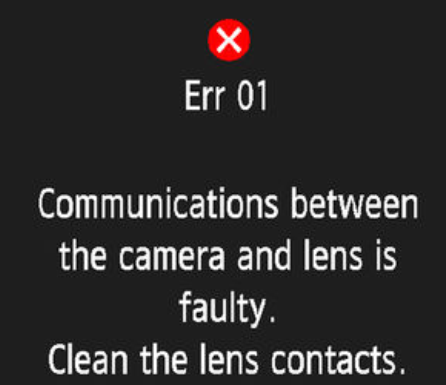
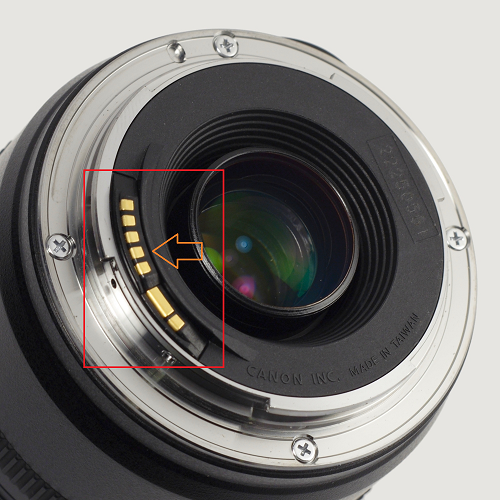
The Lens Communication error is commonly referred to as Err 01. The failure is caused by the lack of communication between your camera and the lens. There can be several reasons that can cause the issue on your camera. What causes the error on your Canon Rebel DSLR camera? Unlike the camera lenses in the past, which had a single task of letting you focus onto the object, today’s cameras and lenses have become quite smarter. They tend to communicate with each other in two-way bi-directional communication. A few tasks will involve relaying the power, communicating a host of settings like aperture settings, autofocus setting, image stabilization, and other details. This communication would include communication through the pins and contacts on the camera and the lens. Any gap in the interface between the two elements gives rise to the “error message Lens Communication Error.”
How to Resolve the Lens Communication error?

Several solutions can be helpful enough in resolving the issue of Lens Communication on your Canon Rebel DSLR. The communication between the camera and the lens can be affected because of several reasons. Let us check out a few options you can put forth to address the concern.

Clean the contacts on your lens

This should be one of the most straightforward fixes that should address the issue. Handling the lens or the camera with the oily hands can make it a little difficult for the camera and the lens to communicate with each other effectively. The oil or other debris can act as an insulator for proper communication. The fix may appear to be quite simple and easy, but you should ensure that you are using a soft, dry cloth. Wipe the gold contacts carefully.

Clean up the Camera contacts

Check the camera body at the place where the lens fits with the camera. A speck of slight dirt, dust, or even clothing can cause a communication error between the camera and the lens. Check if the mount is clean enough and there is no damage to the contacts. For long term use, it is crucial to ensure that the mount interface is regularly cleaned. You can even use the bulb blower and use the blowing option to clean it from the mounts. Never use the compressed air or blow from your mouth.

Use the Proper Blowing techniques

Ensure that you are using proper blowing techniques. Never blow form outside. Sweeping from the outside will make the dust particles to move further inside the camera. Use the same methods to clean the lens. Do not touch any of the areas either on the camera or the lens. The oil or dirt from your fingertips can cause further communication errors on your device.

Inspect your Memory card

An incompatible memory card can also be a reason for throwing the error. However, do note that it may not always be accurate and can be used as one of the possible issues. There are cases where a card is failing for a few unexplained reasons. In such cases, it can be a good idea to check another memory card on the camera. Formatting your memory card can be a good option you can opt for. Make sure you have backed up the contents on the memory card onto your computer. Once done, check if you can use the card once again and get rid of the lens communication error.

Never Ever Do this..!

There are a few suggestions you may come across when getting rid of the Lens Communication error. One of the tips we found over the internet was to use a pencil eraser or WD 40 for cleaning up the contacts.  Never opt for these methods! It has been one of the most common techniques used to resolve the Lens Communication error on any Canon Rebel DSLR cameras. For that matter, any other similar cameras in the range, it is highly advised not to opt for it. It can do more harm to your connectivity or the communication between your camera and the lens than actually solving the issue. The contacts either on the camera or the lens are made of soft material and are gold plated. These tips are sensitive and can cause permanent damage the contacts. Use only the soft and dry cloth for clean up the interface contacts. Make sure that – no matter which methods you use to clean up the contacts – never use your fingers to cleans the contact. Our skin is always oily, and it can further aggravate the issue than helping you resolve it.

Any other Reasons and Solutions?

There are a few other issues that can cause the communication gap between the camera and the lens. Changing a lens and forgetting to turn on Image Stabilisation off can be one of the issues you would find to be one of the major causes. Check it up if that resolves the problem. The aperture ribbon can be yet another contributor for the issue. Check with other lenses to find and rule out the possibility that it is not an issue with the camera. If the camera communicates well enough with the different lenses, you have concluded that the problem is only with your particular lens. You can apply the fixes we mentioned above to clean up the glass or get the lens repaired through the authorized Canon service center as well.

A few Precautions that would help you avoid the Lens Communication error

Whether you have come across any of those lens communication errors or not, there are a few precautions that you would want to take care of. These can be helpful enough in letting you stay away from the possible errors. Follow these precautions –
  • Opt for a regular cleaning regime for your Canon Rebel DSLR camera. You can either use a professional cleaning kit for your cameras or use a clean and dry cloth. This will help you avoid camera lens communication errors.
  • Ensure that you keep the camera away from humidity. Even a small amount of water can damage your camera and contacts.
  • Keep the camera always in a pouch. This will keep the camera protected and keeps it away from accumulating the dirt.
  • Get the camera inspected and checked periodically at the authorized service centers.

In Conclusion

That was how you could check the issues and resolve them when your Canon Rebel DSLR camera faces the problems like Lens Communication error. We assume that the tip shared above should be helpful enough in resolving the issues you may be facing. If it does, our efforts are paid off.

More Reading

How to Resolve Nikon D3500 Memory Card Error and Shutter Release?

0
Are you looking to resolve Nikon D3500 Memory Card Error messages? Congratulations! you are in the right spot. In this post, we share some of the basic steps to resolve such issues. Read along to know more. If you are beginner, the Nikon D3500 is an excellent camera and offers you a unique option of working with your photographs and videos (to some extent). However, if you are unlucky, you might encounter a few errors on the device. For the sake of this post, we will cover the memory card-related error and the shutter release error in this post.

The Nikon D3500 – A little info on the Camera

Check on Amazon

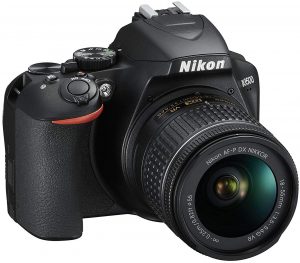
The Nikon D3500 is an upgrade to the D3400 and does not come with any massive upgrades over the past model. However, Nikon has made it sure to provide access to a refreshed and rejuvenated design. Launched in 2018, it was the latest version for the entry-level DSLRs from Nikon. It can be considered to be one of the best entry-level alternatives to Canon or Sony cameras. It has been one of the cheapest and lightest cameras you would opt for. You will also get the 18-55mm AF-P kit lens in the standard package. Since the camera is designed for the beginners, you would find that the design and buttons are minimalistic in nature. There are highly simplified controls and a built-in Guide mode to make sure that the new users will be able to use the camera effectively. It is compatible with most of the Nikkor lenses ecosystem from Nikon.

The Specifications –

Sensor 24.2MP APS-C CMOS 4, 23.5 x 15.6mm
Image processor EXPEED 4
AF points 11-point AF, 1 cross-type
ISO range 100 to 25,600
Max image size 6,000 x 4,000px
Video 1920 x 1080 at 60p, 50p, 30p, 25p, 24p
Metering zones 420-pixel RGB sensor
Viewfinder Optical pentamirror, 95% coverage
Memory card SD/SDHC/SDXC UHS I
LCD 3.0-inch fixed, 921K dots
Max burst 5fps
Connectivity Bluetooth
Size 124 x 97 x 69.5mm
Weight 415g
  The 5 fps burst performance should be one of the best options given the fact that there are several cameras in the price range that offer a maximum of 3 fps performance. There is no in-body stabilization available, but the lenses will have the proprietary VR or Vibration Reduction technology from Nikon. There is no support for 4K compatibility on the camera, but you can opt for the full HD resolution of 1920 x 1080 at 60 and 50 fps. As for the connectivity, there is no WiFi option available, but Nikon has provided the Bluetooth option for your wireless connectivity needs. The XPEED 4 engine will offer you enhanced speed, details, and colors. The battery life is impressive as well, offering you a capacity of 1550 shots per single charge.

Pros

  • The best value for money camera
  • An excellent Image quality
  • Beginner friendly, while providing good performance for the experts as well.
  • 5 fps continuous shooting at this price range

Cons

  • No 4K compatibility
  • A little bulky when compared to the competing models.

How to resolve Nikon D3500 Memory Card Error?

Having gone through the high-level details of the camera, we will now try out fixing the issues like memory card errors and the shutter release errors that you would tend to come across while using the camera.

Memory Card Errors

Some of the most common memory card errors you may come across when using the Nikon D3500 would include the following. Most of them can quickly be addressed in many cases.

No Memory Card Inserted

You might encounter this message even when the memory card is inserted into your camera. You can address the issue by following the tips here –
  • Turn off your camera.
  • Open the memory card compartment and ensure that the memory card is inserted correctly inside the camera.
You will get the prompt on the viewfinder as here – Here are the tips on how to insert a memory card properly –
  • When adding the memory card or the battery, make sure that the camera is in a switched off condition.
  • Ensure that the memory card access light is off. You should never remove the card when the access light is on. This can result in a corrupted card.
  • Switch off the camera and open the memory card slot cover.
  • Press the card in to eject it.
You can now remove it. Follow the same procedure to insert the card. Ensure the proper orientation of the card when adding it. Do not exert more pressure.

Memory Card is Locked

The SD cards that are used in the cameras come with a write protection switch. It may be practical enough to check if the protection is on. The viewfinder indicator will read – You will need to slide the write-protect switch to the Write position. Follow the tips as in the previous section on how to remove and re-insert the card. You may also find the error in the form of Not available if Eye-Fi card is locked. Follow the same procedure as above to switch off the Write Protection. You will get access to the following indicator prompt –

Cannot access this memory card – Insert another card

This can be a situation where you may have used a memory card that is not supported on your camera. Ensure that you are using an approved memory card.

Check if you are getting this indication on your viewfinder –

Please note that the camera does support SD, SDHC, and SDXC cards. These cards are inclusive of the SDHC and SDXC cards compliant with UHS-I. If you are into video recording on your Nikon D3500, it would be advisable to opt for the Cards rated above Class 6 would be prudent. Another reason for the error to creep up would be the card may have developed issues. In such a circumstance, it can be practical to format the card. Formatting a memory card will delete all the content from your card. It may be advisable to opt for a backup if you have any essential photographs or other content on the card.
  • Launch the Setup menu
  • Go to Camera Setup
  • Choose the option Format memory Card
  • Highlight the option Yes and then press OK
If the formatting does not solve the issue, the memory card may have been damaged. You may need to contact the authorized service authorities for further assistance.

This card is not formatted – Format the card

Well, this should be self-explanatory. If you have inserted a new memory card, you will need to format the card. If it does not work, the memory card may be damaged or may not be among the approved cards. Check out the indicator on the viewfinder – Follow the steps in the above tutorial to format your memory card.

Card is full

This is yet another error message that does not need any sort of explanation. Your memory card has gone full, and you would need to delete a few files on the memory card or insert a new card. The error is indicated in the following format on your viewfinder – If you think all the files on your card are essential, you may consider transferring them some other device like your external hard drive or your computer. You can even upload them to the cloud service for storing them online.

Shutter Release Error

The error message syntax reads Error. Press the shutter release button again. It can either be a hardware error that would need service intervention or may also be quickly resolved without huge issues. One of the common reasons for the error would be that it has not retracted from the previous shot. Shutting down your camera and booting it up again should ideally resolve the issue. In most of the cases, you would find that pressing the shutter release button once again will help you resolve the issue instantly. If it does not, you can reboot your camera to see if it resolves the problem. If it does not, it may be a hardware issue and you will need to consult the authorized Nikon service center. For more errors and issues you may come across while using your Nikon D3500 camera, you can check out this official resolution from Nikon.

In Conclusion

That was an attempt at assisting you in resolving the major issues related to the memory card and shutter release on your Nikon D3500 camera. We assume the tips and resolutions here should be helpful enough for you in more ways than one.

Sony IMX499 vs IMX519 vs IMX586 Sensor Specifications Comparison

Exmor by Sony is one of the most solid options when it comes to camera sensor modules for smartphones. Before we can find the differences and similarities between the different Sony sensors, let us check out what do Exmor sensors from Sony mean. After we go through an overview of the sensor technology, let us compare the three formidable sensor options viz IMX499 vs IMX519 vs IMX586 in more detail.

What is the Sony Exmor technology?

Exmor is the new, ever-evolving high-end technology developed by Sony for the phone camera systems. When it comes to Exmor technology, Sony has so far produced six different generations of the camera sensors. The first generation of Exmor sensors brought in a new age of life among the CMOS sensors. The sensors before the advent of Exmor technology carried a lot of noise, especially in the dark. The way CMOS sensors used to transmit the analog data before being converted into digital data brought in a lot of noise. The Sony Exmor 5th and 6th generation sensors are referred to as Exmor R and Exmor RS, respectively. Sony has developed four sensor types – Exmor Sensors, Exmor R sensors, Exmor RS sensors, and Exmor Imaging modules.

How does it work?

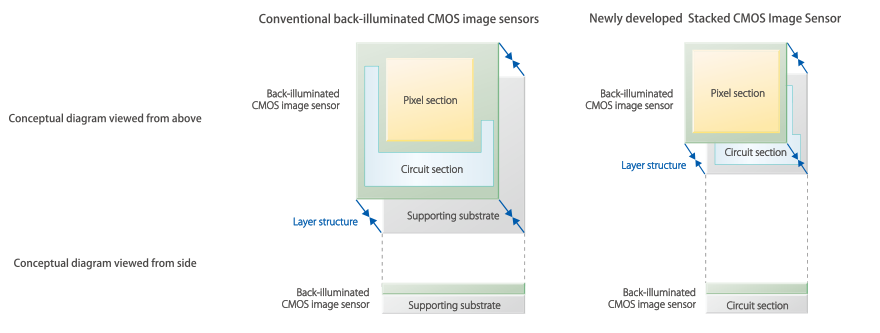
Exmor is specifically a technology developed on some of its existing CMOS sensors. It helps you perform the analog to digital signal conversion along with the two-step noise reduction technology. These noise reduction technology will run parallel to one another in each of the CMOS sensors. The technology lets you make use of the less expensive CMOS sensors in their projects. This assists a design engineer in developing new vision systems more effectively. How do the new Exmor RS sensors offer better performance? The system comes with a back-illuminated and stacked structure. This will help you provide an advanced camera performance. The unique stacked structure will help improve camera performance. The design was originally developed in August 2012.
Source: Sony

Sony IMX499 vs IMX519 vs IMX586 – A Complete Comparison between the Sensors

Having understood the technology history behind the Sony Exmor sensors and how effective they would be, here is a comparison between the different sensor types. Let us check out the differences between different sensors –
Features / Particulars Sony IMX 499 Vivo Z1 Pro Sony IMX 519 Realme 3 Pro Sony IMX 586 Redmi Note 7 Pro
Effective resolution in MP 16 MP 16 MP 48 MP
Effective resolutions in pixels 4608 x 3456 pixels 8000 x 6000 pixels
Sensor Size 6.4 mm ( 1 /2.8”) 6.828 mm (1/2.6”) 8.0 mm diagonal (1/2-type)
Unit Cell size 1.12 microns 1.22 microns 1.6 microns
Subpixel Layout RGB RGB RGB
Phase Detection Autofocus Yes Yes Yes
  Here is the list of smartphones with the individual sensors if you are interested.
  • Sony IMX 499 sensor – NOA N10, Wiko View2 Pro, Blackview BV6800Pro, Zopo Flash X3, Koobee F2, Koobee F2 Plus and Vivo Z1 Pro.
  • Sony IMX 519 sensor – Oppo R15, Oppo R17, OnePlus 6, OnePlus 6T, Motorola Moto G7 Plus, and Realme 3 Pro.
  • Sony IMX 586 sensor – Umidigi S3 Pro, Honor View 20, Honor 20, Honor 20 Pro, Huawei Nova 4, Meizu 16s, Xiaomi Mi 9, OnePlus 7, OnePlus 7 Pro, Redmi Note 7 Pro, Redmi K20, Redmi K20 Pro, Realme X, Asus ZenFone 6, Xiaomi CC9, Nubia Red Magic 3, Moto Z4, Vivo V15 Pro and Oppo Reno.
It should be interesting to note that compared to the other two options, the IMX 586 is found to be available on a wide range of smartphones as of now. The 48 MP functionality offered by the sensor should make it an excellent choice for your needs in high-end photography.

A Little more about the pathbreaking Sony IMX 586 sensor

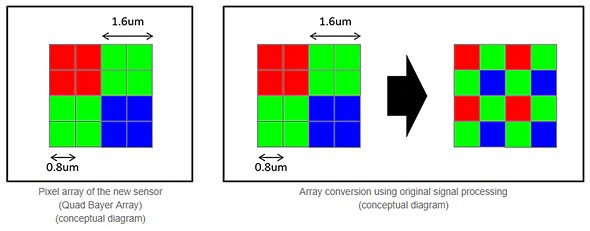
The new sensor launched by Sony, the Sony IMX586 was considered to be the world’s highest resolution image sensor for mobile phones when it was launched in 2018. It takes the image sensing to the next level with an effective resolution of 8000 x 6000 pixels. The pixel size also assumes a lot of importance when it comes to the performance of a smartphone camera. If the pixel size is too small, you will end up with a poor low light photography performance. Sony is attempting to solve this issue with the Quad Bayer color filter array technology.
Source: Sony
This means, even when the sensor comes with the smallest pixel size of 0.8 microns, it combines each of the pixels with the three adjacent pixels producing a 1.6 microns size. This is the technology that Sony claims to enhance the low light photography and the overall image quality. When the sensor was launched back in 2018, there were critical doubts about the technology taking off. However, with several smartphone manufacturers opting for the new sensor. Sony seems to have proved what it had claimed last year while announcing the IMX 586 Exmor RS sensor. The Sony Exmor IMX 586 features the following specifications –
Features Sony IMX586
Effective Pixels 6000 x 8000
Unit cell size 0.8μm(H)×0.8μm(V)
Full frame rate 30 fps
Video recording 4K at 90 fps 1080p at 240 fps 720p at 480 fps
Functions image plane phase-difference AF, HDR imaging
Color filter array Quad Bayer array

The Concluding Thoughts – IMX499 vs IMX519 vs IMX586

That was complete information on the sensors from Sony viz IMX 499, IMX 519, and IMX 586. They differ from one another in terms of functionality and features, despite belonging to the same genre. The IMX 586 has been considered to be the best among the three competing sensors from Sony. We hope that you understood the essential factors features and specifications offered by each of these sensors. It should be noticed that the sensor alone cannot determine the quality of the camera on your smartphone. The camera app and software will also play an important role here. The similar sensor used on different devices should offer you different results in most of the cases. If you have used the smartphones with the sensors featured here, do share your thoughts and experiences with us.

More on Smartphone Camera Sensors:

Samsung ISOCELL Bright GW1 vs GM1 vs IMX586 Smartphone Sensors

In this article, we are comparing the Samsung ISOCELL Bright GW1 vs GM1 vs IMX586. Read along to know more.
Also Read: Phones with IMX586
The cameras on smartphones have become one of the core focus for huge advancements over the years. Gone are the days when we were happy with a camera that offered a single 2 MP camera on its rear. The camera technology has gone so advanced that they now have been on the verge of replacing the DSLR cameras, no puns intended. The high-end cameras these days come with capacities and resolutions as high as 48 MP sensors on mid-range phones. The Xiaomi’s Redmi Note 7 Pro is a clear case in point.
Also Read: Phones with Samsung GW1
Now, Samsung has brought in extensive evolution in the form of the highest resolution for a mobile camera. Yes, we are talking about the ISOCELL Image sensor from Samsung that offers you a resolution of 64 MP. The new Samsung ISOCELL Bright GW1 is a case in point. We will compare the new sensor with the existing 48 MP sensors currently available. From Samsung and Sony’s lineup, we examine the Samsung Isocell GM1 and Sony IMX 586 in today’s post.

Samsung ISOCELL GM1 – What does it offer you?

Source: Samsung
Like most you may have already been aware of, the ISOCELL GM1 from Samsung offers you an excellent smallest pixel size of just 0.8 microns. While this can go a long way in enhancing the image quality of your smartphone camera, it can also be helpful enough in reducing the overall size of the camera module to a considerable extent. The resolution available on the sensor, as we have already mentioned, is 48 MP. However, it should be noted that this 48 MP resolution is not the native one. In other words, Samsung GM1 does not offer an actual 48 MP resolution. It is essentially a 12 MP count and the 48 MP resolution you would be getting on the sensor is through interpolation. The new sensor makes use of modern technology from Samsung called ISOCELL Plus. The technology makes use of the pixel isolation concept, which can be helpful in optimization of the smaller sized pixels. This technology can be quite useful in arriving at the best option for enhanced performance on the high-resolution cameras on the high-end cameras being launched recently. The module makes use of AI technology to output the 48 MP image quality. The camera module is made available on the Samsung Galaxy S10 and S10+ devices. It is also made available on the Redmi Note 7.  The modules have already gone into production from the final quarter of 2018.

The Sony IMX586 – An Overview

Source: Sony
Until the launch of Samsung ISOCELL GW1, the fierce competition that the Samsung GM1 ever faced was in the form of Sony IMX586. The fierce competitor to the Samsung offering, the Sony IMX586 also offers you the same functionality as the Samsung offering. Yes, we are talking about the resolution of 48 MP. The camera module on the Sony IMX586 is the same 0.8 microns as on the Samsung GM1. The module was launched in the later quarters of 2018. You can find the sensor offering you a high-quality image. You will also have an excellent performance with its digital zoom. It provides you a Quad Bayer 2 x 2 array of pixels. By combining pixels, it offers excellent performance both in low light as well as in artificial lighting conditions. The pixel binning tech provides you with access to the perfect bright light outputs. The feature also aids in excellent video shooting performance in low light. The sensor also offers you an excellent performance of 48 MP performance in broader daylight by capturing a significant amount of data. The superb shooting performance will also include access to a perfect 4K recording at 90 fps and also have access to 1080p video resolution at 240 fps.

The Samsung Isocell Bright GW1 – A Sneak Peek

Samsung recently announced the launch of a new camera sensor – the Samsung Isocell Bright GW1. You have access to an option for enhanced mega-zoom performance with the highest smartphone camera resolution at 64 MP ever on a smartphone. The sensor has the same 0.8 microns sensor size as on the other two options we just discussed. With this launch, along with the 48 MP ISOCELL line up GM2, Samsung has expanded its 0.8 microns sensor range. Yongin Park, executive vice president of sensor business at Samsung Electronics stated,
With more pixels and advanced pixel technologies, Samsung ISOCELL Bright GW1 and GM2 will bring a new level of photography to today’s sleekest mobile devices that will enhance and help change the way we record our daily lives.
The sensor makes use of the Tetracell technology along with the remosaic algorithm. It can shoot a high resolution 16 MP images in the low light environments and can provide you access to 64 MP images at the bright light conditions. Here are some feature highlights below:
  • 3D HDR technology
  • 0.8um with ISOCELL Plus (1.6um at 16 MegaPixels)
  • Excellent Low-light performance with the new Tetracell technology by combining pixels
  • Existing SOCs from Qualcomm & MediaTek can already support the GW1 sensor.
In fact, you will have access to an enhanced visual experience because the camera module works in the same way as a human eye perceives the light. The entrance to an improved real-time high dynamic range of up to 100 dB should be capable of developing a better hue performance. It may be worthy to note here that the HDR range that a human eye can handle would be 120 dB and that offered by the normal range of sensors would be 60 dB. It also comes with a Dual Conversion Gain or DCG for providing you with a better sharpness in your images. A few other advantages offered by the GW1 would include higher efficiency in the autofocus technology, full HD recording capability at a whopping 480 fps and sharper results. The 480 fps shooting should be a perfect option for getting an excellent slow motion video that would resemble a cinematic camera.

Comparison Chart – Samsung ISOCELL Bright GW1 vs GM1 vs IMX586 Smartphone Sensors:

Having gone through the specific features and functions offered by the three competing camera sensors, we thought of comparing them in a side by comparison chart. This should help us understand how the three camera sensor options compete. It can help you go through a better analysis of the sensors. So, here we go!
Features and Functions Samsung Isocell GM1 Redmi Note 7S Sony IMX 586 Redmi Note 7 Pro Samsung Isocell GW1  
Effective Pixels 48 MP 48 MP (8000 (H) × 6000 (V)) 4K(4096×2160) @ 90fps   1080p @ 240fps   720p, 480p
Sensor size 6.4 * 4.8 mm or 1/2″ 8.0 mm diagonal (1/2-type)
Unit cell size 0.8 microns 1.6 microns 0.8 microns
Subpixel layout RGB RGB
Model Isocell Slim Isocell Bright
Resolution 48 MP 64 MP
Optical format 1/2″(Diagonal 8.0mm) 1/1.72″
Interface MIPI 4 Lane RAW MIPI 4 Lane RAW
Chroma Tetracell Tetracell
Autofocus performance Phase Detection autofocus Phase detection autofocus Super PD
Video shooting frame rate 4K(4096×2160) 90fps 1080p 240fps 720p 480fps(w/crop)
  Comparing the Sony sensor with the Samsung sensor may not be a perfect option under ideal circumstances. However, we have attempted listing out the specific features that the three sensors provide you access to. We would assume the comparison here should ideally meet most of your requirements.

Which among them would you opt for?

Well, rather than you as a consumer would opt for a particular sensor, it is more of a prerogative on the part of the original device manufacturers to take a call. From that perspective, we may not have a choice as such. However, if you have the habit of checking out the specific camera sensors that the smartphone of your choice is equipped with and a die-hard photographer – a smartphone photographer rather – it may be a good idea to choose between those options. The Samsung Isocell Bright GW1 is just launched, and we may need to wait until the second half of 2019 before you may find a smartphone featuring the sensor. The sensor offers you a 64 MP functionality when compared to the 48 MP resolution available on both Sony IMX586 and Samsung Isocell GM1. Redmi, Xiaomi’s sub-brand is expected to be the first smartphone to opt for the new sensor. It may be essential to note that the Samsung GM1 sensor was first used on the Redmi Note 7 (non-pro version). We would also expect Samsung to use it on its in-house smartphones. A most likely option is the Samsung Galaxy A Series. We may also see it on next year’s flagship S series devices. However, it is too early to make any commitment in that respect. Among Samsung GM1 and Sony IMX 586, Samsung offers you 12 MP effective resolution which is interpolated to 48 MP. On the other hand, the Sony IMX586 would provide you with an actual 48 MP image performance. That would, perhaps, make a Sony IMX586 a better choice if you are looking for a perfect 48 MP performance. However, apart from that one difference, almost all other features and functions on the Sony IMX586 and Samsung Isocell GM1 virtually remain the same for nearly all practical purposes. There is a high chance that the new Samsung GW1 would offer 16 MP sufficient resolution which is interpolated to 64 MP.

In Conclusion

That was a fair comparison between the three competing smartphone camera sensors. We assume that the comparison featured in this compilation should ideally help you arrive at the best correlation between the three of them. Check them out and find the best option among the three sensors we just discussed.

More Reading:

Sigma 60-600mm vs 150-600mm DG OS HSM Contemporary Lens Specs

0
In this article, we are comparing the Sigma 60-600mm vs 150-600mm lenses, which are hyper-zoom lenses with all the right ticks on the box. These are versatile lenses, and both offer 10x optical zoom, with full-time manual focus. Also, it does not matter which lens ecosystem you are into; Sigma offers all the native mounts out of the box without the need for any 3rd party accessories. Plus, image stabilization is directly built into the lens, which uses advanced algorithms which the company claims to help you get sharper images in challenging scenarios. Using these lenses with an APS-C body will effectively increase the focal length, but is still manageable. The Sigma 60-600mm is more versatile among the two since it covers a broader range and incorporates 25 lens elements in 19 groups. This makes the Sigma 60-600mm more costly when compared with the 150-600 model. The 9 blade diaphragm on both the lenses creates an attractive bokeh to out-of-focus areas of the picture, with built-in optical image stabilization and an effect of 4 stops and an accelerometer for vertical & horizontal panning, and a Hyper-Sonic Motor for fast & quiet autofocusing. The Sigma 150-600mm f/5-6.3 DG OS HSM Contemporary lens targets a similar market as the 60-600mm, but at a cost. However, the larger and more substantial “Sport” edition is something unique to Sigma, with no other competing or equivalent offers from any other manufacturer. Both these lenses offer a substantial focal range to work with and is no longer a dream to reach 10x optical zoom without spending a bomb. The 60-600mm is useful for photographing static and moving subjects at varying distances quickly. Using a 600mm prime lens is not always feasible due to its weight and haze in specific environments. Both these lenses have a sports edition, which is more cumbersome and a little bit challenging to carry around. Either way, you will need a carrying case for outdoors 100% of the time. Now, with that background, lets us compare these two lenses by their specs. See below:

Sigma 60-600mm vs 150-600mm: Specifications Comparison

First, we will look at the Pros & Cons of these lenses. See below:
Pros & Cons

Sigma Sports 60-600mm f/4.5-6.3 DG OS HSM Lens

Check on Amazon India
Sigma 150-600mm F 5.0 -6.3 Check on Amazon India
F22 – F32 (Minimum Aperture) f22 minimum aperture
25 Elements in 19 Groups 24 Elements in 16 Groups lens construction
60-260 cm / 23.6-102.4 in. 260cm / 102.4 in minimum focusing distance (2.6m vs 2.7m)
160g lighter – 2.7 kg vs 2860g 2700 grams
1:3.3 (200mm) of maximum magnification 1:5
Comes in Sigma, Nikon and Canon mounts
  • Manual Override (MO) capable of switching two full-time manual modes
  • The world’s first 10× optical zoom telephoto lens with a tele end of 600mm
  • Dust and Splash Proof
Comes with Hyper-Sonic Motor & designed for APS-C & FF DSLR cameras
  • Dust and splash-proof construction
  • Water & oil repellent coating (Front and Rear)
  • Customization and flexible adjustment with Sigma USB Dock
  •  Lens hood LH1164-01 & Case is included in the box
  We will be comparing all the relevant technical aspects and specifications side by side so you can get a better idea. Moreover, we will discuss all the significant differences descriptively and understand how they leave an impact on the overall performance of the lens. So without any more delay, here we begin:

Specs Comparison:

General

Specifications

Sigma Sports 60-600mm f/4.5-6.3 DG OS HSM Lens

Sigma 150-600mm Sports
Packaged Quantity 1 1
Diameter 4.7in. x 10.6in 4.8 x 11.4 in.
Length 120.4mm / 10.6 in. 290.2mm & 11.4 in.
Weight 2,700g [95.2 oz] 2.9 KG [100.9 oz]
Accessory Type Lenses Lenses
Manufacturer Sigma Photo, Inc SIGMA

Carrying Case

Specifications

Sigma Sports 60-600mm f/4.5-6.3 DG OS HSM Lens

Sigma 150-600mm Sports
Included Accessories
  • Case,
  • Hood (LH1144-01),
  • Cover Lens Cap (LC-740E),
  • Shoulder Strap,
  • Built-in Tripod Socket
dust cap lens cap lens case lens hood shoulder strap

Lens System

Specifications

Sigma Sports 60-600mm f/4.5-6.3 DG OS HSM Lens

Sigma 150-600mm Sports
Type Telephoto zoom lens Telephoto Zoom Lens
Focal Length 60 – 600mm 150 mm – 600 mm
Magnification 1:3.3 / 200mm 1:5
Image Stabilizer Optical Optical
Smallest Aperture at minimum Focal Length F22 F22
Intended For FF & APS-C SLR, digital SLR (Canon, Nikon, Sony, Sigma) FF & APS-C SLR, Digital SLR (Canon, Nikon, Sony, Sigma)
Optical Zoom 12x max. 12x max.
Series DG OS HSM Sports DG OS HSM
Lens Coating Super Multi-Layer Coating Water and oil-repellent coating on the front & rear lens elements Super Multi-Layer Coating Water and oil-repellent coating on the front & rear lens elements
Mounting Type Nikon F (Canon EF, EF-S, Nikon, Sigma) Nikon F (Canon EF, EF-S, Nikon, Sigma)
Special Functions Tele, zoom Tele, Zoom
Lens Aperture f/4.5-6.3 f/5.0-6.3
Minimum Aperture F22 – F32 F22 – F32
Min Focal Length 60 mm 150 mm
Max Focal Length 600 mm 600 mm
Min Focus Distance 60-260 cm / 23.6-102.4in. 260cm / 102.4 in
Focus Adjustment automatic, manual (Full time) Automatic, Manual
Zoom Adjustment manual Manual
Max View Angle 16.4 degrees (16.4º-4.1º) (Varies with APS-C & FF DSLRs) 16.4 degrees (16.4º-4.1º)
Min View Angle 39.6º – 4.1º 4.1 degrees
Group Qty 19 16
Element Qty 25 24
Filter Size 105 mm 105 mm
Diaphragm Blades 9 9
Features ELD (Extraordinary Low Dispersion) glass FLD glass Hyper Sonic Motor (HSM) SLD (Special Low Dispersion) glass Sigma USB dock compatible Dustproof Splash-proof ELD (Extraordinary Low Dispersion) glass FLD glass Hyper Sonic Motor (HSM) SLD (Special Low Dispersion) glass Sigma USB dock compatible Dustproof Splash-proof
Note that we will only be discussing the differences in the above table, and not the similarities; since it does not simply make any sense to discuss in what criteria these lenses are similar. We found the 150-600 lens to be quite limiting when the subject is too close is fast-moving. Overall, we like the 60-600’s long focal range, which offers more flexibility to shoot action at both close & long-distance subjects. However, the high price and the extra weight concerns are always there, making such lenses cost-prohibitive for budget-conscious enthusiasts and professionals. They prefer shooting hand-held most of the time. The Sigma 150-600mm f5.0-6.3 Contemporary directly competes with the Tamron 150-600mm f-5-6.3 VC, because both these lenses offer the same focal length and aperture ranges with similar pricing. In addition to this, both the two lenses practically measure & weigh the same, with slight differences here and there. The lens optics are also constructed with a lot of similarities. It comes with a total of 20 lens elements & 9 diaphragm blades. We have already compared the Tamron 150-600mm g2 Vs. Sigma 150-600mm on a different post. Do check it out to find out more. Sigma claims the 60-600mm to be the world’s first 10x optical zoom telephoto lens with a tele end of 600mm. Except for the high-price, we like the lens a lot!

Conclusion:

The new Sigma 60-600mm f 4.5-6.3 DG OS HSM Sports is definitely a versatile lens, given its range and maintaining its sharpness throughout its focal range, at least in daylight conditions. The build quality and weather coating are good for wildlife photographers. The lens comes with an in-built accelerometer, which helps you to reduce camera shakes and works pretty well. While the 60-600mm is very similar to the Sigma 150-600mm f/5-6.3 DG OS HSM Sports optics, it also offers a much more versatile focal range at the short end. With almost two kilograms in weight, you will definitely need a tripod, since this definitely isn’t for handheld photography. There is a tripod mount-collar, which is much improved on the one that ships with Sigma 150-600mm Sports lens, and it also ships with a high-quality lens hood, shoulder strap, and a padded case. Overall, if you want a long-range, go with the 60-600mm. If the high price is an issue, we definitely recommend you to go with the 150-600mm lens from Sigma. We hope you like our comparison of the Sigma 60-600mm vs 150-600mm lenses. Feel free to share your thoughts and suggestions in the comments section below. Thanks for visiting!

More Stories on Lenses:

List of f 0.95 Prime Lens For Canon Nikon Sony Leica Best Budget Options

0
The number 0.95 means a lot for photography fans. This is where Leica has made a great niche for themselves. If you are someone who is interested in bokeh shots, the 0.95 aperture should be one of the significant options among the third party lenses you would want to opt for. So, which are the best f 0.95 lenses suitable for Sony, Nikon, Canon and Leica cameras? Let us check out the best list of f 0.95 prime lens options you can have a look at.

Why is f/0.95 so crucial for photographers?

The shallow depth of field offered by the f/0.95 aperture is one of the best low light lenses you can consider buying. It was also considered to be the best for the faster camera action. The concept was brought ahead by Leica with their range of Noctilux lenses. However, it was Canon who started the trend with the 50mm f/0.95 “dream lens.” However, the lens has now been discontinued. If you are a fan of f/0.95 lenses, there isn’t any shortage of these lenses, especially for the micro Four-third systems. Several products would prove to be helpful to quench your enthusiasm.

List of f 0.95 Prime Lens you can check out in 2019

Now that you have understood what makes f/0.95 one of the best options for your faster photography with a better depth of field, here are the best options you can check out.

Canon 50mm F0.95

This has been considered to be the dream lens by Canon and has been one of the best options you have ever checked out. Sadly enough, the lens has been discontinued and it will remain as a dream. The lens has been considered to be an excellent option for the best image quality. It is also one of the fastest options in terms of aperture speed. In fact, it is also considered to be the most affordable f/0.95 lens compared to the most other alternatives. Do, however, note that Canon has discontinued the lens and if you can find it somewhere – it will indeed be a collector’s item. You may be able to find it from some of the excellent online services or from those who are stocking collector items.

Navitron 50mm F0.95

This is yet another good option you can check out for the best experience with f/0.95 lenses. However, you may not be able to find it on many favorite online stores. The lens was recently spotted on eBay. The Navitron 50mm F0.95 comes with an adaptation to Micro Four Thirds. The lens comes with a 100 mm field of view. You can get access to some of the best bokeh effects with the lens. The looks and color reproduction remains to be the best among the competitors. You should also be able to use it with Leica cameras as well if you are a DIY enthusiast. You can stop it down to f16 and get some outstanding close-up shots as well.

Leica 50mm F0.95 Noctilux

Check on Amazon

Technical Specifications

Angle of view (diagonal, horizontal, vertical) 47° / 40° / 27°
Optical design Number of lenses/groups: 8 / 5 Focal length: 52.3 mm Position of entrance pupil: 50.6 mm (related to the first lens surface in light direction) Focusing range: 1 m to infinity
Distance setting Scales: Combined meter/feet graduation Smallest object field: 406 mm x 608 mm Largest reproduction ratio: 1:17
Aperture Setting/Function: With click-stops, half values available Lowest value: 16
Bayonet Leica M quick-change bayonet with 6-bit lens identification bar code for digital M models
Filter mount Screw-on filter E60 with accessory filter holder
Dimension and weight Length: approx. 75.1 mm Largest diameter: approx. 73 mm Weight: approx. 700 g
Lens hood Yes, extendable
Dubbed as the world’s fastest aspherical lens, the Leica Noctilux is what made the f/0.95 a popular option. If you are looking for a perfect f/0.95 lens for use on an M mount camera, the Leica 50mm f/0.95 Noctilux should be an excellent option for all your needs.
Image Source: Leica
The lens is quite difficult to lay your hands on. Not that the lens is not available as we found with the other two options as outlined in the above examples. But, the product is manufactured in lower quantities every year. A higher speed is what would set it apart from the rest of the M mount lenses. The price may appear to be a little ridiculous, but given the fact that it is a signature lens, you would flaunt around. It is one of the best lightweight lenses you would go with.

Voigtlander 25mm F0.95

Check on Amazon

Technical Specifications for Voigtlander Nokton 25mm F0.95

Lens type Prime lens for Micro-Four Thirds System 25 mm – No Image stabilization
Aperture Maximum aperture F1 Minimum aperture F16 Aperture ring Yes Number of diaphragm blades 10
Optics Elements 11 Groups  8
Focus Minimum focus 0.17 m (6.69″) Autofocus No Full time manual Yes Distance scale Yes DoF scale Yes
Physical Weight  410 g (0.90 lb.) Diameter 58 mm (2.3″) Length 70 mm (2.76″) Materials metal barrel, metal mount Sealing  No Color black Filter thread 52 mm Tripod collar No
The Voigtlander 25mm F0.95 is one of the best options and has been launched quite recently. The lens is specially designed for use with Micro Four-thirds cameras. The best part with the lens is it helps you adjust to the exact focal length. The aperture is one of the best and faster ones you can go with. The lens is one of the best in terms of ultra-fast performance. The aperture ring on the lens can be used for use as a stepless camera for using it as a cinema lens. The glass should work efficiently on a wide range of cameras that include  Panasonic, Olympus, Canon and a lot more.

SLR Magic 50mm f/0.95 HyperPrime Lens

Check on Amazon

Technical Specifications for SLR Magic 50mm f/0.95

Lens type Fast normal lens with seven Tantalum glass elements to ensure superior cinematic performance.
Compatible Cameras: • All Rangefinder M mounts • LM mount for cinematography • E-mount • Micro Four Thirds cameras
Optics 12 elements in 7 groups 0.70m to ∞, combined scale meter/feet (Distance Range)
Aperture / Bayonet • Manually controlled diaphragm • 12 aperture blades (circular), Lowest value 16 M-mount (with Rangefinder coupling), E-mount, Micro Four Thirds
Physical • approx. 95mm (approx. 3.74in) without hood • approx. 110mm (approx. 4.33in) with retractable hood
The lens is one of the fastest lenses among the world’s popular production lenses. The lens provides you access to the best performance and offers excellent shallow depth of field. The lens should be an excellent option for use with low light photography or cinematography requirements you may have. Standard lenses fail to work in specific areas where you would find it challenging to shoot night photography and poorly lit areas. The lens also comes with the manual focus features that makes it a perfect option for ensuring the highest standards. The smoother stepless f- stop will provide you access to best possible transition options. You would be able to achieve the best bokeh effects with the eight aperture blades.

Mitakon Zhongyi Speedmaster

Check on Amazon

Focal Length 35mm Comparable 35mm Focal Length: 52.5 mm
Aperture Maximum: f/.95 Minimum: f/16
Camera Mount Type Fuji X, Sony E, EOS-M
Format Compatibility APS-C
Maximum Reproduction Ratio 0.13
Angle of View 43.5°
Minimum Focus Distance 1.15′ (35 cm)
Elements/Groups 11 Elements in 8 Groups
Diaphragm Blades 9
 

Features

Autofocus No
 

Physical

Filter Thread Front: 55 mm
Dimensions (DxL) Approx. 2.48 x 2.36″ (63 x 60 mm)
Weight 1.01 lb (460 g)
 

Packaging Info

Package Weight 1.65 lb
Box Dimensions (LxWxH) 5.1 x 4.4 x 3.4″
The lens is suitable for a wide range of lenses and compatible with Sony E, Canon RF, and Nikon Z-Mount Full-Frame cameras. A stepless silent aperture control would make it a prominent option for most of our requirements. The lens offers you excellent performance in terms of low light photography. It also provides you access to a better degree of control over the depth of field. It will give you access to the best bokeh effects. The lens comes with a great design that improves the flare resistance and provides you with a compact sized lens. If you want to know more about the lens, you can have a good look at the lens at ZY Optics.

Angenieux 25mm f0.95

Check on Amazon

This is a C mount lens that should make it one of the best options you would want to go with. It has been considered to be one of the most searched f /0.95 lenses for use with micro four-thirds cameras. It is one of the prominent options that can work efficiently as the best focusing options you would want to go with. The lens can perfectly match with your systems.

The Concluding Thoughts

Those were a few exciting options you can check out for the best of f 0.95 prime lens. The lens type has been treated to be an excellent source for the best in bokeh effect, excellent low light performance and superb cinematography experience. Check out the lenses featured in this compilation and improve your photography levels. But before you buy any of the lenses listed here, do check the compatibility of the glasses with your camera. Not all lenses may work with all camera models.

More on Prime Lenses