List of Smartphones with 1-Inch Sensors for Primary Sensor

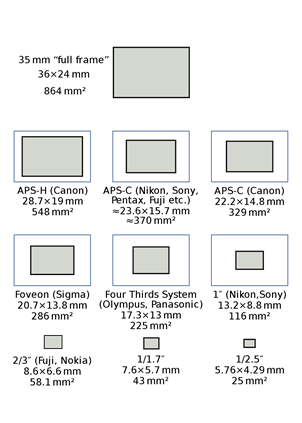
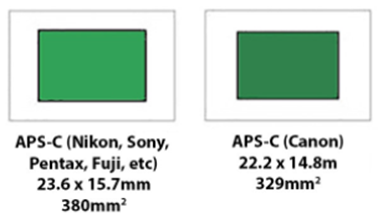
If you are looking for a list of smartphones with 1-inch sensors, then check out our listed devices here in this article. We already had written an article that highlights the major Hybrid cameras that come equipped with 1-inch sensors. Typically, APS-C type sensors are considered the most common size that fits most DSLRs or Mirrorless camera ranges that cost under $1000. Here is a quick look at different sensor sizes on the market today:
Image: https://expertphotography.com/camera-sensor-size-astrophotography/
When it comes to Hybrid Superzooms or bridge cameras, sensor sizes shrink significantly to accommodate the large focal range zoom range. While a 1-Inch sensor is considered small in dedicated cameras, they are huge from a smartphone perspective. At the time of writing this, we do not have many phones with a 1-inch sensor, but I suspect we will see more of these in the foreseeable future. So, let’s see our options.

Table of Contents

Smartphones with 1-Inch Sensors:

  1. Panasonic Lumix CM1

This was an expensive phone to being with. The retail price was estimated to be around $1000, and was technically a camera with an Android phone slapped onto it. The specs were considered high-end for 2014 and came with an IPS LCD, 2 GB of DDR3 RAM, and a Snapdragon 801 chip. The primary shooter was a cool 20.1 MP, Leica branded f/2.8, 28mm (wide) lens, a 1.0″ sensor, 2.4µm pixel size, and AF. The fact that it supported 4K@15fps was mindblowing for the time (2014). It came preloaded with Android 4.4.2 (KitKat) and was later upgradable to 5.0 (Lollipop).

2. Sharp Aquos R6

Sharp might not be a popular brand for most markets except for Japan. However, the company has a history of releasing phones with top-notch specs at any given point in time. Like the CM1, the Sharp Aquos R6 comes with Leica branded optics and a 1-Inch sensor and comes with a focal length of 19mm. This ultra-wide focal length is not conventional, though. The Summicron lens comes with an F/1.9 and is well into the ultra-wide category. The pixels in this 1-inch sensor measure 2.4um in size, which is large. Compared to traditional 1.4um pixels, these 2.4um pixels can collect 194% more light. In terms of scaling, compared to 0.8um, 2.4um pixels can collect 800% more light! There is also a little magic happening in the Spectra 580 chip that does the image computation processing, and we expect the outputs to be stunning. But, unlike the CM1, the R6 is a conventional phone with a 6.6″ OLED display and a Snapdragon 888 chip that is the 2021 flagship. Other specs include a 12GB LPDDR4x RAM, 128GB UFS storage, and a big 5000mAh battery. The other spec smacking feature is the Qualcomm 3D Sonic Max (20x30mm2) fingerprint sensor based on ultrasonic technology. So, the question is, will other major manufacturers follow suit, or will this be yet another unconventional device written off in history? Time will tell.

Conclusion

Since most of us these days carry a phone around, it automatically becomes our primary shooter. As an enthusiast, we would like to see many more of these large sensor devices on conventional smartphones as our daily driver. We hope you like our post. Feedback and suggestions are welcome in the comments section below. Thanks for visiting.

Footnotes

DSLR & Mirrorless Cameras with 10-bit Color for Videos & HDR

If you are into videography, you might be interested in mirrorless cameras with 10-bit Color for Videos that are ideal for HDR with variable bit rates.
Also Read: Best 4K HDR Camcorders
The support for 10-bit color video in cameras was impossible for a few years. If you want to capture the highest quality video, it is recommended to choose a camera with 10-bit color video output. In today’s world of professional photography and videography, 8-bit color video is not ideal anymore. Therefore, it is best to go for a camera with 10-bit color video support. Let’s first look at the key reasons to go for cameras with 10-bit color video:

Why choose a camera with a 10-bit color video?

The foremost reason to choose a camera with 10-bit color depth is its benefit in the data processing. For video post-processing, saturation, stretching, and adding white balance usually leads to color. Moreover, it needs heavy dithering. The footage recorded with a 10-bit color depth is devoid of this issue. This is because a wider range of color data is accessible for reproducing the scenes in fine details.
Related: Best DSLR’s with built-in HDR
An 8-bit video file works with RGB through 256 levels per channel. On the other hand, the 10-bit works through 1,024 levels per channel. It suggests that a 10-bit image can showcase up to 1.07 billion colors, whereas an 8-bit photo can display 16.7 million. The inception of HDR screens gives rise to extensive use of cameras with 10-bit color video. The HDR screens can display a broader range of colors at higher contrast than the average screens. Therefore, the 10-bit color depth video output effectively utilizes hardware with many distinct details to display on the screen. So, the video output always appears dynamic and lifelike. Since contemporary display panels use pixels controlled by digital processors, each pixel represents bits of data. Each bit has either a zero or one value for every primary color: red, green, and blue, aka RGB. Thus an 8-bit color depth panel has 2 to the power of 8 values per color: that’s 256 gradations or versions each of red, blue, and green. We measure them as 256 x 256 x 256 to reach a total of 16.7 million possible colors. For 10-bit color depth display panels, every pixel shows up to 1024 versions of each primary color, in other words, 1024 to the power of three or 1.07 BILLION possible colors. So, a 10-bit panel has the ability to render images with exponentially greater accuracy than an 8-bit screen. A 12-bit monitor goes further with 4096 possible versions of each primary per pixel, or 4096 x 4096 x 4096 colors: that’s 68.7 billion colors.

8-Bit vs. 10-Bit – How do they compare?

Well, actually, the difference comes in as rather huge. While 8-bit color depth panels do a good job of showing realistic images, they’re also the bare minimum in modern input sources. The vast majority of ultra HD 4K content (and 8K soon) gets authored in 10-bit color depth or higher. That means an 8-bit panel won’t be able to display content as intended by content creators. A strictly 8-bit panel receiving 10-bit or higher content has to “crush” details and color gradations to make them fit. While to casual observers, the difference may seem acceptable, if you really care about the content you’re using, whether for enjoyment or work, then the compromise may be too much to tolerate. An 8-bit panel has far more limited range than a 10-bit color depth screen and can’t show the same rich variety of color gradations, resulting in a duller, more washed out, and overall plainer-looking image. The lack of variety shows up most typically in dark and light areas. For example, on an 8-bit panel, the sun may appear as a bright blob with apparent bands of light emanating from it. A 10-bit panel will show the same sun as a continuously bright object without obvious banding. A quick factual perspective may help. The 8-bit color depth was created for VGA displays decades ago and only went up to the RGB color gamut. As such, 8-bit monitors can’t hope to work with wider color spaces such as Adobe RGB or DCI-P3. They also can’t accurately show HDR content – for that; you’ll need 10-bit as a minimum. So let us get started with our recommendations with Nikon’s mirrorless offering.

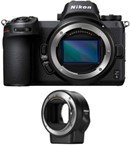
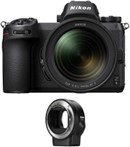
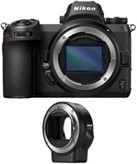
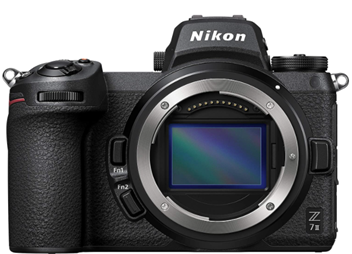
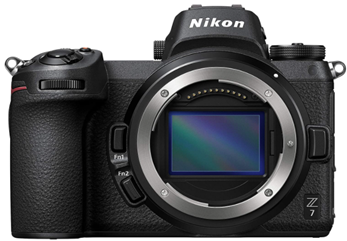
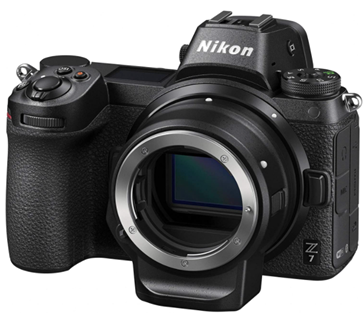
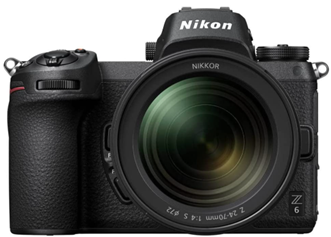
Nikon Z 7 Mirrorless Digital Camera:

Check on Amazon | Amazon India

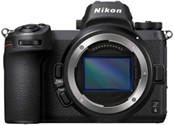
In the world of imaging, Nikon excels by presenting this Z7 mirrorless camera. It is equipped with a cutting-edge X system. It is an FX-format camera that boasts high-resolution output. The huge diameter design and a short 16 mm flange distance make the device compact yet powerful. Like several mirrorless cameras, the Z7 comes in a compact form factor. The light build and slim design ensure portability. Apart from that, it comes with weather sealing. The key aspects of this Nikon camera include its CMOS sensor, efficient image processing engine, and phase-detect AF system. The cameras ship with a battery, a charger, a neck strap, and cables. For wireless connectivity, it supports Bluetooth and Wi-Fi.

Features:

  • In the Z7 camera, the EXPEED 6 image-processing engine and 45.7 MP BSI CMOS sensor delivers excellent image quality.
  • The native sensitivity range is ISO 64-25600.
  • The built-in image processor is EXPEED 6.
  • The sensor comes with a cutting-edge phase-detect AF system. It uses 493 points and covers 90% of the image area.
  • For stabilizing photos and videos, the sensor is implemented with 5-axis vibration reduction technology.
  • The video recording takes place at UHD 4K resolution at 30p.
  • The camera uses an N-Log gamma profile and 10-bit HDMI output to present cinematic quality video.
  • There is support for an 8K Time-Lapse mode.
  • There are multiple screens and displays for simplicity of use.
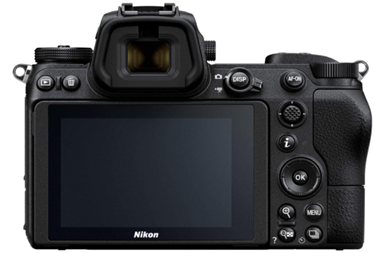
  • The 0.80x 3.6m-dot EVF with a fluorine coating and NIKKOR optics guarantees excellent clarity.
  • At the rear part, there is a 3.2-inch 2.1m-dot tilting LCD with a touchscreen interface.
  • The top comes with a dot-matrix OLED to let you rapidly check the settings.
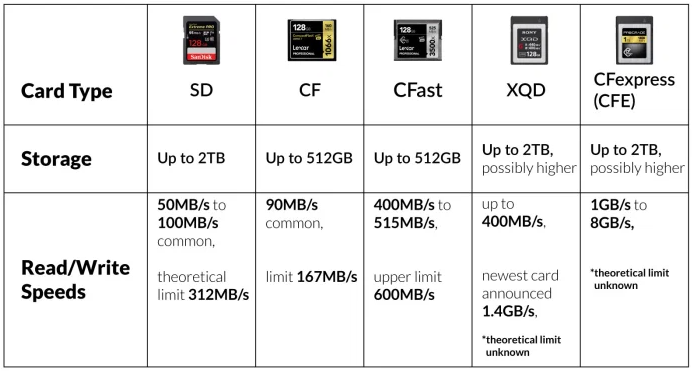
  • There is an XQD card slot for storage. It is compatible with CFexpress for offering faster speeds when needed.
Mirrorless Cameras with 10-bit Color: Table

Sr. No. Image Product Name Manufacturer Buy Now

1 Panasonic LUMIX GH5S Panasonic Check on Amazon
2 Canon Full-Frame Mirrorless Camera [EOS R] Canon Check on Amazon
3 Panasonic LUMIX GH5 Panasonic Check on Amazon
4 FUJIFILM X-T4 Fujifilm Check on Amazon
5 Sony NEW Alpha 7S III Sony Check on Amazon
6 Fujifilm X-T3 Mirrorless Digital Camera Fujifilm Check on Amazon
7 Panasonic LUMIX S5 Panasonic Check on Amazon
8 Panasonic LUMIX S1 Panasonic Check on Amazon
9 PANASONIC LUMIX S1H Panasonic Check on Amazon

9. PANASONIC LUMIX S1H:

Check on Amazon

Creativity is vital for cinematographers. This full-frame camera lets you explore creativity while photo capturing and video shooting. It presents widespread recording modes. With all its superior functionalities, the S1H is suitable for active filming outdoors. For that, you need to attach a drone or gimbal. The built-in sensor provides a broad dynamic range. Also, it provides a sharp and lifelike output at high sensitivity. With the inclusion of the L-mount system, you can connect various other accessories. Therefore, this lens mount system makes the S1H versatile. The internal stabilization works efficiently, and it eliminates shaky effects in the output. Both the 4K and 6K picture appears great without editing. The rugged design resists damage due to splash, dust, and other external factors. Therefore, the camera can work well outdoors, even during harsh conditions. Compared to DSLRs, it is quite lighter.

Features:

  • The latest 24.2 MP full-frame CMOS image sensor supports a dual-base ISO setting. It, therefore, provides excellent image quality even in dim light.
  • The noise is minimal at any sensitivity settings. During switching from a standard sensitivity to a higher one, there will be no noise degradation.
  • There is support for the 6K 10-bit video output and anamorphic modes.
  • V-log/v-gamut comes with 14+ stops for dynamic range. This range is found compatible with the Cinema VariCam. Hence, the camera can capture highlights as well as shadows.

8. Panasonic LUMIX S1:

Check on Amazon

Enhance your photography and videography talents with the Panasonic Lumix S1. It is a full-frame camera equipped with a 24.2MP CMOS sensor to present lifelike detail. One of its specialties is it supports a 96 MP high-resolution mode. In this mode, the sensor-shift technology can capture landscape views in very high resolution. Also, it can capture artwork photos with fine details when you mount the camera on a tripod. The rugged design of the camera prevents damage due to splash, dust, and other environmental factors. This kind of design makes the camera perfect for use outdoors, in harsh conditions. To achieve high-quality stereo output, simply connect an XLR microphone to this camera. When you make this connection, you can also control volume; record lip-synched vocals, low cut, high gain, pro-level videography functions.

Features:

  • With its ultra-fast frame rates, it is possible to create a theatrical slow-motion video at 60 fps in 4K resolution. At FHD resolution, the frame rate is 180 fps.
  • In slow motion, the camera can capture fast-moving subjects.
  • It comes with precise AF in dim light and low-contrast scenes.
  • Low-Light, Low-Contrast Scenes
  • The sensor tuning with optimization and higher sensitivity offers precise autofocus. The accuracy of autofocus is excellent both in dim and bright light conditions.
  • There is a standard focal macro zoom F4 l-mount (24-105mm). It can allow you to connect Lumix Series full-frame digital mirrorless cameras with L-mount support.
  • XLR Microphone Adaptor DMW-XLR1
  • The 4K HDR video recording is supported at 50p/60p and 24/30p (for unlimited recording).
  • There is support for Hybrid Log-Gamma (HLG) and HDR mode.

7. Panasonic LUMIX S5:

Check on Amazon

With the 10-bit video, 4K 60p, the S5 camera expands your creative vision. The key qualities include image stabilization and high precision autofocus. The advanced autofocus can detect the head, face, eyes, and body for capturing subjects with accuracy. The robust body construction is resistant to splash and dust. There is the availability of sealing and some other protections for buttons, seams, and few other parts. The menu interface is simple to use and intuitive. Moreover, the time-lapse video creation works flawlessly. The included sigma EF adapter is compatible with every EF lens. There are ample ports and connectivity options. To shoot in low light, you can pair the camera with a fast lens. Both for cinematic video and dynamic still photography, this Panasonic camera is ideal.

Features:

  • The slow-motion video recording is possible at FHD resolution at 180 fps.
  • The 96 MP high-resolution mode can capture content in high quality.
  • The dual native ISO settings minimize the noise in high sensitivity.
  • V-Log/V-Gamut comes with a 14+ stops dynamic range.
  • For stabilizing output, it comes with a 5-axis Dual Image Stabilization feature. It can enable 6.5-stop for slow shutter speed.
  • The controls of body image stabilization and lens image stabilization provide 6.5 stops correction. Hence, videos appear steady and clear.
  • There is a facility of unlimited recording in the 4K/30p 4:2:0 8-bit with efficient heat dissipation.
  • The Lumix S5 comes with 4:3 Anamorphic support.
  • Live View Composite mode can quickly create an outstanding image from multiple live shots.

6. Fujifilm X-T3 Mirrorless Digital Camera:

Check on Amazon

The ease of use and high-performance image and video output makes the X-T3 famous. All the features vital for your photography and videography demands are instilled in this camera. The tough magnesium alloy construction makes it durable yet flexible to use. It can resist harsh weather conditions. 100 fps guarantees smooth display. It lets you accurately spot subject movements as well as focus positions. All over the frame, the 21.6 M phase-detection AF works fast and accurately. Furthermore, there is a 3.5 mm headphone jack to connect accessories like an HDMI device or a microphone. This jack makes the X-T3 mobile for outdoor videography.

Features:

  • The latest 26.1MP X trans CMOS 4 sensor comes with an X processor 4 image-processing engine.
  • Both 4:2:0 10 bit internal SD card recording and 4:2:2 10bit HDMI output are possible at 4K/60p resolution.
  • The 3.69M dot OLED EVF comes with 0.75x magnification.
  • Compared to FujiFilm, the low-light phase detection limit is increased from 1EV to 3EV.
  • There are 16 film simulation modes for blackout-free burst shooting.
  • Various video formats supported are H.264/MPEG-4 AVC and H.265/HEVC. They provide enhanced data compression.

5. Sony NEW Alpha 7S III:

Check on Amazon

The images captured and videos recorded with this Sony camera have several unique qualities. The output boasts great stability, excellent color reproduction, and accurate focusing. Its innovatively designed image sensor and the image processing engine offer improvements in color reproduction. Even in still images, the output appears lifelike. The key features include 4:2:2 color sampling and 10-bit depth. They provide great flexibility in image grading, compositing, and post-processing. With the dynamic range ISO, fast autofocus, powerful image stabilization, and full-frame video performance, the Alpha 7S III is ideal for movie makers. Moreover, it comes with hybrid AF for precision. The menu and camera settings are designed with the latest features to provide responsiveness.

Features:

  • For low-light focusing, there is a high-sensitive AF. This AF can shoot in dim light conditions up to EV-615.
  • The maximum ISO limit is 4,09,600.
  • The 4K recording is at 120p.
  • It comes with a 15-stop dynamic range.
  • To encompass a major part of the frame, the AF uses on-sensor phase detection and intelligent tracking. Each bit of the precise AF performance is revealed with the help of E-mount lenses.
  • There is a vari-angle 1.44 million-dot17 3.0-type touchscreen. It comes in a side-open design to allow flexibility while positioning. When mounted, it offers excellent visibility.
  • In the image stabilization segment, there is a Σ shaped graphite heatsink. It efficiently dissipates heat and therefore extends the recording time.

4. FUJIFILM X-T4:

Check on Amazon

The essence of creating outstanding photos and videos is to be at the right place at the proper time. It suggests that the handheld images should appear realistic no matter the type of scene. The X-T4 camera is equipped with 5-axis in-body image stabilization (IBIS). It offers a maximum of 6.5 stops for excellent image stability. Even for fast-moving action scenes, the output images appear sharp and stable. The vari-angle LCD has a touchscreen interface. It can be adjusted to be visible from different positions. So, you will observe a superior quality monitor. Moreover, this screen offers easy-to-use and quick controls. Now you can capture and shot with comfort and stability. This is because X-T4 contains an ergonomic grip. What’s more, the powerful battery capacity lets you capture and shoot continuously for hours.

Features:

  • The X-T4’s latest mechanical shutter is the most robust and fastest in the X series of FujiFilm.
  • The mentioned shutter can capture images at 15 fps, and it is rated for 300,000 actuations 2.
  • You can switch to movie mode with a turn of a switch.
  • The X-T4 can record FHD 240p super slow-motion videos and also DCI 4K/60p.
  • It can directly record F-Log 10-bit color footage in the card.
  • The AF-C subject tracking can function in low-light conditions up to the lowest limit of -6EV.

3. Panasonic LUMIX GH5:

Check on Amazon

When it comes to professional-quality photos and videos, the GH5 is a decent choice. Its 20.3 MP micro four-thirds sensor without a low-pass filter can capture sharp images. These images depict a high dynamic range without artifacts. The magnesium alloy is used throughout body construction. This material is freeze-proof up to 10°. Besides, the camera body is splash-proof and dust-proof. On each dial, button, and joint, there is weather sealing for extra protection. Ample connectivity options let you connect various compatible accessories.

Features:

  • With 4K video capture, the GH5 can record smooth 4K 60P/50P video with 4: 2: 2 10 bit 4K internal video recording.
  • The 6K photo and 4K post focus can record photos up to 60 fps.
  • The 4K Photo mode @ 60 fps can freeze any fast-motion scene.
  • Supported video formats are MP4 and MOV.
  • The 5-axis dual-image stabilization can correct all lenses. It can also correct classic lenses devoid of O. I. S.
  • The image stabilization removes blur, body shake, and lens shake effect in both photos and videos.
  • With Relay mode, you can substitute a full card with an empty card. This mode offers a high storage capacity.
  • Connectivity ports include a 3.5 mm audio port, a USB 3.0 port, and an HDMI port.
  • It comes with twin SD card slots that are UHS-II U3 compatible.
  • Other connectivity facilities include a DMW XLR1 microphone adaptor and a Type-A HDMI terminal with a cable lock.

2. Canon Full Frame Mirrorless Camera [EOS R]:

Check on Amazon

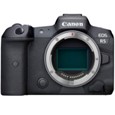
The Canon EOS R can work as a multimedia camera system. The advanced full-frame image sensor and lens mount make this happen. Equipped with the latest RF lens mount, this camera was designed to explore the maximum benefit of lenses from a new series and corresponding optical features. When changing the lens, you need not worry about lens damage due to dust. This is because there is a sensor cover to keep away dust. Overall body is lightweight, compact, and with ergonomic design. You gain easy access to photos through built-in WiFi. Moreover, the Canon app can work as a remote. So, you can easily control various features from a distance. For creating selfies with friends and family, Canon has included a shutter flip-out LCD. Simply touch the subject on LCD to shoot with focus. There are various custom settings for control buttons to suit your style. Initially, you may take some time to familiarize yourself with the settings and button layout. Overall, it is easy to use and control.

Features:

  • The EOS R system comes with a huge 54mm diameter and a short distance between the sensor and rear lens element. These features make the lens design compact and enhance image quality.
  • 12-pin connection facilitates quick communication between this camera and every RF lenses. Consequently, it allows super-fast AF, image optimization, and image stabilization.
  • Use the 3 optional mount adapters to connect any EF/EF-S lens. Whichever lens you connect, there is no compromise in the performance and quality.
  • One of the mount adapters contain a customizable control ring/
  • The drop-in filter type mount adapter allows you to use a variable ND filter or a spherical polarizing filter with EF/EF-S lenses.
  1. Panasonic LUMIX GH5S:

Check on Amazon

Obtain high-quality professional video and photo performance with the GH5S. The efficient sensor and ultra-sensitive video capture are two of the vital aspects of this Panasonic camera. You can connect the Panasonic Lumix Image App through Bluetooth 4.2. When connected, it supports video record start/stop and remote shutter release. Once you have completed shooting, it automatically transits to a fast WiFi 5 GHz connection. Consequently, it allows the transfer of RAW and JPEG files to a mobile device. The magnesium alloy in the construction makes the camera durable. This material is freeze-proof, splash-proof, and dust-proof. There is weather sealing on each dial, button, and joint. The box contains the Lumix GH5S camera, a cable holder, a battery, a battery charger, a shoulder strap, a hot shoe cover, a BNC conversion cable, and a USB connection cable. You also get a 6K/4K photo quick start guide and owner’s manual.

Features:

  • The 10.2 MP micro four-thirds sensor and a large photoreceptive surface for each pixel offers an ultra-wide dynamic range;
  • At the output, the videos have low noise and high sensitivity with the dual native ISO.
  • In 10-bit format, the recordings it supports are 30p/25p/24p 4:2:2 and 30p/25p/24p 4:2:2.
  • In 8-bit format, the recordings it supports are 4K: 60p/50p 4:2:0 and internal SD card capture of 60p/50p.
  • There is support for C4K 60p VFR and Full HD recording up to 240 fps.
  • The interchangeable lens camera system has 4K Anamorphic mode. It offers excellent performance, mobility, and durability.
  • Connectivity options are 3.5mm headphone jack, 3.5mm mic jack having line input, USB-C 3.1 port, HDMI Type-A port, 2.5mm remote socket, and TC in/out/synchro terminal.
  • A flat or neutral log gamma curve snaps pictures with a broad dynamic range. It is perfect for color grading.

  • The HDR mode replicates dark as well as bright portions of an image.
Concluding Note:

The cameras with 10-bit color video support show rich, dynamic output. The fine details and wide range of color data let the output appear realistic.
Fujifilm X -E4 vs Nikon Z50 vs Sony A6400 vs Canon EOS M6 Mark II

This post compares the Fujifilm X -E4 vs Nikon Z50 vs Sony A6400 vs Canon EOS M6 Mark II, which are all mirrorless cameras targetting a similar customer base.
Also Read: List of the Best 1 inch Sensor Cameras
If you have been a die-hard fan of top-notch imaging solutions and checking out the excellent options for working with world-class cameras, it would always be a good idea to check out different camera options and weigh them against one another. We thought of comparing four of the popular cameras you would find quite interesting and appealing from that perspective. We will go through a spec comparison and basic review of Fujifilm X-E, Nikon Z50, Sony A6400, and Canon EOS M6 Mark II.

Fujifilm X -E4 – An overview

Check on Amazon

The Fujifilm X -E4 belonged to the rangefinder-style mirrorless camera and was announced in January 2021. The camera features the same configuration offered on the previous generation X-T4 – few aspects being 26.1MP X-Trans CMOS 4 APS-C sensor and X-Processor 4. You can get access to a very richer color rendering and a wider dynamic range. The ability to handle different lighting conditions should be one of the prime factors that should ideally go in its favor and provide you access to far greater performance enhancements. The camera also provides you access to an 8 fps continuous shooting with the mechanical shutter, 20 fps rate with an electronic shutter, or a 30 fps rate with an electronic shutter and a 1.25x crop, and it supports DCI/UHD 4K video recording at up to 30 fps and Full HD recording up to 240 fps. The ultra slow-motion playback offered by the camera should further make it one of the highly desirable products ever for recreating your imagination.

A few key specifications of the camera would include:

  • 26MP APS-C sensor with X-Trans color filter array
  • 3.0″ tilting touchscreen with 1.62M dots (can tilt up 180 degrees)
  • 2.36M-dot electronic viewfinder, 0.62x magnification
  • DCI 4K/30p, 4:2:0, 8-bit internal video recording (4:2:2 10-bit over HDMI out)
  • Full HD video at up to 240p, for 10x slow motion
  • 8 fps burst shooting with the mechanical shutter (20 fps with electronic)
  • CIPA rated to 460 shots per charge (NP-W126S battery pack)

Pros

  • A refreshing JPG image quality
  • A stronger video performance that lets you shoot in full HD and 4K
  • USB type C compatibility
  • Great battery life

Cons

  • No in-body stabilization
  • Poor autofocus performance
In fact, the camera poses direct competition to the showstoppers such as Nikon Z50, the Sony a6400, and the Canon EOS M6 Mark II. Let us compare the Fujifilm X-E4 with the other three cameras and find which among them meet your needs.

Nikon Z50 – The Sneak Peek

Check on Amazon

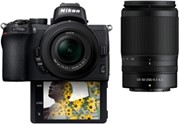
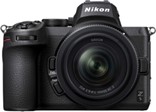
The Nikon Z50 is indeed an excellent option for the best camera experience if you are trying to check out the best APS-C-based 20.9 MP camera. The device does come with the APS -C sensor with the Z mount. If you are not a professional photographer, you will find the Nikon Z50 one of the most reliable options for attracting new users. The camera also comes with an optional bundle of two lenses for the sensor size, viz a 16-50mm F3.5-6.3 collapsible standard zoom and a 50-250mm F4.5-6.3 telephoto zoom. The built-in image stabilization should be another premium factor that would further make it one of the most reliable options ever. The image quality is quite a decent option for all your needs in terms of RAW performance and a great deal of JPG files. The high-end dynamic range offered by the camera should further make it one of the highly reliable options ever. It is indeed an impressive option for your needs in terms of a mid-price camera. The user interface and general aesthetics should be what would make it an extremely reliable camera ever.

Some of the specific parameters offered by the camera can include:

  • 20.9MP CMOS sensor
  • Twin control dial interface
  • Up to 11 fps shooting with AE/AF, 5 fps with live view
  • 4K video at up to 30p
  • 2.36M-dot OLED viewfinder
  • The rear touchscreen tilts up by 90° or down by 180°
  • Single UHS-I SD card slot in the battery compartment
  • Bluetooth-enabled Wi-Fi (via Snapbridge app)
  • Creative Picture Control effects

Pros

  • A perfect image and video quality
  • A reliable dynamic range
  • Rapid switching between stills and videos
  • Simple WiFi image transfer.

Cons

  • Autofocus may be erroneous at times
  • Battery life may not be up to the mark

Sony A6400 – A Concise Review

Check on Amazon

The Sony A6400 is rated to be one of the excellent options for the best 24 MP camera. You can get access to an interchangeable lens with an APS-C sensor. The lightweight construction and easier documentation are a few of the factors that would make it one of the exciting choices ever for almost all your expectations. The camera does come equipped with the real-time tracking autofocus functionality that should further enhance your experience. The new Bionz X processor powers the Sony A6400. That should ideally make it one of the highly reliable options for better autofocus and faster bootup functionality. The customizable My Menu functionality can prove to be yet another exciting option ever. In fact, the major strength of the Sony A6400 lies in the fact that it does provide you access to the best implementation of autofocus technology. A few other advantages that you stand to gain with the Sony A6400 include lack of overheating when shooting 4K video, a touchscreen that doubles up as a great option for selfie-and compatibility with every type of photography can further make it a great choice.

Some of the prime features offered by the Sony A6400 can include

  • 24MP APS-C sensor
  • 425-pt phase-detection AF system with Real-Time Tracking
  • Tilting screen, 180° up, 90° down
  • 2.36M-dot electronic viewfinder
  • New Bionz X processor
  • ISO range from 100-32000
  • 11fps burst shooting (8fps with silent shutter)
  • Interval shooting option added
  • 4K/30p video capture
  • Mic input, no headphone output
  • 410 shots per battery charge (per CIPA)
  • Wi-Fi with NFC and Bluetooth

Pros

  • A leading autofocus functionality
  • A great JPG and RAW image compatibility
  • Water sealing capability
  • A detailed 4K video, slow-mo 1080p
  • The screen tilts up 180°, or down almost 90°

Cons

  • Ergonomics leaves a lot to be desired
  • Autofocus can be quite confusing
  • Lack of in-body stabilization.

Canon EOS M6 Mark II – A unique review

Check on Amazon

Suppose you are checking out the best options offered by an extraordinary camera that tends to provide you access to a far higher degree of performance enhancement. The 32.5 MP mirrorless camera with the APS – C sensor should further make it one of the most reliable cameras and a better fit among the four cameras discussed here. The Canon EOS M6 Mark II comes with a proprietary Dual Pixel design that should further enhance your experience. The Eye Autofocus capabilities offered by the Canon camera would further make it one of the highly reliable options for almost all the expectations that one may have. The 4K video recording provided by the Canon camera should be yet another worthy option for achieving a better degree of performance enhancement. It can shoot 4K at 30p or 25p, which should ideally make it one of the high-end options. The small kit performance offered by the camera should actually make it one of the reliable options ever for most of the experiences.

A few of the specifications offered by the camera can include

  • 32.5MP Dual Pixel AF CMOS sensor
  • 14 fps continuous shooting
  • 30 fps Raw Burst mode (with AF Tracking and pre-shot buffering)
  • UHD 4K video at 30p and 25p with no crop / full width
  • 3.0″ rear touchscreen flips up by 180° or down by 45°
  • Optional electronic viewfinder
  • USB 2.0 port with Type-C connector

Pros

  • Excellent image quality in terms of JPG and RAW
  • A perfect direct control option
  • A great burst speed performance
  • Compact, yet feels quite great in your hands
  • A simple user interface

Cons

  • 4K videos do not have many details
  • It needs a high power charger
  • Eye detection autofocus

The Spec Comparison: Fujifilm X -E4 vs Nikon Z50 vs Sony A6400 vs Canon EOS M6 Mark II

Having understood the prime features offered by each of the cameras, here are the specifications offered by each of the cameras –
Features Fujifilm X-E4

Check on Amazon

Nikon Z50

Check on Amazon

Sony A6400

Check on Amazon

Canon EOS M6 Mark II

Check on Amazon

Lens Mount FUJIFILM X Nikon Z Sony E Canon EF-M
Camera Format APS-C (1.5x Crop Factor) APS-C (1.5x Crop Factor) APS-C (1.5x Crop Factor) APS-C (1.6x Crop Factor)
Sensor Resolution Effective: 26.1 Megapixel (6240 x 4160) Actual: 21.51 Megapixel Effective: 20.9 Megapixel (5568 x 3712) Actual: 25 Megapixel Effective: 24.2 Megapixel (6000 x 4000) Actual: 34.4 Megapixel Effective: 32.5 Megapixel (6960 x 4640)
Aspect ratio 1:1, 3:2, 16:9 1:1, 3:2, 16:9 3:2, 16:9 1:1, 3:2, 4:3, 16:9
Sensor Size 23.5 x 15.6 mm 23.5 x 15.7 mm 23.5 x 15.6 mm 22.3 x 14.9 mm
Image file format JPEG, Raw JPEG, Raw JPEG, Raw JPEG, Raw
Image stabilization No Digital (for videos) No Digital (for videos)
ISO range Auto, 160 to 12800 (Extended: 80 to 51200) Auto, 100 to 51200 (Extended: 100 to 204800) 100 to 32000 (Extended: 100 to 102400) Auto, 100 to 25600 (Extended: 100 to 51200)
Shutter speed Mechanical Shutter 1/4000 to 3600 Seconds 1/4000 to 4 Seconds in Program Mode 1/4000 to 30 Seconds in Aperture Priority Mode 0 to 60 Minutes in Bulb Mode Electronic Shutter 1/32000 to 900 Seconds 1/32000 to 4 Seconds in Program Mode 1/32000 to 30 Seconds in Aperture Priority Mode Electronic Front Curtain Shutter 1/4000 to 30 Second Bulb Mode Time Mode Electronic Shutter 1/4000 to 30 Second Bulb Mode Time Mod Electronic Front Curtain Shutter 1/4000 to 30 Seconds Bulb Mode Mechanical Shutter 1/4000 to 30 Second Bulb Mode Electronic Shutter 1/16000 to 30 Second
Exposure Modes Aperture Priority, Manual, Program, Shutter Priority Aperture Priority, Manual, Program, Shutter Priority Aperture Priority, Auto, Manual, Program, Shutter Priority Aperture Priority, Manual, Program, Shutter Priority
Continuous shooting Mechanical Shutter Up to 8 fps at 26.1 MP for up to 105 Frames (JPEG) / 18 Frames (Raw) Up to 5 fps at 26.1 MP for up to 458 Frames (JPEG) / 24 Frames (Raw) Up to 4 fps at 26.1 MP for Unlimited Frames (JPEG) / 28 Frames (Raw) Up to 3 fps at 26.1 MP for Unlimited Frames (JPEG) / 34 Frames (Raw) Electronic Shutter Up to 20 fps at 26.1 MP for up to 32 Frames (JPEG) / 17 Frames (Raw) Up to 10 fps at 26.1 MP for up to 81 Frames (JPEG) / 18 Frames (Raw) Electronic Shutter Up to 30 fps at 16.6 MP for up to 29 Frames (JPEG) / 17 Frames (Raw) Up to 20 fps at 16.6 MP for up to 79 Frames (JPEG) / 17 Frames (Raw) Up to 10 fps at 16.6 MP for up to 153 Frames (JPEG) / 18 Frames (Raw) Up to 11 fps at 20.9 MP Up to 5 fps at 20.9 MP Up to 4 fps at 20.9 MP Up to 30 fps at 8 MP Up to 11 fps at 24.2 MP for up to 46 Frames (Raw) / 116 Frames Up to 14 fps at 32.5 MP for up to 23 Frames (Raw) / 54 Frames (JPEG) Up to 30 fps at 18 MP
Focus Mode Auto and Manual Focus Auto and Manual Focus Auto and Manual Focus Auto and Manual Focus
Focus Mode Continuous-Servo AF (C), Manual Focus (M), Single-Servo AF (S) Automatic (A), Continuous-Servo AF (C), Full-time Servo (F), Manual Focus (M), Single-Servo AF (S) Automatic (A), Continuous-Servo AF (C), Direct Manual Focus (DMF), Manual Focus (M), Single-Servo AF (S) Continuous-Servo AF (C), Manual Focus (M), Single-Servo AF (S)
Autofocus points Phase Detection: 425 Phase Detection: 209 Phase Detection: 425 Contrast Detection: 425 Phase Detection: 5481
Wireless connectivity Bluetooth Wi-Fi Bluetooth Wi-Fi WiFi Bluetooth Wi-Fi
Connectivity USB Type-C (USB 3.2 Gen 1), HDMI D (Micro), 3.5mm Microphone USB Micro-B (USB 2.0), HDMI D (Micro), 3.5mm Microphone 3.5mm Microphone, HDMI D (Micro), Wired Remote Port, USB Micro-B (USB 2.0) USB Type-C (USB 2.0), HDMI D (Micro), 3.5mm Microphone

The Concluding Thoughts

Well, that was a complete comparison for the best experience you can gather for your needs in an enhanced experience in enjoying the best imaging ever. Comparing the best four competing cameras should ideally help you get access to a very advanced performance ever. The spec comparison shared here should ideally help you get access to a far more advanced performance ever. Check out those specifications and get access to a great degree of performance as per your preferences.

List of the Best 1 inch Sensor Cameras – Hybrid and Bridge Options

There are plenty of important specifications of cameras, and one of the important ones is the sensor. Whether you want to buy a camera for casual use or professional use, you need to be aware of all the important specifications. A camera sensor is basically a piece of hardware present inside which captures light and transfers it into digital signals. These signals ultimately result in image post-processing by an imaging chip. The sensor size determines the amount of light it utilizes to produce an image. In this article, the discussion revolves around 1-inch sensor cameras. These types of sensors are currently famous among a wide range of compact cameras. Those pocket-friendly cameras that use these sensors can present excellent quality images. The aperture allows sufficient light to hit the sensor. The high-quality image is due to the sensor size as well as the implemented technology. Some of the recent versions of these cameras have sensors that capture more light than the standard sensors. Let us go through the details of the best 1-inch sensor cameras:

Our list of the Best 1 inch Sensor Cameras:

Sr. No. Image Product Name Manufacturer Buy Now
1 PANASONIC LUMIX FZ1000 Camera (Black) Panasonic Buy from Amazon
2 Canon PowerShot G9 X Mark II Digital Camera Canon Buy from Amazon
3 PANASONIC LUMIX ZS100 Camera Panasonic Buy from Amazon
4 Sony RX100 IV Digital Camera with 1-inch Sensor Sony Buy from Amazon
5 Canon PowerShot G7X Mark III Camera Canon Buy from Amazon
6 PANASONIC LUMIX ZS200 Camera Panasonic Buy from Amazon
7 Canon PowerShot G5 X Digital Camera Canon Buy from Amazon
8 Canon PowerShot G3 X Digital Camera Canon Buy from Amazon
9 PANASONIC LUMIX FZ2500 Camera, 1 Inch High Sensitivity Sensor Panasonic Buy from Amazon

9. PANASONIC LUMIX FZ2500 Camera, 1-Inch-High Sensitivity Sensor:

PANASONIC LUMIX FZ2500

Check on Amazon

The Panasonic LUMIX FZ2500 is a 4K (Hybrid) point and shoot camera. It comes with a 1-inch high-sensitivity sensor that provides impressive details of the images and videos. There is a wide range of practical functions implemented. These functions help professional videographers and video enthusiasts. Both for formal and informal occasions, it can work flawlessly. The users can now hold this point and shoot camera for long hours without feeling discomfort. There is a quick-stability grip that reduces fatigue in the hands. The front and rear dual dials are appropriately placed to allow immediate control of aperture and shutter speed. The components like lever and button provide an intuitive interface. All the included controls are comfortable to use for both photo capturing and video recording. A swivel touch display is present at the rear. It allows the user to set focus and also allows releasing of the shutter quickly.

Features:

  • The 1-inch 20.1 MP MOS sensor comes with high sensitivity to offer impressive details at low and high ISOs. It can support ISO up to 25600.
  • In this point and shoot camera, a bright 20x LEICA VARIO-ELMART F2.8-4.5 lens is included.
  • The OLED live viewfinder comes with a contrast ratio of 10,000:1 to provide excellent visibility. This makes sure the framing is perfect even under direct sunlight. This viewfinder comes with 0.74x magnification and support for a wide viewing angle.
  • Implementation of a dual-ring control system allows you to zoom and perfectly focus the view.
  • The 3 Fn lens barrel buttons and ND filter ensures smooth video operation.
  • The DFD (Depth From Defocus) quickly measures the distance to the subject to attain an ultra-fast focus lock. This is possible even at high burst shooting speed.
  • Various connection terminals included are 3.5mm headphone jacks, 3.5mm microphone jack, and 2.5mm jack which is useful for remote control.

8. Canon PowerShot G3 X Digital Camera:

Canon PowerShot G3

Check on Amazon

The PowerShot G3 X is an ideal companion for capturing scenes indoors and outdoors. Once you are completed capturing photos and videos, you can easily share them to cherish the memories forever. The rugged, compact design makes sure it is very convenient to carry. With the help of a 1-inch CMOS sensor, this Canon digital camera gives high-quality images. This sensor is capable o zoom up to 25x. You can capture whatever you see –wildlife, wonderful landscapes, low-light images, etc. There would be no blurs in the output images. Whether you are merely enjoying your favorite outdoor activities near your home or traveling to amazing places, this PowerShot G3 X camera is the best device to carry along.

Features:

  • The high-sensitivity 1-inch CMOS sensor maintains a perfect balance between high image quality and high sensitivity.
  • The sensor can gather more light in less time and make sure there are no blown-out highlights. It implies that the output shows better detail and excellent tonal quality.
  • This sensor is compatible with low and high ISO speeds ranging from 125-12800.
  • This camera unit comes with an f/2.8-5.6 optical zoom lens.
  • With the help of a high signal-to-noise ratio, there is minimal noise and distortion in the output. The dynamic range is instrumental in bright areas.
  • This camera allows you to shoot at the same brightness, aperture, ISO settings, and shutter speed as EOS. It does this by allowing you to change the exposure index standard.
  • Implementation of Canon’s innovative Intelligent IS makes sure this camera can capture steady, clear images even in dim light. There is no need to use a tripod.
  • The built-in LCD screen can rotate up 180° allowing you to capture selfies perfectly.
  • The facility of Wi-Fi connectivity allows you to share your captured images and videos.
  • The built-in NFC facilitates touch communication with compatible Android devices.
  • With the help of the Camera Connect App, the G3X camera supports remote shooting.

7. Canon PowerShot G5 X Digital Camera:

Canon PowerShot G5 X

Check on Amazon

The Canon PowerShot G5 X comes with a 1-inch sensor and viewfinder for the best photography and videography experience. It is designed in classic black color designs. The hassles certain photographers face with some cameras is that the control buttons are not properly aligned. In this digital camera, the dedicated dials are situated around the camera. They allow you to customize the settings conveniently. The easy-to-use controls included are a front dial, an exposure compensation dial, a control ring, and a control dial. Using any of them, you can quickly personalize the shooting settings. With the facility of built-in Wi-Fi and NFC, you can effortlessly transfer images and videos to compatible smartphones and tablets. To enhance the convenience of users, the camera is equipped with a capacitive touch screen monitor.

Features:

  • The combination of a 1-inch, 20.2 MP high-sensitivity CMOS sensor, and DIGIC 6 image processor makes up the Canon HS SYSTEM. It helps to deliver excellent performance in low-light conditions.
  • This sensor can work at a high ISO up to 12800.
  • With the help of Canon HS SYSTEM, the captured image contains impressive detail and minimal noise in highlight and dark areas.
  • The G5X digital camera can capture 1080p Full HD video that appears lifelike. The recorded videos can be played on HDTV through the HDMI output.
  • It can record at a speed of up to 60 fps for presenting detailed output in MP4 format.
  • A 2.36 million dot electronic viewfinder is included. It allows the camera to create, set, and capture high-quality motionless images and videos.
  • The 3-inch LCD touch screen is a multi-angle capacitive display. It comes with a resolution of 1.04 million dots that convey sharp, clear readouts.
  • With its touch interface, you can instantly share the captured images and videos.

6. PANASONIC LUMIX ZS200 Camera:

PANASONIC LUMIX ZS200

Check on Amazon

The Panasonic Lumix ZS200 is a 4K digital camera perfect for photographic enthusiasts. This camera can capture all the moments in exceptional detail and color irrespective of distance and lighting conditions. The built-in sensor ensures high-quality images in any lighting condition. The device comes in a sleek design and pocket-friendly size that allows you to carry it to different places easily. With the exceptional15x zoom capability, you can easily capture the far views. Now you can grab the trajectory of action in a sequence photo. You just need to choose frames that you want to compose. You can skip to the desired sequence because this camera detects motion and sets a marker. WiFi connectivity helps you to share the captured shots and videos to your mobile devices. The USB charging facility is available. The 3 micro-HDMI type D ports and a USB 2.0 micro-B port help you to connect a few more favorite devices.

Features:

  • A 1-inch MOS sensor presents high-quality imaging in dim light conditions. To deliver outstanding low-light performance, this sensor supports ISO up to 12800
  • With the help of a hybrid O.I.S. (Optical Image Stabilizer) and LEICA DC VARIO-ELMAR lens, this camera delivers vivid, colorful photos. These photos contain minimal image artifacts.
  • A 2,330K-dot live viewfinder is included.
  • The 3-inch LCD comes with a touch interface. This display shows all the readings clearly, even under bright sunlight.
  • This camera performs video recording in 4K QFHD resolution (3840 x 2160).
  • With the help of Lumix 4K PHOTO and 4K Post Focus equipped with internal focus stacking, photo recording is performed at up to 30fps. You can easily set the preferred focus points after capturing the photo.
  • The filter mode and scene mode allows you to add creativity.
  • The shutter priority mode and traditional aperture mode defocus the background and eliminate motion blur.

5. Canon PowerShot G7X Mark III Camera:

Check on Amazon

For those people who are fascinated with vlogging, the G7X Mark III is a highly suitable device. It is alternatively famous as a digital 4K vlogging camera. It helps you to upgrade your photo capturing and vlogging skills. Designed compactly, it can be easily carried along wherever you go. This camera can easily create still images and stunning videos. This is because it is equipped with wonderful zoom power and 4K video capabilities. The captured images and recorded videos can be easily shared on social media. With the live streaming facility, you can instantly share important moments. You get to use the live streaming services for video shooting.

Features:

  • The combination of 1-inch, 20.2 MP high-sensitivity (stacked) CMOS sensor and DIGIC 6 image processor deliver excellent quality images in low light conditions. The operation is fast and smooth.
  • This camera can record 4K video at up to 30p frame rate.
  • It can record Full HD videos at approx. 120 fps. This allows you to record sharp shots, slow motion playback, and more.
  • The 3-inch touchscreen LCD with 180° of inclination allows you to add creativity when framing any shot.
  • The stereo mini jack is compatible with external microphones. It helps you when you are recording in noisy environments.
  • A USB Power Adapter PD-E1 is available. It allows charging this camera through USB; no need to remove the battery.
  • The HDMI output enables you to choose movie output without any details shown on your screen.
  • The Vertical Video feature allows you to combine camera angles easily and shot length. This helps you to create unique videos that are more useful for vlogging enthusiasts.

4. Sony RX100 IV Digital Camera with 1-inch Sensor:

Sony RX100 IV DigitalCheck on Amazon

When you want to record videos in 4K resolution or create creative movies in 4K quality, this digital camera is one of the best choices. It is possible to shoot videos in slow motion. The quality of captured images is always stunning. Inside this pocket-friendly camera, a 1-inch Exmor RS CMOS sensor is included. It is a backside illuminated sensor. It enhances the possibilities for image shooting. This sensor makes sure there is no pixel binning or line skipping during shooting. One of the best things about the RX100 IV camera is it can record short videos of up to a few minutes and record 4K movies. The recorded clips can be directly transferred to the SD memory card.

Features:

  • The built-in Exmor RS CMOS sensor can be used to record 40x super slow motion and fast motion videos at high-speed of up to 1/32000 sec.
  • An F18- F28 ZEISS Vario-Sonar T lens is included. It comes with a focal length of 24-70 mm.
  • In this digital camera, an XGA OLED Tru-Finer viewfinder is included.
  • There is support for a dual record of 168 MP photos when shooting movies with auto settings.
  • With the help of the fast, Intelligent AF, this Sony camera can capture crucial moments and transitory scenes at very high speed.
  • The AF comes with an auto-focusing system that allows contrast detection at high speed and with high accuracy.
  • A sharp 3-inch LCD is present. It is a multi-angle display that accurately shows the readouts.
  • The built-in WiFi and NFC help you connect the camera to smartphones and tablets through the camera app.

3. PANASONIC LUMIX ZS100 Camera:

PANASONIC LUMIX ZS100

Check on Amazon

The aforementioned 4K digital camera is a perfect point-and-shoot camera for professional photographers and travelers. It combines the 4K photo and 4K video capturing the ability to deliver stunning output. With the help of 4K video capability, you can easily capture swift-moving action scenes in high quality. The 30 fps burst feature allows you to capture printable 4K photos. In this Panasonic camera, the key component is the MOS sensor. It helps the camera to capture color, detailed and clear images in any light conditions. There is the implementation of advanced image processing for enhanced performance. The noise in the output is significantly reduced. As a result, there is an improvement in sensitivity, resolution, color, and gradation performance. The USB charging is supported. The 3 micro-HDMI type D ports and a USB 2.0 micro-B port help you to connect a few more favorite devices.

Features:

  • Inside the configuration of this point and shoot camera, a 1-inch 20.1 MP MOS sensor is included. It comes with a 10x zoom capability.
  • The built-in LEICA DC VARIO-ELMARIT lens comes with a focal length in the range of 25-250 mm.
  • A hybrid OIS conveys bright, colorful photos with minimum image artifacts.
  • The camera contains a high-resolution 1,166k-dot electronic viewfinder.
  • This camera performs video recording in 4K QFHD resolution (3840 x 2160).
  • With the help of Lumix 4K PHOTO and 4K Post Focus equipped with internal focus stacking, photo recording is performed at up to 30fps. You can easily set the preferred focus points after capturing the photo.
  • The 3-inch LCD screen comes with a touch interface. It can precisely show the readouts even in sunlight.
  • A lens-mounted control ring is included in conveying exposure control similar to DSLR.
  • Wi-Fi connectivity allows you to connect this camera to your mobile device.

2. Canon PowerShot G9 X Mark II Digital Camera:

Check on Amazon

When you require a compact travel camera, you can try the G9 X Mark II camera. It comes in elegant silver color. This digital camera is the advanced version of Canon’s G9 X entry-level premium compact camera. Due to the lightweight and sleek design, you can pack it in a travel bag and carry it along. It is a good alternative to bulky DLSR cameras. It gives the user the flexibility to manually control settings such as aperture, shutter speed, and ISO. Moreover, it supports the conventional auto point and shoot modes. Certain creative settings usually found in a point and shoot cameras are present in this Canon camera. The combination of ultra-slim design and high-performing features makes sure your investment is justifiable. Some of the supplementary aspects of this Canon camera are a quick auto-focus feature, dual-sensing image stabilization, auto shooing mode, improved subject tracking, and efficient battery life. Wireless features like Wi-Fi, NFC, and Bluetooth are included. The pack contains this camera, a battery, a charger, a hand strap, and a quick start guide.

Features:

  • The Canon PowerShot G9 X Mark II comes with a 1-inch, 20.1 MP high-sensitivity CMOS sensor.
  • The built-in DIGIC 7 image processor offers noise reduction at low and high ISO settings. This helps it to capture detailed, sharp images in any lighting conditions.
  • This process equips the camera with exceptional detection and enhanced tracking capabilities. So, your subject stays locked during the action.
  • Picture Style allows you to select from 8 presets to adjust the final picture.
  • A time-lapse movie function offers an amusing creative option. It allows you to compress long videos into shorter, engaging videos. These videos would boast great resolution and lifelike clarity.
  • A 3-inch capacitive touch screen LCD is included to show the readouts accurately.
  • This digital camera is compatible with Android and iOS smartphones and tablets.
  1. PANASONIC LUMIX FZ1000 Camera (Black):

LUMIX FZ1000Check on Amazon

The black FZ1000 from Panasonic is a 4K point and shoot camera that captures wonderful imagery. Now you can capture all the beautiful scenes around you and cherish them as lifelong memories. Whether for travel or professional use, this camera is a great companion. It lets you dive into the world of 4K video. This camera can capture lifelike, ultra-high resolution images in flawless motion. With the help of the included lens and 1-inch sensor, this camera can produce superb quality images. Irrespective of the external lighting conditions, the image quality stays uncompromised. You can easily choose images or videos in 4K resolution. A sufficient amount of light generates excellent defocus with a low depth of field. Consequently, it presents stunning images at the output.

Features:

  • A 1-inch 20.1 MP MOS sensor is included. It provides background defocus effects and enhanced lowlight capturing ability.
  • With the 16x optical zoom, this camera can bring any far scene very close.
  • The videos are recorded at 4K resolution, and the 8MP video frame helps capture stunning photos.
  • It comes with an ultra-sharp and bright Leica DC lens with a 25-400 mm range.
  • The hybrid OIS with 5 axis correction conveys single-handed video shooting convenience. All the recorded videos are free from blurs and lags.
  • The built-in Wi-Fi helps you to perform remote imaging control through the Panasonic image app. You can use a tablet or a smartphone as a remote controller to set the focus, zoom, and record from a far distance.

Concluding Note:

The 1-inch sensor cameras are well-known for stunning quality photo capturing and video recording abilities. The output from these cameras is unaffected by the lighting conditions. It is possible to capture far scenes with lifelike clarity.

Also Read:

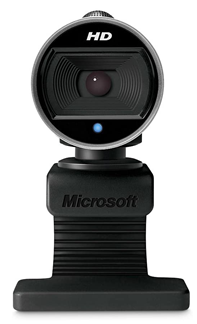
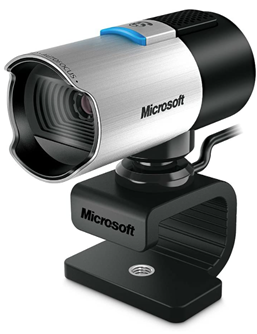
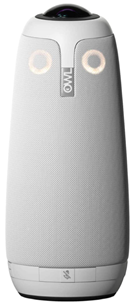
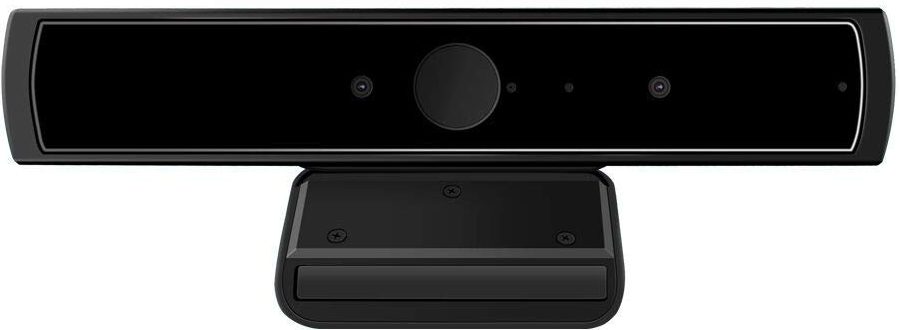
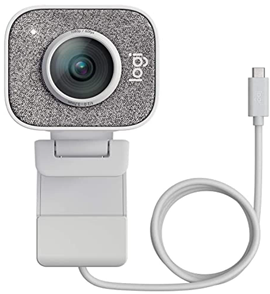
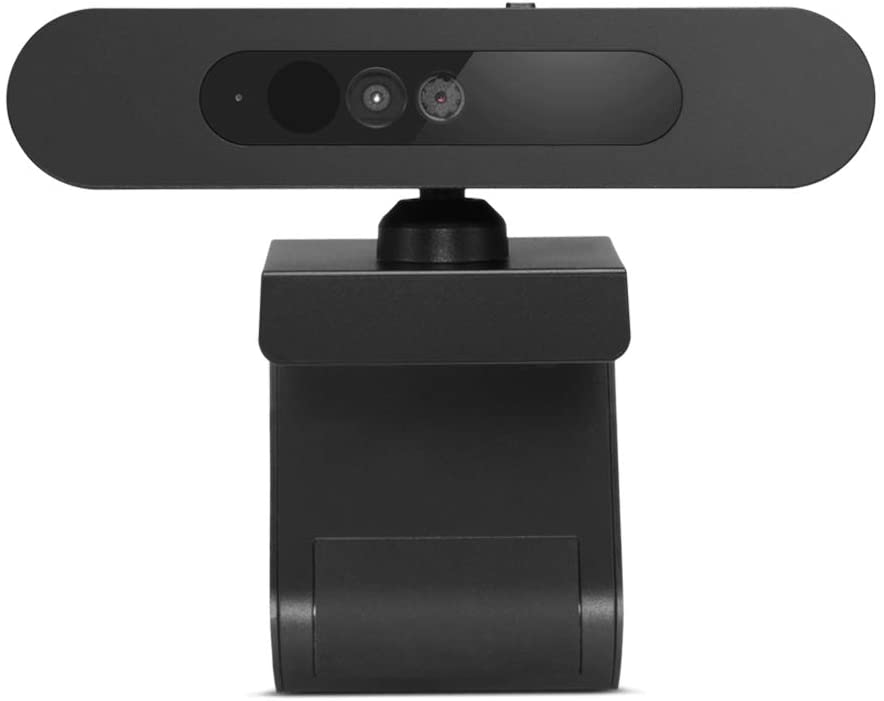
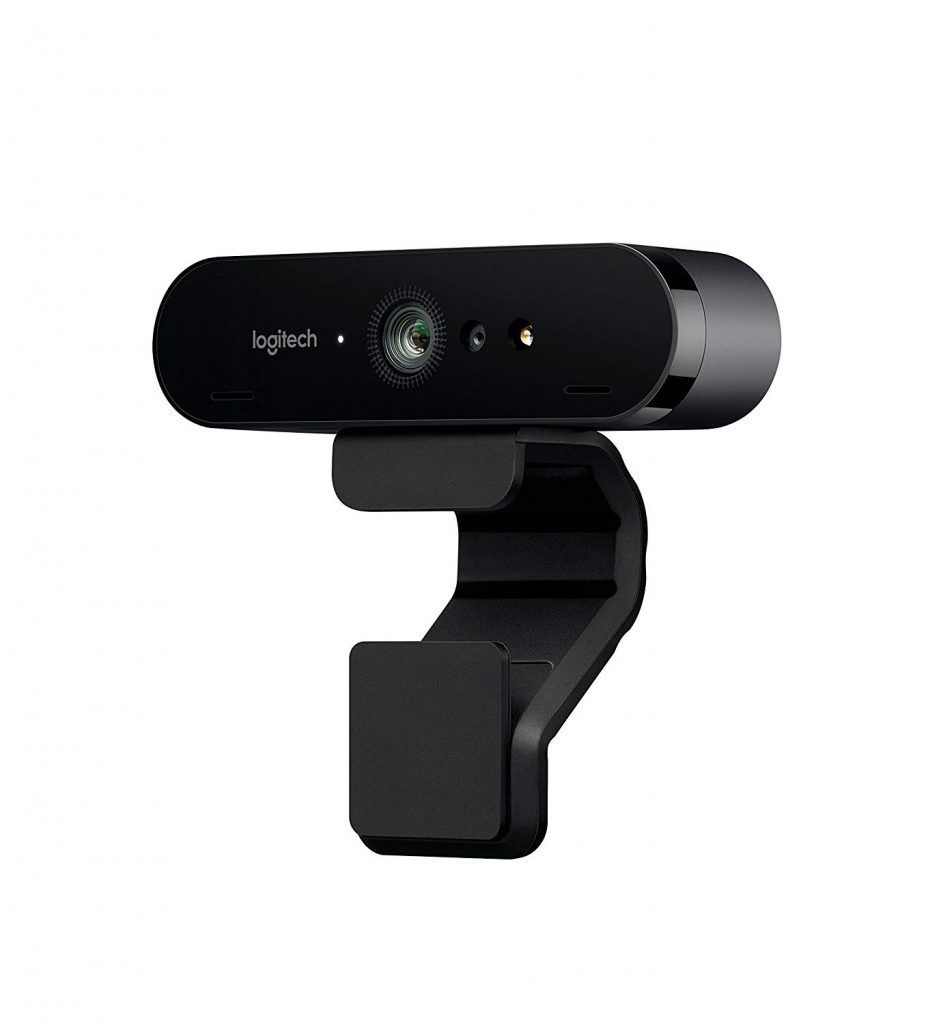
Best Windows Hello Webcams

List of Canon EF-M Mount Cameras with Budget Options

The two latest lens mount systems for mirrorless cameras from Camera are the time-tested EF mount and the latest RF mount. For Canon interchangeable lens cameras, there are 3 types of lenses, i.e., EF, EF-S, and EF-M. When you want to choose a lens for your camera, make sure it is compatible with your camera. There are plenty of Canon cameras whose lenses are compatible with EF-mount. The Canon EF-S lens mount is a derivative of the EF lens mount designed for a subset of Canon digital single-lens reflex cameras with the smaller APS-C-sized image sensors. It was released back in 2003. Cameras with the EF-S mount are backward compatible with the EF lenses and, as such, have a flange focal distance of 44.0 mm. Such cameras, however, have more leeway, allowing lens elements to be closer to the sensor than in the original EF mount. Only Canon cameras released on or after 2003 with APS-C sized sensors support the EF-S mount. Canon has variously described the “S” in EF-S as expanding from either a “Small image circle” (the lens extends a smaller image circle than normal EF lenses to match the sensor) or “Short back focus” (the smaller mirror used in APS-C cameras also allows optical elements to protrude extra into the camera body, lessening the minimum distance between the sensor and the rear element of the lens). Combining a smaller sensor and smaller back focal length distance heightens the possibilities for wide-angle and extremely wide-angle lenses. Such lenses designed for the EF-S mount can be made smaller, lighter (containing less glass), faster (larger aperture), and less expensive.
Related: Best Budget Canon Prime Lenses for EF & EF-S DSLR
The EF-mount comes with enough diameters to mount full-frame lenses. The depth is not shallow. Therefore, it offers compatibility with several lenses. With enough depth, the EF-mount delivers power and information to the connected lens. The transmission of information enables the camera to control the particular lens. Let’s get familiar with those Canon cameras that use the EF-mount:
Sr. No. Image Product Name Buy Now
1 Canon EOS M200 Check on Amazon
2 Canon EOS M100 Check on Amazon
3   Canon EOS M50 Mark II Check on Amazon
4 Canon EOS M50 Check on Amazon
5 Canon EOS M10 Check on Amazon
6 Canon EOS M6 Check on Amazon
7 Canon EOS M6 Mark II Check on Amazon
8 Canon EOS M5 Check on Amazon
9 Canon EOS M3 Check on Amazon
10 Canon EOS M2 Check on Amazon
11 Canon EOS M 18 MP Camera Check on Amazon

11. Canon EOS M 18 MP Camera:

Check on Amazon

Capture outstanding quality Full HD video with the EOS M camera. With a big APS-C sized sensor, this camera provides shallow depth-of-field. The same helps attain outstanding quality cinematic results. It equips the camera with the ability to capture quality, clean video irrespective of the light conditions. Incorporating the optional mount adapter EF-EOS M, this device is compatible with the broad family of EF lenses from Canon. Hence, you can use this mount adapter for exploring your photography creativity. The LCD always delivers a clear output with enough brightness. This is due to the coating on its surface that minimizes damage due to fingerprint marks and smudges. Between the LCD and resin-coated cover of the monitor, the body is solidly constructed. It reduces reflections. So, the display stays visible without glare from all angles. This Canon camera ships with an EF-M 22 mm STM lens.

Features:

  • The 18MP CMO sensor is perfect for magnification or cropping out detailed parts of the composition. This sensor captures images with great clarity.
  • The DIGIC 5 image processor and CMOS sensor work to provide incredible details in images. No need to use any artificial light sources.
  • There is support for shooting in various frame rates and recording sizes.
  • It allows easy control of exposure and focus.
  • For a prolonged recording without a break, the camera automatically splits files with a size greater than 4 GB.
  • The Movie Servo AF enables constant autofocus tracking of mobile subjects during video recording.
  • The stepping motor of the lens offers quiet and smooth continuous AF.
  • With the built-in stereo microphone, the camera captures high-quality audio.
  • The wind filer reduces wind noise while recording outdoors.
  • The audio recording levels are controllable both manually and automatically. There are up to 64 unique levels.
  • The attenuator decreases audio clipping.

Specifications:

Sensor Type APS-C CMOS
Sensor size 22.3 x 14.9 mm
Maximum ISO 12800 ISO
Maximum FPS 4.3
Effective Pixels 18 MP
Image processor DIGIC 5
Focus Mode Auto, Manual
Aperture Range F3.5 – F5.6
Aspect Ratio 30200 AM
Image Format JPEG, RAW, EXIF 2.3, DPOF
Other Focus Features Contrast Detect AF
Shutter Speed 1/4000 sec
Color Filter Primary RGB
Continuous Shots Yes, 4.3 fps
External Flash Yes
Display type 3 inches TFT LCD
Display resolution 1,040,000 dots
Video Quality HD
Video Format MPEG-4, H.264
Video frame rates 30 fps
Audio Video Interface Video Output NTSC, PAL
Connectivity HDMI, USB
Card type supported SD / SDHC / SDXC / Compatible with UHS-I
Weight 0.57 lbs
Dimensions 1.27 x 4.28 x 2.62 inches

10. Canon EOS M2:

Check on Amazon

The EOS M2 comes in a lightweight and slim design for everyday use. Its body is so compact that the weight is lesser than the EOS M camera. With superior quality image and video output, this device provides a pleasant shooting experience. The latest Hybrid CMOS AF II autofocus system leads to a smooth and fast AF response. Due to wide compatibility, you can equip the camera with various EF-M lenses. This aspect determines how the camera helps to widen your photography talents. More than 60 EF/EF-S lenses can be used with the included EF-EOS M mount adapter. Another appealing aspect is the camera can support a complete line-up of Speedlite and GPS Receiver GP-E2. This will be useful for those looking for ease of use, high-quality images, lightweight design, and wide compatibility. The use of quality materials makes its body robust and durable. For proper video recording, you would need a high-speed SD card. A microphone jack is also included.

Features:

  • The DIGIC 5 digital image processor works on 14-bit image processing. It provides excellent color reproduction and fine detail.
  • The Hybrid CMOS AF II system comes with an extended phase-difference AF area.
  • For sharing, the camera can be connected to smartphones through WiFi.
  • The built-in WiFi functionality enables the user to connect the camera with live-view from different angles remotely.
  • There is a ‘Camera Connect’ smartphone app and an ‘EOS Remote’ app to enable remote Live View shooting.
  • These apps allow you to browse, delete and transfer images.

Specifications:

Sensor Type APS-C CMOS sensor
Sensor size 22.3 mm
ISO sensitivity range 100-25600
Continuous shooting 4.6 fps
Effective Pixels 18 MP
Image processor DIGIC 5
Focus Mode Autofocus, Face Detection, AF Tracking, Manual, and Touch AF
Aspect Ratio 3:2, 4:3, 16:9, 1:1
Image Format RAW, JPG, RAW + JPG
Shutter Speed 1/4000sec
Continuous Shots 4.6 fps
Exposure Modes Program, Aperture-Priority, Shutter-Priority, Manual, Scene modes, and Program Variable
Display type 3 inches LCD
Display resolution 1,040,000 dots
Video resolution 1920×1080 Full HD
Video fps 30, 25, 24
Stereo sound Yes
Connectivity HDMI, USB
Card type supported SD / SDHC / SDXC
Battery type LP-E12 Lithium-ion
Battery life 230 shots
Weight 0.52 lb
Package Dimensions 12 x 10 x 10 inches

9. Canon EOS M3:

Check on Amazon

In the compact form factor, the EOS M3 packs in superb EOS performance. It feels sophisticated to create still, and mobile image captures for various applications. You can use the EOS M3 for capturing landscapes, portraits, travel scenes, etc. Though the body is compact, there are zero compromises with the features and performance a photographer or moviemaker needs. For those who want a portable mirrorless camera with an interchangeable lens, manual controls, and a large sensor, this camera is a suitable pick. Apart from being compatible with various EF M lenses, the M3 is also compatible with a wide range of EF and EF-S lenses. There is an optional shoe-mounted type EVF. There are multiple EOS controls for ease of use. Enjoy capturing selfies with the 3-inch rotatable LCD monitor. It facilitates rapid focusing and provides smooth menu navigation.

Features:

  • The two vital components are the 24.2MP APS-C sized CMOS sensor and a DIGIC 6 image processor. Both of them help the camera to capture high-resolution images and record full HD movies.
  • The ISO range is 100–12800 (can be expanded to H: 25600).
  • With the hybrid CMOS AF III system, the camera offers precise and fast focusing. This kind of focusing is helpful for still images and videos.
  • There is a movie control (manual) available. It can let the camera create Full HD movies at 24p and 30p in the MP4 format.
  • The exposure compensation dial and front dial provide comprehensive manual control. These dials offer customized settings for ease of use.
  • Its LCD monitor can rotate up to 180° upwards and 45° downwards.
  • Using the built-in NFC and WiFi, you can transfer images and videos to compatible devices.
  • The captured output can be viewed on an HDTV or shared on social networking platforms.

Specifications:

Sensor Type APS-C CMOS sensor
Sensor size 22.3 x 14.9 mm
Maximum ISO 12800 ISO
Image processor DIGIC 6
Effective Pixels 24.2 MP
Focus Mode AF, MF Manual Focusing, 5x / 10x Magnification Possible, AF + MF
Aspect Ratio 30200 AM
Image Format JPEG, RAW 14-bit Canon Original, RAW + JPEG Simultaneous Recording Possible
Lens compatibility Canon EF-M Lenses, Canon EF Lenses including EF-S Lenses
Shutter Speed 1/4000 sec
Continuous Shots 4.2 Shots/sec
External Flash Yes
Display type 3 inches TFT LCD
Display resolution 1,040,000 dots
Video Quality Full HD
Video Format DCF 2.0, MP4, MPEG-4 AVC / H.264
Video frame rates 30 fps
Audio format MPEG-4 AAC-LC
Connectivity HDMI, USB
Card type supported SD / SDHC / SDXC / Compatible with UHS-I
Battery Lithium-ion
Weight 0.81 lbs
Dimensions 4.37 x 1.75 x 2.68 inches

8. Canon EOS M5:

Check on Amazon

Several applications demand you to capture sharp images. The 24.2MP CMOS sensor in the EOS M4 produces a dynamic, sharp image with low noise. What makes the M5 famous in the market is the support for ultra-fast autofocus. The autofocus functionality quickly adjusts the parameters like aperture, shutter speed, picture mode, etc. For ease of adjustment, there are intuitive controls and various customizable dials included. For the price, this is an outstanding mirrorless camera with all the required features. There are no lag times noticed when using the camera with compatible EOS lenses. The focus is responsive when you adjust it with the EVF or touchscreen. While recording a video, you can touch the LCD to employ focus on a particular portion of the image.

Features:

  • There is a tiny AF frame and more than 24M phase-difference sensors. They allow this camera to smoothly and rapidly lock your subject. Also, they provide sharp and accurate focus.
  • The camera can capture at speed up to 7fps. The speed is 9fps with AF Lock.
  • 5-axis Digital Image Stabilization reduces blur and other adverse effects on the output.
  • Attaching a combination IS-compatible lens allows the pairing of Optical IS with Digital IS. Thus, the shaky effects are reduced in the output.
  • There is the availability of an OLED electronic viewfinder.

Specifications:

Sensor Type APS-C CMOS sensor
Sensor size 22.3 x 14.9 mm
ISO sensitivity range 100 – 25600
Image processor DIGIC 7
Effective Pixels 24.2 MP
Focal length Equivalent to 1.6x the focal length of the lens
Aspect Ratio 3:2
AF points Max. 49 AF points
AF working range EV -1 – 18
Image Format JPEG, RAW 14-bit Canon Original, RAW + JPEG Simultaneous Recording Possible
Lens compatibility EF and EF-S lenses compatible via Mount adapter EF-EOS M
Shutter Speed 30-1/4000 sec (1/3 stop increments), Bulb
Continuous shooting 9 shots/s
External Flash Yes
Display type 3.2 inches TFT LCD
Display resolution 1,620,000 dots
Video Quality Full HD
Viewfinder type 0.39-type OLED Electronic Viewfinder
Card type supported SD / SDHC / SDXC / Compatible with UHS-I
Connectivity Hi-Speed USB (Micro USB connector)
Battery Rechargeable Li-ion Battery LP-E17
Weight 1.40 lbs
Dimensions 2.4 x 4.6 x 3.5 inches

7. Canon EOS M6 Mark II:

Check on Amazon

There is a blend of superior quality optics and compact design in this mirrorless camera. The EOS M6 Mark II camera is equipped with 32.5MP CMOS (APS-C) sensor and DIGIC 8 image processor. These two components facilitate shooting at a fast speed. Other than these, multiple other features combine to create sharp images and quality videos. The built-in AF system can work in regions even with the lowest light rating of EV -5. Consequently, the camera employs a proper focus on your subject in any light conditions. You can focus on a specific portion of the subject with a maximum of 5481 AF positions. These positions are manually selectable. The selection is accomplished with a wide range of selectable modes. Some of the useful modes are single-point AF, Zone AF, Face + Tracking AF, and more.

Features:

  • The DIGIC 8 image processor provides superior quality images at the output. No compromise in the quality, even if it is a dim environment.
  • The EVF-DC2 comes with a 2.36 M dot resolution. It provides nearly 100% coverage.
  • It is easy to choose focus points with touch & drag AF.
  • With the fast speed continuous and (H+) shooting mode, you would never miss a moment.
  • The maximum speed for continuous shooting is 14 fps. It is applicable for AE and AF tracking.
  • The maximum shutter speed of 1/16000 of second freezes fast-moving action scenes. It helps the camera capture random moments with great detail.
  • There is support for eye detection and face tracking in the dual-pixel CMOS AF. It provides quick and precise autofocus.
  • The aforementioned autofocus functionality is useful for recording 4K videos with perfection.

Specifications:

Sensor Type APS-C CMOS sensor
Sensor size 22.3 x 14.9mm
ISO sensitivity range 100 – 25600
Effective Pixels 32.5 MP
Image processor DIGIC 8
Focus length Equivalent to 1.6x the focal length of the lens
Image stabilization Optical Image Stabilizer on compatible lenses
Aspect Ratio 3:2
Shutter Speed 30 – 1/4000 sec (1/3 stop increments), Bulb
Continuous shooting 14 shots/sec
Viewfinder type Optional Electronic Viewfinder EVF-DC1, EVF-DC2
Lens compatibility EF and EF-S lenses compatible via Mount adapter EF-EOS M
Display type 3 inches TFT LCD
Display resolution 1,040,000 dots
OS compatibility Windows 10 / 8.1 / 7 SP1 Mac OS X 10.14 / 10.13 / 10.12
Connectivity USB Type C
Card type supported SD / SDHC / SDXC / Compatible with UHS-I
Battery Rechargeable Li-ion Battery LP-E17
Weight 0.90 lb
Dimensions 1.9 x 4.7 x 2.8 inches

6. Canon EOS M6:

Check on Amazon

There are multiple advanced features implemented in the lightweight, compact EOS M6. It is an interchangeable lens camera equipped with advanced sensors and phase detection. It feels comfortable in hands while capturing photos and recording videos anywhere. The focus is quick and precise to let you snap the desired shot—no worries about missing any special moment. You can view all the settings and output on the 3-inch LCD monitor. For convenient operation, this monitor is tiltable by 180° upward and 45° downward. This monitor is perfect for composing self-portraits as well as capturing pictures at low and high angles. With Bluetooth pairing, you can remotely manage this camera’s features from a compatible smartphone. Make sure the particular smartphone is installed with the free Canon Camera Connect app.

Features:

  • The 24.2MP APS-C sensor can capture huge images and movie files that are appropriate for magnification. Also, the sensor allows trimming for maintaining the proper resolution.
  • The DIGIC 7 image provides superior quality images. It speeds up the operation though the environment has dim light.
  • At the high ISO settings, the noise reduction retains the image sharpness.
  • The maximum speed of image capturing is 7 fps. This speed is adequate to capture numerous images of a fast-moving subject.
  • The captured images and videos can be shared through WiFi or NFC, or Bluetooth.
  • It is quite easy to adjust the brightness of the image with the exposure compensation dial.

Specifications:

Sensor Type APS-C CMOS sensor
Sensor size 22.3 mm
ISO sensitivity range 100-25600
Continuous shooting 4.6 fps
Effective Pixels 24.2 MP
Image processor DIGIC 7
Aspect ratio 3:2, 4:3, 16:9, 1:1
Focus length 1.6x
Focusing Brightness Range EV -1 – 18
Shutter Speed 1/4000sec
Continuous Shots 4.6 fps
Image format JPEG, RAW
Lens compatibility Canon EF – M lenses, Canon EF Lenses including EF-S lenses
Exposure Mode Manual
Display type 3 inches LCD
Video resolution 6000 x 4000 pixels
Viewfinder type Electronic
Battery type Lithium-ion 1040 mAh
Weight 0.90 lb
Dimensions 1.8 x 4.4 x 2.7 inches

5. Canon EOS M10:

Check on Amazon

Snap the perfect moment in outstanding quality with the EOS M10 camera. Its compact, lightweight design eliminates the hassles while using outdoors. This device is well-known for its compact design, versatility, and incredible quality output. The included sensor and image processor lets the camera capture detailed photos and videos. The output appears vibrant and lifelike even in dim light conditions. The EOS M10 is compatible with a wide range of compact EF-M lenses designed for the EOS M series. Also, the camera can work with a wide range of EF and EF-S lenses found in DSLR cameras by Canon. For ease of photo customization, an automatic setting is available, i.e., Creative Assist. The settings are automatically adjusted to provide you with desired image output. The focusing and video recording are simplified with the 3-inch LCD monitor. It boasts a user-friendly and smooth navigating experience.

Features:

  • The 18MP CMOS sensor captures plenty of details with minimal image noise.
  • The DIGIC 6 image processor and mentioned sensor help the camera capture the scenes in incredible detail. There is no adverse effect on output due to light conditions.
  • Adjustment of movie control provides you with Full HD movies at 24p and 30p.
  • The video recording format is MP4.
  • The Hybrid CMOS AF II conveys precise and fast autofocus.
  • The fast-moving action scenes are captured at continuous shooting speed up to 4.6 fps.
  • Creative Assist allows you to vary image settings easily. These settings are brightness, contrast, background blur, and filter effects.
  • Self Portrait mode is helpful for selfies. This mode smoothens skin tones and creatively blurs backgrounds.
  • The pop-up flashlights illuminate dark regions in a photo.

Specifications:

Sensor Type CMOS
Sensor size 22.3 mm
ISO sensitivity range 100 -12800
Continuous shooting 4.6 fps
Effective Pixels 24.1 MP
Image processor DIGIC 6
Aspect Ratio 30200 AM
Aperture range F3.5 – F6.3
Image Format JPEG, RAW 14-bit Canon Original, RAW + JPEG Simultaneous Recording Possible
Shutter type Electronically-controlled, Focal-plane Shutter
Continuous Shots 4.6 shots/sec
Lens compatibility Canon EF-M lenses, Canon EF lenses including EF-S lenses
Video resolution Full HD
Video format DCF 2.0, MP4, MPEG-4 AVC / H.264
Video frame rates 30p / 25p / 24p (Full HD), 1280 x 720 60p (HD) / 50p, 30p / 25p (SD 640 x 480)
Card type supported SD / SDHC / SDXC
Battery type Lithium ion
Weight 0.58 lb
Dimensions 4.25 x 1.37 x 2.62 inches

4. Canon EOS M50:

Check on Amazon

Every image you capture with EOS M50 will have minimum noise. You will always obtain clean, high-quality images in any light condition. The design of the sensor uses Dual Pixel CMOS AF that utilizes phase-detection autofocus. So, the entire operation is smooth and precise for both images and videos. The rotatable monitor streamlines the shooting experience. With the attachment inputs, the camera delivers stereo-quality sound. To explore your creativity, Canon equipped the device with plenty of shooting modes. Right out of the box, the camera begins taking perfect photos in auto settings mode.

Features:

  • The Canon EOS M50 contains a DIGIC 8 image processor and a 24.1MP APS-C CMOS sensor.
  • The combination of processor and sensor supports 4K UHD video recording @ 23.98 fps.
  • For slow motion recording, the resolutions supported are HD 720p (@120 fps) and HD 1080p (@60 fps).
  • An automatic lighting optimizer guarantees clean image output with low noise.
  • The maximum continuous shooting rate is 10 fps.
  • The native sensitivity range is expandable to ISO 51200 for use in low-light conditions.
  • Various wireless technologies supported are WiFi, Bluetooth, and NFC.
  • The combination IS 5-axis image stabilization minimizes vibration while recording.

Specifications:

Sensor Type APS-C CMOS
Sensor size 22.3 x 14.9 mm
ISO sensitivity range 100-25600
Image processor DIGIC 8
Effective Pixels 24.21MP
Exposure modes Manual, Automatic
Aspect Ratio 30200 AM
Image Format JPEG, RAW 14-bit Canon Original, RAW, JPEG Simultaneous Recording Possible
Lens compatibility Canon EF-M Lenses, Canon EF Lenses including EF-S Lenses
Shutter Speed 1/4000 – 30 sec
Shutter type Electronically-controlled, Focal-plane Shutter
Continuous Shots 4.2 Shots/sec
Built-in Flash Yes
Display type 3 inches TFT LCD
Display resolution 1,040,000 dots
Video resolution 6000 x 4000 pixels
HD support 1920 x 1080 pixels
Card type supported SD / SDHC / SDXC / Compatible with UHS-I
Battery type Lithium-ion
Weight 5.94 pounds
Dimensions 20 x 16 x 8 inches

3. Canon EOS M50 Mark II:

Check on Amazon

For casual photographers/videographers, vloggers, and content creators, the EOS M50 Mark II is the right choice. It comes with an EF-M 15-45 mm IS STM lens kit. The efficient CMOS sensor, autofocus, and live streaming abilities let you shoot beyond your vision. For most video recording and streaming applications, the image quality will be cinematic. Especially for non-professional applications, the built-in flash helps you. With the Canon app, you can effortlessly send the captured images and videos to compatible smartphones. With the EOS Webcam Utility, the camera can function as a high-quality webcam. Moreover, use the HDMI output from the camera to watch videos on an HDTV.

Features:

  • Capturing high-resolution images and recording 4K videos is possible with the 24.1 MP CMOS (APS-C) sensor. It can work in dim light conditions.
  • The DIGIC 8 image processor makes sure photos and videos appear detailed and sharp. These images will have low noise in any lighting condition.
  • The dual-pixel CMOS AF offers quick, precise autofocus instantly.
  • To capture the portion of a subject precisely, there is an advanced eye detection AF.
  • Video recording occurs at 4K 24p/25p.
  • The movie recording occurs at a frame rate of approx. 120 fps. Hence, the slow-motion playback appears smooth.
  • It is possible to compose and record from any angle with a huge variety-angle LCD touchscreen.
  • The Auto Lighting Optimizer upkeeps the detail and color in vivid portions of a photo. So, captured images appear lifelike.

Specifications:

Sensor Type APS-C CMOS
Sensor size 22.3 x 14.9 mm
ISO range Auto, 100-25600 (expandable to 51200)
Continuous shooting 4.6 fps
Effective Pixels 24.1 MP
Image processor DIGIC 8
Focus modes Continuous-Servo AF (C), Manual Focus (M), Single-Servo AF (S)
Focus length 1.6×
Image Format JPEG, Raw
Shutter Speed 1/4000 to 30 Seconds, Bulb Mode
Exposure Modes Aperture Priority, Manual, Program, Shutter Priority
Image stabilization Digital, 5-Axis (Video Only)
Built-in Flash Yes
Viewfinder Type Electronic
Viewfinder resolution 2,360,000 dots
Video resolution 6000 x 4000 pixels
Audio format AAC LC
Connectivity 3.5mm Microphone, HDMI D (Micro), USB Micro-B (USB 2.0)
Card type supported SD/SDHC/SDXC slot (UHS-I compatible)
Battery type LP-E12 Rechargeable Lithium-Ion 875 mAh
Weight 1 lb
Dimensions 9.1 x 9.1 x 9.1 inches

2. Canon EOS M100:

Check on Amazon

Enhance your photographic creativity with the EOS M100 camera. You can equip this camera with interchangeable lenses from EF, EF-M, and EF-S lines. The design is compact, and the user interface is beginner-friendly. However, there are ample manual options to let you capture the pro shots. It feels comfortable to hold with a rubber grip. The entire construction is sturdy yet lightweight. You can preview the scenes before capturing them on the 3.0-inch tiltable LCD touchscreen. With a simple tap, you can vary the settings. Capture selfies at different angles since the touchscreen can be rotated up to 180°.

Features:

  • The DIGIC 7 image processor, a 24.2MP (APS-C) CMOS sensor, and Canon optics work collectively.
  • The above features equip your pictures with sharpness, clarity, and vibrant colors, free from noise.
  • To quickly attain focus, the AF tracking locks on your subject.
  • Dual Pixel CMOS AF leads to quick and accurate autofocusing.
  • Sharing files and wireless operations are simplified with Bluetooth, WiFi, and NFC.
  • The camera can obtain GPS coordinates from a phone through Bluetooth.
  • To adjust various image settings, the Creative Assist feature and Self Portrait mode are available.

Specifications:

Sensor Type APS-C CMOS sensor
Sensor size 22.3 x 14.9 mm
Maximum ISO 25600
Effective Pixels 24.2 MP
Image processor DIGIC 8
Focal length 1.6×
Aperture Range F3.5 – F5.6
Aspect Ratio 30200 AM
Image Format JPEG, RAW CR2a, Canon 14-bit RAW Format, RAW, JPEG
Exposure modes Manual, Automatic
Image stabilization Lens-shift type & in-body 3-axis electronic image stabilization
Shutter Speed 1/4000 – 30 sec
Shutter type Electronically-controlled, Focal-plane Shutter
Video resolution 6000 x 4000 pixels
Movie format MP
Battery type Lithium-ion
Weight 0.67 lb
Dimensions 1.4 x 4.3 x 2.6 inches
  1. Canon EOS M200:

Check on Amazon

Are you looking for an easy-to-use camera compatible with EF-M mount? Well, the EOS M200 is the best fit for you with scope for creativity. You can use the creative filters to add vibrancy to images. If you wish to vary color tone and brightness, you can use the Creative Assist function. To explore various functionalities and settings, you can go through the visual guide. Capture perfect selfies from different alignments through a responsive touchscreen LCD. It can tilt 180° upwards and 45° downward. The flexibility to shoot at various angles explores your creativity. The autofocus works efficiently to track eyes and face. What’s more, the battery life is decent enough and does not demand frequent charging in a day.

Features:

  • The mirrorless EOS M200 has a 24.1MP image sensor.
  • The video output is always stunning as it works at 4K 24p/25p.
  • Dual Pixel CMOS AF is fast and precise. It comes with eye-detection AF.
  • With a wide autofocus area, the camera employs fast focusing for any subject.
  • The vertical video support, autofocus, and other creative features make the camera perfect for sharing files on social media.
  • Silent Mode ensures zero shutter sound. Hence, your subjects will stay free from vibrations and distractions.

Specifications:

Sensor Type APS-C CMOS sensor
Sensor size 22.3 x 14.9 mm
ISO range Auto, 100-25600
Effective Pixels 24.1 MP
Image processor DIGIC 8
Focal length 24-72 mm
Aspect Ratio 30200 AM
Exposure modes Program, Shutter priority, Aperture priority, Manual exposure, Scene Intelligent Auto, Hybrid Auto, Creative Assist, SCN, Creative Filters, Movie
AF points selection Automatic Selection, Manual Selection
AF System Points Up to 143 AF areas (auto selection)
Closest Focusing Distance 25cm (9.84 inches)
Image Format JPEG, RAW, RAW + JPEG, C-RAW, C-RAW+JPEG
Shutter Speed 1/4000 sec, Bulb
Continuous Shooting speeds 6.1 (One-Shot AF) / 4 (Servo AF)
Image stabilization Lens-shift type & In-body 3 axis electronic image stabilisation
Video formats MPEG-4, H.264
Movie Format MP4
Video resolution 6,000 x 4,000 pixels
Optical Zoom 3x
Connectivity Hi-Speed USB (USB Micro-B), HDMI (Type D)
Card type supported SD / SDHC / SDXC / Compatible with UHS-I
Battery type Rechargeable Li-ion LP-E12
Weight 1.4 x 4.3 x 2.6 inches
Dimensions 1.19 pounds

Concluding Note:

When it comes to capturing high-quality images and videos, you can use these Canon cameras. The EF-M mount in these devices offers versatility. In most lighting conditions, they ensure satisfactory results.

More on Canon:

List of Best Mirrorless Cameras with Dual SD Card Slots – Budget Options

Many of us want to opt for the best mirrorless cameras with dual SD card slots to overcome both performance and storage constraints! Compared to DSLRs, mirrorless cameras offer more advanced features. Generally, photographers of all levels can make the most of a compact mirrorless camera. The features like photo and video resolution, focus area coverage, image stabilization, etc., matter the most. However, the typical hassle some photographers face is inadequate storage space. Fortunately, mirrorless cameras are available with dual SD card slots. The apparent benefit of this feature is more storage space, i.e., no need to swap the cards frequently. Apart from that, there are other alluring benefits as listed below:
  • You can dedicate the first card for storing still images and another one for storing video files.
  • You can let the first card store RAW images and another one store JPEG images.
  • Both the cards can be used for the storage of duplicate data.
  • Superior “Burst Mode” performance.
The third one facilitates instant data backup. Most photographers are thrilled to purchase such cameras due to the instant backup benefit. The event/sports photographers and travel photographers mostly benefit the most from the dual card slot feature. Let’s browse with such mirrorless cameras that provide ample storage space:

Best Mirrorless Cameras with Dual SD Card Slots – Top Recommendations:

Sr. No. Image Product Name Manufacturer Buy Now
1 Fujifilm X-T3 Fujifilm Check on Amazon India

Check on Amazon

2 Sony a7 III Sony Check on Amazon India

Check on Amazon

3   Leica SL (Typ 601) Leica Check on Amazon India

Check on Amazon

More Options:

Sr. No. Image Product Name Manufacturer Buy Now
1 Canon EOS R6 Canon Check on Amazon
2 Panasonic LUMIX GH5 Panasonic Check on Amazon
3   Sony α7R IV Sony Check on Amazon
4 Panasonic LUMIX S5 Panasonic Check on Amazon
5 Panasonic LUMIX G9 Panasonic Check on Amazon
6 Fujifilm X-T2 Fujifilm Check on Amazon
7 Sony a9 II Sony Check on Amazon
8 Olympus OM-D E-M1 Mark III Olympus Check on Amazon

3. Leica SL (Typ 601):

Leica SL (Typ 601)

Check on Amazon

Eliminate your concern regarding low storage space while capturing or recording. The Leica SL camera comes with two SD card slots having UHS-II and UHS-I standards. These slots support a 4:2:0 8-bit sampling rate. It is possible to obtain the output across HDMI through 4:2:2 10-bit sampling. Apart from that, plenty of other video features are equipped inside to provide a superior quality recording. The Contrast AF system in this camera is asserted to be the fastest one than other full-frame cameras. It comes with 49 AF points to employ an accurate focus on the subjects. Hence, the photographers will never miss the critical moment. The aluminum body of this camera is weather-resistant—no worries when you use the camera in outdoor conditions. The 1.3-inch LCD screen at the top keeps you updated on various settings. You can access the built-in WiFi and GPS.

Features:

  • The image quality is always the best with Leica’s Maestro II processor and 24MP CMOS sensor.
  • Its sensitivity range is ISO 50-50000.
  • The sensor does not include a low-pass filter. So, it maximizes the detail of the image output.
  • There is support for the internal DCI 4K video recording @ 24 fps in Super35 mode.
  • The L-Log gamma is also supported for maximum dynamic range.
  • It comes with a 0.8x EVF.
  • The continuous shooting speed is up to 11 fps.
  • The 2.95-inch LED-backlit touchscreen has a 1.04M-dot resolution.
  • The slow-motion recording occurs at 120 fps in full-frame mode.
  • Available resolution options are standard HD (1280 x 720p) and Full HD (1920 x 1080p).
  • The 2GB internal buffer facilitates bursts of a maximum of 33 DNG files or unlimited JPEG files.

2. Sony a7 III:

Sony a7 III

Check on Amazon

What sets this Sony mirrorless camera well-known in the world of cameras is the powerful battery performance. It boasts the longest battery life. All the functionalities you expect from a mirrorless camera are found in this device. The body construction is made durable yet lightweight with the use of magnesium alloy. This material is resent at the top, rear, front, and internal frame. One of the superlative aspects is the Sony a7 III boasts what you see is what you get. It is an excellent feature one would like to have in a mirrorless camera. It is primarily useful for night photography because you can activate ISO while framing initially. To reduce the effect of reflection, the lens is equipped with the ZEISS T coating. There are 2 SD media card slots available. You can use one for storing still images and the other one for moving images. Take into account that the lower card slot is UHS-II compatible with providing quick write speed. It is possible to simultaneously record still or movie data to both the cards for instant backup. Alternatively, you can let one card store RAW images and another one store JPEG images.

Features:

  • The a7 III comes with the cutting-edge BIONZ X image processor and 24.2MP full-frame BSI image sensor to capture fine details.
  • The continuous shooting is possible @ 10fps in 4K HDR video format.
  • To precisely focus on the subject, the camera has 693 phase AF points.
  • Eye AF first detects the subject automatically and then focuses on its eye. In continuous AF mode, you can shoot a moving subject.
  • The 5-axis SteadyShot image stabilization supports 5 shutter speed levels. This system helps you shoot videos without shaky effects in high resolution.
  • The 3-inch LCD monitor has a 922K dots resolution.
  • For imitating the finest details, the a7 III comes with EVF having a resolution of 2.35M dots.
  1. Fujifilm X-T3:

    Fujifilm X-T3

    Check on Amazon

Everything is available, from the quality output to storage space as per the typical expectations in X-T3. It is a premium quality high-performance camera suitable for professional usage as well as fosters your creativity. It comes in a sturdy magnesium alloy construction. Therefore, the camera can work well in tough conditions. For a smooth shooting experience of the fast-moving subjects, there is a significant reduction in shutter distortion. Moreover, for an intuitive user experience, a bright touchscreen panel is included. It comes with high contrast and supports a wide viewing angle. To let the user make adjustments comfortably, the X-T3 has large buttons at the top and rear. Also, the command dials are available at the front and rear.

Features:

  • The sensor and image processing engine are, respectively, 26.1MP X-Trans CMOS 4 and X-Processor 4.
  • The camera supports 4: 2: 0 10-bit recording and 4K movie recording in the internal SD card.
  • The video output can be 4K/60p 4: 2: 2 10-bit HDMI.
  • All over the frame, there are 2.16M phase-detection pixels.
  • The phase-detection limit in the low-light condition is -3EV.
  • The OLED viewfinder comes with 0.75x magnification and 3.69 M-dots resolution.
  • Video formats supported are H.264/MPEG-4 AVC and H.265/HEVC (suitable for efficient data compression.)
  • Simultaneously, you can save video as backup or carry out 4K/60p recording in internal SD card when observing the 4K/60p footage.
  • The display has a refresh rate of 100fps ad a lag time of 0.005 seconds.

8. Olympus OM-D E-M1 Mark III:

Olympus OM-D E-M1 Mark III

Check on Amazon

The beginners benefit from the portability and ample storage space provided by the E-M1 Mark III. It comes in a lightweight and compact design for ease of use anywhere. The operation is seamless with the compact M. Zuiko PRO lenses. Wherever you are, you can capture and shoot instantly. The efficient image stabilization system assists the camera in capturing outstandingly sharp stills and videos—no need to carry your tripod because the entire camera system stays stable during the operation. The plethora of advanced features aids you in accomplishing even the most challenging circumstances for shooting. Despite coming in a micro four-thirds package, the camera provides hi-res output. If you want, you can capture slow shutter speed photos. For that, no need to use neutral density filters or a tripod. Furthermore, the camera can load up multiple images shot handheld for creating a deep zone wherein everything is in focus. The magnesium alloy construction is weather-sealed. It is dustproof, splash-proof, and freeze-proof.

Features:

  • The continuous shooting speed is 60 fps for S-AF mode and 18 fps for C-AF tracking.
  • There is a silent electronic shutter to choose from among 121 focus points.
  • For focusing on any subject, the camera has contrast detection and phase-detection AF.
  • A joystick is available for rapid selection of the AF area when viewing through the viewfinder. The supported zoom type is extended optical zoom.
  • The compatible mountings are Micro Four Thirds.
  • The hi-res mode provides you with extremely detailed 50MP images. This kind of output is suitable for capturing architectural scenes and landscapes.
  • Names of exposure controls are manual, program, aperture priority, and shutter priority.

7. Sony a9 II:

Sony a9 II

Check on Amazon

When it comes to excellent image quality and high-speed performance, use the Sony a9 II. It packs in the fastest 24.2 MP1 stacked Exmor RS CMOS sensor (35mm full-frame) belonging to the world’s biggest sensor manufacturer. Primarily, this mirrorless camera is devised for professionals associated with photojournalism and sports photography. They will admire the unparalleled performance of this device. There are dual UHS-II SD card slots available. Real-time tracking is the advanced technology that implements artificial intelligence. It leads to persistent tracking of moving subjects while shooting still images or movies. Moreover, eye AF works in real-time to sense and process eye data. It tracks the eye of the subject with great precision. The box packs in a battery, a power cord, a charger, a cable protector, a USB cable, a strap, an eyecup, and shoe caps.

Features:

  • The continuous shooting occurs at up to 20 fps with Auto Focus mode, at 60 fps with Auto Exposure tracking, and up to 10 fps using a mechanical shutter.
  • Various features of the 4K recording are interval shooting, 2.4x oversampling, S&Q Motion, and full pixel readout without binning.
  • The OLED True-Finder is blackout-free. It covers the entire frame and provides extremely luminous output.
  • There is a facility to link a voice memo (.wav format) to photo files. You can use voice-to-text conversion for IPTC data.
  • Wireless connectivity options include 2.4 or 5 GHz Wi-Fi, secure FTP transfer, Bluetooth, and Ethernet (speed up to 1 Gbps).
  • Other features are an electronic viewfinder, image stabilization, anti-flicker, and telephoto lens.

6. Fujifilm X-T2:

Fujifilm X-T2

Check on Amazon

For capturing vibrant photos and shooting in a lifelike manner, the X-T2 is a great choice. It houses the X Processor Pro engine that boosts response times. It leads to faster AF and reduced noise in the output. Especially for movie shooting, this camera is a great companion. This is because there are film simulation modes available. Hence, movie shooters can explore their creativity—no need to involve in the prolonged post-production. There are dual SD card slots available for enhanced data storage space. Both these slots are compatible with UHS-II standards. Therefore, the write speeds they offer are excellent. These slots can be used for backup, sequential recording, and more. You can store the recorded RAW files in one slot and JPEG files in another. Moreover, you can dedicate one of the slots for the storage of videos. The body also features a quality LCD screen. It can rotate in 3 directions. While shooting in landscape mode, you can tilt it vertically. When shooting in portrait mode, you can tilt it upward only. Furthermore, the screen stays aligned on the optical axis of the lens. This is why shooting at different angles is possible. The magnesium alloy body is lightweight yet sturdy. It is resistant to moisture and dust.

Features:

  • The 24.3MP X-Trans CMOS III APS-C sensor decreases ripple and false colors for enhancing image quality. There is the absence of an optical low-pass filter.
  • Video recording is possible at Full HD and 4K (@30p/25p/24p). For 4K shooting, you need to use a card compatible with UHS-II or higher.
  • Continuous shooting is possible at up to 11 fps through a mechanical shutter and up to 5 fps in Live View mode.
  • The 0.48-inch OLED viewfinder comes with a 2.36 M-dot resolution. Its magnification power is 0.77x.
  • The ultra-fast viewfinder works in real-time and has a lag time of 0.005 seconds.

5. Panasonic LUMIX G9:

Panasonic LUMIX G9

Check on Amazon

When you prioritize sharpness along with the overall quality, you can choose the Lumix G9. Its CMOS sensor captures images with great sharpness and a wide dynamic range. The excellent image stabilization system is another key aspect of this camera. So, you get rid of blur and shaky effects in the output. The 3-inch LCD monitor is rotatable. It allows shooting from various angles. Due to the robust magnesium alloy construction, the camera can withstand rugged outdoor usages. Additionally, its body is dustproof and splash-proof. There is weather sealing on each button and joint dial. To let you adjust settings quickly, there are function buttons and a toggle switch at the front. With a soft grip, you can comfortably hold the device. The menu interface is intuitive and easy-to-use. The dual SD card slots are UHS-II U3 compatible. With a 3.5 mm audio port, you can connect the camera to devices having a USB 3.0 interface. Use the HDMI port to connect an external recorder or external monitor.

Features:

  • The 20.3 MP Micro Four Thirds sensor is devoid of a low pass filter. It lets the camera capture images with enough sharpness and high dynamic range.
  • The 4K PHOTO mode (8 MP @ 30/60 fps) and 6K PHOTO mode (18 MP @ 30 fps) are available. These modes help you pause the desired moment of the video for the generation of high-res photos.
  • The lens type is telephoto, and the mounting type is Bayonet.
  • A combination of lens-based I.S. and sensor-shift I.S. is found in dual I.S. 2.
  • The stabilization system leads to sharp, clear image output.
  • Both for photo capturing and 4K video recording, there are zero blurs.

4. Panasonic LUMIX S5:

Panasonic LUMIX S5

Check on Amazon

Regardless of your photography talent, the Lumix S5 is found to be easy to use. It is the best buy for DIY filmmakers, content creators, experienced photographers, photo hobbyists, and more. The advanced autofocus encompasses the detection of the head, eyes, face, and body. Consequently, it helps you capture subjects with precision. The speed of high-precision AF is 0.08 sec. There is scope to expand your creativity with the Live View Composite mode. It lets you quickly compose an outstanding image from multiple shots. Henceforth, you can capture any luminous scenes of outstanding quality. One SD card slot is UHS-I compatible, whereas another one is UHS-II compatible. There is the availability of sealing and some protection around buttons, seams, and other functional parts. This is why the camera can resist damage due to splash and dust.

Features:

  • Various video recording options are 10-bit video, 4K 60p, FHD 180 fps slow motion, and 4:3 Anamorphic support.
  • For high-quality capture, the camera has a 96MP high-resolution mode.
  • The native 5-axis Dual I.S.2 blends the control of Lens O.I.S. and body I.S. So, it provides 6.5 stops of correction for stability, noise reduction, and video clarity.
  • The V-Log/V-Gamut comes with a 14+ stop dynamic range.
  • The built-in 2,200 mAh battery can capture 470 shots (in LVF mode) and 1500 shots (in Power Save LVF mode).
  • Wireless connectivity options are Bluetooth 4.2 and 2.4 GHz /5 GHz Wi-Fi.

3. Sony α7R IV:

Sony α7R IV

Check on Amazon

The optimal optical performance is desirable for event and travel photographers. For them, the Sony α7R IV is the best fit. You can make the most of your photography talents with fast processing speed and unparalleled image quality. Though this device is a new addition to the α7R series, it comes with all fundamental and advanced features. It feels comfortable to hold and use the controls. Use the two SD card slots to enhance the storage space. The two vital components are a 61 MP Exmor R CMOS sensor (full-frame) and the BIONZ X imaging engine. They let the camera convey fine gradation, exceptional resolution, and reduced noise. The real-time Eye AF assists a lot for portrait shooting. It is implemented with AI to provide instant, precise eye detection. Moreover, it can quickly track focus on a subject’s face with clarity. Features:
  • In AF and AE tracking, the continuous shooting speed is up to 10 fps through a mechanical shutter.
  • In live-view mode, the shooting speed is up to 8 fps.
  • There is the inclusion of the SEL2470GM full-frame zoom lens.
  • The in-body 5-axis image stabilization maximizes overall performance with stability.
  • The lowest limit of AF is EV-39. The focusing is accurate even in dim light.
  • There are two efficient NP-FZ100 batteries included.

2. Panasonic LUMIX GH5:

Panasonic LUMIX GH5

Check on Amazon

Capture the scenes with great sharpness and free from artifacts. The Lumix GH5 offers excellent optical performance in its compact form factor. Overall construction is durable, and the design is eye-catching. All the buttons and controls are correctly positioned. It feels comfortable in hands—no worries about the shaky effect in the output since the camera boast 5-axis I.S. There are 2 SD card slots and 3 modes available. Use the Relay mode to substitute an occupied card with an empty one. This mode offers higher storage capacity. You can use one card for recording and another for backup. It is also possible to duplicate data on both cards simultaneously. The green light on the camera body indicates charging; no light indicates charging completed. For quick image transfer and wireless connection, there is support for Bluetooth and 5 GHz Wi-Fi. The camera comes with a LEICA DG VARIO-ELMARIT 12-60 mm lens with an aperture range of f2.8-4.0.

Features:

  • There is an absence of a low-pass filter in the 20.3 MP Digital Live MOS sensor. It lets you capture sharp, artifact-free images with a broad dynamic range.
  • Smooth video recording occurs at 4K 60p/50p, in MP4 or MOV format.
  • The video recording is facilitated with motion compensation and slow-down footage in the timeline.
  • The internal 4K video recording at 30p/25p/24p (4:2:2 10-bit) captures the fine details of every scene.
  • The 6K Photo mode (18MP @ 30 fps) captures the perfect moment.
  • The 4K Photo mode @ 60 fps locks in fast motion scenes.
  • There are up to 5 stop corrections in the 5-Axis Dual I.S. It is compatible with the LUMIX MFT lenses.
  • Non-O.I.S. lenses are compatible with in-body stabilization.
  • The lens type is Macro, and the mounting type is Bayonet.
  1. Canon EOS R6:

Canon EOS R6

Check on Amazon

For expert photography and video creation, one needs to be active and prompt. The Canon EOS R6 is designed to be versatile, practical, and easy to use. The efficient 20MP CMOS sensor conveys splendid image quality. This sensor is efficient enough to provide image performance more than you imagined. The 4K video recording records fine detail of the scenes around with clarity. With artificial intelligence, the camera tracks the subject of people and animals. It is easy to perform a backup with the dual SDXC UHS-II card slots. The Bluetooth and Wi-Fi provide easy and quick wireless connectivity. They lead to a quick wireless transfer of data and sharing on social media. The main body is made of magnesium, whereas the exterior is made up of polycarbonate. So, the camera’s body is durable.

Features:

  • The DIGIC X image processor facilitates 4K capture, improves detail, and decreases noise.
  • ISO range is 100-102400 (expandable to 204800).
  • The video capture resolution is 4K UHD 2160p.
  • Continuous shooting speed is up to 12 fps (via mechanical shutter). It is up to 20 fps (via an electronic shutter).
  • The dual pixel CMOS AF covers the whole image with 1,053 AF areas.
  • The in-body 5-axis image stabilization provides maximum 8 stops shake correction. So, the image output is always steady and smooth.

Concluding Note:

Get rid of the storage space restraints while capturing and shooting with the discussed mirrorless cameras. They ascertain high-performance and superb quality images and videos. Most of them come in robust construction to withstand the ruggedness of outdoor use.

List of the best Panasonic Lumix DC-S5 Compatible Lenses

0
If you are looking to find the best Panasonic Lumix DC-S5 compatible Lenses, we have some recommendations for you. The Panasonic Lumix DC-S5 provides outstanding image quality for photos and video. It comes with a 24.2 MP CMOS sensor and with 5-axis sensor-shift image stabilization. To make the most of your photo capturing and video shooting, you need to use the right type of lens. Generally, this mirrorless camera is compatible with the L-mount lens developed by Panasonic, Leica, Sigma, and few other brands. Let us know the details of the lenses compatible with this Panasonic camera:

List of the best Panasonic Lumix DC-S5 Compatible Lenses:

Sr. No. Image Product Name Manufacturer Buy Now
1 Panasonic Lumix S 85mm Lens Panasonic Check on Amazon
2 Panasonic Lumix S 20-60mm Lens Panasonic Check on Amazon
3   Sigma 105mm F2.8 DG DN Macro Art Lens Sigma Check on Amazon
4 Sigma 100-400mm DG DN OS Contemporary Lens Sigma Check on Amazon
5 Sigma 20mm f/1.4 DG HSM Art Lens Sigma 20mm f/1.4 DG HSM Art Lens Sigma Check on Amazon
6 Panasonic Lumix S 70-300mm MACRO O.I.S. Lens Panasonic Check on Amazon
7 Panasonic Lumix S PRO 70-200mm O.I.S. Lens Panasonic Lumix S PRO 70-200mm O.I.S. Lens Panasonic Check on Amazon
8 Sigma 70mm DG Macro Art Lens for Leica L Sigma Check on Amazon
9 Panasonic Lumix S PRO 16-35mm Lens Panasonic Check on Amazon
10 Panasonic Lumix S PRO 24-70mm L-Mount Lens Panasonic Lumix S PRO 24-70mm L-Mount Lens Panasonic Check on Amazon
11 Leica APO-SUMMICRON-SL 35mm lens Leica Check on Amazon

11. Leica APO-SUMMICRON-SL 35mm lens:

Leica APO-SUMMICRON-SL 35mm lens

Check on Amazon

The latest Summicron-SL 35 mm lens provides excellent imaging performance at its biggest aperture. Irrespective of the lighting condition, the lens can let the camera capture superior quality images. The image output from this lens reveals elegant bokeh, natural skin tones, and exceptional contrast—no chances of distortion in the images. What makes this lens so popular is it provides versatile focal lengths. Along with this, it promises excellent image quality and superb autofocus performance. This is why any beginner or experienced photographer likes to carry this lens in their camera bag.

Features:

  • It is an aspheric lens with a focal length of f/2.
  • There are 13 lens elements, out of which 5 are aspheric, in 11 groups. These lens elements guarantee optimal imaging performance over the whole image field.
  • The Dual Syncro Drive Precision Autofocus enables the lens to focus from a distance to the closest focusing distance. The focus speed is fast.
  • With apochromatic corrections, the lens corrects undesired chromatic aberrations.
  • The 3D pop separates subjects from the background.
  • The depth of field is shallow.

Specifications:

Focal length 35 mm
Aperture range f/2-f/22
Format Compatibility Full-Frame
Lens Mount Leica L
Aspherical elements 5
Focus type Autofocus
Maximum Magnification 0.2x
Minimum Focus Distance 10.63″ / 27 cm
Angle of view 63.4°
Lens element configuration 13 elements in 11 groups
Filter 67 mm (Front)
Image Stabilization No
Motor Dual Syncro Drive Stepping AF motor
Coating Multi-Layer and AquaDura coatings
Design features Dust and moisture-resistant
Weight 4 pounds
Dimensions 6.7 x 6.6 x 9.4 inches

10. Panasonic Lumix S PRO 24-70mm L-Mount Lens:

Panasonic Lumix S PRO 24-70mm L-Mount Lens

Check on Amazon

Whether you want to shoot city landscape or elegant portraits, you can equip a Panasonic Lumix DC-S5 with this lens. It can capture scenes in high resolution and high contrast. For those who demand control on the bokeh and depth of field, this lens is a suitable accessory for their camera. There is a combination of linear or non-linear focusing options and a manual focus clutch system. This combination provides total control for both videos and stills. This L-mount lens meets the strict standard of the LEICA cameras. Therefore, it delivers outstanding resolution at all focal lengths and all over the frame. These aspects make it the best choice for full-frame mirrorless cameras. Due to rugged and weather-sealed body design, you can use the camera at various outdoor places. The kit contains an HMC UV filter and NXT circular polarizer filter from Hoya. A microfiber cloth and a cleaning kit are also present.

Features:

  • The lens configuration shows 4 extra-low dispersion (ED) lenses, 3 Aspherical lenses, and an ultra-high refractive index (UHR) lens.
  • The Aspherical (ASPH) lenses decrease weight and size. Also, they avoid distortion and spherical aberrations.
  • With the correction of chromatic aberration, the ED lenses provide high-contrast, sharp images.
  • The ED lenses significantly reduce color fringing to make sure images have excellent color accuracy and clarity.
  • The UHR lens boosts overall optical performance and attains consistent image quality.
  • A huge aperture provides superb edge-to-edge sharpness all over the frame. It also conveys a striking bokeh effect.
  • There is a stepping motor and a linear motor in the double focus system. It provides quick, accurate, and quiet autofocus performance.

Specifications:

Focal length 24 to 70mm
Aperture range f/2.8-f/22
Format Compatibility Full-Frame
Lens Mount Leica L
Aspherical elements 3
Focus type Autofocus
Maximum Magnification 0.25x
Minimum Focus Distance 1.21′ / 37 cm
Angle of view 84° to 34°
Lens element configuration 18 elements in 16 groups
Filter 82 mm (Front)
Image Stabilization No
Motor Dual AF system: Linear & stepping motors
Blade feature Circular 11-blade diaphragm
Design features Weather-sealed
Weight 4.5 pounds
Dimensions 11.2 x 5.6 x 5.6 inches

9. Panasonic Lumix S PRO 16-35mm Lens:

Check on Amazon

The 16-35 mm lens mentioned above comes in a compact and lightweight design. It is a wide-angle zoom lens that guarantees excellent imaging performance. Being a part of the LUMIX S PRO series, this lens fulfills all strict LEICA standards. On the entire zoom range, the resolution is excellent. To provide outstanding video recording performance, there is a system that restrains focus breathing. This kind of problem is found in some interchangeable lenses that are designed for still-image photography. The quiet and fast autofocus is one of the prominent aspects of this lens. In addition, the lens conveys smooth aperture changes. With superior level performance, you can record ultra-sharp videos in 4K resolution. The entire body of the lens is resistant to splash and dust. You can use this lens in rugged outdoor environments.

Features:

  • The lens configuration features 3 aspherical lenses, a UHR (ultra-high refractive index) lens and an ED (extra-low dispersion) lens.
  • A double-magnet linear motor is equipped for the AF actuator. This motor’s size is small, but it provides high power output.
  • The mentioned linear motor can rotate at a maximum 480 fps sensor drive. It leads to fast, precise AF to ensure no moment gets missed.
  • The focus clutch system allows immediate AF/MF switching and precise manual focusing. It also suppresses focus breathing.

Specifications:

Focal length 16 to 35mm
Aperture range f/4-f/22
Format Compatibility Full-Frame
Lens Mount Leica L
Aspherical elements 3
Focus type Autofocus
Maximum Magnification 0.23x
Minimum Focus Distance 9.84″ / 25 cm
Angle of view 107° to 63°
Lens element configuration 12 elements in 9 groups
Filter 77 mm (Front)
Image Stabilization No
Motor Double-magnet linear motor AF system
Blade feature Circular 9-blade diaphragm
Design features Weather-sealed
Weight 1.1 pounds
Dimensions 3.3 x 3.3 x 3.9 inches

8. Sigma 70mm DG Macro Art Lens for Leica L:

Check on Amazon

The exceptional clarity and spectacular resolution are the two famous specialties of this Sigma lens. They collectively provide you a magnificent visual experience. For the last few years, macro lenses are implemented with inner focusing to maximize autofocus speed. However, this f/2.8 DG Macro Art lens is uniquely designed to provide superb optical performance. Hence, it fulfills the image quality expectations of most photographers. The entire design is resistant to splash, dust, and other external factors.

Features:

  • From standard to mid-telephoto range, this f/2.8 lens provides outstanding resolution and clarity.
  • The built-in DC motor is without any cores. It boosts overall image quality.
  • The DC motor’s optimized algorithm provides smooth autofocus performance.
  • There is an implementation of a floating, expanding two-group focus system. This system has 2 SLD glass elements and 2 FLD glass elements.
  • This system minimizes aberration to provide optimal performance at any focus distance.
  • The operation of full-time manual focus varies depending on the mount type.

Specifications:

Focal length 70mm
Aperture range f/2.8-f/22
Format Compatibility Full-Frame
Lens Mount Leica L
Focus type Autofocus
Maximum Magnification 1x
Minimum Focus Distance 10.16″ / 25.8 cm
Angle of view 34.3°
Lens element configuration 13 elements in 10 groups
Filter 49 mm (Front)
Image Stabilization No
Motor Coreless DC AF motor with manual override
Blade feature Circular 9-blade diaphragm
Mount Brass bayonet mount
Design features Weather-sealed
Weight 2.93 pounds
Dimensions 7.1 x 4.8 x 4.7 inches

7. Panasonic Lumix S PRO 70-200mm O.I.S. Lens:

Panasonic Lumix S PRO 70-200mm O.I.S. Lens

Check on Amazon

This Panasonic O.I.S. lens ships with a UV filter kit. It is basically a telephoto zoom lens with a large aperture. Due to its large aperture, it provides excellent visual performance over the whole zoom range. Especially for professional shooting outdoors, you can equip your Panasonic Lumix DC-S5 with this lens. For high-resolution performance, astigmatism is corrected through an aspherical lens. There are no more variations of an aberration though the distances are close. This is due to the implemented double focus system. Hence, the imaging performance is superb across the whole zoom range. Use the available tripod collar to mount the lens on a monopod or a tripod. Furthermore, for precise control, the focus clutch system allows quick switching amongst AF and MF settings.

Features:

  • There are 3 ED (Extra-low Dispersion) lenses and 2 UED (Ultra Extra-low Dispersion) lenses.
  • These lenses, along with optimum alignment, restrain axial chromatic aberration as well as a chromatic aberration of magnification.
  • Due to the f/2.8 large aperture, there is a smooth defocus shift from the peak of the focus to the adjacent part of the image. Hence, the images will have a stunning bokeh effect.
  • The O.I.S. conforms to the 5-Axis Dual I.S. and camera’s body I.S. This image stabilization system supports slow shutter speed with 7 stops.
  • The maximum focus speed is 480 fps. It provides quick autofocus with high precision.

Specifications:

Focal length 70 to 200mm
Aperture range f/2.8-f/22
Format Compatibility Full-Frame
Lens Mount Leica L
Focus type Autofocus
Maximum Magnification 0.21x
Minimum Focus Distance 10.16″ / 25.8 cm
Angle of view 34° to 12°
Lens element configuration 22 elements in 17 groups
Filter 82 mm (Front) UV filter
Image Stabilization Yes, Optical Image Stabilization
Motor Dual AF system: Linear & stepping motors
Blade feature Circular 11-blade diaphragm
Tripod Collar Removable and rotating
Design features Weather-sealed
Weight 13.75 pounds
Dimensions 16.7 x 7 x 6.9 inches

6. Panasonic Lumix S 70-300mm MACRO O.I.S. Lens:

Panasonic Lumix S 70-300mm MACRO O.I.S. Lens

Check on Amazon

Capture any scene, whether near or far, with this Lumix S 70-300 mm lens. With telephoto ability, it provides photographers with the versatility to capture any scene in high quality. To make sure video recording appears smooth, the lens provides quick, precise autofocus and smooth aperture fluctuations. The compatibility is found with all L-mount full-frame type cameras. Therefore, it can work with most cameras from the Lumix S series. With the maximum magnification of 0.5x, you can shoot a single leaf or an entire landscape. Overall, the video recording performance is smooth due to restrained focus breathing. The durable body construction suggests that the operation is smooth even under harsh outdoor conditions.

Features:

  • There are 2 ED, a UHR and UED lenses. They reduce aberrations.
  • The maximum magnification and closest distance are respectively 0.5x and 0.74 m. They let you capture tiny subjects with great details.
  • The 5-axis Dual I.S. 2 is composed of 2-axis O.I.S. and 5-axis body I.S. It efficiently compensates for the blur effect.
  • The mentioned image stabilization system provides a slow shutter speed with 5.5 stops. It corrects handshakes when used in the telephoto shooting.

Specifications:

Focal length 70 to 300mm
Aperture range f/4.5 to 5.6
Format Compatibility Full-Frame
Lens Mount Leica L
Focus type Autofocus
Maximum Magnification 0.5x
Minimum Focus Distance 1.8′ / 54 cm
Angle of view 8.3° to 34°
Lens element configuration 17 elements in 11 groups
Filter 77 mm (Front) UV filter
Image Stabilization Yes, Optical Image Stabilization
Motor Linear AF motor
Blade feature Circular 11-blade diaphragm
Tripod Collar Removable and rotating
Design features Weather-sealed
Weight 1 pound
Dimensions 5.5 x 11.4 x 5.5 inches

5. Sigma 20mm f/1.4 DG HSM Art Lens:

Sigma 20mm f/1.4 DG HSM Art Lens

Check on Amazon

Both for indoor and outdoor photography, you can mount this lens in your Panasonic Lumix DC-S5 camera. Owing to its wide-angle lens, it can capture landscapes, wedding photography, and more. During the design, Sigma focused on minimizing ghosting and glare. So, the image quality is outstanding. Moreover, the optical design is resistant to powerful secondary light sources like backlight. The lens can resist such a light effect due to the super multi-layer coating. One of the advanced technology implements is the autofocus algorithm. It provides fast, smooth, and precise focusing. Besides, there is the inclusion of Thermally Stable Composite (TSC) compound material. It consistently provides great affinity to metal parts. The brass bayonet mount is sturdily built from quality materials for durability. It resists wear & tear.

Features:

  • There is the inclusion of 5 Special Low Dispersion (SLD) glass and “F” Low Dispersion (FLD) glass. The lens configuration is 15 elements in 11 groups.
  • The lens power is optimally distributed, and the optic technology used is cutting-edge.
  • Two aspects mentioned above minimize axial chromatic aberration, spherical aberration, and field curvature. So, the image quality is outstanding.
  • The efficiency is more than the DSLR cameras with ultra-high resolution.
  • Focal length and aperture are respectively 20 mm and F1.4. Therefore, the lens provides a bokeh effect and brightness across a large aperture.
  • The built-in Hyper Sonic Motor (HSM) guarantees quiet, fast AF.
  • Optimization of the AF algorithm leads to smooth autofocus.
  • You can create blue on the image areas that are out of focus with the circular 9-blade diaphragm.

Specifications:

Focal length 20mm
Aperture range f/1.4 to 16
Format Compatibility Full-Frame
Lens Mount Leica L
Aspherical Elements 2
Focus type Autofocus
Maximum Magnification 0.5x
Minimum Focus Distance 10.9″ / 27.69 cm
Angle of view 94.5°
Lens element configuration 15 elements in 11 groups
Filter 77 mm (Front) UV filter
Image Stabilization No
Motor Hyper Sonic AF motor with manual override
Blade feature Circular 9-blade diaphragm
Mount Brass Bayonet Mount
Coating Super multi-layer coating
Weight 3.08 pounds
Dimensions 6.3 x 4.33 x 3.15 inches

4. Sigma 100-400mm DG DN OS Contemporary Lens:

Check on Amazon

Not just at the center of the image, but the image quality is optimized at the edges. This f/5-6.3 lens guarantees high-resolution image quality all across the image. It is specially optimized for compatibility with mirrorless cameras. Equipped with cutting-edge optical technology, the lens is best for experienced photographers. In any condition, the zoom function lets you capture any subject. It works on all focal lengths ranging from wide to telephoto. Also, it is pertinent for telephoto photography and close-up shots. The package contains an SD cardholder and a protective 67mm filter. Wherever you carry it, you will feel lightweight.

Features:

  • It comes with 4 SLDs and one FLD.
  • The aforementioned elements correct distortions, chromatic aberrations, and color fringing all over the zoom range. Hence, the image will have excellent color accuracy and clarity.
  • The 1:4.1 macro function is useful for capturing scenes from any distance.
  • O.I.S compensates camera shake for up to 4 stops. It results in sharp image output when shooting at slow shutter speeds.

Specifications:

Focal length 100 to 400mm
Maximum aperture f/5 to 6.3
Minimum aperture f/22 to 29
Format Compatibility Full-Frame
Lens Mount Leica L
Focus type Autofocus
Maximum Magnification 0.24x
Minimum Focus Distance 3.61′ / 1.1 m
Angle of view 24.4° to 6.2°
Lens element configuration 22 elements in 16 groups
Filter 67 mm (Front)
Image Stabilization Yes, OS Image Stabilization
Motor Stepping motor AF system
Blade feature Circular 9-blade diaphragm
Mount Brass Bayonet Mount
Tripod Collar Removable and rotating
Weight 2.55 pounds
Dimensions 7.8 x 3.4 x 3.4 inches

3. Sigma 105mm F2.8 DG DN Macro Art Lens:

Sigma 105mm F2.8 DG DN Macro Art Lens

Check on Amazon

The Sigma 105mm f2.8 lens is a part of the Art line of the Global Vision series from Sigma. Both for beginners and experienced photographers, it is a great pick. Also, it lets you explore your photography talents because it comes with several advanced features. The optical design features an SLD element. There is a provision to suppress different aberrations and color fringing. Therefore, the image would have superb color accuracy and clarity. Essentially, it is a short-telephoto lens compatible with full-frame type Leica L-mount mirrorless cameras. However, you can also use it with APS-C cameras, which offer an equivalent focal length of 157.5 mm. Due to the durable brass bayonet mount, the mounting accuracy is high. This mount keeps the entire lens stable and rigid. On the surface, the multiple layers of coating reduce ghosting and lens flare. Therefore, the images would appear vibrant and full of contrast, even in low-light conditions.

Features:

  • The working distance is 5.5 inches and min. The focusing distance is 11.6 inches. They provide a reproduction ratio of 1:1 for precise focusing on close subjects.
  • The Autofocus-Lock (AFL) button provides extra functions. It broadens the range of operation for the lens.
  • The circular 9-blade diaphragm leads to a smooth and elegant bokeh effect.
  • Clicked and de-clicked types aperture ring comes with aperture ring lock switch.
  • With focus limiter switch is useful for adjusting autofocus for full-range, portrait, and macro types.
  • In the AF system, a hypersonic motor is available to provide precise and smooth AF.

Specifications:

Focal length 105mm
Aperture range f/2.8 to 22
Format Compatibility Full-Frame
Lens Mount Leica L
Focus type Autofocus
Maximum Magnification 1x
Minimum Focus Distance 11.6″ / 29.5 cm
Angle of view 23.3°
Lens element configuration 12 elements in 7 groups
Filter 62 mm (Front) UV filter
Image Stabilization No
Motor Hyper-sonic motor AF system
Blade feature Circular 9-blade diaphragm
Coating Super multi-layer coating
Design Weather-sealed
Weight 1.58 pounds
Dimensions 5.26 x 2.91 x 2.91 inches

2. Panasonic Lumix S 20-60mm Lens:

Panasonic Lumix S 20-60mm Lens

Check on Amazon

Not just image quality, but this f/3.5-5.6 lens also excels in terms of video recording performance. It is due to smooth exposure fluctuations and suppressed focus breathing that video quality is excellent. The lens attributes include a full-frame format with L-mount compatibility. Due to the wide viewing angle, indoor shooting is simplified through space may be less. Whether edges or center, the optical performance is uncompromised throughout the image. On the front element, a fluorine coating is available. It protects the lens against oil and water. Regardless of the outdoor place, the lens works smoothly. Its body is resistant to splash, dust, and other damaging elements. Despite packing in too many useful features, the design is lightweight and compact.

Features:

  • The capability to cover from wide 20 mm to standard 60 mm of focal length indicates lens versatility.
  • Observe the elegant bokeh effect with the circular 9-blade diaphragm.
  • The lens is compatible with 67 mm threaded filters.
  • It is easy to easily capture scenes located at a close distance because the lens has a min—focusing distance of 5.9 inches and max.

Specifications:

Focal length 20 to 60mm
Maximum aperture f/3.5 to 5.6
Minimum aperture f/22
Format Compatibility Full-Frame
Lens Mount Leica L
Aspherical elements 2
Focus type Autofocus
Maximum Magnification 0.43x
Minimum Focus Distance 5.91″ / 15 cm
Angle of view 94° to 40°
Lens element configuration 11 elements in 9 groups
Filter 67 mm (Front)
Image Stabilization No
Motor Stepping AF motor
Blade feature Circular 9-blade diaphragm
Coating Fluorine coating
Design Weather-sealed
Weight 1.05 pounds
Dimensions 9.9 x 4.5 x 4.5 inches
  1. Panasonic Lumix S 85mm Lens:

Panasonic Lumix S 85mm Lens

Check on Amazon

Any beginner or experienced photographer can explore various functionalities of this 85mm f1.8 lens. It provides ease of maneuverability with powerful performance. Enjoy portability while creating outstanding portraits and shooting the scenes. Due to the 85 mm focal length, the output image represents a combination of field of view and background compression. Overall size and weight are optimized with the f1.8 aperture. With its 9-blade diaphragm arranged circularly, the image can have a bokeh effect. At the center as well as edges of the image frame, the resolution and sharpness are excellent. You can explore photography talents and creativity as you get used to it. Besides, use the S-S85 MTF Chart to use some of the creative features of the lens. The robust body construction resists outdoor elements. What’s more? The lens comes in splash-, dust-, and freeze-resistant design.

Features:

  • 2 ED lenses reduce aberrations and convey outstanding resolution.
  • The focal length of 8 5mm is perfect for portraits and selective shooting.
  • A maximum aperture of f/1.8 provides a depth of field control.
  • The autofocus performance is fast and precise.
  • It allows recording 4K videos with stability—no worries about losing the focus.
  • S-S85 Lens Construction
  • The defocus gradation is smooth right from the focus climax to the adjacent portion of the image.

Specifications:

Focal length 85mm
Maximum aperture f/1.8-f/22
Format Compatibility Full-Frame
Lens Mount Leica L
Aspherical elements 2
Focus type Autofocus
Maximum Magnification 0.13x
Minimum Focus Distance 2.6′ / 80 cm
Angle of view 29°
Lens element configuration 9 elements in 8 groups
Filter 67 mm (Front) UV filter
Image Stabilization No
Motor Linear AF motor
Blade feature Circular 9-blade diaphragm
Design Weather-sealed
Weight 1 pound
Dimensions 9.1 x 9.1 x 9.1 inches

Concluding Note:

The multiple glass elements of varied types make these lenses versatile. All these lenses are suitable for indoor and outdoor photography. They boast broad compatibility, and imaging performance is excellent.

Also Read:

RF vs EF? Canon RF Lenses and the RF Mount Explained

Every camera needs a lens. A camera with an interchangeable lens needs a mount with an interface for mounting the lens and facilitating communication. The same is the minimum requirement in modern camera systems equipped with autofocus and electronic aperture control techniques. The question now arises –why must a photographer focus on the particular technologies used by their camera lens mount and lenses? Well, the performance of the lens and its mount prominently influences the image quality provided by a camera system.
Also Read: Best Canon RF Lenses RF Mount for EOS R Full Frame Mirrorless Camera
There is a reason why Canon created the RF mount in the R-series cameras. After 30 years of inception of the EOS cameras and their connected EF (Electronic Focusing) lens mount, the brand persists in presenting the latest high-end EF lenses. Moreover, Canon intends to release more EF lenses in the future. But, during the last 3 decades, there have been considerable technological advancements. Principally, computer-driven improvements are seen to influence the lens/camera design. Also, the corresponding upgrades are accessible for in-camera processing.

Limitations of the current EOS EF systems:

Assessing the current EOS system in the context of future reflections exposes some limitations as follows: 1. Insufficient extensibility in mount diameter and back focus distance to support all of the increasingly assorted requirements in zoom and prime lenses 2. Limited rate of the electronic communication between lens and camera 3. Inadequate electronic channels between lens and camera to accommodate new operational ambitions 4. Restrictions in sensor-based AF operational capabilities Collectively, these remunerations make a compelling argument for a more encompassing method to the interchangeable lens-camera system going forward. A new lens system is pivotal to form a foundation core to the new EOS R system. One among such innovative technologies is the fast imaging autofocus that works based on the sensor. Looking at the performance of the Dual Pixel CMOS AF system from Canon which uses an AF-based dual-photodiode structure. This kind of structure is found in every photosite. Consequently, it provides 87 selectable positions (horizontally) covering 88% of the image width and 65 selectable positions (vertically) that cover 100% of the image height. These positions are found for max—5,655 manually selectable AF points. The DIGIC processors (version 8) are implemented in the introductory EOS R cameras.
Related: List of Canon Cameras with Digic X Processor
The corresponding performance is so enhanced that it is possible to eliminate the conventional mirror assembly and the relevant AF system. Also, it is possible to discard the mirror assembly. The TTL (Through the Lens) optical viewfinder is now not practical, so that it can be substituted by EVF (Electronic Viewfinder). The Electronic vs. Optical Viewfinder Comparison is available here. However, keep in mind that with the elimination of mirror assembly, the lens mount can be shifted closer to the imaging sensor. Practically, this change shows excellent benefits. The RF mount comes with the full-frame implementation of cutting-edge technologies from Canon. Essentially, the RF lens mount maintains the huge 54 mm inner diameter benefit of the EF mount. To understand this, for example, the Nikon Z mount has an identical 55mm diameter, whereas the Nikon F-mount diameter is just 44mm, and that of the Sony E mount is 46.1mm. There is the preservation of durability, and the ultra-wide aperture supports the big diameter mount. Moreover, there is the reduction of the flange back distance (distance from the imaging sensor to the rear of the lens mount) from 44 mm to 20 mm. Therefore, there is support for the latest optical designs that are smaller and usually contain rear-positioned components with large diameters. The more extensive rear-element optical design, which is now implemented, showcases decreased angle of light rays within the image circle edge. The twisting of light to a lesser inclination leads to enhanced image quality, chiefly with improved corrected aberrations. The more extensive rear-element design of the RF lenses leads to a decent weight balance and comfy shape. The vital component of the RF mount design is the enhanced communication. The latest microprocessor is implemented in the lens. Along with that, the RF mount employs a 12-pin connection between the lens and the camera. There is a 50% increment compared to the 8 pins present on the EF mount. In addition to more data channels, this novel design offers higher data transfer speed for outstandingly fast AF, optimization of image quality, and improved image stabilization. How the RF mount design contributed to enhanced image stabilization performance? The Canon USA White Paper has an answer to this question. According to that, inside a lens, a dual gyro sensor system senses any unintentional physical movements. The corresponding data is passed over the lens-camera communication to DIGIC 8 processor. Simultaneously, the image sensor observes any blur resultant due to these movements. This sensor also gives this image data to the DIGIC 8 processor. Subsequently, the two data reports are analytically processed at extremely high speed. Furthermore, a compensation control signal is produced and reverted faster to the lens for triggering the IS optical element, which neutralizes the disturbance. The lens-camera communication data is too used for the in-camera DLO (Digital Lens Optimizer) function. The enhanced built-in memory capacity leads to more data. The same includes the storage of aberration correction data in-lens for accurate image correction. (However, we usually prefer zero corrections.) Keep in mind that DLO data from the compatible EF and EF-S lenses are saved in advance in the EOS R-series cameras. RF 24-105 f/4L IS | EF 24-105 f/4L IS II:

Check on Amazon

A crucial requirement related to Canon’s engineers’ RF mount design was nothing but the EF lenses should be supported. The EF lenses are designed for a more extensive flange back distance. These lenses should be moved forward by 24 mm to work effectively. The optic-less Canon Mount Adapter EF-EOS R, found in a wide range of designs extending from affordable and straightforward to options supporting drop-in filters or control rings, provides one crucial function. This function converts the EF 8-pin communications to the latest 12-pin design without any compromises in performance. (Note: It is possible to add a tiny circular polarizer filter to a Canon TS-E 17mm f/4L Tilt-Shift Lens or Canon EF 11-24mm f/4L USM Lens. Among native mount and adapter, the use of an adapter is not preferable. However, the benefits of the relatively shorter flange-back distance justified the reason to use the adapter. The lenses like EF, EF-S, TS-E, and MP-E that support the RF mount works excellently. They facilitate the inclusion of an RF-mount camera into a prevailing Canon kit. Though the EF-S lenses are not most advantageous for the full-frame cameras, these lenses are accepted by the adapter. Furthermore, the R-series cameras automatically transit to crop mode due to the use of the adapter. The EF-M series is devoid of the supported lens. Equipped with a shorter flange-back distance of 2 mm, the 18mm vs. 20mm is a direct challenge for EF-M to RF adapter design. Moreover, it seems implausible that we would perceive the availability of this kind of adapter. The use of RF mount abilities leads to the inclusion of a latched control ring over RF lenses. The ring can be programmed for controlling Tv, Av, ISO, or +/- EV, and few more options to be added in the future. The corresponding programming is facilitated with/without the need for shutter release half-press. Besides, the adjustment direction can be upturned. Though the control ring comes clicked from the factory, the Canon Service could discard the clicking system. Initially, I find it confusing between the manual focus ring and the control ring. However, a bit of physical training solves this concern. Moreover, this feature improves speed in the field. The RF mount utilizes a 3-tab bayonet design, similar to the EF mount. Though these two designs are identical, the tabs are aligned such that lenses cannot be unintentionally set up on non-compatible cameras. In addition to the latest lens mount (rear), the RF caps and camera body caps naturally feature a more chic appearance than the earlier EF models. Both the RF mount caps are a tad broader than the relevant EF caps. The lens mount cap receives the more considerable upgrade, and it showcases a sturdy double-wall design. The frustrating aspect is that the RF rear lens mount caps mount in just a single orientation, unlike the 3 mounting options provided by the EF caps. Thus, they need extra care during installation. The camera body caps and RF lens mount are compatible with the EF models. However, the RF bayonet mount tab positions lay restrictions on mounting the EF lens mount caps and EF camera body on RF lenses and R-Series cameras. When shifting to the RF lens system, remember to add some auxiliary body and lens mount caps into the kit. As shown above, the RF front lens caps, in addition to a pair of RF lens mount caps, stay unaltered from the existing EF front caps. These EF front caps were effectively revamped before some time. RF lenses make use of the electronic manual focusing. The focusing optic is not physically attached to the focus ring. But when it turns, the lens is triggered to vary the focus distance. This adjustment is made through a small, fast, and quiet motor. Frequently, electronic manual focus lenses employ an adjustable speed focus drive. When you slowly turn the lens, the focus distances vary slowly. This is perfect for accurate focusing even at close distances. To make long focus distance alterations, turn the ring quickly. When implemented correctly, an adjustable speed focus ring offers benefits. But, I feel them quite annoying. Hence, I got more thrilled when I found out the R-series menu option for choosing among the fixed and adjustable speed manual focusing rates. One more helpful menu option is the capability to vary the direction of the MF ring. As mentioned earlier, the control ring too comes with this option. At least those RF lenses which were initially launched are without the focus distance windows. I considered that we would probably observe an LED panel like the one equipped on the Canon EF 70-300mm f/4-5.6 IS II USM Lens. I did not perceive the 70-300’s panel to be so valuable, and in fact, Canon concluded the same. But, the R-series cameras can depict the focus distance within the viewfinder. R-series cameras come with a “Retract lens on power off” feature. This feature is default enabled. When you disable this feature, it prevents the meticulously selected focus distance from resetting while the camera automatically turns off. An appealing RF design functionality is the lens mount’s external diameter that matches with the camera mount. In addition to a visually appealing look, the design streamlines the alignment of the lenses with cameras. Moreover, some finger space is given. When the R-series cameras power off, the aperture blades of the mounted lens closes at a farther distance than the minimum aperture opening of the lens. Consequently, it protects the imaging sensor and shutter blades from harmful light, chiefly from the sun. A good question is why this lens series entitled RF? One of the guesses I come across from a Canon rep is that the camera was entitled “R” and earlier, there were “EF” lenses. This explanation seems logical; however, it is just a guess. Together with the initial EOS R-series camera, Canon presented 4 RF lenses. The 3 out of the 4 lenses come with f/2 or broader apertures (including Canon RF 28-70mm f/2L USM Lens). Moreover, those 3 of the 4 lenses are high-end models from L Series. This depicts that Canon is determined regarding this mount. The experience of min with the RF lenses and R-series camera was positive. Indeed, the new lenses with more features are on the way. Development usually needs a positive change. Although it occasionally comes with troubles, the results are fantastic. In this case, the situation is comparatively modest. Apart from the expense of purchasing an R-series camera, the most significant trouble I feel is that an adapter is needed to upkeep the EF, EF-S, MP-E, and TS-E lens functionality. I will be glad that the adapter will come with new techniques.

To Summerize

According to Canon USA White Paper, the latest RF system design foresees constant innovations in lenses and also in future cameras. Canon has not revealed its next plan for the RF lenses. However, Canon’s designers are thrilled regarding the prospects and freedom provided by the latest RF lens mount. I am confident that we do not still perceive all its benefits, but the future will bring some great features and services.

List of Canon Cameras with Digic X Processor and Specs

For cameras, the most vital function is image processing. The type of image processor used determines the overall image quality. The image processing performs several operations on an image to deliver enhanced image output. One of the most prevalent and efficient image processors found in Canon cameras is the Digic X processor. The same is used in the form of image processors by Canon in its digital imaging products.
Related Reading: Digic 7 vs Digic 8
This type of processor provides 3.1X image processing power and 380X computing processing performance compared to its predecessor. Moreover, it can process 4K videos with a maximum frame rate of up to 120 fps. Several other features found in the DIGIC X processor are:
  • Enhanced noise-reduction processing.
  • Sharp image output
  • A noteworthy decrement in power consumption compared to predecessor Dual DIGIC 6+ processors.
  • Includes dedicated blocks of the processor for explicit Dual Pixel CMOS AF tasks as well as subject detection
  • Supports advanced head detection AF and possesses AF tracking abilities for Live View shooting and viewfinder
  • Processing of 4k videos with up-to 120fps
  • 8k videos up to 30fps on the EOS R5
Now let’s get into the details of the best cameras with Digic X processor:
Sr. No. Image Product Name Manufacturer Buy Now
1 Canon EOS R6 Camera with 4K Video Canon Check on Amazon
2 Canon EOS R5 Camera Canon Check on Amazon
3 Canon EOS-1D X Mark III Canon Check on Amazon

3. Canon EOS-1D X Mark III:

Check on Amazon

When it comes to high image quality output, the EOS-1D X Mark III from Canon is a significant choice. It comes with the latest 20.1 MP full-frame CMOS sensor. This sensor, along with the innovatively designed low-pass filter, offers outstanding image quality. For sports and other scenarios where high-speed imaging is essential, this camera comes into play. Moreover, the dual-pixel CMOS AF offers quick, precise, and uniform AF all over the image. This autofocus feature covers almost the entire portion of the image. Another functional component in this camera is the advanced smart controller. It provides smooth autofocus positioning. You just need to press and then drag your finger over the AF-ON button. Consequently, you can shift the AF points during Live View, video shooting, or viewfinder. Use the built-in Bluetooth and WiFi for hassle-free image transfer. The image transfer is possible with compatible smart devices and through the Canon Camera Connect app. The advanced imaging system and advanced AF sensors make this camera stand out in the market. The included shutter is durable and opens and closes easily. With the support for continuous shooting at high speed, this camera can capture wildlife scenes or any outdoor scenes quickly. In terms of speed, image quality, and reliability, the EOS-1D X Mark III price seems justifiable.

Features:

  • The DIGIC X image processor comes with an ISO range of 100-102400. This range is expandable to 50-819200.
  • With the deep learning technology, the 191-point AF system can track the subject’s head and face. The mentioned AF systems let you extend the size of the active AF area.
  • The cutting-edge EOS iTR* AF X technology track any subjects with outstanding accuracy. It combines the head detection AF, face detection, and the feature to read the shape and color of the subject.
  • The dual pixel CMOS AF provides autofocus with the use of a maximum of 3869 manual AF positions. It supports a maximum of 525 automatic positions.
  • The continuous shooting is at a high speed of 16 fps, and it is up to 20 fps in Live View through AF/AE tracking.

Specifications:

Image Processor DIGIC X
Autofocus Dual Pixel CMOS AF
Number of AF Points 191 Point/155 f/4 cross-type AF points inc 1 dual cross-type at f/2.8
AF Modes One-Shot AI Focus
Selected AF point display Superimposed in viewfinder and depicted on the LCD panel
Lens mount EF (excludes EF-S/EF-M lenses)
Focal length 1.x Multiplication with EF lens fitted
ISO Speed Equivalent Stills: 100-102400 (in 1/3-stop increments) ISO can be expanded to L: 50 or H1: 204800, H2: 409600, H3: 819200 (selected in Custom Function)
Shutter type Vertical-travel mechanical focal-plane shutter, electronically controlled at all speeds/Sensor Electronic shutter
Shutter speed 30 – 1/8000 sec. (1/3 stop increments), Bulb
White balance type Auto white balance with the imaging sensor
CMOS Sensor resolution 20.1 MP
Video Recording 4K @ 60 fps
OLED EVF Resolution 2.1 Million Dots
Viewfinder type Pentaprism with 0.76x magnification
Continuous shooting At 16 fps and 20 fps
Shooting modes Program AE, Shutter-priority AE, Aperture-priority AE, Manual, 3x Custom settings
LCD type 3.2″ TFT, approx. 2.1 million dots with anti-reflection coating
Viewing Angle (horizontally/vertically) Approx. 170°
Display Options
  • Quick control Screen
  • Camera settings
  • Dual Axis Electronic Level
  • Custom Quick Control screen
Microphone Built-in stereo microphones (48 kHz, 16-bit x 2 channels)
HDMI Display External Monitor only, External Monitor only without information display or Simultaneous on camera and external monitor
HDMI Output 4K and Full HD recording, uncompressed YCbCr 4:2:0, YCbCr 4:2:2, or 8-bit BT709, 10-bit BT2020 with Canon Log sound output via HDMI is also available
Focusing Dual Pixel CMOS AF with Face Detection and Tracking AF, Movie Servo AF Manual Focus
Wi-Fi connectivity Wireless LAN (IEEE802.11b/g/n) (2.4 GHz only), with Bluetooth support Features supported – EOS Utility, Smartphone, Upload to Web
Connectivity options HDMI (mini), RJ-45, External microphone (Stereo mini jack) Headphone Jack, N3 remote release terminal, Flash PC connector
Computer interface USB 3.1 Gen 2 (PTP)
Other Features GPS, Metadata Tag, LCD Panel, 1.5x – 10x Playback zoom, Histogram, Voice Memo, Image Erase Protection, 27 Menu Languages, and Firmware Update

OS Compatibility (PC) Windows 8.1 and Windows 10 (tablet mode not supported)
OS Compatibility (Macintosh) OS X v10.12, 10.13, 10.14,10.15, 11
Weight 6.2 pounds

2. Canon EOS R5 Camera:

Check on Amazon

The Canon EOS R5 is the newest addition to the EOS R series. It comes with support for 8K DCI video, the latest full-frame 45 MP CMOS sensor, dual pixel CMOS AF II sensor, and many more functionalities to provide outstanding image performance. Whether for capture wildlife scenery, landscapes, portraits, etc., this camera can be your best companion. Furthermore, the in-body image stabilization leads to steady and smooth image output even when you are in motion. Canon implements advanced deep learning technology to track the subject of animals and people. Every shooting experience depicts clear video output with dynamicity and accuracy.

Features:

  • The built-in DIGIC X processor comes with an ISO range of 100-51200. This range is expandable to 102400×1.
  • With the dual pixel CMOS AF, the image’s entire area gets covered with 1,053 AF areas.
  • For capturing fast action scenes, continuous shooting is available. Its maximum speed is 12 fps (for mechanical shutter) and 20 fps (for silent shutter).
  • 8K and 4K video shooting are available in 10-bit 4:2:2 (H.265) using Canon Log or HDR PQ.
  • The 4K recording is possible at speed up to 119.9 fps.

Specifications:

Image Processor DIGIC X
Autofocus Dual Pixel CMOS AF II
Number of AF Points 1,053 Automatic AF Zones 100% horizontal and 100% vertical with Face + Tracking and Auto Selection modes 100% horizontal and 90% vertical with manual selection and large zone modes
AF Modes One-Shot Servo AF AI Focus AF (in A+ Scene Intelligent Auto mode )
Lens mount RF (EF and EF-S lenses can be connected using: Mount Adapter EF-EOS R Control Ring Mount Adapter EF-EOS R Drop-In Filter Mount Adapter EF-EOS R)
Focal length Equivalent to 1.0x the focal length of the lens with RF and EF lenses 1.6x with EF-S
Shutter type Electronically-controlled focal-plane shutter and Electronic shutter function on the sensor
Shutter speed 30-1/8000 sec (1/2 or 1/3 stop increments), Bulb (Total shutter speed range. Available range differs by shooting mode)
Shutter release Soft-touch electromagnetic release
White balance type Auto white balance with the imaging sensor
CMOS Sensor resolution 45 MP
Video Recording 8K, 4K, Full HD
OLED EVF Resolution 5.76 Million Dots
Viewfinder type 0.5-inch OLED color EVF
Continuous shooting At 12 fps and 20 fps
Shooting modes Stills; Scene Intelligent Auto, Flexible priority AE, Program AE, Shutter-priority AE, Aperture-priority AE, Manual, Bulb and Custom (x3) Movie: Auto Exposure, Manual
LCD type 3.15″ Clear View LCD II, approx. 2.1 million dots with anti-smudge coating
Viewing Angle (horizontally/vertically) Approx. 170°
Display Options
  • Basic Camera settings
  • Advance Camera settings
  • Camera settings plus histogram and dual-level display
  • No info
  • Quick Control Screen
  • Display off
Microphone Built-in mono microphone (48 kHz, 16-bit x 2 channels)
HDMI Display Output to external monitor only (output of images and shooting information, images get recorded to the card) Camera screen and External Monitor output ( Simultaneous recording to camera and external recorder, camera screen shows images with shooting info)
HDMI Output 4K (DCI) 59.94p / 50.00p/29.97p /25.00p/24.00p/ 23.98p, 4K (UHD) 59.94p / 50.00p/ 29.97p / 25.00p / 23.98p, Full HD 59.94p / 59.94i, 50.00p / 50.00i 480p 59.94p 576p 50p Uncompressed YCbCr 4:2:2, 8-bit or 10-bit, sound output via HDMI is also available
Focusing Dual Pixel CMOS AF with Eye/Face Detection and Animal Tracking AF, Movie Servo AF Manual Focus (Peaking and Focus Guide available)
Wi-Fi connectivity Wireless LAN (IEEE802.11a/b/g/n/ac) (5Ghz /2.4 GHz), with Bluetooth 4.2 support, Features supported – EOS Utility, Smartphone, Upload to image.canon, Wireless printing
Connectivity options HDMI micro out (Type D), Headphone socket (Stereo mini jack), External Microphone In/Line In (Stereo mini jack), N3-type terminal (remote control terminal) Flash sync socket
Computer interface SuperSpeed USB 3.1 Gen 2 USB C connector
Other Features 23 Custom Functions, Metadata Tag, LCD Panel, Water/Dust Resistance, Voice Memo, Playback Zoom (1.5x – 10x in 15 steps), Histogram, Image Erase function, 7 menu categories, 29 menu languages, and Firmware Update

OS Compatibility (PC) Windows 8.1 and Windows 10 (tablet mode not supported)
OS Compatibility (Macintosh) OS X v10.12, 10.13, 10.14,10.15, 11
Weight 1.63 lbs

1. Canon EOS R6 Camera with 4K Video:

Check on Amazon

In any outdoor situation, you can now steadily record the surrounding with this EOS R6 camera. The high-quality image output is possible with the 20 MP full-frame CMOS sensor. To record far scenes with fine details and accuracy, the subject tracking feature is inevitable. Canon equipped this camera with intuitive subject tracking. It provides the ability to track animals, people, and everything around through face, eye, and head detection AF. Moreover, the animal detection AF leads to the tracking of the whole body of animals and birds. No worries regarding instability in the image output. The latest 5-axis in-body image stabilization supports shake correction up to 8 stops. This image stabilization feature is available in lenses that are optically stabilized as well as non-stabilized. So, when the need arises for steady low-light photo capture and video shooting, this feature helps. The dual SDXC UHS-II card slots with Bluetooth and Wi-Fi provide multiple transfer convenience and automatic backup alternatives. Hence, the EOS R6 is so much versatile and functional.

Features:

  • The ISO range of the DIGIC X image processor is 100-102400. This range is expandable to 204800.
  • The dual pixel CMOS AF covers 1053 automatic AF areas to encompass the entire area of the image.
  • The continuous shooting is up to 12 fps (via mechanical shutter); it is up to 20 fps (via electronic shutter). This feature lets the camera accurately track any fast-moving subject.
  • 4K (@60p) and Full HD (@120p) video shooting is available in 10-bit 4:2:2 using Canon Log or HDR PQ.

Specifications:

Image Processor DIGIC X
Autofocus Dual Pixel CMOS AF II
Number of AF Points 1,053 Automatic AF Zones 100% horizontal and 100% vertical with Face + Tracking and Auto Selection modes 100% horizontal and 90% vertical with manual selection and large zone modes
AF Modes One-Shot Servo AF AI Focus AF (in A+ Scene Intelligent Auto mode )
Lens mount RF (EF and EF-S lenses can be attached using: Mount Adapter EF-EOS R Control Ring Mount Adapter EF-EOS R Drop-In Filter Mount Adapter EF-EOS R)
Focal length Equivalent to 1.0x the focal length of the lens with RF and EF lenses 1.6x with EF-S
Shutter type Electronically-controlled focal-plane shutter and Electronic shutter function on the sensor
Shutter speed 30-1/8000 sec (1/2 or 1/3 stop increments), Bulb (Total shutter speed range. Available range differs by shooting mode)
White balance type Auto white balance with the imaging sensor
CMOS Sensor resolution 20.1MP
Video Recording 4K, Full HD
Video capture resolution 4K UHD 2160p
OLED EVF Resolution 3.69 Million Dots
Viewfinder type 0.5-inch OLED color EVF
Continuous shooting At 12 fps and 20 fps
Shooting modes Stills; Scene Intelligent Auto, Flexible priority AE, Program AE, Shutter-priority AE, Aperture-priority AE, Manual, Bulb, and Custom (x3) Movie: Auto Exposure, Manual
LCD type 3.0″ Clear View LCD II, approx. 1.62 million dots with anti-smudge coating
Viewing Angle (horizontally/vertically) Approx. 170°
Display Options
  • Basic Camera settings
  • Advance Camera settings
  • Camera settings plus histogram and dual-level display
  • No info
  • Quick Control Screen
Microphone Built-in stereo microphone (48 Khz, 16-bit x 2 channels)
HDMI Display Output to external monitor only (output of images and shooting information, images get recorded to the card) Camera screen and External Monitor output (no recording to the card, camera screen displays images with shooting info)
HDMI Output 4K (UHD) 59.94p / 29.97p / 23.98p, Full HD 59.94p / 59.94i, 50.00p / 50.00i 480p 59.94p 576p 50p Uncompressed YCbCr 4:2:2, 8-bit or 10-bit, sound output via HDMI is also available.
Focusing Dual Pixel CMOS AF with Eye/Face Detection and Animal Tracking AF, Movie Servo AF Manual Focus (Peaking and Focus Guide available)
Wi-Fi connectivity Wireless LAN (IEEE802.11a/b/g/n) (2.4 GHz) with Bluetooth 4.2 support. Features supported – EOS Utility, Smartphone, Upload to the image.canon, Wireless printing to Web
Connectivity options HDMI micro out (Type D), External Microphone In (Stereo mini jack), Headphone socket (Stereo mini jack), E3-type terminal (remote control terminal)
Computer interface SuperSpeed USB 3.1 Gen 2 USB C connector
Other Features 21 Custom Functions, Metadata Tag, Water/Dust Resistance, Intelligent Orientation Sensor, Playback Zoom (1.5x – 10x in 15 steps), Slideshow, Histogram, Highlight Alert, Image Erase function, 7 menu categories, 29 menu languages, and Firmware Update

OS Compatibility (PC) Windows 8.1 and Windows 10 (does not support tablet mode)
OS Compatibility (Macintosh) OS X v10.12, 10.13, 10.14,10.15, 11
Weight 1.5 lbs

Concluding Note:

For enhanced image quality with precision and clarity, you can consider any of these cameras. The DIGIC X processor leads to lifelike image output in any condition.

List of the Best Lenses for Vlogging for Canon Nikon Sony – Wide Angles

Vlogging has gained great prominence in the last few years. It is the practice of posting short videos to a vlog or to maintain a vlog. You may wonder what a vlog is. It stands for a video blog, and in such blogs, most or every type of content is available in a video format. Generally, vlog posts comprise creating a video where you discuss a specific subject. If you intend to begin vlogging but inexperienced in this industry, you may be perplexed on what lens to use. Related: List of the Best Interview Microphones Worry not! It can seem not easy initially, but this post is solely created to give you enough information to get you started. The present post provides thorough details on all the procedures of selecting the appropriate lens. After you know how to choose, you will be guided on those decent enough models for vloggers. If you plan to start vlogging on YouTube or want to buy a mirrorless camera or DSLR camera, you can pick the lens from this list. This is regardless of the camera brand. Now let’s learn what to emphasize first. Also Read: List of Budget Cameras with Flip Screens

What Lens Will I Need?

Firstly, you need to be familiar with the sensor size of the camera you plan to use. It can be any one of the following:
  • Full-frame
  • APS-C
  • Micro Four Thirds
The majority of the DSLRs possess an APS-C sensor, whereas the full-frame is present only in the most high-end DSLRs in the market. The full-frame is the biggest size and provides supreme benefits when it comes to image quality. Contrasting to that, the Micro Four Thirds sensors are the tiniest of these 3 types. Frequently, they are found in a few mirrorless camera brands such as Olympus and Panasonic. Yet, APS-C is prevalent in Sony mirrorless cameras. It is vital to know your camera’s sensor size to make sure you can pick up the appropriate focal length.

Selecting the Perfect Focal Length:

A lens equipped with a focal length of 50 mm will appear more zoomed-in while utilized on a Micro Four Thirds camera than on an APS-C. With a focal length of 50 mm, the lens would appear more zoomed-in while incorporated on an APS-C camera than on a Full-frame. It is crucial first to select the perfect length. The reason is it informs you of the zoom level your camera can attain. I wish to demonstrate how various focal lengths appear by depicting you a few example images of lenses with focal lengths like 50 mm, 35 mm, and 24 mm. These 3 focal lengths are the prominent choices for vlogging. Every image I am about to depict you were captured in an APS-C sensor camera. Hence, if your camera makes use of any other size, go through the below table to determine which focal length would be the best fit to attain a similar look:

Focal Length Equivalency Table:

Full-frame APS-C Micro 4/3
80 mm 50 mm 38 mm
56 mm 35 mm 27 mm
38 mm 24 mm 18 mm
To select the appropriate focal length, it is necessary to know how you intend to use your camera.

Focal Lengths as given are nearly comparable and may designate available lenses:

Film Size 35mm 120 2″x3″ 4″x5.”
Image Format 24x36mm 56x68mm 2″x3″ 4″x5.”
Film Type roll roll sheet sheet
Fisheye
Focal Length 18mm 37mm —- —-
Ex. Wide Angle
Focal Length 20mm —- 65mm
24mm 50mm 47mm —-
28mm 65mm 53mm 90mm (3-1/2″)
Moderate Wide Angle
Focal Length 100mm (4″)
35mm 75mm 65mm 127mm (5″)
40mm 75mm 135mm (5-1/4″)
Normal
Focal Length 50mm 110mm 100mm 152mm (6″)
65mm 127mm —- 203mm (8″)
Moderate Telephoto
Focal Length 85mm 150mm —- 250mm (10″)
270mm
Medium Telephoto
Focal Length 100mm 210mm 202mm —-
135mm 250mm —- 380mm (15″)
Long Telephoto
Focal Length 250mm 500mm —- —-
500mm —- —- —-

When shall I use a 50mm lens??

For recording at home and plenty of space available in the studio, you can go for a 50 mm lens as it boasts the highest quality output. For effective use, you will require a tripod. This is because the lens comes with a considerable zoom effect. Also, you will require ample space and a remote controller to position the camera at enough distance away. When using on an APS-C camera, the 50 mm lens appears like this: If you dislike the zoom effect, you can go for a 35 mm lens. It depicts more portion of the surroundings. Moreover, it is helpful to show more portions f the space you are currently at. Since you may not have to place your camera at a far distance, you don’t require much space.

It appears like this:

When shall I use a wide-angle lens (focal length of 24mm or less)? Using a camera in selfie mode and recording videos while walking will require a wide-angle lens. This type of lens lets you stay near to your camera. For APS-C, I recommend choosing a focal length not more than 24mm. In case you utilize a selfie stick to carry along your camera when recording on your own, it must look this below: It is possible to use wider lenses. However, keep in mind that occasionally the things begin to appear distorted, identical to a fish-eye lens. It is advisable to make use of a selfie stick. You can use any of these tiny tripods along with your camera. This is since it assures high stabilization and makes sure the camera stays far from your face.

Is Optical Image Stabilization (OIS) Needed?

I never recommend a camera that lacks an image stabilization (IS) feature. It is inevitable for vloggers. To make sure I am telling the truth, watch the below video test that demonstrates with and without OIS function on GoPro HERO5 Black: Nobody likes the shaky effect after watching you when you walk around carrying your camera. But, plenty of mirrorless and DSLRs cameras I recommend over this website are devoid of image stabilization. However, it is because you can purchase a lens with OIS for them. You may not need it every time.

For example:

For the following cases, you don’t require the OIS feature:
  • You intend to place your camera on a tripod and use it merely for recording, or
  • You want to walk around carrying your camera when recording; however, your camera is already equipped with in-body IS (digital IS not considered)

You need the OIS feature for the following cases:

  1. You have to walk around carrying your camera when recording (handheld)
  2. Your camera only possess digital image stabilization
If you have to hold your camera, the OIS feature is necessary. Those lenses with OIS are usually costly, so pick it only if you actually require it. Now ask yourself about your budget for buying the lens. For that, you have to: Get Familiar About Aperture and f-Number: The f-number is one of the significant characteristics found in such lenses. It appears like f/1.4, f/1.8, f/2.0… The above is merely a measure to demonstrate the maximum aperture the lens can handle.
  • More lens aperture is proportional to more light the lens enables to penetrate the sensor.
  • More lens aperture is proportional to higher quality
  • More lens aperture is proportional to the lower f-number

Remember:

The lens can receive more light if the f-number is lower—the same converts to enhanced low-light performance. The depth of field is directly proportional to the f-number. It results in the production of a huge portion of the blurry background effect. The lens can achieve a better quality output if the f-number is lower. It provides a better Bokeh effect, sharper images, and more light. If the focal length is bigger, the lenses would have more aperture and a lower f-number. So, you must begin by asking if you can use a 50 mm. If this lens provides an excessive zoom effect, select a wide-angle lens with a low aperture, such as 24 mm. Always target to get the lens with the lowest f-number possible. Avoid Choosing an Incompatible Lens: The eventual aspect you have to know is the type of lens mount your camera possesses. Though the lens is designed for your explicit brand and the sensor size, you must know about the mount. For instance, all APS-C Canon lenses are not compatible with all the Canon APS-C cameras. Make sure if your camera utilizes EF, EF-S, or the EF-M mount. If this sounds too complex, worry not. I am ascertaining that I am incorporating all the mounts and the information you have to know to check if a lens is compatible with the camera you use. It is great to go through your camera manual or product detail available on an e-commerce site. As a result, you can determine the mount-type and sensor size your camera possesses. Now You Are Aware of How to Choose

You have now learned to consider the following things:

  • Determine the sensor size of your camera
  • Determine the focal length you require for your specific vlogging style
  • Determine if you require optical image stabilization
  • Determine the lens mount of your camera, so you don’t end up with an incompatible lens
  • Pick the lens having the lowest f-number that you could afford for attaining the superior quality output.
With this information, now you can go through the table I prepared for your brand. So, you can pick one of the vlogging lenses I have chosen to be appropriate for vlogging.

Let’s go through the details of the best lenses for vlogging:

  • The 51 Best Lenses for Vlogging
  • Canon Vlogging Lenses
  • Zoom Lenses

50mm:

These lenses provide plenty of zoom effects. I advise using a tripod for recording with these lenses. This is because you will have to get far from the camera to be within the frame. The same applies to Full-frame cameras.
Parameters Canon EF 50mm f/1.8 STM Lens Canon EF 40mm f/2.8 STM Lens Canon EF 50mm f/1.4 USM Sigma 50mm F1.4 ART DG HSM Canon EF 50mm f/1.2 L USM Lens
Image Best Budget Canon Prime Lenses
Brand Canon Canon Canon Sigma Canon
Lens Type Standard Standard Telephoto Standard Standard
Focal length 50 mm 40 mm 50 mm 50 mm 50 mm
OIS Not available Not available Not available Not available Not available
Motor operation EF STM (Stepping motor) EF STM (Stepper motor) EF USM (Ultrasonic autofocus motor) DG HSM (Hyper Sonic Motor) EF USM (Ultrasonic Motor)
Maximum Aperture f/1.8 f/2.8 f/1.4 f/1.4 f/1.2
Minimum Aperture 22 22 22 16 16
Focus type Stepper motor Stepper motor Ultrasonic Ring-type ultrasonic Ring-type ultrasonic
Camera Compatibility Full-frame, APS-C, Mirrorless (with adapter) Full-frame, APS-C, Mirrorless (with adapter) Full-frame, APS-C, Mirrorless (with adapter) Full-frame, APS-C Full-frame, APS-C, Mirrorless (with adapter)
Photo Filter Thread size 49 mm 52 mm 58 mm 77 mm 72 mm
Lens construction 6 elements in 5 groups 15 Elements in 12 Groups 7 elements in 6 groups 13 elements in 8 groups
Closest Focusing Distance 1.15 ft. / 0.35m 0.98 ft./0.30 m 1.5 feet 1.31 ft./0.4m 1.48 ft. /0.45m
Product dimensions 1.54 x 2.72 x 2.72 inches 0.87 x 2.68 x 2.68 inches 2.01 x 2.91 x 2.91 inches 3.94 x 3.35 x 3.35 inches 2.6 x 3.39 x 3.39 inches
Weight 5.60 ounces 4.59 ounces 0.64 lbs 1.80 lbs 1.28 lbs
Buy Now Check on Amazon Check on Amazon Check on Amazon Check on Amazon Check on Amazon

35mm:

These lenses are suitable for recording yourself in the selfie mode when you use a Full-frame. When using APS-C cameras, you need to remember to use these lenses for tripod recording and not a 50 mm lens. This needs to be considered if you deem that the zoom is excessive.
Parameters Canon EF-S 35mm f/2.8 Macro IS STM Sigma 30mm F1.4 Art DC HSM Canon EF 28mm f/1.8 USM Canon EF 35mm f/2 IS USM Canon EF 35mm f/1.4L USM
Image
Brand Canon Sigma Canon Canon Canon
Lens Type Macro Standard Wide Angle Wide Angle Wide Angle
Focal length 35 mm 30 mm 28 mm 35 mm 35 mm
OIS Available Not available Not available Available Not available
Motor operation EF-S STM (Stepper motor) DC HSM (Hyper Sonic Motor) EF USM (Ultrasonic Motor) EF USM (Ultrasonic Motor) EF USM (Ultrasonic Motor)
Maximum Aperture f/2.8 f/1.4 f/1.8 f/2 f/1.4
Minimum Aperture 2.8 16 22 22 22
Focus type Autofocus Ultrasonic Ultrasonic Ring-type ultrasonic Ring-type ultrasonic
Camera Compatibility APS-C, Mirrorless (with adapter) Full-frame, APS-C Full-frame, APS-C, Mirrorless (with adapter) Full-frame, APS-C, Mirrorless (with adapter) Full-frame, APS-C, Mirrorless (with adapter)
Photo Filter Thread size 62 mm 28 mm 67 mm 72 mm
Lens construction 5 elements in 5 groups 10 elements in 8 groups 11 elements in 9 groups
Angle of view 35mm standard angle of view equivalent to 45mm on a 35mm camera 75° 63° 63°
Closest Focusing Distance 1.15 ft. / 0.35m 0.98 ft./0.30 m 1 foot 0.79 ft. / 0.24m 1 foot
Product dimensions 2.2 x 2.7 x 2.7 inches 2.48 x 2.91 x 2.91 inches 2.2 x 2.91 x 2.91 inches 2.48 x 3.07 x 3.07 inches 3.39 x 3.11 x 3.11 inches
Weight 6.70 ounces 0.96 lbs 0.68 lbs 0.74 lbs 1.28 lbs
Buy Now Check on Amazon Check on Amazon Check on Amazon Check on Amazon Check on Amazon

Wide-angle for Handheld Vlogging

The wide-angle lenses are designed for recording in the selfie mode on Full-frame as well as APS-C cameras. Such lenses attain a wide image when utilizing the latter.
Parameters Canon EF-S 24mm f/2.8 STM Lens Canon EF-S 10-18mm f/4.5-5.6 IS STM Lens Sigma 10-20mm f/3.5 DC HSM Lens Canon EF 20mm f/2.8 USM Lens Canon EF 24mm f/2.8 IS USM Lens
Image
Brand Canon Canon Sigma Canon Canon
Lens Type Wide Angle Wide Angle Wide Angle Wide Angle Wide Angle
Focal length 24 mm 10-18 mm 10-20 mm 20 mm 24 mm
OIS Not Available Available Not available Not Available Available
Motor operation EF-S STM (Stepper motor) EF-S (Stepping motor) EX DC HSM (Hyper Sonic Motor) EF USM (Ultrasonic motor) EF USM (Ultrasonic motor)
Maximum Aperture f/2.8 f/4.5 f/3.5 f/2.8 f/2.8
Minimum Aperture 22 29 22 22 22
Focus type Stepper motor Stepper motor Ring-type ultrasonic Ultrasonic Ring-type ultrasonic
Camera Compatibility APS-C / Mirrorless (with adapter) APS-C / Mirrorless (with adapter) APS-C Full-frame, APS-C, Mirrorless (with adapter) Full-frame, APS-C, Mirrorless (with adapter)
Photo Filter Thread size 52 mm 67 mm 82 mm 72 mm 58 mm
Lens construction 6 elements in 5 groups 14 elements in 11 groups 11 elements in 9 groups 11 elements in 9 groups
Angle of view 59°10′ 107°30′ – 74°20′ 102.4° 94° 84°
Closest Focusing Distance 0.52 ft. / 0.16 m 0.72 ft. / 0.22m 0.78 ft./0.24m 0.8 ft. / 0.24m 0.20m / 0.66 ft.
Product dimensions 0.91 x 2.68 x 2.68 inches 2.83 x 2.95 x 2.95 inches 3.46 x 3.43 x 3.43 inches 2.8 x 3.07 x 3.07 inches 2.2 x 2.68 x 2.68 inches
Weight 4.41 ounces 0.53 lbs 1.15 lbs 0.89 lbs 0.62 lbs
Buy Now Check on Amazon Check on Amazon Check on Amazon Check on Amazon Check on Amazon

EF-M Lenses for Canon Mirrorless:

Such lenses are flawlessly compatible with Canon’s EF-M cameras, and they are their mirrorless APS-C cameras. Moreover, these lenses are excellent for vlogging. They are famous for being lightweight, and the majority of them possess image stabilization.
Parameters Canon EF-M 22mm f2 STM Canon EF-M 28mm f/3.5 Macro IS STM Lens Canon EF-M 11-22mm f/4-5.6 STM Lens
Image
Brand Canon Canon Canon
Lens Type Standard Macro Wide Angle
Focal length 22 mm 28 mm 11-22 mm
OIS Not Available Available Available
Motor operation EF-M STM (Stepper motor) EF-M STM (Stepper motor) EF-M STM (Stepper motor)
Maximum Aperture f/2.0 f/3.5 f/4
Minimum Aperture 22 22
Focus type Stepper motor Autofocus
Camera Compatibility Mirrorless Mirrorless Mirrorless
Photo Filter Thread size 43 mm 55 mm
Lens construction 7 elements in 6 groups 11 elements in 10 groups 12 elements in 9 groups
Angle of view 63°30′ 51°55’ 102°10’–63°30′
Closest Focusing Distance 0.49 ft./ 0.15m 0.318 ft./0.097m 0.49 ft./0.15m
Product dimensions 0.94 x 2.4 x 2.4 inches 3.7 x 3.7 x 4.5 inches 3.7 x 3.7 x 6.08 inches
Weight 3.70 ounces 4.6 ounces 7.76 ounces
Buy Now Check on Amazon Check on Amazon Check on Amazon

Types of Canon Lenses:

EF:

These types of Canon lenses are designed to use with their full-frame cameras. But, they can also work with APS-C. Also, you can use them on an EF-M mirrorless through this adapter.

EF-S:

The EF-S lenses are compatible only with APS-C sensors. For use on a Canon mirrorless camera that contains an EF-M mount, you need this adapter.

EF-M:

Such lenses were designed for Canon mirrorless cameras.

Sigma’s DC:

They are compatible with APS-C cameras.

STM (Smooth Transition for Motion):

These types of lenses include a motor that is designed to work silently while focusing. The same makes them suitable for recording. This is since you would not listen to the autofocus while the video is being played. It aids when you also use the incorporated microphone. Especially, they are silent for video, which is one reason why Canon is more suitable for video.

USM (UltraSonic Motors):

The USM lenses focus more quickly, and they work silently. This holds only for those cameras that contain a Ring USM motor. Those lenses that are only of USM type are not so different from a standard one. Only the costly models have Ring USM. Therefore, you must prioritize STM lenses because, for video recording, they are more silent.

Sigma’s HSM:

This is comparable to Canon’s USM lenses. Moreover, they are designed for quick and noise-free focus.

IS (Image Stabilization):

Several DSLR cameras are devoid of image stabilization. This is the key aspect you must focus on if you want to record during movements. Plenty of vloggers want to carry their cameras and accomplish recording while walking. Such lenses are ideal for this since the image will not appear unsteady while you walk and record.

Nikon Vlogging Lenses:

Nikon zoom lenses suitable for use on a tripod:

Parameters Nikon AF FX NIKKOR 50mm f/1.8D Lens Nikon 35mm f/1.8G AF-S DX Lens Nikon AF-S FX NIKKOR 50mm f/1.8G Lens Nikon AF-S FX NIKKOR 50mm f/1.4G Lens Sigma 30mm F1.4 Art DC HSM Lens for Nikon
Image
Brand Canon Canon Sigma Canon Canon
Lens Type Standard Wide Angle Standard Standard Standard
Focal length 50 mm 35 mm 50 mm 50 mm 30 mm
OIS Not Available Not Available Not available Not Available Not Available
Type AF FX AF-S DX AF-S FX AF-S FX DC HSM
Motor operation Silent Wave Motor (SWM) Silent Wave Motor (SWM) Silent Wave Motor (SWM) Silent Wave Motor (SWM) Hyper Sonic Motor (HSM)
Maximum Aperture f/1.8 f/1.8 f/1.8 f/1.4 f/1.4
Minimum Aperture 22 16 16 16
Focus type Screw drive from the camera Ultrasonic Ring-type ultrasonic Ultrasonic
Camera Compatibility Full-frame, APS-C APS-C Full-frame, APS-C Full-frame, APS-C APS-C
Photo Filter Thread size 52 mm 52 mm 58 mm 58 mm 62 mm
Angle of view 31°30′ (DX-format)/ 46°(FX-format)/ 47° 31°30′ (DX format)/ 46°(FX format)/ equivalent to 45mm on a 35mm camera
Closest Focusing Distance 1.5 ft./ 0.45 m 1.48 ft/ 0.45 m 1.47 ft. / 0.45 m 0.98 ft/ 0.3 m
Product dimensions 2.5 x 2.5 x 1.54 inches 2.09 x 2.76 x 2.76 inches 2.09 x 2.83 x 2.83 inches 2.13 x 2.91 x 2.13 inches 2.48 x 2.91 x 2.91 inches
Weight 5.47 ounces 7.4 ounces 6.53 ounces 0.64 lbs 0.96 lbs
Buy Now Check on Amazon Check on Amazon Check on Amazon Check on Amazon Check on Amazon

Wide-angle Lenses for Handheld Vlogging:

I came to know that Nikon does not provide any feasible wide-angle lens for vlogging. In case you only use a Nikon DSLR and wish to perform handheld vlogging, I will recommend Sigma 10-20mm f/3.5 EX DC HSM (check it here). The reason is it is the only lens available at a slightly affordable price. However, it does not come with image stabilization. Nikon cameras were not designed for portable video recording. Thus, if you need a camera for recording vlogs regardless of the place, choose a compact camera (check it here), and use your Nikon DSLR for recording videos through a tripod when incorporating any of the lenses discussed above. Using 2 distinct cameras for every task is the only approach if you use a Nikon camera.

Types of Nikon Lenses:

DX:

These Nikon’s lenses are designed for APS-C. It is possible to use them on Full-frame (FX) lenses as well. However, to prevent hassles with vignetting, go for a DX lens when using a DX camera.

FX:

Such lenses are designed for the Full-frame cameras from Nikon. But you could use them on the DX bodies; no worries.

AF (Autofocus):

These types of lenses are the most affordable. They implement the body motor of the camera to autofocus. In case a motor is absent, they could not use autofocus. It implies that the performance of your lenses relies on the motor performance of the camera.

AF-S (Auto Focus with Silent Wave Moto):

There is an internal motor for the lens to implement instead of using the one that ships along with the body. Generally, they contain an efficient motor for quick and quiet autofocus rather than what the camera provides. So, you will get them at a high price.

D Type:

These lenses are an earlier model from the brand Nikon. The key difference is that you could manually set the aperture using the lens instead of using the camera interface. It is now futile, so only a type of lens is vanishing.

G Type:

Considered the latest NIKKOR lenses, they are devoid of the manual aperture setting. Still, you can use the interface of the camera. Essentially, they are more costly because they are newer models. But there is no prominent difference. You need not worry about D vs. G comparison while selecting a Nikon lens. It would help if you considered AF vs. AF-S. For Sigma lenses nomenclature, choose the 50mm Fixed Lenses for following the Sigma DSLR section.

Sony Vlogging Lenses:

If you are planning to invest in the Sony mirrorless ecosystem, our recommendations should meet your expectations when it comes to vlogging.

Best Sony Full-frame Lenses:

The below lenses are slightly costly since you can use them on Full-frame cameras from Sony, for example, the Sony A7S II. But, you can also use them on Sony APS-C Mirrorless cameras.

Zoom lenses suitable for use on a tripod (Full-frame):

Keep in mind that the output of an 80mm lens over a Full-frame camera appears like a 50 mm lens in an APS-C camera. Therefore, a 35mm lens within a Full-frame camera is regarded as wide-angle; not suitable on an APS-C. If you want, look at the table above to know the focal length parity for every sensor size.
Parameters Sony – FE 50mm F1.8 Standard Lens (SEL50F18F) Sony 55mm F1.8 Sonnar T FE ZA Lens Zeiss Batis 85mm f/1.8 Lens for Sony E Mount Sony SEL50F14Z Planar T FE 50mm f/1.4 ZA Lens
Image
Brand Sony Sony Zeiss Sony
Lens Type Standard Standard Telephoto Standard
Focal length 50 mm 55 mm 85 mm 50 mm
OIS Not Available Not Available Not available Not Available
Type Full-frame E-mount (FE) Full-frame E-mount (FE) Full-frame E-mount (FE) Full-frame E-mount (FE)
Motor operation Fast DC motor focus actuator system Stepper motor Stepper motor
Maximum Aperture f/1.8 f/2.8 f/1.8 f/1.4
Minimum Aperture 22 22 22 16
Focus type Autofocus Autofocus Auto/Manual, Autofocus Autofocus
Camera Compatibility Full-frame, APS-C Full-frame, APS-C Full-frame, APS-C Full-frame, APS-C
Photo Filter Thread size 49 mm 49 mm 67 mm
Angle of view 32° 43°
Closest Focusing Distance 1.48 ft. 1.64 ft. 1.48 ft
Product dimensions 2.7 x 2.34 x 2.7 inches 2.8 x 2.52 x 2.52 inches 4.1 x 3.6 x 3.6 inches 7.64 x 4.65 x 4.72 inches
Weight 6.6 ounces 9.9 ounces 1.05 pounds 2.41 pounds
Buy Now Check on Amazon Check on Amazon Check on Amazon Check on Amazon
Wide-angle for handheld recording (Full-frame): When you plan to record in selfie mode, you can go for a 35 mm, provided you use a Full-frame camera. When using APS-C, you require a lens with a minimum focal length of 24 mm. There is too a section after the below table.
Parameters Sony 35mm F2.8 Sonnar T FE ZA Lens Zeiss Batis 25mm Wide-Angle Camera Lens Sony 16-35mm Vario-Tessar T FE F4 ZA OSS Lens Sony SEL35F14Z Distagon T FE 35mm ZA Lens
Image
Brand Sony Zeiss Sony Sony
Lens Type Wide Angle Wide Angle Wide Angle Wide Angle
Focal length 35 mm 25 mm 16-35 mm 35 mm
OIS Not Available Not Available Available Not Available
Type Full-frame E-mount (FE) Full-frame E-mount (FE) Full-frame E-mount (FE)
Maximum Aperture f/2.8 f/2 f/4 f/1.4
Minimum Aperture 22 22 22 16
Focus type Internal focusing Auto/Manual, Autofocus Autofocus Piezoelectric
Camera Compatibility Full-frame, APS-C Full-frame, APS-C Full-frame, APS-C Full-frame, APS-C
Photo Filter Thread size 49 mm 67 mm 72 mm 72 mm
Angle of view 44º (APS-C), 63º (35 mm Full Frame) 83°-44° (APS-C) 107°-63° (35mm)
Closest Focusing Distance 1.15 ft./ 0.35 m 0.92 ft/ 0.28 m 0.98 ft/ 0.3 m
Maximum Magnification ratio 0.12x 0. 19x 0.18x
Product dimensions 1.46 x 2.44 x 2.44 inches 3.6 x 3.2 x 3.2 inches 3.9 x 3.07 x 3.07 inches 4.41 x 3.11 x 3.11 inches
Weight 4.23 ounces 0.74 lbs 1.14 lbs 1.39 lbs
Buy Now Check on Amazon Check on Amazon Check on Amazon Check on Amazon

Best Sony E-Mount Lenses (APS-C):

We did a post earlier for E-Mount, but the following list is purely focused on vlogging. On a side note, even with image stabilization, Zoom lenses are suitable for use on a tripod (APS-C) in most scenarios.
Parameters Meike 35mm F1.7 Large Aperture Lens Sigma 30mm F2.8 DN Lens Sony – E 50mm F1.8 (SEL50F18/B) Lens Rokinon 50mm F1.4 Lens Sony SEL35F18 35mm f/1.8 Lens
Image
Brand Meike Sigma Sony Rokinon Sony
Lens Type Prime lens Wide Angle Telephoto Standard Wide Angle
Focal length 35 mm 30 mm 50 mm 50 mm 35 mm
OIS Not Available Not Available Available Not Available Available
Type E-Mount E-Mount USM E-Mount OSS E-Mount E-Mount
Maximum Aperture f/1.7
f/2.8
f/1.8 f/1.4 f/1.8
Minimum Aperture 22 22 22
Focus type Manual Focus Manual Focus Stepper motor Manual Focus Stepper motor
Sensor size APS-C APS-C APS-C APS-C APS-C
Photo Filter Thread size 49 mm 77 mm 49 mm
Angle of view 44°20′ (Diagonal), 36°30′(Horizontal), 23° (Vertical) 39.6° 32° 44°
Closest Focusing Distance 0.98 ft./ 0.3 m 0.98 ft./0.3 m 1.28 ft./0.39 m) 1.47 ft. / 0.45 m 0.99 ft/ 0.3 m
Product dimensions 1.8 x 1.8 x 1.23 inches 2.4 x 60.6 x 1.4 inches 2.44 x 2.44 x 2.44 inches 3.97 x 3.2 x 3.2 inches 1.77 x 2.48 x 2.48 inches
Weight 6.40 ounces 0 ounces 7.13 ounces 1.20 lbs 5.47 ounces
Buy Now Check on Amazon Check on Amazon Check on Amazon Check on Amazon Check on Amazon

Wide-angle for handheld recording (APS-C)

Parameters Sony SELP1650 16-50mm Power Zoom Lens Sony SEL-20F28 E-Mount 20mm F2.8 Lens Sony SEL35F18 35mm f/1.8 Prime Fixed Lens Sony F4 OSS Wide-Angle Zoom Lens (SEL1018) Sony Carl Zeiss Sonnar T E 24mm F1.8 ZA Lens
Image
Brand Sony Sony Sony Sony Sony
Lens Type Power Zoom lens Wide Angle Wide Angle Wide Angle Fisheye
Focal length 16-50 mm 20 mm 35 mm 10-18mm 24 mm
OIS Available Not Available Available Available Not Available
Type E-Mount OSS E-Mount E-Mount OSS E-Mount OSS E-Mount
Motor operation Internal Stepping Motor Stepper motor Stepper motor Stepper motor Stepper motor
Maximum Aperture f/3.5 f/2.8 f/1.8 f/4 f/1.8
Minimum Aperture 36 22 22 22 22
Focus type Manual Focus Stepper motor Stepper motor Stepper motor Micromotor
Sensor size APS-C APS-C APS-C APS-C APS-C
Photo Filter Thread size 49 mm 49 mm 62 mm 49 mm
Closest Focusing Distance 0.25 m 0.66 ft./0.2 m 0.99 ft./0.3 m) 0.82 ft. / 0.25 m
Product dimensions 2.55 x 2.55 x 1.8 inches 0.79 x 2.48 x 2.48 inches 1.77 x 2.48 x 2.48 inches 2.52 x 2.76 x 2.76 inches 2.58 x 2.48 x 2.48 inches
Weight 4.2 ounces 2.43 ounces 5.5 ounces 7.9 ounces 7.9 ounces
Buy Now Check on Amazon Check on Amazon Check on Amazon Check on Amazon Check on Amazon

SAM (Smooth Autofocus Motor):

This acronym is prevalent for the cost-effective but tad quiet and fast lenses from Sony. Recognized as the lower-end version of the SSM lenses, they are genuinely quick and silent.

DT (Digital Technology):

They are made for APS-C sensor cameras. Such cameras are the most reasonably priced mirrorless and DSLRs. Furthermore, they can be utilized on a full frame; however, they would crop the image.

OSS (Optical SteadyShot):

It is Optical Image Stabilization (OIS) from is Sony.

USM:

They belong to the lineup of Sigma (& Canon) silent autofocus lenses.

FE (Full-frame E-mount):

They work flawlessly with every E-mount camera, incorporating APS-C and Full-frame sensors.

E Mount/A Mount:

E-mount cameras could use A-mount lenses along with an adapter. The A-mount cameras could not adopt E-mount lenses.

Panasonic and Olympus Vlogging Lenses:

The lenses discussed below are designed for Micro Four Thirds cameras. It is possible to use them on Panasonic or Olympus. Both of them implement this smaller sensor size for the corresponding camera and possess compatible lens mounts. Remember that you have to purchase lenses with a low focal length for such cameras due to their crop factor. The resultant image on such sensors appears quite closer compared to that on APS-C. Therefore, I have chosen lenses from a 27 mm focal length for tripod recording. On the other hand, 18 mm lenses are practical for handheld vlogging. To compare how many focal lengths would appear on your video, you can glance at my focal length equivalency table.

Zoom Lenses for Tripod Recording:

Parameters Panasonic LUMIX G LENS, 25MM, F1.7 ASPH Lens Sigma ART 30MM F2.8 DN Lens Panasonic LUMIX G II LENS, 20MM, F1.7 ASPH Olympus 25mm f1.8 Lens Rokinon 35mm F1.4 AS UMC Lens
Image
Brand Panasonic Sigma Panasonic Olympus Rokinon
Lens Type Standard Standard Fisheye Standard Wide Angle
Focal length 25 mm 30 mm 20 mm 25 mm 35 mm
OIS Not Available Not Available Not Available Not Available Not Available
Autofocus Available Available Available Available Not Available
Maximum Aperture f/1.7 f/2.8 f/1.7 f/1.8 f/1.4
Focus type Manual Focus Autofocus Autofocus Stepper motor Manual focus
Sensor size MFT MFT MFT MFT MFT
Photo Filter Thread size 49 mm 77 mm 49 mm
Angle of view 47° the equivalent angle of view as a 60mm lens on the Micro Four Thirds systems 47° 84.1° (full-frame camera),

57.6° (APS-C)
Closest Focusing Distance 0.66 ft./0.2 m) 1 foot/ 0.3 m
Product dimensions 3.23 x 3.23 x 4.41 inches 2.4 x 60.6 x 1.4 inches 1.02 x 2.48 x 2.48 inches 1.61 x 2.2 x 2.2 inches 4.6 x 3.3 x 3.3 inches
Weight 4.41 ounces 0 ounces 3.07 ounces 4.8 ounces 1.4 pounds
Buy Now Check on Amazon Check on Amazon Check on Amazon Check on Amazon Check on Amazon

Wide-Angle for Handheld Recording:

Parameters Sigma 19mm F2.8 EX DN Art Panasonic LUMIX G X Vario, H-PS14042S Lens Olympus M.Zuiko f1.8 17mm Lens Olympus M ED 9-18mm f/4.0-5.6 Lens Olympus M. Zuiko Digital ED 12mm f/2.0 Lens
Image
Brand Sigma Panasonic Olympus Olympus Olympus
Lens Type Telephoto Telephoto Wide Angle Wide Angle Wide Angle
Focal length 19 mm 14-42 mm 17 mm 9-18 mm 12 mm
OIS Not Available Available Not Available Not Available Not Available
Type EX Power OIS
Maximum Aperture f/2.8 f/3.5 f/1.8 f/0.9 f/2
Minimum Aperture 22 22
Focus type Fast Focus Manual focus Micromotor Micromotor Manual focus
Sensor size MFT MFT MFT MFT MFT
Photo Filter Thread size 46 mm 52 mm 46 mm
Closest Focusing Distance 0.08 ft 0.08 ft
Product dimensions 60.6 x 2.4 x 1.7 inches 1.06 x 2.4 x 2.4 inches 1.42 x 2.28 x 2.28 inches 1.97 x 2.24 x 2.24 inches 2.2 x 2.2 x 1.7 inches
Weight 0.00 ounces 3.35 ounces 4.2 ounces 5.47 ounces 4.64 ounces
Buy Now Check on Amazon Check on Amazon Check on Amazon Check on Amazon Check on Amazon

Nomenclatures:

MFT

Micro Four Thirds: It is the size of mirrorless cameras from Panasonic. A 12 mm lens appears like a 24 mm lens available on an APS-C sensor camera (with x2 crop factor) due to the smaller sensor size.

Power OIS

It is the latest image stabilization technology from Panasonic. It is essentially the enhanced version of the Mega OIS.

Sigma EX

This determines the higher quality lenses from Sigma. However, they have cut short using this nomenclature on the newest lenses. However, if you perceive it, the reason is the lens is essentially high-end.