Comparing IMAX 70mm Film vs Digital IMAX and Differences

The hype surrounding the “Oppenheimer” movie in IMAX is palpable and for good reason. This film, projected in the immersive IMAX format, promises to deliver a cinematic experience like no other. The larger-than-life screen, combined with the superior sound quality of IMAX, is expected to bring the story of J. Robert Oppenheimer, the “father of the atomic bomb,” to life in a way that’s both visually stunning and emotionally resonant.

The anticipation is further fueled by the fact that this is not just any movie, but one directed by Christopher Nolan, a filmmaker known for his meticulous attention to detail and his love for shooting on film, particularly IMAX. Nolan’s previous works have set a high bar for IMAX presentations, and expectations are sky-high for “Oppenheimer.” The hype is not just about the technology, but also about the potential for this film to be a landmark in cinematic storytelling, leveraging the power of IMAX to draw viewers into Oppenheimer’s world.

IMAX, a name synonymous with larger-than-life cinematic experiences, has been wowing audiences for decades. The journey of IMAX began with its iconic 70mm film projection, taking viewers on unforgettable visual adventures. However, with advancements in digital technology, the IMAX experience has transformed, offering new possibilities and challenges. In this blog post, we’ll explore the evolution of IMAX, comparing the pros and cons of both IMAX 70mm film and digital IMAX projection.

Comparison table highlighting some key differences between IMAX 70mm film and digital IMAX projection:

Aspect IMAX 70mm Film Digital IMAX
Image Quality Exceptional clarity Crisp and detailed
Resolution Extremely high (18K+) High (4K or 2K)
Dynamic Range Excellent contrast Good contrast
Color Reproduction Rich and vibrant Vivid and accurate
Aspect Ratio Varies (typically 1.43:1) Standard widescreen (1.90:1 or 1.43:1)
Sound Quality Immersive and powerful Immersive and powerful
Film Projection Projected from 70mm film Projected from digital source
Image Consistency Slightly prone to variations due to film quality and aging Consistent across screenings
Maintenance Film handling and upkeep required Minimal maintenance required
Availability Limited number of theaters Widespread availability
Filmmaker Preference Preferred by some directors for its unique aesthetic Increasingly embraced due to advancements in digital technology
Cost Higher production and distribution costs Lower production and distribution costs

It’s worth noting that the digital IMAX format has evolved over the years, and some newer digital IMAX installations have adopted advanced technologies like laser projection and higher resolutions. As a result, the specifications and capabilities of digital IMAX can vary to some extent depending on the specific theater and equipment being used.

IMAX 70mm film projection offers a unique and immersive experience due to the larger film format, while digital IMAX provides high-quality visuals and sound with more consistency and accessibility. Ultimately, the choice between the two formats depends on various factors such as the filmmaker’s preference, theater availability, and technological advancements.

Comparing IMAX 70mm Film vs Digital IMAX:

IMAX 70mm Film:

Pros:

  1. Exceptional Image Quality: IMAX 70mm film provides exceptional clarity, sharpness, and detail due to its large film format.
  2. Immersive Experience: The combination of the larger film format, high-resolution image, and powerful sound system creates a truly immersive cinematic experience.
  3. Unique Aesthetic: Some filmmakers and cinephiles appreciate the unique aesthetic qualities of film projection, including the grain structure and texture.
  4. Dynamic Range: IMAX 70mm film offers excellent contrast and dynamic range, resulting in deep blacks and vibrant colors.
  5. Filmmaker Preference: Certain directors choose to shoot or project their films in IMAX 70mm to achieve a specific visual impact or to create a more cinematic experience.

Cons:

  1. Limited Availability: IMAX 70mm film projection is available in a limited number of theaters due to the specialized equipment and film distribution requirements.
  2. Film Handling and Upkeep: Working with 70mm film requires careful handling, regular maintenance, and specialized projection equipment, which can be more labor-intensive and costly.
  3. Image Consistency: Film projection may be susceptible to variations in image quality due to film quality, aging, or the condition of the projection equipment.
  4. Higher Production Costs: Producing and distributing films in the IMAX 70mm format can be more expensive compared to digital formats.

Digital IMAX:

Pros:

  1. High-Quality Visuals: Digital IMAX offers crisp and detailed visuals with high resolutions, typically 4K or 2K, resulting in a visually stunning presentation.
  2. Consistent Image Quality: Digital projection ensures consistent image quality across screenings since it is not subject to variations in film quality or aging.
  3. Accessibility: Digital IMAX is more widely available, allowing a larger audience to experience the IMAX format.
  4. Lower Maintenance: Digital projection requires less maintenance compared to film, as there is no need for film handling, cleaning, or regular equipment calibration.
  5. Lower Production Costs: Producing and distributing films in digital formats generally incur lower costs compared to shooting and distributing on 70mm film.

Cons:

  1. Aesthetic Differences: Some cinephiles argue that the digital format lacks the unique aesthetic qualities and texture that can be achieved with IMAX 70mm film.
  2. Limited Resolution: Although digital IMAX offers high resolutions, it may not match the extreme resolution capabilities of IMAX 70mm film.
  3. Dynamic Range: While digital IMAX offers good contrast, it may not provide the same level of dynamic range and deep blacks as IMAX 70mm film.
  4. Filmmaker Preference: Despite advancements in digital technology, some filmmakers and purists still prefer the aesthetic and authenticity of shooting on film.

These pros and cons highlight the trade-offs between IMAX 70mm film and digital IMAX, and the choice between the two formats often depends on factors such as the filmmaker’s artistic vision, availability of equipment, theater infrastructure, and audience preferences.

Tabular Comparison: Pros and Cons of IMAX 70mm film and digital IMAX:

Aspect IMAX 70mm Film Digital IMAX
Pros Exceptional image quality High-quality visuals
Immersive experience Consistent image quality
Unique aesthetic qualities Accessibility to a larger audience
Dynamic range and vibrant colors Lower maintenance requirements
Filmmaker preference for specific visuals Lower production costs
Cons Limited availability Lack of unique aesthetic texture
Film handling and upkeep Limited resolution compared to IMAX 70mm film
Image consistency variations Lesser dynamic range compared to IMAX 70mm film
Higher production costs Filmmaker preference for film aesthetic

It’s important to note that these pros and cons may vary depending on individual preferences, advancements in technology, and the specific implementation of IMAX in different theaters.

Conclusion:

In conclusion, the anticipation for the “Oppenheimer” movie in IMAX is a testament to the power of this format in enhancing cinematic storytelling. With the combination of Christopher Nolan’s directorial prowess and the immersive qualities of IMAX, whether in 70mm or Digital, audiences are eagerly awaiting a viewing experience that promises to be both visually spectacular and deeply engaging.


List of the Best Parfocal Lenses (from Nikon, Canon, and Sigma)

0

Parfocal lenses maintain focus when zooming. They allow photographers and videographers to adapt the focal length without having to readjust focus. They keep the focus, although there are changes in the lenses‘ magnification or focal length. So, they allow cinematographers to zoom in and out from a subject and maintain the same focus.

Parfocal lenses are created for action photography, such as those with quick apertures and long telephoto focal lengths. As part of binoculars, these lenses are widely regarded as “zoom” or “focus adjusting” lenses.

They are used for zoom shots, dolly zooms, and crash zooms. The parfocal zoom lenses are critical to effective dolly zoom shots, which not only zoom but simultaneously move the camera. Crash zooms are typically found all over Quentin Tarantino’s directing style. It would not be easy to achieve these without using parfocal lenses.

They contain particular internal elements and are equipped with internal focusing mechanisms to maintain their focus irrespective of what you do with them. Their versatility indicates their ability to work on portraits, landscapes, sports, and several other things.

Comparison between parfocal lenses and varifocal lenses:

Aspect Parfocal Lens Varifocal Lens
Focus Maintenance Maintains focus when zooming; no need for refocusing Requires refocusing after zooming
Zooming Capability Smooth and continuous zooming Smooth and continuous zooming
Applications Photography, videography, fast-paced situations Surveillance, security, video conferencing
Precision Offers precise focus control It may require more manual focus adjustments
Lens Design Complex internal lens design to maintain focus Simpler lens design
Cost Generally, higher costs due to the complexity of the design Usually lower price due to more straightforward design
Availability Available in a range of focal lengths and for various cameras Widely available with different options and compatibility

These are some of the critical differences between parfocal lenses and varifocal lenses. Parfocal lenses are explicitly designed to maintain focus while zooming, which makes them suitable for situations where maintaining focus is crucial, such as professional photography and videography.

On the other hand, varifocal lenses require refocusing after zooming and are commonly used in surveillance, security, and video conferencing applications. Parfocal lenses’ cost and complexity are generally higher than varifocal lenses.

Benefits of parfocal lenses:

  • They save you time and effort if you want to modify your focal length during a shot.
  • They also save you time and effort if you want to zoom in and out when filming videos frequently.
  • If you are a beginner photographer or looking for a lens that can withstand the abuse of frequently using your camera, you will need a parfocal lens.
  • They prove helpful if you want to focus on a subject and rapidly switch over to another topic without needing to refocus the lens.
  • Photographers can use a parfocal lens at a short distance to benefit from the wide-angle focal length and subsequently zoom back to capture a broader constitution of the subject.
  • The corresponding focusing system provides excellent image quality and sharpness compared to other focusing systems like zoom or focus adjustments.
  • Since they are created to generate a fixed focal plane, they can be used to employ excellent effects in cameras, binoculars, telescopes, microscopes, and other equipment.
  • They ensure a smooth photography and videography experience. You don’t have to stop whenever your subject approaches closer or farther away. Your camera can still be able to capture images irrespective of the distance.

Best Parfocal lenses from Nikon:

Parfocal lenses from Nikon are a remarkable innovation in photography, offering photographers unparalleled convenience and precision. These lenses are designed to maintain focus on a subject when zooming in or out, eliminating the need for continuous refocusing and ensuring sharpness throughout the zoom range. Whether capturing a distant landscape or a close-up portrait, parfocal lenses provide consistent image quality and allow photographers to compose their shots without worrying about losing focus.

From Amazon Global:

Image Product Name Buy Now
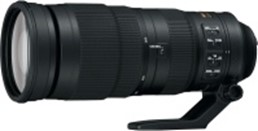
Nikon AF-S NIKKOR 200-500mm f/5.6E ED VR Check on Amazon
 

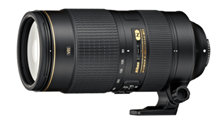
Nikon AF-S NIKKOR 80-400mm f/4.5-5.6G ED VR Check on Nikon
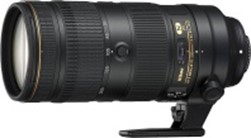
Nikon AF-S NIKKOR 70-200mm f/2.8E FL ED VR Check on Amazon
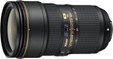
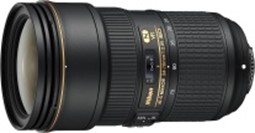
Nikon AF-S NIKKOR 24-70mm f/2.8E ED VR Check on Amazon
4. Nikon AF-S NIKKOR 24-70mm f/2.8E ED VR:

Check on Amazon
It is a versatile wide-angle to short telephoto lens famous for its electromagnetic aperture system and constant f/2.8 maximum aperture. You can use this lens with a Nikon full-frame high-resolution DSLR and obtain excellent clarity and sharpness. It suits studio work, landscape, press events, and weddings. It is versatile, efficient, and durable.

Its optical design contains a unique aspherical extra-low dispersion element, three aspherical, two extra-low dispersion, and high refractive index elements. They decrease distortions and chromatic aberrations across the zoom range.

The captured photos and videos perfectly balance soft blur effects and sharpness. They are free of ghosting, flare, spherical/chromatic aberration, and coma at any edges of the frame.

Features:

  • Vibration reduction image stabilization technology decreases camera shake and vibration up to ~4.0 stops (for low light and handheld shooting).
  • The f/2.8 constant aperture provides fast shutter speeds to lock immediate action, present stunning bokeh blur, and perform vividly in low light.
  • The sweet spot of the zoom range is 24-70 mm.
  • You can add an electromagnetic diaphragm to achieve fast auto-exposure control.
  • Nikon Fluorine coating is available on the front and rear glass.
  • Removing dirt, water, and smudges from the nonstick glass is easy.

Specifications:

Lens type Normal
Camera lens description 4
Compatible mountings Nikon F
Lens elements 20
Focal length 24-70 mm
Maximum aperture 2.8 mm
Minimum aperture 22
Maximum aperture range F2.8
Photo filter thread size 82 mm
Minimum focus distance 35 to 50 mm focal length for 0.38 m from the focal plane; 24, 28, and 70 mm focal lengths for 0.41 m from the focal plane
Distance from camera lens mount flange 154.5 mm
Dimensions and weight 5.75 x 5.75 x 9.25 inches; 2.36 lbs
Included accessories LC-82 82mm Snap-On front lens cap, LF-4 rear lens cap, HB-74 bayonet hood, CL-M3 lens case

Pros:

  • High optical precision
  • Captures sharp, stable images and HD videos
  • Sharpness is maintained even in low-light conditions
  • Zero distortion

Cons:

  • Expensive

3. Nikon AF-S NIKKOR 70-200mm f/2.8E FL ED VR:

Check on Amazon
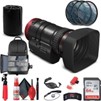
This fast telephoto zoom lens offers outstanding performance for sports, wildlife photography, portraits, weddings, concerts, everyday shooting, and shooting in low-light conditions. The quality output makes it suitable for both serious hobbyists and pros. Whether you are shooting a powerhouse like the D5 or a DX DSLR like the D500, you can use this lens.

Its high durability and superior optics let it deliver outstanding results and upkeep focus while you zoom. So, it is perfect for wildlife and sports photography.

When used in a high-ISO Nikon DSLR, this lens explores new possibilities for shooting wildlife at dawn and dusk, sports, weeding, etc.

Features:

  • Its key components include 6 ED glass elements and High Refractive (HRI) and Fluorite (FL) lens elements.
  • The HRI and FL lens elements and magnesium alloy barrel keep the lens uniformly balanced.
  • Nano crystal coating removes glare and distortion. It also maximizes sharpness and contrast, even in challenging backlit situations.
  • The constant f/2.8 maximum aperture generates a stunning, smooth background blur.
  • The lens barrel comes with four focus function buttons. They help you to achieve attractive autofocus or AF Lock.
  • The focus and zoom rings have reversed positions for stable, comfortable zooming.
  • The tripod collar ring rotates on ball bearings to smooth vertical and horizontal shooting transitions.
  • AF tracking is enhanced for challenging subjects, having very slow or unpredictable movements, those moving at random speeds, and those chasing the camera at high speed.
  • Nikon’s Silent Wave Motor (SWM) drives near-silent, ultra-fast internal focusing (IF) without a breathing effect over the whole zoom range.
  • All movable lens barrel components are perfectly sealed for water, dust, and drop resistance.
  • The front lens element has Nikon’s nonstick Fluorine coat to resist fingerprints, dirt, and smudges.

Specifications:

Lens type Telephoto
Maximum format size Full Frame
Format FX/35 mm
Compatible mountings HB-78
Focal length 70-200 mm
Minimum aperture 2.8 mm
Maximum aperture 22 mm
Maximum aperture Range F2.8
Minimum aperture f/ 22
Photo filter thread size 77 mm
Minimum focus distance 1.1 m
Diaphragm blades 9
Focus distance indicator 1.1 am to infinity
Image stabilization Up to ~4.0 stops
Acceptable filter-type Screw-on
Compatibility New Z Nikkor lenses, over 360 F-mount Nikkor lenses, and a wide range of Nikon system accessories
Dimensions and weight 7.9 x 3.4 x 3.4 inches; 3.15 lbs

Pros:

  • Brilliant close-up portraits
  • Stable, comfortable zooming
  • The coating eliminates glare and distortion

Cons:

  • It may have limited camera compatibility

2. Nikon AF-S NIKKOR 80-400mm f/4.5-5.6G ED VR:

Check on Nikon

This Nikon product is a versatile lens that covers portrait-length to super-telephoto focal lengths. It uses four extra-low dispersion elements and a super extra-low dispersion element. These elements significantly decrease color fringing and chromatic aberrations all over the zoom range for enhanced clarity and color accuracy.

The included lens hood blocks bright light sources like the sun and light from the lens to avoid lens flare and glare.

Due to the long maximum focal length, the lens allows you to focus on a tiny part of a scene. Subsequently, it provides a narrower angle of view than shorter focal lengths. You get the broadest angle of view at the shorter end of the lens. So, the lens lets you fit more parts of the scene into an image (according to APS-C format).

Features:

  • VR image stabilization counterbalances the effects of camera shake by up to four shutter speed stops.
  • The f/4.5 wide aperture allows the sensor to capture more light. So, it avoids blur by triggering a faster shutter speed. Also, it offers a shallow depth of field that lets you blur the background and focus on the subject.
  • A Silent Wave Motor AF system generates quick, near-silent focusing performance, which suits movie recording and still shooting. You can turn the manual focus ring to override it instantly manually.
  • 5x zoom range indicates the versatility of the lens.
  • Nine rounded aperture blades control the light entering the camera’s sensor. It uses a selective focus technique and shallow depth of field.
  • Nano Crystal and Integrated Coatings are applied to reduce ghosting and flare. So, the lens will improve color accuracy and contrast in vivid and backlit conditions.
  • The rotating tripod collar allows you to mount the lens on a monopod or tripod.

Specifications:

Lens type Zoom, telephoto
Lens mount Nikon F
Lens format coverage Full-Frame
Focus type Autofocus
Focal length 80 to 400mm
Minimum focus distance 5.74′ / 1.75 m
Maximum aperture f/4.5 to 5.6
Minimum aperture f/32 to 40
Maximum magnification 0.2x
Angle of view 30° 10′ to 6° 10′
Optical design 20 elements in 12 groups
Diaphragm blades 9, rounded
Tripod collar Rotating and removable
Filter size 77 mm (Front)
Dimensions and weight 3.76 x 7.99 inches; 1.57 kg

Pros:

  • Can focus to infinity without compromising sharpness
  • Lightweight design
  • Wide range of focal length

Cons:

  • Limited accessories included

1. Nikon AF-S NIKKOR 200-500mm f/5.6E ED VR:

Check on Amazon
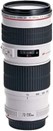
This super-telephoto zoom lens is suitable for Nikon digital SLR cameras. It lets you capture and share magnificent views of wildlife, birds, athletes, motorsports, landmarks, and other far subjects. The fast f/5.6 constant aperture provides your shots and speed. It also offers stunning out-of-focus backgrounds over the whole zoom range.

Features:

  • Vibration Reduction Image stabilization maintains steadiness and sharpness in your shots. It counterbalances camera shake up to -4.5 stops f.
  • The electromagnetic diaphragm works in sync for the fastest shutter speeds and subjects. It transforms fast-moving action into impressive photo sequences.
  • To achieve additional reach, you can increase the lens’ zoom power using an optional Nikon 1.4x, 1.7x, or 2x teleconverter.
  • DX-format lets it add an extra 1.5x zoom effect for an angle of view analogous to a massive 750 mm
  • Notwithstanding the extreme power, you can focus on subjects as near as 7.2 feet away for detailed close-ups.
  • The fast f/ 5.6 constant aperture provides stunning out-of-focus backgrounds and excellent low-light performance.
  • AF is compatible with optional TC-14E teleconverters and DSLRs providing f/8 support.

Specifications:

Lens type Telephoto Zoom
Camera lens description 4
Maximum format size APS-C
Compatible mountings Nikon F
Focal length 200-500mm
Maximum aperture f/5.60
Minimum aperture f/32.00
Filter size 95 mm
Dimensions and weight 10.5 x 4.2 x 4.2 inches; 5.07 lbs
Included accessories LC-95 95mm Snap-On front lens cap, HB-71 Bayonet Hood, LF-4 rear lens cap, CL-1434 semi-soft case

Pros:

  • Lightweight and compact design
  • Great VR and color reproduction
  • Tack-sharp clarity
  • Fast autofocus

Cons:

  • Not much suitable for portraits

From Amazon India:

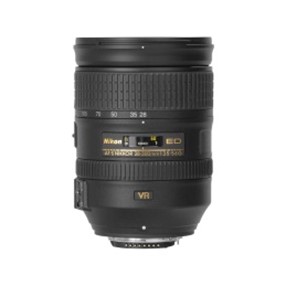
Nikon AF-S NIKKOR 28-300mm f/3.5-5.6G ED VR:

Check on Amazon India
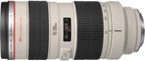
The image stabilization system in this lens provides flawless, blur-free images for handheld photography. This lens is compatible with Nikon F (FX) digital SLR cameras.

Features:

  • FX zoom lens with a 10.7 zoom ratio allows you to obtain high-quality images of far objects.
  • The Vibration Reduction II (VR II) image stabilization system supports normal and active modes.
  • The three aspherical lens elements and two extra-low dispersion (ED) glass elements let you obtain high contrast and resolution in all images.
  • SWM (Silent Wave Motor) offers quick, quiet autofocus.
  • The lens can focus 18 inches at any focal length.
  • The rounded nine blades diaphragm offers clear and lifelike images.
  • The zoom lock switch protects the lens barrel during traveling.
  • The super-integrated coating boosts light transmission efficiency by providing excellent color consistency. It decreases the odds of flare in the snaps.

Specifications:

Camera lens description Zoom lens
Lens type Zoom lens
Focus type Auto, Manual
Focal length description 28-300 mm
Compatible Mountings Nikon F
Maximum aperture 3.5-5.6 mm
Minimum aperture f/22
Minimum focus distance 1.64 ft
Magnification 0.32x
Compatible format(s) FX, DX, FX in DX Crop Mode, 35mm Film
Angle of view 74 – 8.1 degrees (FX Picture Angle); 53 – 5.2 degrees (DX Picture Angle)
Filter thread (diameter) 77 mm
Zoom ratio 10.7x
Lens construction 19 elements in 14 groups
VR (Vibration Reduction) Image Stabilization Supported
Diaphragm blades 9
Distance information Supported
ED glass elements 2
Aspherical elements 3
Super integrated coating Available
AF-S (Silent Wave Motor) Included
Internal focusing Supported
G-type Supported
Accepts filter-type Screw-on
Dimensions and weight 11.5 x 8.3 x 8.3 cm; 800 grams
Included accessories Bayonet Hood HB-47, 58mm snap-on front lens cap LC-58, rear lens cap LF-4, flexible lens pouch CL-1013

Pros:

  • Nice picture reproduction
  • Easy to carry around
  • Quiet operation

Cons:

  • Bulky body

Best Parfocal lenses from Canon:

Canon is renowned for its exceptional range of parfocal lenses, offering photographers unrivaled precision and versatility. Among the best parfocal lenses from Canon, the EF 24-70mm f/2.8L II USM stands out as a powerhouse, providing a constant aperture, superb image quality, and a versatile zoom range ideal for various shooting scenarios.

Another top contender is the EF 70-200mm f/2.8L IS III USM, renowned for its exceptional sharpness, advanced image stabilization, and reliable autofocus, making it a favorite among sports and wildlife photographers. Canon’s commitment to optical excellence and innovation ensures that these parfocal lenses deliver outstanding performance and reliability, empowering photographers to easily capture breathtaking images.

Image Product Name Buy Now
Canon EF 200-400mm f/4L IS USM Extender 1.4x Check on Amazon
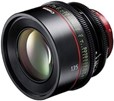
Check on Newegg

Canon EF 75-300mm f/4-5.6 III USM Check on Amazon
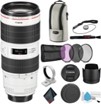
Check on Newegg

Canon EF 90-300mm f/4.5-5.6 USM Check on Amazon
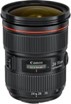
Canon EF 100-400mm f/4.5-5.6L IS II USM Check on Amazon
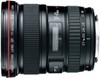
Check on Newegg

Canon CN-E 70-200mm T4.4 Compact-Servo Cine Zoom Lens (EF Mount) Check on Amazon
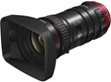
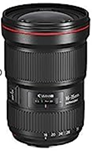
Canon EF 70-200mm f/4L USM Check on Amazon
Check on Newegg

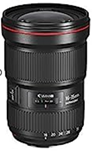
Canon EF 70-200mm f/2.8L USM Check on Amazon
Check on Newegg
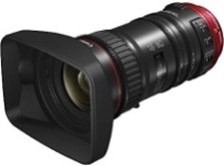
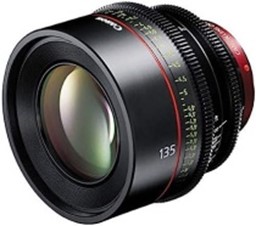
Canon CN-E 135mm T2.2 L F Cinema Prime Check on Amazon
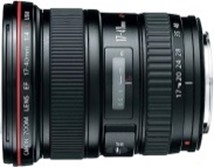
Check on Newegg

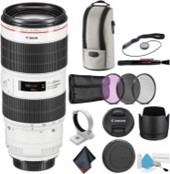
Canon EF 70-200mm f/2.8L IS III USM Check on Amazon

Check on Newegg

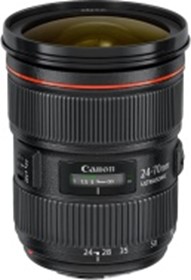
Canon EF 24-70mm f/2.8L II USM Check on Amazon

Check on Newegg

Canon EF 17-40mm f/4L USM Check on Amazon

Check on Newegg

Canon CN-E 18-80 T4.4 Check on Amazon

Check on Newegg

Canon EF 16-35mm f/2.8L III USM Check on Amazon

Check on Newegg

13. Canon EF 16-35mm f/2.8L III USM:

Check on Amazon | Check on Newegg

This Canon f/2.8L ultra-wide-angle zoom lens is designed to perform reliably even in the severest conditions. Its body is dust- and water-resistant. It perfectly captures wide-angle shots and landscapes while also maintaining your aperture. It comes protected in a nonstick fluorine coating. The output is sharp at all focus distances and apertures.

The latest optical design significantly improves outer and corner sharpness. UV protection filter decreases ultraviolet light and makes the lens suitable for everyday use. It helps remove bluish cast in images.

Features:

  • Its focal range offers excellent perspective control with a quick, constant aperture.
  • A high-speed CPU, inner focusing ring USM, and optimized AF algorithms offer precise and fast autofocusing.
  • Subwavelength Coating (SWC) and Air Sphere Coating (ASC) substantially decrease ghosting and flare.
  • Full-time manual focus allows manual focus adjustment while in AF mode.
  • Three Aspherical & Two UD Elements
  • Fluorine coating is available on exposed elements on the rear and front surfaces. It helps decrease fingerprints and smears.
  • 9-blade circular aperture makes the camera capable of capturing beautiful out-of-focus areas and soft backgrounds all over its zoom range.

Specifications:

Lens type Ultra Wide Angle Zoom
Focus type AF with full-time manual
Focal length 16-35 mm
Max. format size Full frame
Max. focal length 35 mm
Minimum focus distance 0.92 Feet
Aperture range f/2.8 to f/22
Lens diameter 88.5 mm
Lens construction of 16 elements in 11 groups
Photo filter effect type Ultraviolet
Filter size 3.2 inches
Focus adjustment AF
Motor Ring-type ultrasonic motor AF system
Coating Multi-Coating
Dimensions and weight 3.50 x 3.50 x 5.00 inches; 1.74 lbs

Pros:

  • Superb control on the depth of field
  • UD lenses decrease chromatic aberration.
  • Air Sphere Coatings decrease ghosting and flare.

Cons:

  • It is not much suitable for real estate photography and shooting small space

12. Canon CN-E 18-80 T4.4:

Check on Amazon | Check on Newegg

This lens’s parfocal design maintains focus during zoom and offers versatile zoom capabilities. It is created with EF-mount cameras with Super 35 or APS-C-sized sensors. This lens is Canon’s first cine-style option to include autofocus and image stabilization functionalities when paired with Cinema EOS cameras.

The lens encompasses an 18 to 80mm focal range while maintaining a continuous T-stop of T4.4 (f/4) all over the content.

It is compact and lightweight and suitable for various productions, including narrative work, run-and-gun documentaries, etc.

The built-in RS-422 port provides lens control. So, you can use this lens as a PTZ system to configure your camera. Also, it is suitable for performing remote options while on a crane or jib. Hence, the lens is helpful in concerts, live productions that capture the cinematic capabilities of the lens, and houses of worship.

Features:

  • It offers minimized focus breathing.
  • The focus ring swivels 180°.
  • To provide versatility, Canon equipped this lens with a servo drive unit. It is compatible with industry-standard lens controllers for focus, full zoom, and iris control. Alternatively, you can furnish the lens with the ZSG-C10 Control Grip (optional) for ENG-style lens control and operation.
  • The grip gets power from compatible cameras through the EF mount.
  • To employ non-servo zoom control, the lens contains cine-standard 0.8 mod gears and a rubberized grip on the focus ring that provides comfortable manual operation.
  • 0.5 MOD iris and zoom gear rings are also included.
  • The lens matches the color characteristics of prevailing CN-E lenses.

Specifications:

Camera lens description 9
Lens type Normal
Lens format coverage Super35/APS-C
Focal length description 18-80 mm
Minimum focus distance From: 0.5 m
Lens mount Canon EF
Compatible mountings Canon EF
Maximum aperture T4.4, f/4
Image circle 31.4 mm
Filter thread 77 mm
Diaphragm blades 9
Dimensions and weight 18 x 14 x 10 inches; 9 lbs

Pros:

  • Lightweight and compact design
  • Smooth rotation of focus ring
  • Comfortable handling

Cons:

  • Limited mounting compatibility

11. Canon EF 17-40mm f/4L USM:

Check on Amazon | Check on Newegg

It is suitable for nature/wedding photography. Its body is resistant to water, dust, and other weather elements. You can use it in harsh environments. It is perfect for both digital and film SLR cameras. You can use this lens in your camera to capture landscapes and interiors. It provides an effective USM and Canon’s full-time manual focus, generating silent and fast autofocus.

Features:

  • A super UD glass element and three aspherical lens elements produce excellent optics in all conditions. The combination of these elements provides superb contrast and sharpness.
  • Super UD glass is used to avoid the chromatic aberrations that frequently can damage the subject’s edge clarity.
  • The powerful ring-type ultrasonic monitor (USMD) produces silent and fat autofocusing.
  • The lens supports screw-in 77 mm filters or a holder at the rear for a maximum of 3 gel filters.
  • The circular seven-blade diaphragm provides attractive out-of-focus quality that benefits the use of selective focus and depth of field techniques.
  • The optical coatings are optimized for use with digital cameras.
  • An enhanced AF algorithm and a fast central processing unit let the autofocus work quickly and silently.
  • You can override AF mode using manual focus.
  • An electromagnetic diaphragm controls the lens’ circular aperture. It attains a more beautiful appearance to out-of-focus background regions in a picture.
  • A drop-in gelatin filter holder is available at the lens’s rear.

Specifications:

Camera lens description 12
Lens type Wide Angle
Focal length description 17 -40 Ultrawide
Compatible mountings Canon EF
Max. format size 35 mm full frame
Max. aperture f/4
Min. aperture f/22
Min. operation distance 0.28 m
Photo filter thread size 77 mm
Diagonal angle of view 104° 57° (@30 feet)
Focus adjustment Inner focusing system with USM
Zoom system Rotating type
Dimensions and weight 3.82 x 3.31 x 3.31 inches; 1.1 lbs
Included accessories E-77U 77 mm Snap-On lens cap, EW-83E lens hood, lens dust cap E (rear), lens case LP1319

Pros:

  • Elegant appearance
  • Smooth focus and zoom rings
  • Fast AF
  • Environment-friendly, lead-free glass construction

Cons:

  • Lacks f2.8 aperture

10. Canon EF 24-70mm f/2.8L II USM:

Check on Amazon | Check on Newegg

This Canon lens is famous for its versatility and sharpness, making it a favorite choice among professionals. It upkeeps focus while you zoom. So it allows smooth transitions.

It is built with improved water and dust sealing resistance. The fluorine coatings on the front and rear lens surfaces help decrease smears, soiling, and fingerprints.

Features:

  • The latest optical design uses two UD and a Super UD lens element. They minimize chromatic & spherical aberration in the external area at a wide angle. Also, these elements remove color blurring near the subject’s edges for images with high contrast and resolution.
  • The zoom lock lever determines the zoom position at the wide end for risk-free transporting.
  • Optimized lens coatings offer excellent color balance and minimal ghosting.
  • The fluorine coating on the front and rear lens surfaces decreases fingerprints and smears.
  • The included circular 9-blade diaphragm conveys stunning, soft backgrounds.
  • A ring-type USM, high-speed CPU, and optimized AF algorithms achieve quiet and fast autofocusing.

Specifications:

Camera lens description 9
Lens type Wide Angle
Compatible mountings Canon EF
Maximum format size 35 mm FF
Focal length 24-70 mm (112 mm equivalent focal length on Canon APS C cameras)
Maximum aperture 2.8
Minimum aperture F22
Focal length 24-70 mm
Filter size 82 mm
Closest focusing distance 1.25 feet
Maximum magnification(x) 0.21(at 70 mm)
Diagonal angle of view 84° – 34°
Focus adjustment Inner-focusing on USM
Motor Ring type ultrasonic type AF motor having full-time manual focusing
Zoom system Rotating type
Dimensions and weight 4.45 x 3.5 x 3.5 inches; 1.77 lbs
Included accessories Lens cap E-82U, lens dust cap E, lens case LP1219, lens hood EW-88C, instruction book, 1-year warranty card

Pros:

  • Lightweight design
  • All necessary accessories included
  • High-quality coating resists damage

Cons:

  • Autofocus can be better

9. Canon EF 70-200mm f/2.8L IS III USM:

Check on Amazon | Check on Newegg

You can use this lens to focus on a wide range of subjects, from sports to portraiture. Its fast, constant f/2.8 maximum aperture performs well in low lighting conditions. Also, it gives improved control over the depth of field for isolating subjects. The lens is built in weather-sealed design.

Features:

  • Optical Image Stabilizer counterbalances for 3.5 stops of camera shake to deal with handheld and low-light situations effectively.
  • The optical layout uses fluorite and five UD elements to decrease color fringing and chromatic aberrations. So, you obtain excellent clarity across the whole zoom range.
  • An air sphere coating decreases ghosting and flare for high contrast and color fidelity in all conditions.
  • The internal focusing mechanism and a ring-type USM provide quiet, fast, and precise autofocus performance. Also, they offer full-time manual focus override.

Specifications:

Camera lens description 200
Focal Length 70-200 mm
Motor Ring-Type Ultrasonic Motor AF System
Coating Air Sphere Coating, Fluorine Coating
Compatible mountings Canon EF
Compatible Canon cameras EOS 7D Mark II, 77D, 70D 80D, Rebel T3, T3i, T4i, T5, T5i, T6, T6i, T6s, T7, T7i, SL1, SL2 APS-C Cameras; EOS 5D Mark III, 5D Mark IV, 6D Mark II, 5DS, 5DS R, 1Dx Mark II Full Frame DSLR Cameras, etc.
Dimensions and weight 7.83 x 3.5 x 3.5 inches; 5.86 lbs
Included accessories Three piece filter kit includes: UV, circular polarizer, fluorescent filter, hard case; 5-piece lens cleaning kit; lens cap leash; lens pen cleaner; microfiber cleaning cloth

Pros:

  • Weather-sealed is perfect for use in various environments
  • Accurate autofocus performance
  • Broad camera compatibility

Cons:

  • Initially, it was difficult to use some features

8. Canon CN-E 135mm T2.2 L F Cinema Prime:

Check on Amazon | Check on Newegg

This Cinema Prime lens is uniquely designed for professional video applications. It provides parfocal capabilities. It is a telephoto prime lens compatible with the full-frame sensor format. So, it is an ideal lens for the Cinema EOS series and all Canon EOS DSLRs.

All control rings are precision-designed to achieve ultra-smooth operation and maintain constant torque. Its all-glass optical construction minimizes differences due to temperature deviations.

Features:

  • It fulfills 4K production standards.
  • It contains an 11-bladed eris diaphragm to provide smooth bokeh effects. The comprehensive scales on both sides of the barrel can be changed from footage to metric distances and vice versa. You can easily read settings from either side of the camera or behind.
  • To efficiently and quickly implement lens changes, the lens is designed to share identical dimensions (diameter, gear position, and rotation angle) with other CN-E lenses.
  • Glass construction counterbalances temperature-induced marking deviations.

Specifications:

Camera lens description 135 month
Lens type Telephoto
Lens format coverage Full Frame
Focal length 135 mm
Maximum aperture T2.2
Lens mount Canon EF
Diaphragm blades 11
Imaging circle Full-frame
Compatibility 1D X, 1D X Mark II, 1D X Mark III, 5D Mark
Dimensions and weight 12 x 10 x 10 inches; 4.68 pounds
Included accessories 1 x lens cap keeper, 1 x lens pouch, 1 x cleaning kit

Pros:

  • Stunning bokeh effect
  • Durable glass construction
  • Easy-to-read markings

Cons:

  • It needs cautious handling

7. Canon EF 70-200mm f/2.8L USM:

Check on Amazon | Check on Newegg

This telephoto zoom slens’s constant f/2.8 maximum aperture and outstanding image quality make it one of the market’s most famous professional SLR lenses.

Features:

  • 4 UD-glass elements are included to correct chromatic aberrations. So, the lens creates high-quality, sharp images for any application.
  • It features a telephoto zoom lens, ultra-low dispersion glass, full-time manual focus, EF mount, and inner focusing.
  • It is compatible with extender EF 1 4x II and 2x II.
  • Ultrasonic motor (USM) offers quick, quiet, and precise autofocus.

Specifications:

Camera lens description 8
Lens type Telephoto
Format 35 mm Full-Frame, Canon (APS-C)
Focal length F/2.8L
Compatible mountings Canon EF
Diagonal angle of view 34-12 degrees
Zoom system Rotating type
Filter size 77 mm
Closest focusing distance 4.9 feet
Magnification 0.16x
Lens construction 18 elements in 15 groups
Dimensions and weight 7.64 x 3.35 x 3.35 inches; 2.9 pounds
Included accessories Lens Case LZ1324, lens hood ET-83II, zoom instruction book, neck strap 7(2) w/o shoulder pad, 1-year limited warranty card

Pros:

  • Quiet and super-fast autofocusing
  • Excellent sharpness and clarity
  • Accurate autofocus.

Cons:

  • Lacks stabilization.

6. Canon EF 70-200mm f/4L USM:

Check on Amazon | Check on Newegg

The critical aspects of this Canon lens are an inner focusing system, an f/4 maximum aperture, and a ring-type ultra-sonic monitor (USM). The first two features combine to provide quiet and fast autofocusing. So, it is suitable for beginners and professional photographers. You can use it for Canon SLR cameras.

The ring-type USM is fast, quiet, and enables full-time minimum focus. It also provides the closest MF of any L-series 70-200 designs.

Features:

  • It is compatible with the same tripod collar (not included).
  • It blends two UD-glass and fluorite elements for excellent contrast and performance.
  • It allows photographers to attach and use a circular polarizing filter conveniently. The reason is the front lens element doesn’t rotate during focusing.

Specifications:

Camera lens description 13
Lens type Telephoto
Max. format size 35 mm full frame
Focal length 70-200 mm
Focal length with Extender EF 1.4x II / EF 2x II 98–280mm f/5.6 / 140–400mm f/8
Compatible mountings Canon EF
Max. aperture range F4.0
Min, aperture f32
Min. operating distance 1.2 m
Photo filter thread size 67 mm
Lens construction 16 elements in 13 groups
Diagonal angle of view 34 to 12 degrees
Magnification with extension tube EF 12 0.23x – 0.06x
Magnification with extension tube EF 25 0.39x – 0.13x
Zoom system rotating type
Dimensions and weight 6.77 x 2.99 x 2.99 inches; 14.1 ounces

Pros:

  • Rapid and quiet auto-focusing
  • Durable construction
  • Reasonable price

Cons:

  • Lacks IS

5. Canon CN-E 70-200mm T4.4 Compact-Servo Cine Zoom Lens (EF Mount):

Check on Amazon

This Cine Zoom lens is suitable for 4K HDR Image Capture. It offers HDR and 4K compatible imaging for Super 35-sensor digital cinema cameras.

It maintains focus while zooming. So, you can vary the focal length without refocusing. The parfocal capability is quite advantageous in cinematography, where smooth zooms with uniform direction are required. This lens lets you achieve continuous stress in the entire zoom range.

The lens provides coverage in the typically used 70-200mm range. You can expand the range further by using the optional Canon EF 1.4x III and 2x extenders. The lens’s color characteristics match Canon cinema lenses, allowing smooth intercutting.

Features:

  • It has a continuous maximum iris of T4.4 over its zoom range.
  • Its 9-bladed iris can be used to create stunning bokeh effects.
  • A click-less aperture allows iris control through a servo unit / wireless F/I/Z system.
  • You can attach an external ZSG-C10 Zoom Servo Grip to the lens for hassle-free handheld operation.
  • The select EF-mount cameras provide great control options like REC start/stop, zoom control, handgrip focus, chromatic aberration correction, lens metadata transfer, and autofocus functions.

Specifications:

Camera lens description
Lens type Zoom Lens
Focal length 70-200 mm
Lens format coverage Super35/APS-C
Lens mount Canon EF
Compatible mountings Canon EF
Maximum aperture T4.4
Image circle 28.2 mm
Focus scales Metric, Imperial
Minimum focus distance From Camera Sensor: 3.9′ / 1.2 m
Filter thread 77 mm
Diaphragm blades 9
Image stabilization Supported
Electronic communication Supported
Compatibility Cinema Camera 6K, Blackmagic Design Pocket Cinema Camera 6K Pro, 70D, 77D, 7D Mark II, 80D, 90D, C100 Mark II EF-Mount, C100 EF-Mount, C200 EF-Mount, C300 EF-Mount, C300 Mark II EF-Mount, C300 Mark III EF-Mount, C500 EF-Mount, C500 Mark II EF-Mount, C700 EF-Mount, T5, T5i, T6, T6i, T6s, T7, T7i, T8i, SL1, SL2, SL3
Dimensions and weight 7.17 x 1 x 7.17 inches; 12.12 pounds
Included accessories 1 x 77mm 3-piece filter kit, 1 x SanDisk 64GB Ultra SDXC memory card, 1 x pro sling backpack, 1 x memory card reader, 1 x memory card wallet, 1 x 12 inch flexible tripod, 1 x lens cap keeper, 1 x cleaning kit, 1 x hand strap, 1 x lens pouch

Pros:

  • Compatible with various cameras
  • Comfortable handheld operation
  • Excellent image stabilization

Cons:

  • Slightly bulky

4. Canon EF 100-400mm f/4.5-5.6L IS II USM:


Check on Amazon | Check on Newegg

This lens is a versatile choice for wildlife and sports photographers. Also, it is a feasible telephoto zoom lens for various shooting applications. It uses Super Ultra-low Dispersion (Super UD) and Fluorite lens elements to deliver high-contrast, sharp images. They decrease distortions and aberrations over the zoom range to ensure clarity, color reproduction, and image sharpness.

Features:

  • Full-time manual focus override provides accurate adjustment without moving your camera away from the eye.
  • A 4-stop effective image stabilizer helps the lens minimize camera shake occurrences. It is helpful for various styles of shooting.
  • An advanced rotation-type zoom ring pairs with an ultrasonic motor and an internal focusing mechanism to provide rapid and intuitive handling for handheld shooting.
  • The lens elements are also applied with an air sphere coating to decrease lens ghosting and flare for contrast-rich image output.

Specifications:

Lens type Telephoto
Max. format size Full frame
Focal length 100-400 mm
Max. aperture f/4.5
Min. aperture f/32
Max. aperture range 5.5
Photo filter thread size 77 mm
Compatible mountings Canon EF
Dimensions and weight 7.6 x 3.7 x 3.7 inches; 3.62 lbs
Included accessories 77 mm protect filter, lens hood ET-83D, extender EF 1.4x III, 77 mm circular polarizer, lens dust cap E, lens cap E-77II, lens case LZ1326, booklet, warranty card (EUR)

Pros:

  • Versatile super-telephoto performance
  • Accurate and fast USM autofocus
  • Efficient image stabilization

Cons:

  • The image can be blurry

3. Canon EF 90-300mm f/4.5-5.6 USM:

Check on Amazon

Those above 90-300 mm lenses are lightweight and compactly designed telephoto zoom lenses. It is one of those lenses with the fastest AF speed in its class.

The AF-powered pattern is optimized for the EOS 300V, providing a faster AF speed. The latest high-speed CPU offers prompt communication between the camera and the lens. The latest AF algorithm has been developed. The exterior design matches the style of other EOS camera models.

Features:

  • All the lens elements are created from environmentally friendly lead-free glass.
  • The upgraded electromagnetic diaphragm (EMD) offers an aperture that is almost circular at the most comprehensive settings. So, it provides an enhanced out-of-focus background effect.
  • The built-in micro USM (Ultrasonic Motor) motor runs almost noiseless.

Specifications:

Camera lens description 300 month
Max. format size Full format
Focal length 90-300 mm
Lens type Telephoto zoom lens
Compatible mountings Canon EF
Max. aperture f/4.5
Max. magnification 0.25x
Min. focus 1.5m
Photo filter thread size 58 mm
Dimensions and weight 6.7 ounces

Pros:

  • Excellent sharpness
  • Perfect for landscape photography
  • Wide focal length

Cons:

  • Limited advanced features

2. Canon EF 75-300mm f/4-5.6 III USM:

Check on Amazon | Check on Newegg

This telephoto zoom lens for Canon SLR cameras is perfect for shooting wildlife, portraits, and sports. The advanced zoom mechanism makes zooming smoother. Also, it makes this lens version suitable for applications that need quick autofocus, like wildlife shoots or sporting events. It is also ideal for applications that require fast AF.

The lens shows a close focusing range and compact size. It also provides accessory compatibility for the non-USM lens.

Features:

  • The front group rotating extension system comes with USM focus adjustment.
  • The latest Micro USM makes auto-focusing quieter and quicker.
  • The zoom ring’s front part features a silver ring for a sophisticated touch.

Specifications:

Max. format size 35 mm full frame
Focal Length Description 75-300 mm
Lens Type Telephoto
Compatible Mountings Canon EF
Camera Lens Description 300 month
Max. aperture range F4.0-F5.6
Min. aperture range f/22 – 22
Closest focusing distance 1.5m
Zoom system rotating type
Photo filter thread size 58 mm
Lens construction 13 elements in 9 groups
Focus adjustment Front group rotating extension system with USM
Diagonal angle of view 32° 11′ – 8° 15′
Dimensions and weight 4.8 x 2.8 x 2.8 inches; 1.06 lbs
Included accessories Instruction Book; 1-year Limited Warranty Card

Pros:

  • Super-quiet and super-quick
  • Compact and lightweight design
  • A broad range of diagonal view

Cons:

  • It has some chromatic aberration and irregular fringing

1. Canon EF 200-400mm f/4L IS USM Extender 1.4x:

Check on Amazon | Check on Newegg

This high-performance L-series super-telephoto zoom has a 1.4x extender (converts focal range to 280-560 mm and maximum aperture to f/5.6). So, it is perfect for wildlife and sports photography. The extender is placed at the lens’s bottom and applied with a simple lever switch. The lens is weather-sealed for use in challenging environmental conditions.

Features:

  • The built-in 1.4x extender lets you switch between the native 200-400mm f/4 setting and an effective 280-560mm f/5.6 for broader reach.
  • Optical Image Stabilizer offers up to four shutter speed stops of correction. This system has three unique stabilization modes to suit different shooting applications.
  • 4 UD and fluorite lens elements offer outstanding correction of chromatic aberration all over the zoom range. They deliver superior-quality images with high contrast and resolution.
  • A high-speed CPU, ring USM, inner focusing, and optimized AF algorithms offer quick and precise autofocusing with full-time manual focus override.
  • Super-spectra lens coatings reduce glare and ghosting.
  • A fluorine coating on the front and rear lens elements minimizes fingerprints and oily smears.

Specifications:

Camera lens description 400 mm
Lens type Telephoto
Focal length 200-400 mm
Compatible mountings Canon EF
Min. aperture 4
Photo filter thread size 52 mm
Other features Focus limiter, Focus Preset
Weight 7.98 pounds
Included accessories Removable & rotatable tripod collar, E-145C lens cap, lens dust cap E (rear), lens wide strap B f/EF 300 / 400 mm, lens case 200-400, ET-120 lens hood, strap for a hard case, professional telephoto lens cleaning kit, 52 mm drop-in gelatin filter holder

Pros:

  • Includes all necessary accessories
  • Multiple stabilization modes
  • Quick and accurate autofocus

Cons:

  • Require a monopod for better results

Best Parfocal lenses from Sigma:

Sigma offers a range of outstanding parfocal lenses that cater to the diverse needs of photographers. One standout option is the Sigma 18-35mm f/1.8 DC HSM Art lens, known for its impressive image quality, constant aperture, and versatile zoom range, making it a favorite among videographers and photographers.

The Sigma 50-100mm f/1.8 DC HSM Art lens is highly regarded for its exceptional sharpness, fast aperture, and smooth zoom operation, making it an excellent choice for portrait and telephoto photography.

With Sigma’s commitment to optical excellence and innovation, these parfocal lenses provide photographers with reliable, high-performing tools to capture stunning images and videos.

From Amazon Global:

Image Product Name Buy Now
Sigma 150-600mm f/5-6.3 DG OS HSM Contemporary Check on Amazon


Sigma 24-105mm f/4 DG OS HSM Art Check on Amazon
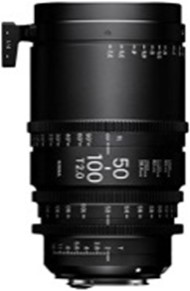
Sigma 50-100mm T2 Cine High-Speed Zoom Check on Amazon
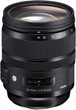
Sigma 24-70mm f/2.8 DG OS HSM Art Check on Amazon

Check on Newegg

Sigma 18-35mm f/1.8 DC HSM Art Check on bhphotovideo

5. Sigma 18-35mm f/1.8 DC HSM Art:

Check on bhphotovideo.com

Sigma designed this lens for APS-C sensor cameras. However, it attained fame for its exceptional parfocal abilities and image quality. It covers wide-angle to standard focal lengths.

The f/1.8 constant maximum aperture makes the lens suitable for challenging lighting conditions. Also, it provides excellent depth of field control all over the zoom range.

The optical design includes multiple SLD and aspherical elements. These elements help the lens attain sharpness and clarity by reducing color fringing, aberrations, and distortion. Hence, the lens achieves high color accuracy and clarity.

Features:

  • An optimized AF algorithm generates smooth focusing performance.
  • Hyper Sonic motor (HSM) and an internal focusing design offer quiet, fast, and accurate autofocus performance. The HSM also provides full-time manual focus control by rotating the focus ring.
  • A Super Multilayer Coating is applied to reduce lens flare and ghosting. It contributes to generating color-neutral and contrast-rich imagery in any light condition.
  • Four aspherical elements decrease spherical aberrations and distortion. They also boost overall sharpness and provide precise image rendering.
  • The rounded 9-blade diaphragm provides a smooth and beautiful bokeh quality.
  • The lens uses a thermally stable composite (TSC) material for high precision and use in broad temperature variations.
  • A brass bayonet provides excellent mounting precision and rigidity.
  • The lens is compatible with the optional Sigma USB Dock for adjusting various lens features and upgrading its firmware.

Specifications:

Lens format coverage APS-C
Lens mount Canon EF
Focal length 18 to 35 mm (35 mm equivalent: 28.8 to 56 mm)
Focus type Autofocus
Max. aperture f/1.8
Min. aperture f/16
Min. focus distance 28 cm
Max. magnification 0.23x
Macro reproduction ratio 1:4.3
Angle of view 76.5° to 44.2°
Optical design 17 elements in 12 groups
Diaphragm blades 9, rounded
Filter size 72 mm (front)
Length at maximum extension 4.77 inches
Dimensions and weight 3.07 x 4.76 inches; 1.78 lbs

Pros:

  • Precise depth of field
  • Decent low-light performance
  • Durable build quality

Cons:

  • Inaccurate focus

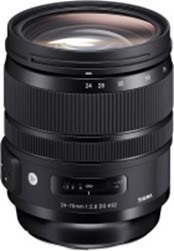
4. Sigma 24-70mm f/2.8 DG OS HSM Art:

Check on Amazon | Check on Newegg

This Sigma lens is suitable for those who want consistent resolution at up to F2.8 brightness or lower and efficiently control the beautiful bokeh effect. It is perfect for nature, news, and many other types of photography.

The front lens comes with an oil- and water-repellent coating. A rubber sealing is included in the mount design to make the lens splash and dust-resistant. Thermally stable composite (TSC) material construction provides high precision and sustains broad temperature variations. The contemporarily designed HSM and optical stabilizer functionality offer success on any shoot.

Features:

  • The constant f/ 2.8 maximum aperture performs consistently even in the entire zoom range.
  • HSM offers high-speed autofocus. It also provides a full-time manual focus override.
  • The Optical Stabilizer streamlines handheld shooting and reduces camera shake to provide sharp imagery.
  • The 9-blade rounded diaphragm produces a beautiful blur in the image’s background.
  • A metal lens barrel offers high rigidity and stability.
  • Four aspherical lens elements and 3 SLD (Special Low Dispersion) glass lens elements help reduce optical aberrations.
  • Super Multilayer Coating decreases ghosting and flare to let photographers produce high contrast and sharp images in light conditions.
  • The lens hood eliminates harmful rays that can severely impact photographs. It also minimizes reflectivity within the hood.
  • The hood has a rubber construction and a non-slip groove to let you easily hold in various shooting situations.
  • The splash and dustproof mount has rubber sealing.

Specifications:

Lens type Wide Angle
Focal length description 24-70mm F2.8
Focus type Auto Focus
Focal length 24-70 mm
Compatible mountings Canon EF
Max. aperture f/2.8
Min. aperture F22
Photo filter thread size 82 mm
Lens construction 19 elements in 14 groups
Angle of view 84.1 degrees – 34.3 degrees
Min. focusing distance 37 cm
No. of diaphragm blades 9, rounded
Max. magnification ratio 1:48
Max. magnification 0.21 x
Precision High-precision, rugged brass bayonet mount and optical Stabilizer
Glass quality Exclusive low-dispersion glass
Dimensions and weight 3.5 x 4.2 x 4.2 inches; 2 lbs
Included accessories Lens hood LH876-04, soft padded case, front cap LCF II 82 mm, rear cap LCR II

Pros:

  • Large-diameter zoom lens for any shoot
  • Minimized flare
  • Smooth bokeh

Cons:

  • Lacks the ability to adjust the stabilization sensitivity

3. Sigma 50-100mm T2 Cine High-Speed Zoom:

Check on Amazon

Sigma uniquely designed this lens for cinematography. It supports parfocal functionality to guarantee accurate focus throughout the zoom range. It provides a constant aperture of T2 in the entire zoom range.

The optical performance makes the lens suitable for high-resolution shooting in 6K to 8K. The lens provides superior image quality in its class.

Features:

  • The lens barrel supports 180° rotation from close focus to infinity.
  • The zoom barrel rotates 160°.
  • The clickless iris ring supports 60° of rotation.
  • All three lens control rings are equipped with cine-standard 0.8 Mod gears, and the focus scale is marked in feet.
  • The lens’s front is 95 mm in diameter. This diameter offers compatibility with various matte boxes.
  • It has a detachable 1/4″-20 support foot that helps the lens with the 1/4″-20 rod-mounted lens support (buy it separately).
  • Each mount and ring is sealed to prevent dust and water from entering.
  • The lens body is entirely made of metal to resist the rigors of daily life.
  • The central lens markings show luminous paint for convenient visibility in low-light situations. You can easily read the zoom, and focus markings are readable from either side of this lens.

Specifications:

Camera lens description 100 month
Focal length description 50-100 mm
Lens type Zoom Lens
Lens format coverage Super35/APS-C
Maximum aperture T2
Minimum aperture T16
Lens mount Canon EF
Focus scales Imperial
Minimum focus distance From: 96.5 cm
Image circle 28.4 mm
Filter thread size 82 mm
Diaphragm blades 9
Dimensions and weight 0.39 x 7.09 x 12.99 inches; 4.58 pounds
Included accessories 1x removable support foot

Pros:

  • Dustproof and splash-proof design
  • All metal body construction
  • Easy visibility of lens markings

Cons:

  • Lacks some basic accessories

2. Sigma 24-105mm f/4 DG OS HSM Art:

Check on Amazon

This product is a premium lens created for full-frame cameras. It will also work with APS-C sensors with an effective boost in focal length. It is a versatile and everyday lens.

Features:

  • It provides fine and stable image quality from the broad to mid-telephoto range.
  • This lens features a combination of a decent zoom ratio and fixed aperture.
  • The minimum focusing distance and maximum magnification ratio make this lens suitable for close-up photography.
  • It is MC-11 Compatible.
  • Hyper Sonic Motor (HSM) guarantees quiet, fast, and precise autofocusing.
  • Optical Stabilizer (OS) compensates for camera shake.
  • A 9-blade rounded diaphragm produces a stunning background blur.
  • SLD and FLD glass elements counterbalance for different aberrations, curvature, and distortion. Thermally Composite Material (TSC) material is used to decrease the size and weight. It is compatible with the Sigma USB dock for more customization.

Specifications:

Camera lens description 105 mm
Lens type Normal
Lens diameter 3.5 inches
Focal length 24-105 mm
Lens construction 19 elements in 14 groups
Min. aperture f22
Min. focusing distance 45 cm
Filter size 82 mm
Max. magnification 1:4.6
Angle of view 84.1 degrees – 23.3 degrees
No. of diaphragm blades 9
Compatible mountings Sigma SA Bayonet
Weight 1.95 pounds

Pros:

  • Silent HSM motor operation
  • No blur or distortion
  • Lightweight design

Cons:

  • Not weather-sealed

1. Sigma 150-600mm f/5-6.3 DG OS HSM Contemporary:

Check on Amazon

This latest Sigma lens is implemented with updated Sigma technologies like a quiet and optimized Hyper Sonic Motor (HSM) and Optical Stabilizer (OS) (with an accelerometer) for enhanced panning photography both horizontally and vertically. This lens is suitable for wildlife, birding, and motor photography.

The optical stabilization uses a built-in mechanism that counterbalances the camera shake. It significantly explores photographic possibilities by eliminating camera movement while shooting using a handheld camera.

Features:

  • The included motor is driven by ultrasonic waves that generate quiet and high-speed autofocus. It offers high performance with low noise in various shooting situations.
  • The FLD glass indicates F Low dispersion. It is built from a material equivalent to the performance of fluorite glass. This specially designed optic element provides excellent correction for residual chromatic aberration. Since its density is lesser than traditional glass, the lens construction is more efficient and lighter.
  • The Sigma USB dock works with Sigma Optimization Pro software to connect a photographer’s lens to their PC. Hence, they can calibrate the lens, update firmware, and perform other customizations.
  • The front glass element has an oil- and water-repellent coating. It simplifies the maintenance of the lens surface.
  • The LCR II rear lens cap, LC-740E front cap, and LH1164-01 lens hood are the accessories that protect the lens.
  • The included sleek case also protects the lens.

Specifications:

Camera lens description 600
Lens type Telephoto zoom lens
Focal length 150-600 mm
Focus type Autofocus
Aperture range f/5-6.3
Magnification 0.20x
Filter thread (diameter) 95 mm (Dustproof and splash-proof)
Compatible mountings Nikon F
Dimensions and weight 25.7 x 19.3 x 8.4 inches; 1 pound
Included accessories Sigma USB Dock for Nikon lenses, 62-inch lightweight monopod (black), 95 mm circular polarizing and UV protective lens filter bundle, 5-piece digital camera cleaning and accessory kit, 64 GB Ultra SDXC UHS-I 100MB/s memory card, camera bag

Pros:

  • Reasonable price
  • All necessary accessories included
  • High-speed and quiet autofocus

Cons:

  • The straps aren’t sturdy

From Amazon India:

Image Product Name Buy Now
Sigma 50-100mm f/1.8 DC HSM Art Check on Amazon India

Check on Newegg


Sigma 17-70/2.8-4.5* Check on Amazon India

Check on Newegg

Sigma 18-50/2.8 EX Macro Check on Amazon India
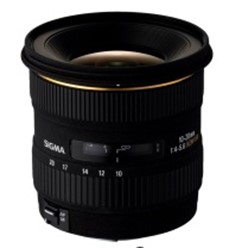
Sigma EX 10-20 f4-5.6** Check on Amazon India

Check on Newegg

4. Sigma EX 10-20 f4-5.6:

Check on Amazon India | Check on Newegg

The ‘DC’ designation in this lens shows that it is created for DSLRs with APS-C or smaller sensors. It is a 10- to 20mm ultra-wide angle lens designed especially for Canon digital SLR cameras.

Features:

  • Hyper-Sonic Motor (HSM) generates high-speed, silent autofocus and full-time manual focus.
  • Multilayer lens coating decreases ghosting and flare.
  • The integral petal-type hood blocks out extrinsic light.
  • 3 Super-low dispersion glass elements minimize chromatic aberrations.
  • Three aspherical elements decrease distortion and other aberrations. So, the output has superior image quality throughout the zoom range.
  • Two hybrid aspherical elements and a glass mold aspherical element are included.

Specifications:

Form factor DSLR
Lens type Zoom lens
Focal length 20 mm
Focus method Internal
Compatible mountings Sigma SA
Min. aperture F22
Min. focusing distance 9.4 inches at all focal lengths
Max. magnification 0.15x
Lens construction 14 elements in 10 groups
Filter size (diameter) 77mm
Number of diaphragm blades 6, rounded
Angle of view 102.4 degrees-63.8 degrees
Optical sensor resolution 24 MP
Optical zoom 2x
AF motor type Ring-type hypersonic motor (Nikon, Canon, Four Thirds, Sigma); full-time manual focus
Speaker diameter 8.1 cm
Material Metal mount
Autofocus Supported
Lens mount compatibility Nikon, Canon, Sigma, Pentax, Sony, Four Thirds
Dimensions and weight 8.1 x 8.4 x 8.4 cm; 470.01 grams
Included accessories AC adapter, front and rear caps, lens hood

Pros:

  • Durable build quality
  • Perfect for shooting indoor pictures
  • Low distortion

Cons:

  • Bulky size

3. Sigma 18-50/2.8 EX Macro:

Check on Amazon India

This Sigma lens provides a massive aperture of f/2.8 over its whole range of focal lengths. Its enormous depth of field offers excellent freedom of creative expression. It is perfect for low-light conditions. It encompasses wide-angle to medium telephoto. Also, it is ideal for various types of subjects. You can use it with Canon digital SLR cameras.

It proves to be an ideal large aperture standard zoom lens for digital SLR cameras equipped with an APS-C size image sensor. The design of the lens power layout considers the digital SLR cameras’ characteristics. The latest design guarantees excellent peripheral brightness.

Features:

  • An exceptional low dispersion (SLD) glass lens element effectively compensates for lateral chromatic aberration and other monsters that may likely happen with digital SLR cameras.
  • The two aspherical lens elements offer correction for different aberrations and present superior-quality images over the zoom range.
  • ELD and SLD glasses provide excellent correction of color aberrations.
  • Super Multilayer (SML) coating provides the finest color balance. It also decreases ghosting and flare from which digital cameras might suffer.
  • The minimum focusing distance of 28 cm, above its zoom range, is suitable for close-up photography.
  • An inner focusing system is implemented.
  • The non-rotating front lens element makes the lens appropriate for using its circular polarizing filters and petal-type lens hood.
  • This lens efficiently corrects vignetting that usually occurs in large-aperture lenses.

Specifications:

Form factor ‎DSLR
Camera lens description 50 mm
Lens type Standard, Macro, Wide Angle
Focal length 18-50 mm
Compatible mountings Canon
Aperture f/2.8
Min. focusing distance 8 inches
Max. magnification factor 1:3
Optical zoom ‎2.8 x
Minimum diaphragm opening ‎22
Actual viewing angle ‎69.3 Degrees
Auto Focus ‎Supported
Dimensions and weight ‎8.64 x 7.87 x 7.87 cm; 453.59 grams

Pros:

  • Accurate and sharp
  • Excellent image quality
  • Durable construction
  • Affordable price

Cons:

  • No internal focusing

2. Sigma 17-70/2.8-4.5:

Check on Amazon India | Check on Newegg

This Sigma product is an ideal large-aperture standard zoom lens designed for Nikon digital SLR cameras with APS-C size image sensors. It is perfect for various subjects. It offers a maximum magnification of 1:2.3 to allow close-up macro photography.

The multilayer lens coating and new lens design decrease ghosting and flare. Moreover, the lens performs well even in low-light conditions.

Features:

  • It allows the addition of two aspherical lens elements and a Special Low Dispersion (SLD) glass element. So, it corrects all kinds of aberrations while generating superior optical performance at all intervals.
  • It provides a vast aperture of f/2.8 at the 17 mm wide-angle setting.
  • The inner focusing system offers a fast autofocus speed while protecting the front of the lens from rotating. Hence, the lens is especially suitable for circular polarizing filters and petal-shaped lens hoods.
  • A zoom lock switch eliminates zoom creep during transportation.

Specifications:

Form factor ‎DSLR
Lens type ‎Macro
Focal length 70 mm
Compatible mountings Nikon
Lens construction 15 elements in 12 groups
Angle of view 72.4 to 20.2 degrees
Number of diaphragm blades 7
Minimum aperture f/2.2
Minimum focusing distance of 20cm
Optical zoom 4.1 x
Minimum diaphragm opening ‎2.8
Min focal length ‎17 mm
Actual viewing angle ‎72.4 degrees
Autofocus ‎Supported
Dimensions and weight ‎7.87 x 7.87 x 7.87 cm; 489.88 grams

Pros:

  • Great lens for the price
  • Fast autofocus
  • Extremely sharp

Cons:

  • Massive weight

1. Sigma 50-100mm f/1.8 DC HSM Art:

Check on Amazon India | Check on Newegg

This f1.8 lens features a 1.8 aperture throughout its focal length. It covers a proper range of 75-150mm. It is the world’s first APS-C zoom for DSLRs to provide a constant F1.8 aperture value all over the zoom range. It is ideal for capturing portraits with delicate bokeh effects and more.

It encompasses the focal lengths of three prime lenses in a package. These lenses are 85 mm F1.8, 105 mm F1.8, and 135 mm F1.8 (35mm equivalent).

Features:

  • It has an updated HSM motor that offers quick and precise autofocus.
  • 3 FLD and SLD elements are included for outstanding image sharpness.
  • A high-refractive index element is included.
  • SLD glass, FLD glass, and high-refractive index, high-dispersion glass reduce aberrations
  • Including one or multiple low-dispersion elements in each element group lets the lens ensure outstanding image quality throughout the focal and zoom range.
  • The users can access MF by rotating the focus ring. So, it facilitates quick focus adjustment by removing the dependency on the AF/MF focus mode switch.
  • The diaphragm blades contain Carbon Feather film. The diaphragm unit includes the latest polycarbonate designed using fluorine. These innovations ensure the diaphragm operation is smooth, even in continuous shooting.

Specifications:

Form factor DSLR
Lens type Telephoto
Camera lens description 75-150mm
Lens diameter 82mm
Lens construction 21 elements in 15 groups
Mounting type Canon EF
Focus type Autofocus
Focal length 50-100 mm
Min. focusing distance 95 cm
Max. aperture f/1.8
Min. aperture f/22
Max. magnification ratio 1:6.7
Autofocus Supported
Actual viewing angle 31.7 degrees
Filter thread (diameter) 82 mm
Camera compatibility Canon digital SLR cameras
Compatible mountings Sigma, Sony, Nikon, Canon, Pentax
Coating Super multilayer coating
Dimensions and weight 17.02 x 9.4 x 9.4 cm; 1.36 kg
Included accessories Front cap, rear cap, lens hood

Pros:

  • Beautiful, sharp image
  • Durable construction
  • Soft and pleasant bokeh

Cons:

  • Very bulky

Concluding Note:

The parfocal lens’s ability to maintain focus while capturing and shooting ensures a smooth photography and videography experience. They guarantee outstanding image quality and sharpness. Also, you benefit from quiet, quick, and precise autofocus of your subject.

List of the Best Webcams without Microphones – Budget Options

Webcams with built-in microphones cannot always eliminate the background noise or offer clear audio output. On the other hand, separate, dedicated microphones can easily do that. The webcams with built-in microphones can’t fulfill your high-quality audio output expectations.

The reason is the quality of that built-in microphone is average. Especially you can’t use them for professional and educational purposes. Therefore, going for a webcam with a separate mic is recommended to ensure listeners hear your voice.

Another reason to use a webcam without a built-in mic is that the manufacturers don’t have to focus on the mic and would focus on other things. Moreover, most webcams without a microphone provide better image quality and resolution. Their prices are more affordable than those webcams with built-in microphones. Besides, they provide excellent image and video quality. Let’s get familiar with when to use a webcam without a mic.

When to use a webcam without a mic?

A webcam without a mic can also offer quality that is exceptional. It offers options for complex audio projects like podcasting, live streaming classes, music recording, and presentations. Usually, an external USB microphone is a smart investment in such cases.

Webcams are designed to record videos and capture still shots for business professionals, streamers, and casual users. The inclusion of a sub-par microphone may not be effective if you demand extremely high-quality audio.

You can use a webcam with a microphone for your computer use and average communication.

Factors to consider before buying a webcam without a microphone:

1) Video resolution:

Your webcam without a microphone should have a minimum HD resolution whether you stream or record videos. 720p resolution can work in some cases. But choosing the one with at least 1080p or higher resolution is better. Those with 1080p resolution provide excellent smoothness and clarity.

2) Frame rate:

It denotes the number of images your camera can capture per second. Make sure to choose a webcam with a microphone whose frame rate is at least 30 fps; otherwise, the video recording will have a shaky effect.

3) Optical zoom:

Optical zoom capability is beneficial if you use your webcam without a microphone for gaming, webinars, or professional video calls. If you wish to obtain the best performance for conference calls, choose a webcam with at least 4x visual zoom capability. The mentioned zoom capability is essential when dealing with auditoriums and large conference halls.

4) Auto image adjustments:

A webcam without a microphone that supports auto image adjustments lets you quickly adjust images while conducting a business meeting or pursuing online learning. Certain webcams without microphones have a special lens that avoids image distortion and enhances image quality in low-light conditions. The lens decides the amount of light that reaches the camera sensor.

The top-notch quality lenses guarantee superior image quality and automatic image adjustment. To benefit from automatic image adjustments, ensure your webcam has color, white balance, and low-light correction abilities.

Best Webcams without Microphones:

Image Product Name Buy
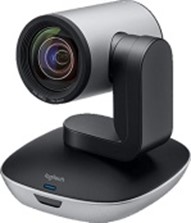
Logitech PTZ Pro 2 video camera Check on Amazon

Check on Newegg

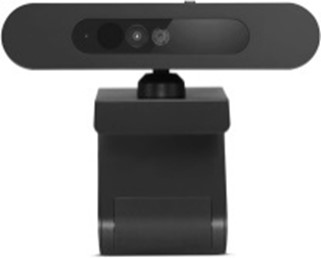
Lenovo 500 USB Webcam Check on Amazon

Check on Newegg

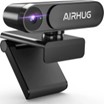
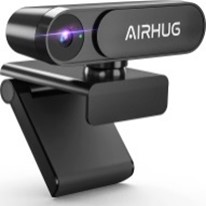
AIRHUG 2K Webcam No Mic Check on Amazon

Check on Newegg

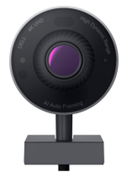
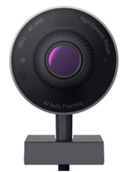
Dell Ultrasharp Webcam WB7022 Check on Dell

Check on Newegg

Check on Amazon

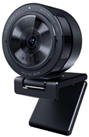
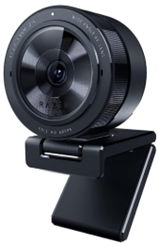
Razer Kiyo Pro Check on Razer

Check on Newegg

Check on Amazon

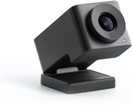
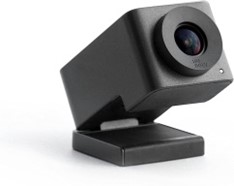
Huddly GO Video Conferencing Camera Check on Amazon

6. Huddly GO Video Conferencing Camera:

Check on Amazon

This webcam is highly recommended to anybody looking for one that can fit the entire scene in a frame from a very near distance. It can capture a wide shot and focus precisely. It is a perfect device for Zoom meetings and streaming.

Features:

  • Its 150° wide-angle lens allows you to capture everybody in the room. So, it converts even the smallest rooms into superior-quality conference suites.
  • The 180°Auto-flip feature allows you to install this webcam with the Huddly bracket upside down underneath your meeting room display. So, the image automatically flips to display the correct view.
  • It supports lossless HD zoom up to 4x.
  • It comes with a USB plug-and-play interface.
  • It is compatible with both MacOS and Windows.
  • It supports USB 2 and USB 3 after the update is installed.

Specifications:

Image sensor CMOS
Effective resolution 16 MP
Digital zoom 3x
Video resolution maximum 1280 x 720
Lens angle 150°
Frame rate 30 fps
Camera device supported Computer
Device supported Notebook
Supported applications Zoom, Skype, BlueJeans, WebEx, and Google Hangouts
Dimensions and weight ‎3.75 x 2.5 x 2.3 inches; ‎0.5 ounces
Included components USB 3 Type C to C Cable (0.6 m) (helps installation in huddle spaces and small & medium-sized rooms), travel pouch

Pros:

  • Easy to handle and mount.
  • Excellent image quality
  • Decent zoom capability

Cons:

  • It needs the effort to screw in the mount.

5. Razer Kiyo Pro:

Check on Razer | Check on Newegg | Check on Amazon

You can obtain professional video standards for video conferencing and streaming with this FHD USB webcam. Its built-in high-performance adaptive light sensor provides clear, crisp image and video quality in any light condition.

You can tilt the stable webcam mount to the perfect angle after it snugly fits on your tablet or monitor. You can detach it if you want the webcam installed on a tripod setup.

It provides a 5GB/s camera signal to your stream. So, you get outstanding video performance.

The cover protects the webcam’s lens and thus ensures privacy when not used.

Features:

  • Its light sensor performs better in various conditions compared to 4K webcams that depend on professional lighting devices to obtain the same result.
  • With the included Type 1/2.8 ultra-sensitive CMOS sensor with STARVIS technology implemented, this webcam can determine its dark or bright surroundings. It adjusts accordingly to provide the brightness or darkness of its surroundings and changes for picture-perfect clarity every time.
  • You can activate HDR at 30 fps to make your stream appear with more dynamic colors. So, it improves your video’s dynamic range and covers over and underexposed regions of the image.
  • The lens is equipped with scratch-resistant and damage-resistant Corning Gorilla Glass 3.

Specifications:

Pixel size 2.9μm
Video resolution 1080p @ 60 / 30 / 24 fps / 720p @ 60 fps / 480p @ 30 fps / 360p @ 30 fps
Image resolution 2.1 MP
Still image resolution 1920 x 1080p
Field of view 103°, 90°, 80°
Focus type Auto
Video encoding formats USB 3.0: YUY2. & NV12 (uncompressed); USB 2.0 H264 codec. (compressed)
Sensitivity -38 dB
Connection type USB 3.0
Polar patterns Omnidirectional
Audio codec 16-bit 48 kHz
Image quality settings customization Supported
Connection type PC with a free USB port; Windows 8 (or higher); Internet connection; 500 MB of free hard disk space
Compatible software Xsplit and Open Broadcaster Software
Mounting options L-shape joint and Tripod (Not included)
Cable length 1.5 m braided cable

4. Dell UltraSharp Webcam WB7022:

Check on Dell | Check on Newegg | Check on Amazon

This Dell’s 4K HDR webcam contains a huge 4K Sony STARVIS CMOS sensor. The sensor captures more light to provide superior quality, crystal-clear video, and superior image quality in its class. The digital overlap HDR provides true-to-life color in different lighting environments. The webcam makes sure you will always appear at your best

The reduction of 3D/2D video noise automatically removes grain images and motion blur, even under low light conditions. So, you would always look fantastic.

It is created for your virtually borderless displays. It magnetically attaches to the mount and fits well on your monitor; it doesn’t block any signal.

Features:

  • The advanced AI auto framing retains a focus on what matters the most. Irrespective of your position, it keeps you at the center of the picture.
  • You can regulate the sensitivity, the speed of camera tracking, and the tightness of the framing.
  • It supports various fields of view.
  • The Presets let you conveniently adjust settings according to your preference.
  • The privacy shutter cap lets you easily mount the cover on the lens and ensure its protection while not in use.

Specifications:

Connectivity technology Wired
Digital video capture resolution 4K
Digital zoom 5x
Frame rate (max) 30 fps
Key features Advanced Digital Overlap HDR; 3D+2D Video Noise Reduction; AI Auto-Framing; Dell Express Sign-In; Auto Focus; Auto White Balance
Image sensor type Sony STARVIS CMOS 8.3 MP
Focus adjustment Automatic
Interface Computer interface
Connectivity ports USB
Included accessories Lens cap, privacy cover
Cables included USB-C to USB-A cable (2 m);
Software included Dell Peripheral Manager for Windows OS; Dell Display Manager for Mac OS
Compatible OS Win 11/10 64 bit; MacOS

Pros:

  • Excellent lens protection
  • Accurate focus adjustment
  • No noise or distortion in the output

Cons:

  • Becomes very hot

3. AIRHUG 2K Webcam No Mic:

Check on Amazon | Check on Newegg

AIRHUG significantly focuses on your privacy and fully protects it. This HD webcam can effectively and easily protect your personal and family privacy. Hence, your digital online journey stays safe.

Its design shows an adjustable universal clip with a USB power cable (5 feet) that fits desktops, computers, laptops, PC, Macs, and LCD monitors. Moreover, the 360° mounting clip rotatable axis allows the webcam to capture images and videos from any angle easily. You can also opt for a webcam tripod clip to fulfill multi-angle needs. The foldable design lets you easily carry it anywhere.

Features:

  • The field of view is 78° wide.
  • The high-speed 1/4-inch 5 MP image sensor displays a 100% color signal for each frame. So, you get excellent color accuracy and brightness that shows the raw image quality.
  • The privacy shutter cap helps you to snap the cover over the lens easily and protects it while not in use. You can record online and offline videos, even in dim light environments.

Specifications:

Photo sensor technology CMOS
Video capture resolution 1080p, 1920p
Screen size 2.7 inches
Special feature Lightweight, low light
Other display features Home Theater
Flash memory type Micro SD
Dimensions and weight 2.8 x 1.9 x 1.5 inches; 2.47 ounces
Included components Privacy cover, USB cable

Pros:

  • Easy plug & play interface
  • Works well in different lighting conditions.
  • Affordable price

Cons:

  • Privacy shutters may not work smoothly.

2. Lenovo 500 USB Webcam:

Check on Amazon | Check on Newegg

This USB Video Class (UVC) compliant video camera is suitable for teleconferencing applications on laptops or desktops. It can transfer video data in HD quality via a high-speed USB interface (in Full HD mode). It’s simple to operate, and the functional mechanical system provides an outstanding user experience.

Features:

  • It streams or feeds its image in real-time via a computer to a computer network. Moreover, it quickly and securely performs facial recognition for Windows Hello.
  • It supports Zoom and Microsoft Teams meetings.
  • It comes with a manual lens cover for privacy. Slide it on if you want to cover up the camera.

Specifications:

Video capture resolution 1080p
Minimum focal length 1 mm
Maximum frame rate 30 fps
Digital zoom 4x
Connectivity technology USB
Host interface USB 2.0
Flash memory type Micro SD
Camcorder type Video Camera
Special feature Low light
Dimensions and weight ‎4.21 x 2.48 x 1.97 inches; 4.3 ounces

Pros:

  • Solid mounting mechanism
  • It quickly recognizes your face and unlocks.

Cons:

  • Your face must be closer to it.

1. Logitech PTZ Pro 2 video camera:

Check on Amazon| Check on Newegg

This Logitech webcam is perfect for training environments, conference rooms, huge events, and other professional video applications. It provides premium optical and a natural video call experience. You can use it to record professional videos with sharp image resolution, excellent color reproduction, high visual accuracy, and an excellent 10X HD zoom system.

Features:

  • Advanced camera technology saves bandwidth by processing video in the webcam. It leads to smooth video streaming in applications like Microsoft Skype for business.
  • It records videos at 1920x1080p. So, the webcam is useful for sharing during webinars and online meetings.
  • The video recording occurs at 30 fps.
  • The zoom capability is up to 10X.
  • Its remote control has a range of up to 8.5 m.
  • The wide field of view displays everyone.
  • The improved pan/tilt and zoom motor performance smoothen the movement from preset to preset.

Specifications:

Photo sensor technology CCD
Optical zoom 10x
Screen size 2 inches
Special feature Low light
Flash memory type Micro SD
Included components power adapter, quick start guide, USB cable
Dimensions and weight 3 x 6 x 12 inches; 1.28 pounds

Pros:

  • Automatic adjustable lighting
  • High picture clarity
  • No buffering

Cons:

  • Blueshift when used over 5 feet.

Elgato Facecam Full HD Webcam:

Check on Amazon

The Facecam Pro can produce a high res 4K image and output a 4K stream @ 60 fps. The Elgato Face Cam Pro is the first and only webcam that supports 4K/60fps streaming. You can use it for video calls, live streaming, and gaming.

Features:

  • The f/2.4 24 mm all-glass Elgato Prime lens offers studio-quality optics.
  • The focus range is 30 – 120 cm.
  • The advanced image engine offers uncompressed videos free from artifacts. So, it processes maximum data at high speed.
  • The video resolution is 1080p, and the frame rate is 60 fps.
  • The USB 3.0 interface transfers image with minimum latency.
  • The field of view is 82° offering a wide angle and full frame view.
  • A fixed focus range keeps the subject in focus.
  • Autofocus works for up to four inches far from the lens.

Specifications:

Form factor ‎DSLR
Photo sensor technology CMOS
Sensor type Sony STARVIS CMOS
Lens type ‎Prime
Optical sensor resolution ‎2 MP
Optical zoom 3 x
Min focal length ‎24 mm
Minimum diaphragm opening ‎22 f
Connector type USB
Screen size 2.3 Inches
Flash memory type SD
Special feature Low Light
Batteries required ‎No
Connector type ‎USB
Device interface Primary buttons
System requirements Windows 10( 64-bit), Intel/AMD CPU; macOS 11.0, Intel/Apple CPU
Compatible software Zoom, OBS, Teams, and more (for PC/ Mac)
Other features DSLR Style Control, Advanced Light Correction
Dimensions and weight ‎5.8 x 8 x 4.8 cm; 103 grams
Included components Mounting hardware, face cam, mount with 1/4″ thread, privacy cap, detachable USB-C cable, and quick start guide

Pros:

  • Outstanding image quality
  • Large housing offers protection.
  • Quick and easy setup

Cons:

  • Flickering issues
  • Expensive

Concluding Note:

You can consider any of these webcams for professional uses and projects involving complicated audio recording. They ensure high-quality audio, video, and image output. Besides, they are compatible with the latest operating systems and leading video conferencing software.

What is a Dual conversion gain (DCG)? Which Sensors support it?

What is a Dual conversion gain (DCG)? Which Sensors support it?

Dual conversion gain (DCG) is a technology used in CMOS image sensors to improve image quality in low-light conditions. It converts the light that hits the sensor into two signals, one with a high gain and one with a low gain. The high-gain signal is used to capture more light in low-light conditions, while the low-gain signal is used to capture more detail in high-light conditions. The two signals are combined to create a single image with improved quality.

DCG is a relatively new technology but has quickly become a standard feature in many high-end camera sensors. It is one of the most effective ways to improve image quality in low-light conditions, and it is a key factor in the ability of modern cameras to take stunning photos in even the darkest of environments.

Here are some of the benefits of dual conversion gain:

  • Improved image quality in low-light conditions
  • Reduced noise
  • Increased dynamic range
  • Improved color reproduction
  • Reduced read noise
  • Improved signal-to-noise ratio

Dual conversion gain (DCG) is a technology many modern CMOS image sensors support. Some of the sensors that support DCG include:

  • Sony IMX686
  • Samsung GW1
  • OmniVision OV64B
  • Samsung ISOCELL GN1
  • Sony IMX766
  • Sony IMX789
  • OmniVision OV50A
  • Samsung ISOCELL JN1
  • Sony IMX586
  • OmniVision OV48C

DCG is also supported by some hardware platforms, such as the Qualcomm Snapdragon 8 Gen 1 mobile platform. This platform includes a built-in image signal processor (ISP) that supports DCG, which allows smartphones that use the Snapdragon 8 Gen 1 platform to take better photos in low-light conditions.

Dual conversion gain is a powerful technology that can significantly improve the image quality of CMOS image sensors. It is a key factor in the ability of modern cameras to take stunning photos in even the darkest of environments.

Conclusion:

As DCG technology continues to advance, its widespread adoption is inevitable. This will allow a broader audience to capture stunning photos in low-light conditions, enriching visual storytelling.

Omnivision OV64b vs Samsung GW1 vs Sony IMX686 – Specs & Sensor Size

We are comparing Omnivision OV64b vs Samsung GW1 vs Sony IMX686 in this article.

The OmniVision OV64B, Samsung GW1, and Sony IMX686 are all 64MP camera sensors that are used in smartphones and other devices. They all have their strengths and weaknesses, so choosing the right sensor for your needs is important.

The OmniVision OV64B is the smallest of the three sensors, with a pixel size of 0.7 µm. This means that it can capture less light than the other two sensors, which could lead to lower image quality in low-light conditions. However, the OV64B also has a smaller physical size, which could make it more suitable for use in smaller devices.

The Samsung GW1 is the largest of the three sensors, with a pixel size of 0.8 µm. This means it can capture more light than the other two sensors, giving it an advantage in low-light conditions. However, the GW1 also has a larger physical size, which could make it less suitable for use in smaller devices.

The Sony IMX686 is a middle-of-the-road sensor with a pixel size of 0.8 µm. It is not as small as the OV64B but not as large as the GW1. This makes it a good choice for devices that need a balance of size and image quality.

Ultimately, the best sensor for you will depend on your specific needs and budget. If you want the best image quality in low-light conditions, the Samsung GW1 is the better choice. However, if you’re looking for a smaller sensor or a lower price, then the OmniVision OV64B or Sony IMX686 are good options.

Omnivision OV64b vs Samsung GW1 vs Sony IMX686:

Feature OmniVision OV64B Samsung GW1 Sony IMX686
Sensor size 1/1.7″ 1/1.7″ 1/1.7″
Pixel size 0.7 µm 0.8 µm 0.8 µm
Megapixels 64MP 64MP 64MP
BSI (Backside Illumination) Yes Yes Yes
Dual Conversion Gain (DCG) Yes Yes Yes
Phase Detection Autofocus (PDAF) Yes Yes Yes
OIS (Optical Image Stabilization) Optional Optional Optional
Video recording 8K@30fps 4K@60fps 4K@60fps
Price Varies Varies Varies


As you can see, the three sensors are very similar in their specifications. The main difference is the pixel size, with the OmniVision OV64B having the smallest pixels at 0.7 µm.

This means that it will capture less light than the other two sensors, which could lead to lower image quality in low-light conditions. However, the OV64B also has a smaller physical size, which could make it more suitable for use in smaller devices.

Ultimately, the best sensor for you will depend on your specific needs and budget. If you want the best possible image quality in low-light conditions, then the Samsung GW1 or Sony IMX686 are the better choices.

However, if you’re looking for a smaller sensor or a lower price, then the OmniVision OV64B is a good option.

Conclusion

The OmniVision OV64B, Samsung GW1, and Sony IMX686 are all excellent camera sensors. They are all capable of producing high-quality images in a variety of conditions. The Samsung GW1 and Sony IMX686 have a slight edge regarding low-light performance and dynamic range, but the OmniVision OV64B is a good option if you are looking for a smaller sensor or a lower price.

Ultimately, the best sensor for you will depend on your specific needs and budget. If you are looking for the best possible image quality in all conditions, then the Samsung GW1 or Sony IMX686 are the better choices. However, if you are looking for a smaller sensor or a lower price, then the OmniVision OV64B is a good option.

You will surely be happy with the results no matter which sensor you choose. These are all top-of-the-line sensors that can produce stunning images.

Comparing DOL-HDR vs HDR vs Dolby Vision – Specs & Features

DOL-HDR, HDR, and Dolby Vision are high-dynamic range (HDR) imaging types. HDR imaging captures and displays images with a broader range of brightness and colors than standard dynamic range (SDR) imaging. This can make images look more realistic and immersive.

Comparison table of SDR, HDR, and Dolby Vision:

Feature SDR HDR Dolby Vision
Dynamic range Limited Wide Wider
Color gamut sRGB DCI-P3 Rec. 2020
Bit depth 8-bit 10-bit 12-bit
Metadata Static Static or dynamic Dynamic
Compatibility Widespread Limited Widening
Price Affordable More expensive Most expensive


SDR stands for Standard Dynamic Range. It is the most common type of video format, and it is what most people are used to seeing. HDR stands for High Dynamic Range. It offers a broader range of colors and brightness than SDR, making images look more realistic and immersive. Dolby Vision is a type of HDR that offers an even wider color gamut and brightness than HDR. It is also more dynamic, which can adjust the image’s brightness and contrast scene by scene.

HDR and Dolby Vision offer several benefits over SDR, including:

  • More realistic and immersive images
  • Greater detail in both bright and dark areas of the image
  • Improved contrast and color
  • Reduced glare and blooming

However, HDR and Dolby Vision also require more powerful hardware to display correctly. Most TVs and monitors do not support HDR or Dolby Vision, and even those that do may be unable to display it at its full potential.

  • DOL-HDR stands for Digital Overlap High Dynamic Range. It is a type of HDR imaging that captures multiple exposures of an image simultaneously rather than one at a time. This allows smoother transitions between bright and dark areas in the image and can help reduce noise and artifacts.
  • HDR stands for High Dynamic Range. It is a type of imaging that captures a broader range of brightness and colors than standard dynamic range (SDR) imaging. This can make images look more realistic and immersive.
  • Dolby Vision is a type of HDR imaging developed by Dolby Laboratories. It is a proprietary tech licensed by Dolby that offers a broader range of colors and brightness than HDR, and it is also more dynamic, meaning that it can adjust the image’s brightness and contrast scene by scene.

These three technologies offer improved image quality over standard dynamic range (SDR) imaging. However, there are some key differences between them.

  • DOL-HDR is the most affordable option but offers the narrowest range of colors and brightness.
  • HDR is a good middle ground between DOL-HDR and Dolby Vision and is more widely compatible.
  • Dolby Vision offers the broadest range of colors and brightness and is more dynamic than HDR. However, it is also the most expensive option.

The best type of HDR imaging for you will depend on your budget and needs. Dolby Vision is the way to go if you want the best image quality.

However, if you are on a budget or your hardware does not support Dolby Vision, then HDR is a good option. And if you are on a tight budget and your hardware does not support HDR, then DOL-HDR is a good choice.

Some of the most popular DOL-HDR hardware sensors include:

These sensors offer a wide range of features and benefits, including:

  • High resolution
  • Wide dynamic range
  • Fast autofocus
  • Low-light performance

Here are some additional information about these technologies:

  • DOL-HDR is a relatively new technology quickly becoming more common in smartphones and other consumer cameras. It is a powerful tool that can help improve your image quality, regardless of the lighting conditions.
  • HDR has been around for a few years now, and it is becoming more widely supported by TVs and other devices. It offers a noticeable improvement in image quality over SDR, and it is a good option for those who want to improve the look of their movies and TV shows.
  • Dolby Vision is the newest and most advanced HDR technology. It offers the broadest range of colors and brightness and is more dynamic than HDR. However, it is also the most expensive option and is not as widely supported as HDR.

Dolby Vision is the way to go if you want the best image quality. However, if you are on a budget or your hardware does not support Dolby Vision, then HDR is a good option. And if you are on a tight budget and your hardware does not support HDR, then DOL-HDR is a good choice.

Comparison: DOL-HDR vs HDR vs Dolby Vision

Here is a comparison of DOL-HDR, HDR, and Dolby Vision:

Feature DOL-HDR HDR Dolby Vision
Dynamic range Wide Wider Widest
Color gamut Wide Wider Widest
Bit depth 10-bit 10-bit 12-bit
Metadata Static Static or dynamic Dynamic
Compatibility Limited Widespread Widening
Price Affordable More expensive Most expensive

Conclusion

DOL-HDR, HDR, and Dolby Vision are all types of HDR imaging that can offer improved image quality over standard dynamic range (SDR) imaging. Dolby Vision offers the widest range of colors and brightness and is more dynamic than HDR. However, it is also the most expensive option. HDR is a good middle ground between DOL-HDR and Dolby Vision and is more widely compatible. DOL-HDR is the most affordable option but offers the narrowest range of colors and brightness.

The best type of HDR imaging for you will depend on your budget and needs. Dolby Vision is the way to go if you want the best image quality. However, if you are on a budget or your hardware does not support Dolby Vision, then HDR is a good option. And if you are on a tight budget and your hardware does not support HDR, then DOL-HDR is a good choice.

Compare Sony IMX 766 and IMX 890 with Limitations and Phones

Introducing the Sony IMX 766 and IMX 890 camera sensors: These cutting-edge sensors are packed with features that will take your photography and videography to the next level. With a larger sensor size, more megapixels, and improved low-light performance, the IMX 766 and IMX 890 sensors will surely deliver stunning images in any lighting condition.

Here are just a few of the features that make the IMX 766 vs. IMX 890 sensors unique:

  • Large sensor size: The IMX 766 and IMX 890 sensors have a larger sensor size than previous generations, which means they can capture more light and detail. This is especially beneficial for low-light photography and videography.
  • More megapixels: The IMX 766 and IMX 890 sensors have more megapixels than previous generations, so you can crop your images more and still get great results. This is also beneficial for printing large photos.
  • Improved low-light performance: The IMX 766 and IMX 890 sensors have improved low-light performance, so you can take sharper and more detailed photos in low-light conditions. This is perfect for shooting at night or in dimly lit environments.
  • Fast autofocus: The IMX 766 and IMX 890 sensors have fast autofocus, so you can easily capture moving subjects. This is perfect for shooting sports, action, or wildlife photography.
  • Video recording: The IMX 766 and IMX 890 sensors can record video in 4K resolution at 60 frames per second, perfect for creating high-quality videos.

Related: IMX989 vs IMX903 vs IMX907

Comparison Table: Sony IMX 766 vs IMX 890 camera sensors:

Feature IMX 766 IMX 890
Sensor size 1/1.56 inches 1/1.3 inches
Pixel size 1.0μm 1.22μm
Megapixels 50MP 50MP
ISO range 100-51200 100-102400
Dynamic range 12.5 stops 15 stops
Autofocus Phase detection and contrast detection Phase detection and contrast detection
Image stabilization OIS OIS
Video recording 8K@30fps, 4K@120fps, 1080p@240fps 8K@30fps, 4K@120fps, 1080p@240fps
Other features DOL-HDR, Eye AF, Real-time tracking DOL-HDR, Eye AF, Real-time tracking
Price $15-$20 $25-$30


As you can see, the IMX 890 has a slightly larger sensor size, larger pixel size, higher dynamic range, and a more comprehensive range of video recording features. It also costs slightly more than the IMX 766.

Ultimately, the best camera sensor for you will depend on your needs and budget. If you are looking for the best possible image quality, the IMX 890 is the better choice. However, the IMX 766 is still a great option if you are on a budget.

Sensor size

The IMX 890 has a slightly larger sensor size than the IMX 766. This means it can capture more light, improving image quality in low-light conditions.

Pixel size

The IMX 890 also has a larger pixel size than the IMX 766. Each pixel can capture more light, improving image quality in low-light conditions.

Dynamic range

The IMX 890 has a higher dynamic range than the IMX 766. This means it can capture a broader range of brightness levels in a single image, improving image quality in scenes with much contrast.

Autofocus

The IMX 766 and IMX 890 have phase and contrast detection autofocus. This means they can quickly and accurately focus on subjects, even in low-light conditions.

Image stabilization

The IMX 766 and IMX 890 have optical image stabilization (OIS). This helps to reduce camera shake, which can lead to sharper images.

Video recording

The IMX 766 and IMX 890 can record 8K video at 30fps. However, the IMX 890 can also record 4K video at 120fps, while the IMX 766 is limited to 4K video at 60fps.

Other features

The IMX 766 and IMX 890 have several other features, such as DOL-HDR, Eye AF, and Real-time tracking. These features can help to improve the quality of your images and videos.

Overall

The IMX 890 is a slightly better camera sensor than the IMX 766. It has a larger sensor size, pixel size, higher dynamic range, and broader video recording features. However, it is also slightly more expensive.

Ultimately, the best camera sensor for you will depend on your needs and budget. If you are looking for the best possible image quality, the IMX 890 is the better choice. However, the IMX 766 is still a great option if you are on a budget.

Here are some phones that use the Sony IMX 766 and IMX 890 camera sensors:

Phones with Sony IMX 766

  • OnePlus 10 Pro
  • Realme GT Neo 3
  • Oppo Reno 7 Pro
  • Xiaomi 12 Pro
  • Poco F4 GT
  • Motorola Edge 30 Pro
  • iQOO 9 Pro
  • Vivo X70 Pro+
  • OnePlus 9RT
  • Realme GT 2 Pro

Phones with Sony IMX 890

  • Realme GT Neo 3T
  • Oppo Reno 9 Pro+
  • Xiaomi 12S Pro
  • Redmi K50 Pro
  • Motorola Edge 30 Ultra

These are just a few phones that use the Sony IMX 766 and IMX 890 camera sensors. If you are looking for a phone with a great camera, these are some of the best options.

Conclusion

The Sony IMX 766 and IMX 890 sensors are the perfect choice for photographers and videographers who demand the best image quality. With their large sensor size, more megapixels, and improved low-light performance, these sensors will surely deliver stunning images in any lighting condition.

If you are looking for a camera sensor that can take your photography and videography to the next level, then the Sony IMX 766 and IMX 890 sensors are the perfect choice.

Related Articles:

List of Sigma 30 mm f/1.4 DC DN Contemporary Lens alternatives

The Sigma 30 mm f/1.4 DC DN Contemporary Lens is a great all-around lens for APS-C mirrorless cameras. However, several other great lenses are available that offer similar features and performance.

These alternatives include the Sony 35 mm f/1.8 OSS Lens, the Tamron 30 mm f/1.4 Di III OSD M1:2 Lens, and the Zeiss Touit 32 mm f/1.8 Lens. Each of these lenses has its strengths and weaknesses, so choosing the one best suited for your needs is essential.

Here are a few alternatives:

  • Sony FE 35mm f/1.8

Sony FE 35mm F1.8 Large Aperture Prime Lens (SEL35F18F)

Check on Amazon

The Sony FE 35mm f/1.8 is an excellent option for those who want a slightly wider field of view. It’s also slightly sharper than the Sigma lens and weather-sealed.

  • Panasonic Lumix S 35mm f/1.8

Check on Amazon

The Panasonic Lumix S 35mm f/1.8 is another excellent option for those who want a slightly wider field of view. It’s also slightly sharper than the Sigma lens and has a focus clutch for quick and easy manual focus.

  • Samyang AF 35mm f/1.8 FE

Check on Amazon

The Samyang AF 35mm f/1.8 FE is an excellent option for those who want a more affordable lens. It’s not as sharp as the Sigma lens, but it’s still a good option for those on a budget.

  • Meike 35mm f/1.7 II

Check on Amazon

The Meike 35mm f/1.7 II is another excellent option for those on a budget. It’s not as sharp as the Sigma lens, but it’s still a good option for those who want a wide-aperture lens for a low price.

Ultimately, the best lens for you will depend on your individual needs and budget. If you want the best possible image quality and don’t mind spending more, the Sigma 30mm f/1.4 DC DN Contemporary Lens is a great option. If you’re on a budget, the Sony FE 35mm f/1.8, Panasonic Lumix S 35mm f/1.8, Samyang AF 35mm f/1.8 FE, or Meike 35mm f/1.7 II are all great choices.

Tabular comparison of the above lenses: Sigma 30 mm f/1.4 DC DN Contemporary Lens alternatives:

Feature Sigma 30mm f/1.4 DC DN Contemporary Lens

Sony FE 35mm F1.8 Large Aperture Prime Lens (SEL35F18F)

Check on Amazon

Sony FE 35mm f/1.8

Sony FE 35mm F1.8 Large Aperture Prime Lens (SEL35F18F)

Check on Amazon

Panasonic Lumix S 35mm f/1.8

Check on Amazon

Samyang AF 35mm f/1.8 FE

Check on Amazon

Meike 35mm f/1.7 II

Check on Amazon

Price Check on marketplace Check on marketplace Check on marketplace Check on marketplace Check on marketplace
Aperture f/1.4 f/1.8 f/1.8 f/1.8 f/1.7
Focal length 30mm 35mm 35mm 35mm 35mm
Mount Sony E, Micro Four Thirds Sony E L mount Sony E Micro Four Thirds
Image stabilization No No Yes No No
Autofocus Yes Yes Yes Yes Yes
Weather sealing No Yes No No No
Weight 156g 186g 255g 184g 186g
Dimensions 67.4 x 73.2 x 45.5mm 67.4 x 73.2 x 45.5mm 67.4 x 73.2 x 45.5mm 67.4 x 73.2 x 45.5mm 67.4 x 73.2 x 45.5mm


As you can see, there are a few different factors to consider when choosing a lens. The most important factor is probably the price. The Meike 35mm f/1.7 II is an excellent option if you’re on a budget.

If you can afford to spend a little more, the Sigma 30mm f/1.4 DC DN Contemporary Lens is an excellent choice for those who want the best image quality. The Sony FE 35mm f/1.8 is a perfect option for weather-sealed lenses. And if you want a lens with a focus clutch, the Panasonic Lumix S 35mm f/1.8 is a great choice.

Ultimately, the best lens for you will depend on your individual needs and budget.

Conclusion

When choosing a lens, there are a few factors to consider, such as price, image quality, weather-sealing, and focus features. The best lens for you will depend on your individual needs and budget.

The Meike 35mm f/1.7 II is an excellent option if you are on a budget. It is a sharp and affordable lens that is perfect for everyday photography.

If you can afford to spend a little more, the Sigma 30mm f/1.4 DC DN Contemporary Lens is an excellent choice for those who want the best image quality. It is a fast and sharp lens that is perfect for low-light photography.

The Sony FE 35mm f/1.8 is an excellent option for weather-sealed lenses. It is a well-built lens that is perfect for shooting in all weather conditions.

And if you want a lens with a focus clutch, the Panasonic Lumix S 35mm f/1.8 is a great choice. It is a fast and precise lens that is perfect for videography.

Ultimately, the best lens for you will depend on your individual needs and budget. By considering the factors above, you can choose the right lens for you.

Comparing Atomos Nina V vs Shogun Connect vs Ninja V+ Limitations

Atomos Ninja V, Shogun Connect, and Ninja V+ are powerful monitor recorders that can record high-quality video from your camera. However, some key differences may make one a better choice for you than the others.

Here is a tabular comparison of Atomos Nina V vs Shogun Connect vs Ninja V+:

Feature Atomos Ninja V

Check on Amazon

Atomos Shogun Connect

Check on Amazon

Atomos Ninja V+

Check on Amazon

Price Check marketplace Check marketplace Check marketplace
Display 5-inch touchscreen 7-inch touchscreen 5.5-inch touchscreen
Video resolution Up to 4K UHD at 60fps Up to 8K ProRes RAW at 30fps Up to 8K ProRes RAW at 60fps
Codecs ProRes, DNxHR ProRes, DNxHR, Blackmagic RAW, REDCODE RAW ProRes, DNxHR, Blackmagic RAW, REDCODE RAW
Audio 2-channel, 24-bit/48kHz 12-channel, 24-bit/48kHz 12-channel, 24-bit/48kHz
Battery life 2 hours 2 hours 2 hours
Dimensions 5.9 x 3.6 x 1.2 inches 7.8 x 5.2 x 1.6 inches 5.9 x 3.6 x 1.2 inches
Weight 12.7 ounces 1.6 pounds 12.7 ounces
Interfaces HDMI, SDI, USB-C HDMI, SDI, two USB-C HDMI, SDI, two USB-C
Other features 3.5mm headphone jack, built-in speaker, Wi-Fi, Bluetooth 3.5mm headphone jack, built-in speaker, Wi-Fi, Bluetooth, Ethernet 3.5mm headphone jack, built-in speaker, Wi-Fi, Bluetooth, Ethernet


As you can see, the Atomos Ninja V, Shogun Connect, and Ninja V+ are all powerful monitor recorders that offer a variety of features and capabilities. The best choice for you will depend on your needs and budget.

Atomos Ninja V

Check on Amazon

The Atomos Ninja V is the most affordable of the three options, and it’s an excellent choice for beginners or those who don’t need all the bells and whistles. It can record up to 4K UHD video at 60fps and has a built-in 5-inch touchscreen display. It also supports a variety of codecs, including ProRes and DNxHR.

Atomos Shogun Connect

Check on Amazon

The Atomos Shogun Connect is a more powerful option than the Ninja V and is a good choice for intermediate or advanced users. It can record up to 8K ProRes RAW video at 30fps and has a built-in 7-inch touchscreen display. It also supports a broader range of codecs than the Ninja V, including Blackmagic RAW and REDCODE RAW.

Atomos Ninja V+

Check on Amazon

The Atomos Ninja V+ is the most powerful of the three options, and it’s a good choice for professionals or those who need the absolute best image quality. It can record up to 8K ProRes RAW video at 60fps and has a built-in 5.5-inch touchscreen display. It also supports a broader range of codecs than the Ninja V, including Blackmagic RAW and REDCODE RAW.

List of compatible devices for the Atomos Ninja V, Shogun Connect, and Ninja V+:

Atomos Ninja V

  • Canon

    • EOS C70
    • EOS C500 Mark II
    • EOS C300 Mark III
    • EOS R5
    • EOS R6
    • EOS 1DX Mark III
    • EOS 5D Mark IV
    • EOS 90D
    • EOS RP
    • EOS M6 Mark II
  • Nikon

    • Z 9
    • Z 7 II
    • Z 6 II
    • D780
    • D500
    • D7500
    • D5600
    • D3500
  • Sony

    • FX6
    • FX9
    • α7S III
    • α7R III
    • α7 IV
    • α1
    • FS7 II
    • FS5 II
    • XDCAM PXW-FX9
    • XDCAM PXW-FS7 II
  • Panasonic

    • GH6
    • S1H
    • S1
    • BGH1
    • GH5S
    • GH5
    • GH4
  • Blackmagic Design
    • URSA Broadcast G2
    • URSA Mini Pro 12K
    • URSA Mini Pro 4K
    • Pocket Cinema Camera 6K Pro
    • Pocket Cinema Camera 4K

Atomos Shogun Connect

  • All cameras compatible with the Atomos Ninja V
  • Additional cameras:
    • Canon EOS C50
    • Canon EOS C100 Mark II
    • Canon EOS C200
    • Canon XF705
    • Sony FS7
    • Sony FS5
    • Sony α7S II
    • Sony α7R II
    • Sony α7 III
    • Panasonic GH5
    • Panasonic GH4

Atomos Ninja V+

  • All cameras compatible with the Atomos Ninja V
  • Additional cameras:
    • RED Komodo
    • RED V-Raptor
    • ARRI Alexa Mini LF
    • ARRI ALEXA Mini
    • ARRI ALEXA SXT
    • ARRI AMIRA
    • Blackmagic Ursa Mini Pro 12K G2
    • Blackmagic Ursa Mini Pro 4K G2
    • Blackmagic Pocket Cinema Camera 6K Pro
    • Blackmagic Pocket Cinema Camera 4K

This is just a list of some of the compatible devices. For a complete list, please visit the Atomos website.

Limitations: Atomos Nina V vs Shogun Connect vs Ninja V+

Atomos Ninja V

  • Can only record up to 4K UHD video at 60fps
  • It does not support Blackmagic RAW or REDCODE RAW
  • It does not have as many features as the Shogun Connect or Ninja V+

Atomos Shogun Connect

  • More expensive than the Ninja V
  • Larger and heavier than the Ninja V
  • Requires an external battery to operate

Atomos Ninja V+

  • Most expensive of the three options
  • It does not have as many features as the Shogun Connect
  • Requires an external battery to operate

As you can see, each Atomos monitor recorder has its limitations. The best choice for you will depend on your needs and budget.

Which one should you choose?

The Atomos Ninja V, Shogun Connect, and Ninja V+ are all high-end external recorders that can be used to record high-quality videos from various sources. The Ninja V is the most affordable option, but it has fewer features than the other two recorders. The Shogun Connect is the most expensive option but has the most features. The Ninja V+ is a good middle-ground between the Ninja V and Shogun Connect. It has more features than the Ninja V but is not as expensive as the Shogun Connect.

The best Atomos monitor-recorder for you will depend on your needs and budget. If you’re a beginner or don’t need all the bells and whistles, the Atomos Ninja V is a great option. If you’re an intermediate or advanced user who needs more power and features, the Atomos Shogun Connect is a good choice. And if you’re a professional or need the absolute best image quality, the Atomos Ninja V+ is the best option.

Can Advances in CMOS Replace sCMOS Sensors? We Compare

0

CMOS technology is equipped with cutting-edge imaging abilities that are useful for several applications. The question is whether it can substitute the more costly sCMOS (Scientific CMOS) sensors.

CMOS and sCMOS sensors have set the yardstick for value and performance in machine vision in different industries. With this article, you will be familiar with the costs and advantages of each technology for demanding imaging applications.

Related: Comparing sCMOS vs qCMOS Sensors

CMOS vs. sCMOS Sensors:

An sCMOS sensor is usually considered a “next-generation” CMOS sensor. The idea behind implementing the sCMOS technology is to reduce the gap between the latest CMOS sensors and obsolete CCD (Charge Coupling Device) sensors through the initial phases of CMOS development. Initially, several applications couldn’t use the CMOS sensors because of the negotiation in frame rates, resolution, dynamic range, and read noise.

During the introduction of sCMOS cameras, they utilized identical fabrication methods and design principles as the CMOS sensors. However, they incorporated various features that assisted them in tackling the early CMOS defects.

Consequently, sCMOS sensors became perfectly suitable for scientific applications where broad dynamic range, low light performance, and high fidelity were significant.

Since the sCMOS cameras were introduced till now, there has been a noteworthy improvement in the conventional CMOS sensors in the context of their competence to decrease their internal noise and high quantum efficiency. Therefore, CMOS cameras have become worthwhile options for lots of cutting-edge applications.

The majority of CMOS cameras are considerably less expensive than sCMOS cameras. Due to this aspect, many researchers and engineers are encouraged to assess the newest CMOS sensor. This assessment is helpful to them when they want to choose a microscopy camera, cytology/cytogenetics camera, pifluorescence camera, or histology camera for their application.

Also Read: Comparing CCD vs CMOS Sensor

Which one to use -a CMOS or an sCMOS Sensor?

Schematic indicating how the acquisition of a frame can overlap with the readout of the previous frame. This allows the sCMOS to acquire and readout at a fast speed. Source: https://www.princetoninstruments.com/learn/camera-fundamentals/scmos-the-basics

The choice among a CMOS or sCMOS sensor relies on various factors. When comparing the two, you probably use the epifluorescence illumination since the white light is vivid enough to not depend on an sCMOS sensor.

The choice between the two simplifies when considering the amount of light approaching the camera or a blend of performance parameters exceptional to a particular application. Irrespective of sCMOS or CMOS, you must prioritize a monochrome sensor over the color equivalent sensor. This is because a monochrome sensor offers high quantum efficiency.

Two essential characteristics of sCMOS sensor include backside illumination and big pixels that help decrease the overall noise. Furthermore, sCMOS cameras typically incorporate a Peltier cooling mechanism to reduce thermal noise over extended exposures.

Those cameras equipped with sCMOS sensors also require a high bandwidth interface like CoaXpress or CameraLink with a frame grabber board, making these vision systems more complicated and, therefore, more expensive.

To counteract this, CMOS manufacturers have brought noteworthy enhancements in quantum efficiency, decreasing read noise and employing backside illumination.

The high quantum efficiency improves the incoming photon gathering ability. The reduced read noise guarantees that even the low levels of incoming photos are not lost in this noise.

Peltier cooling is also an alternative in a few CMOS sensors. But the boost in quantum efficiency and decreased noise has made cooling needless for several biomedical imaging applications.

CMOS sensors have been combined with interfaces like GigE, 10 GigE, and USB3. This is one of the ways to keep costs down. Such interfaces don’t need a frame grabber that decreases the cost and complexity of the system. Forthcoming interfaces like CXPX, USB4, and 25/100GigE will help to solve this problem by offering considerably higher bandwidths.

CMOS Sensors are an Affordable Alternative:

The affordable cost is one of the key factors encouraging many system designers and engineers to consider assessing the cutting-edge CMOS sensors over an sCMOS-based system.

In many instances, vision system designers are stunned to get a relevant CMOS camera for a price below $1,000 when a classic sCMOS setup with similar performance metrics could cost up to $10,000.

Irrespective of CMOS or sCMOS type, several camera manufacturers don’t use a single standard when comparing cameras. Therefore, it cannot be easy to compare cameras irrespective of the sensor type.

In the machine vision domain, EMVA1288 is the accepted standard for specifications and measurement of the cameras in America (AIA – American Automated Imaging Association), Japan (JIIA – Japan Industrial Imaging Association), and Europe.

Summing up, sCMOS cameras may be a requisite for cases requiring high-performance levels. However, it would be worthwhile to recognize the crucial performance metrics for a particular application. Moreover, it is essential to establish an unbiased comparison between CMOS and sCMOS cameras before making a choice.

There is continuous advancement in CMOS sensors. Moreover, the price-to-performance ratio between these two camera types is quickly narrowing. If a conventional CMOS sensor can meet your application requirements, it may be a cost-effective alternative.