Rebel T7i Canon 1500D vs. Nikon D3400 – Specifications Comparison

0

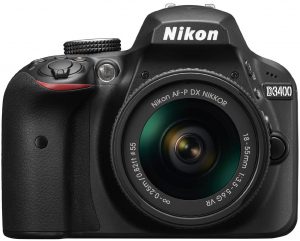
Are you looking for an excellent DSLR for your requirements? Well, Canon and Nikon have been the two popular manufacturers you would find coming up with world-class cameras that have focussed on providing you many practical use cases. In today’s post, we will focus on comparing the two best cameras from them and decide as to which one should you buy among the two. Now that we are aware of the popularity enjoyed by Canon and Nikon cameras, we thought of picking the two best devices from each of these two brands and comparing them. We will compare Canon 1500D vs. Nikon D3400 in this post.

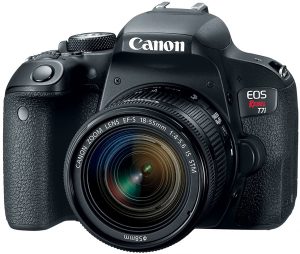
The Canon 1500D – An Overview

Canon 1500D is an excellent camera for the beginners. The 24.1 MP MP sensor with APS –C size. Some of the features worth mentioning concerning the 1500D are its upgraded autofocus system and offers a better grip on the camera that helps you handle it with ease.

Notably, it also comes with a WiFi and NFC connectivity options to help you share your photos and images almost instantly. Availability of 5 creative filters would serve to provide better shooting experience that suits the ambiance. The Live View mode should be your best bet against an assured fine-tuning of your composition.

The Nikon D3400 – An Overview

In case you are taking your first step towards the direction of DSLR photography, D3400 should be your best option. The SmartBridge technology that helps you connect to several devices right away.

The 24.2 MP sensor has an 11 point autofocus system. The D3400 comes with a full HD video shooting capability at 1080p at 60 fps. The lightweight camera fits every situation quite well and works as your reliable companion to shoot your dream moments right away.

Which one should you Go With? Canon 1500D vs. Nikon D3400

Well, let us compare the two cameras based on separate parameters. That would help you transparently understand the two competitors so that you would be able to make a well-informed decision.

The Summary

Features/Particulars

Canon 1500D

[amazon_link asins=’B06VT2NQD8′ template=’PriceLink’ store=’foi04-20′ marketplace=’US’ link_id=’7b529769-77e0-11e8-b8bc-4f566888d218′]

Nikon D3400

[amazon_link asins=’B01KITZKDE’ template=’PriceLink’ store=’foi04-20′ marketplace=’US’ link_id=’843119fa-77e0-11e8-af0f-67e12828909d’]

Connectivity Options WiFi, HDMI, NFC WiFi, HDMI, SmartBridge
Sensor CMOS CMOS
Resolution 24.1 MP 24.2 MP
Flash Sync speed 200 200
Storage 1 Slot, SD/SDHC/SDXC 1 Slot, SD/SDHC/SDXC

Video Performances

Features/Particulars 1500D D3400
Resolutions available 1080p, 720p, VGA 1080p, 720p
FPS 1080p at 24,25 and 30 fps

720p at 60 fps

VGA at 30 fps

1080p at 24, 25 and 30 fps

720p at 60fps

Video file format MOV MOV
Image Stabilisation Yes Yes

The Lens Capacity

Features/Particulars 1500D D3400
Auto Focus points 9 11
Shutter speed 30- 1/4000 30- 1/4000
ISO 100-12800 100-25600
Auto Focus system Contrast detect, phase detect, traditional autofocus Contrast detect, phase detect, traditional autofocus

Dimensions

Features/Particulars 1500D D3400
Physical Dimensions 101.3 x 129 x 77.6 mm 124 x 98 x 75.5 mm
Weight 475 grams 395 grams
Rugged build No No
Color Options Black Black


Sensor Details

Features/Particulars 1500D D3400
Model DIGIC 4+ Processor Expeed 4 Processor
Type CMOS sensor Digital SLR
Sensor size 22.3 x 14.9 mm, APS-C inch 23.5 x 15.6 mm, APS-C inch
Effective resolution 24.1 MP 24.2 MP


Image Preview

Features/Particulars 1500D D3400
Display Time LCD LCD
Display Resolution 920000 dots 921000 dots
Supported Languages 25 36
Display Size 3.0 inch 3.0 inch
Viewfinder Penta Mirror Penta Mirror
Brightness Adjustment Yes Yes


Flash Details

Features/Particulars 1500D D3400
Hot shoe support Yes Yes
Built-in Flash Yes Yes
Features External flash, Flash exposure compensation External flash, Flash exposure compensation
Flash Range 17 metre 12 metre
Viewfinder Penta Mirror Penta Mirror
Brightness Adjustment Yes Yes

Reasons in favor of Nikon D3400

Features/Particulars 1500D D3400
Sensor size for Image CMOS, APS-C – 22.30 x 14.90 mm CMOS, APS-C – 23.50 x 15.60 mm
Native ISO 6400 12800
Continuous shooting 3 fps 5 fps
Battery life 500 shots 1200 shots
Weight 425 grams 395 grams
Metering Method Center-weighted, Metrix, Spot Evaluative metering (linked to all AF points), Partial metering (approx. 10% of viewfinder at center), Center-weighted average metering
Audio Recording format PCM Linear PCM
USB Micro USB 2.0 Micro USB

What would we suggest?

Well, the comparison above should give you a definite idea about the differences between the Canon 1500 D and Nikon D3400. Ideally, the Nikon D3400 should be a good choice among the two for the obvious reasons as is evident from the comparison tables based on different aspects of the cameras.

The Nikon D3400 should be your best option if you are looking for the better low light performance. The sensor on Nikon D3400 has a better sensor with more responsive to the light. Another feature you would love with the Nikon D3400 is the improved autofocus functionality. D3400 offers you an 11 point autofocus system as opposed to the 9 points available on Canon 1500D.

Finally, impressive continuous shooting speed and better performance regarding video recording should make you opt for the Nikon alternative. One of the issues we came across while using the Nikon D3400 is, however, the slower wireless connectivity. We do not think it should have any bearing on your decision as the primary concern would be to get better pictures and videos.

The Parting Thoughts

That would conclude our comparison between the two ably popular and capable digital cameras based on the key features. We have sourced our information from the official sites and product descriptions. The hands-on experience with both the cameras has let us differentiate the features and functions of both the competitors in more exquisite detail.

In fact, when you buy a camera, it depends upon the individual preferences you may have. That is precisely why we have opted for a tabular comparison. This should go a long way in pinpointing the exact feature you are interested in and choose a camera that best meets your expectations.
Do let us know which camera you opted for among the two competing devices as featured in the above discussion. Your feedback can be helpful for us in making a learned choice for the best camera for your requirements.

Fujifilm X100T vs. Leica M9: Specifications Review and Comparison

A photo is better than thousand words, and a video is, even more, to portray something to the audience. To capture or record something marvelous, you need an excellent camera to freeze the moment. Generally speaking, it is not that easy to find a camera in your price point that takes fantastic stills and video. Fuji and Leica are two well-known names in the field of the camera. Fujifilm X100T and Leica M9 come under the not so same category and users are often confused which one will be better for them. Today’s post topic is the comparison of Fujifilm X100T vs. Leica M9.

Both these cameras have been on the market for quite a long time. FujiFilm is the newest one among the two, but Leica M9 is a high-end still in demand among the camera enthusiasts.

Fujifilm X100T vs. Leica M9 – The Comparison

Fujifilm X100T vs Leica M9
Features

Fujifilm X100T

[amazon_link asins=’B00NF6ZGY6′ template=’PriceLink’ store=’foi04-20′ marketplace=’US’ link_id=’af80e268-760a-11e8-aae1-fd282d8414a1′]

Leica M9

[amazon_link asins=’B002NX13LC’ template=’PriceLink’ store=’foi04-20′ marketplace=’US’ link_id=’ba2a6123-760a-11e8-b2b0-47a68518428a’]

Number of effective pixels 16.3 MP 18.1 MP
Image sensor APS-C Full frame sensor
Body Type Fixed lens compact Rangefinder-style mirrorless
Supported Memory Cards Internal memory (approx.55MB)

SD memory card / SDHC memory card / SDXC (UHS-I) memory card

No inbuilt storage

SD Memory Card, SDHC Memory Card

Display 3 inches LCD 2.5 inches LCD
File Format Still image:
JPEG (Exif Ver 2.3)
RAW (RAF format), RAW+JPEGMovie:
MOV (H.264, Audio: Linear PCM / stereo sound) 1080p at 60fps
Still image:
DNG (RAW), JPEGMovie:
Does not support
Exposure Compensation -3 EV to +3 EV range, in 1/3 EV steps -3 EV to +3 EV range, in 1/3 EV steps
Self-Timer Delay 10 sec. / 2 sec. Delay 12 sec, 2 sec
Continuous Shooting Speed 6 frames per second 2 frames per second
Image Sensor Size 23.6mm x 15.6mm 24 x 36 mm
Wireless connectivity WiFi IEEE 802.11b / g / n No
Wireless function Image transfer, Remote camera shooting, Instax printer print, PC Autosave No
Connectivity USB 2.0,
HDMI Micro connector (Type D),2.5 mm audio input stereo mini connector
USB 2.0
No HDMI
Battery NP-95 Li-ion battery (included) Lithium-Ion rechargeable battery
Dimension 126.5mm x 52.4mm x  31.0mm 139 x 80 x 37 mm
Weight 440 grams 585 grams

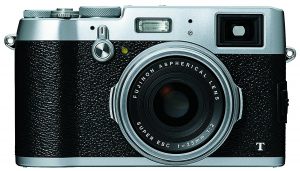
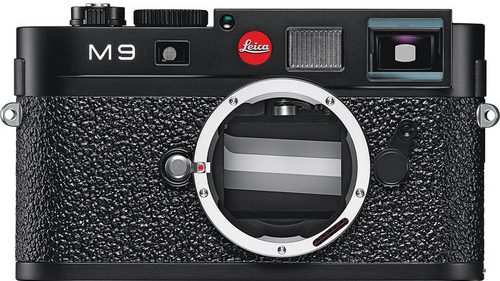
FujiFilm X100T is a fixed lens compact camera while the Leica M9 is a rangefinder style mirrorless camera. Now, starting with the camera dimension and weight. If we see both the cameras from the front, it is the Leica M9 which is longer and broader than the X100T. But the FujiFilm X100T has more depth that is because of the built-in lens. The Leica M9 is also heavier of the two with a weight of 585 grams as compared to 440 grams weight of the FujiFilm X100T.

I found handling and ergonomics better on the FujiFilm X100T. You can easily access all the buttons without dropping it. But the Leica M9 is not bad either it has just more weight and slightly bigger size that creates a bit issue for some users. But the flexibility to change the lenses is excellent that the X100T mises.

Check out the X100T Pictures available on Flickr,

Now, its Leica M9s turn: Source: Flickr

Fujifilm X100T vs. Leica M9: Sensor Comparison

The sensor is the core of the digital cameras. The size and quality of the sensor being used play an important role in deciding the image quality. A large sensor is better for low-light sensitivity and rich color depth. It will offer users a wide dynamic range and better control over depth of field and objects. Out of the two cameras, the Leica M9 has a full frame sensor whereas the FujiFilm features an APS-C sensor. The M9 wins here with a 135% bigger sensor. Also, with the 18.1 MP, the M9 offers high resolution over the X100T 16 MP camera.

The Leica M9 has a larger pixel pitch of 6.91 μm. Here again, the FujiFilm X100T loses with its 4.80μm pixel pitch. But the X100T is a much more recent model. It was launched back in 2014 five years after the M9. Its sensor has more technological advances over the Leica M9 which bridges the gap between the two cameras. But neither of the two cameras has an anti-alias filter.

Leica M9 being the older one among the two does not offer movie recording capabilities. But you can do same with the FujiFilm X100T with the highest resolution of 1080p at 60 fps. If you are buying the camera for still photography, Leica M9 could be a better option for you. But for movie recording, M9 is not even in race and X100T is a clear winner here.

 Fujifilm X100T vs. Leica M: Features comparison

Apart from the dimension and sensors, few other features in a camera also hold importance in the overall performance of a camera. The FujiFilm X100T has an electronic viewfinder while the Lecia M9 comes with an optical one. Every technology has its advantages and disadvantages. While the optical viewfinder delivers lag-free viewing and clear image framing, the electronic viewfinder allows projecting supplementary shooting information.

Overall few more things are in favor of FujiFilm X100T. The FujiFilm X100T has a relatively large 3 inches LCD as compared to the 2.5 inches in the Lecia M9. A large display is always better as it allows easy image review and settings control. The X100T also got faster burst time with 6 fps vs. 2 fps/sec in the M9. The FujiFilm also got a built-in lens which makes it ready to shoot out of the box. But you have to buy a compatible lens for the M9, as it does come with any in the box. Also, the X100T is more compact and easy to carry around.

If you see above, as we have already stated, Leica M9 is not a wrong choice by any means. It has more megapixels, brighter framing. It is more flexible with the interchangeable lenses. You can use different lenses for different optics requirement. It still performs well but only with still images. It does not support video recording which is a significant drawback of this camera when we are in 2018.

Overall, both the FujiFilm X100T and Leica M9 has their pros and cons. In some cases, M9 proves better whereas sometimes X100T comes out as a better choice. But if I have to choose one, I will surely pick the FujiFilm X100T. It is more technologically advanced and ahead of the Leica M9. There are a lot of other things that are in favor of X100T over the M9 which we have discussed above. Moreover, the FujiFilm X100T is cheaper. Thus it would not make any sense to choose the Leica M9 over the FujiFilm X100T.

Best Panasonic G7 Cine-Like D Settings for 4K Video Shooting

Panasonic Lumix G7 is one of the excellent cameras out there has been getting a few best rave reviews. In fact, what makes it one of the excellent choices is the host of settings that it packs in. One of them is Cine-Like D (Panasonic G7 Cine-Like d Settings). What precisely these settings are and how would you get the best video shooting for the excellent output? We will discuss the concept in more exquisite detail.

Best Panasonic G7 Cine-Like D Settings for 4K Video Shooting

Check on Amazon

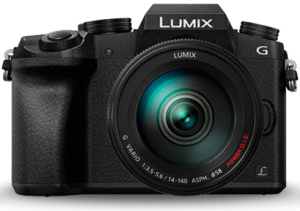
Panasonic Lumix G7 – An Introduction

Well, the Panasonic G7 is one of the prominent cameras you can depend upon for an excellent performance regarding video shooting. It offers you a 16 MP resolution. That should be at par with the slightly higher 18 MP resolution found in most of the DSLRs out there.

You cannot expect the best 4K or similar kind of shooting at that price range, but that should not be something you would need to worry about. Of course, you can rely on a few tips and tricks to achieve the best functionality as long as video quality is concerned.

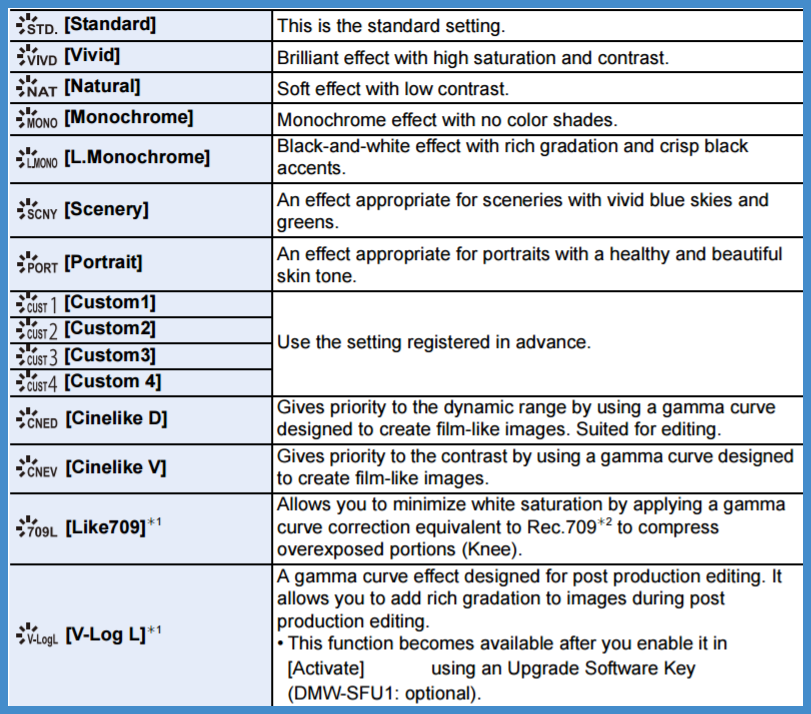
The camera comes with a host of preset settings. One of them is Cinelike D. This, along with another shooting mode referred to as Cinelike V have been specifically designed for video shooting. How to get the best settings for those modes and how to get the best cinematic level of video shooting? Let us check it out.

Panasonic G7 Cine-Like d Settings

Best Panasonic G7 Cine-Like D Settings for 4K Video Shooting
Source: Panasonic

What is Cinelike D Mode?

The Cinelike D on Panasonic G7 is one of the excellent features that would help you get the best settings for your videos. You can check out your subject and arrive at the best settings for your Cinelike D mode.

The Cinelike D mode is specifically meant for those if you are someone who wants to do the color correction in the post-production. The mode would help you retain a lot of color and contrast while dealing with the post-production. The Cinelike V mode, on the other hand, would handle all the color corrections on the camera itself.

We will be focussing on the Cinelike D mode for video shooting and check out which settings would work the best for a complete (or at least, almost) cinematic video shooting experience.

How to set up Cinelike D Mode on your Panasonic G7?

There are multiple videos available over the internet that suggest the best Cinelike D settings for Panasonic G7. In fact, the settings should be dependent completely upon your subject and the ambient conditions.

Here is how you can set up the Cinelike D Mode on your Panasonic G7 –

  • Press the button for You need to press the middle button for the purpose. Consult your instruction manual for a better understanding of the buttons and controls.
  • Go to Photo Style
  • Press the left or right buttons until you find the Cinelike D
  • Confirm the action with the middle button.

That should do it. You have successfully activated the Cinelike D mode on your camera.

What are the Best Settings to be used with Cinelike D Mode?

As we stated before, that should ideally be dependent upon the ambient conditions to a better extent. Apart from choosing the shooting mode as Cinelike D, you would also need to complement it with a few other settings so that you would be able to shoot videos with a perfect and truly cinematic quality in your videos.

The exact settings would be dependent upon your personal preferences. In fact, photography and videography are creative arts and that would emphasize the importance of the creative angle of the person who is shooting the videos. However, let us suggest a few settings that may be helpful so that you can experiment further.

Most users suggest opting for as much natural or standard settings when you are shooting in Cinelike D mode. The LUT settings may not have any bearing on the quality you would get as far as our knowledge ( and even that of experts) goes.

Combining the suggestions from a host of experts and common users, we would suggest the following settings for better and lively color settings –

  • Opt for a Natural Profile along with Cinelike D mode.
  • Customise it with these settings

Set Contrast to 0

Set Sharpness to 0

Set Saturation to 0

  • You can slightly alter the settings to match your perception of the color grading.

However, we have also come across a few users who have claimed that the following settings would work great.

  • Standard Profile
  • Set NR to -5
  • All other settings to 0

One other setting that would probably work great for an excellent color grading can be opting for Natural Profile along with Cinelike D mode and use it with a good Conversion LUT. You may need to look for a good Conversion LUT from reliable sources in combination with the Cinelike D mode. Ensure that the Conversion LUT you are using is compatible with your Panasonic G7.

The Concluding Thoughts

Cinelike D Mode on the Panasonic G7 has been touted as the best one for shooting cinematic quality videos on your camera. However, the feature does not seem to have received any good reviews from the users and experts alike.

In any case, we would assume that a couple of settings that we have listed here should work towards offering you the best performance as long as the color grading is concerned. Use them in different combinations and check which settings provide you the best results. When it comes to quality videos, a trial and error option should indeed be the best you can opt for.

Which among the above settings have you been using on your Panasonic G7 for a truly cinematic video shooting performance? Do share your inputs on the settings that we have shared. In case you are a professional photographer or someone who has a better experience in the field of videography, please chip in with your share of settings so that we and our readers would stand to gain from your expertise.

Best Dimmable LED Light for Video and Photography Kit Within Budget

If you are considering to improve your photography or videography with the correct amount of lighting, the On-Camera LED lights are what you should prefer. They can indeed be the most cost-effective and beneficial regarding added effects. We would indeed suggest the Dimmable LED light because of the vast list of advantages that the LED lighting would offer for your enhanced levels of photographic excellence.

Why use LED lights in Photography?

Well, the LED lighting would offer you a high degree of excellence and benefits. One of the significant advantages would be a cost-effective manner that these tiny lights provide. Apart from that they also help you out in several other ways that would be beneficial in its own right.

Some of the advantages offered by LED lighting can be summarised as here below –

  • LED lights are cooler, as opposed to the heat generated by the traditional flashlights and other lighting arrangements in your studio, you would find LED lights running quite cooler. That would make the photography experience quite comfortable. A LED light can be fitted in a corner that may be inaccessible, where a traditional light source may not provide.
  • You can buy them in multiple colors and hues –LED lights are available in different colors, tones, and intensities. You can adjust them as per your needs in your camera settings and the exact ambiance that you are looking for, and in essence, they would help you be more creative. You can buy your LED lights in both tungsten and daylight balanced. Of course, the bicolor adjustments are essential as your camera can see the slightest differences in the intensity of the light.
  • LEDs are energy efficient –By using LED lights, you are bringing your overheads down. They convert almost 80 percent of energy into light and thus save your electricity. Experts say that an LED can provide the light that is equivalent to three tungsten bulbs.
  • They are Environment-friendly – If you care about the nature around you, we advise you to go for LED lighting. Also, they offer you more life, thus reducing the e-waste you may be generating. Less consumption of energy would make it another feature that would make LEDs an excellent option compared to the traditional lamps.
  • Use lighting as per your needs –Traditional flash guns produce a higher burst of light. The LED lighting will ensure that you get enough light to meet your needs. That would help let you get enough lighting as per the scene requirements you may have. The best way to get the right light is through LED light than going the hit and miss option available through traditional lighting systems.

Dimmable LED light – Our Picks

Having gone through the advantages of the dimmable LED lights that are effective enough for your camera, let us move ahead to list a few best on-camera LED lights for your needs.

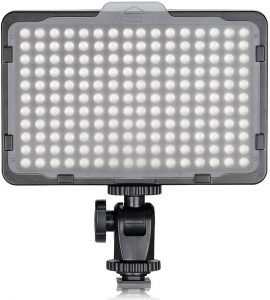
TOLIFO Photo Studio 176 LED

Check on Amazon

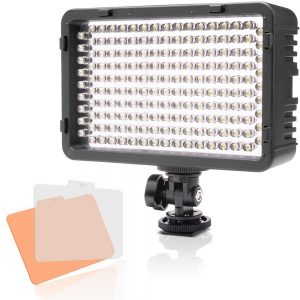
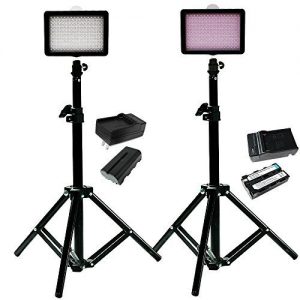
The dimmable LED light comes with 176 LED Bulbs. If you are looking for variation, the light offers you transparent and orange filters to soften the light. With the thread at the bottom end, you should be able to fix the LED bulb onto a stand easily.

Some salient features that would make it an exceptional choice can be

  • You have access to broader lighting ranges to suit your exact photography needs.
  • They can work both on battery or DC supply.
  • It comes with a digital display screen design to get the most accurate settings.
  • Compatible with almost all major camera brands, including Canon, Nikon, Pentax, Panasonic, Sony, Samsung, and Olympus.
  • The LED light is durable and lightweight.

If you find it interesting, you can check it out on Amazon.

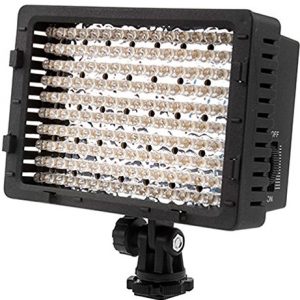
NEEWER 160 LED CN-160

Check on Amazon

Neewer has been a name to reckon with when it comes to LED flashes and LED lights for cameras. The NEEWER 160 LED CN-160 is one of the top-selling LED Light for your camera. The light comes with 160 LED bulbs for providing excellent illumination and diffusing needs.

Some of the features that would make it an excellent service in its own right are –

  • It features 16 powerful LED bulbs for a complete illumination package.
  • The LED light also comes with a set of diffusers to soften the color temperature.
  • It can be your best bet for durability, portability, and lightweight features.
  • You have access to a standard shoe connection that would aid in making it usable with any camera brand.
  • It has a rotate switch for adjusting the brightness.
  • The light intensity can be adjusted as per your scenes.

Seems impressive enough? Why not take a look at it on Amazon.

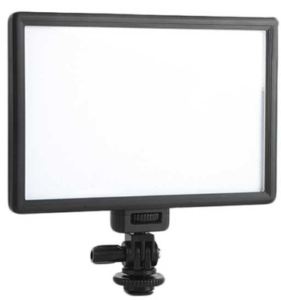
VILTROX L116B

Check on Amazon

Viltrox has been the recipient of several certifications, prominent among them being CE, EMC, FCC, and RoHS. That should prove the efficiency of the LED lights manufactured by Viltrox. The natural lighting is what they excel in.

What makes us believe in them? Well, we assume these reasons would suffice –

  • The light comes with an efficient diffuser for avoiding harsh light.
  • The LED light offers you a bicolor adjustment. You can adjust both the color temperature and intensity of light output with the aid of a knob.
  • It ensures that you get perfect sunlight like lighting.
  • It makes use of PWM light adjustment technology.
  • Brightness can be adjusted by +10 to +10 percent.

If you think it is your best bet, you can check them out on Amazon.

Selens 168 LED Dimmable Ultra High Power Light

Check on Amazon

Selens 168 LED Light should solve all your issues in handling the low light situations that you may face when photographing your day away. The rotate switch can be used to adjust the brightness as per your needs and to switch on or off the LED light.

Some of the features worthy of mentioning can be summed up as

  • You can adjust the color temperature of the light to meet your needs.
  • The LED light can be used with five different types of batteries and thus makes it one of the best options for your requirements.
  • The dimmable light intensity should make it one of the prominent choices for your needs in the adjustable light.
  • The LED light comes with a full shoe mount. That would make it an excellent option for almost all cameras.
  • You can use it with multiple installations.

If those features impress you and you would want to give it a thought, you can do so on Amazon.

Julius Studio 160 LED

Check on Amazon

The Julius Studio 160 LED is undoubtedly one of the excellent options for your needs in LED light for your photography requirements. And yes, what makes it a great choice is it comes with the light stand along with the package.

Why should you opt for it for your needs in the LED light? Maybe the following can offer you a reason –

  • It comes with a set of LED light stands. That should make it a thoughtful decision on account of Julius.
  • The LED light comes with four color filters in white, orange, blue, and pink
  • The LED light is compatible with almost all models of Canon and Nikon cameras.
  • Lightweight and portable design should make it the best option for outdoor shooting needs you may have.

In case if you think that makes it an excellent option for your lighting requirements, look no further than Amazon.

NEEWER CN-216 216PCS LED

Check on Amazon

Last but not least – here is another great LED light from Neewer. One of the excellent options in the dimmable LED lights for an excellent natural lighting experience, the NEEWER CN-216 216PCS LED, produces brighter and clearer lighting.

Want to know what makes it an exceptional choice? Check them out –

  • The LED light comes with 216 LED bulbs for perfect illumination.
  • You can use it in a broader variety of DSLRs and digital cameras.
  • The LED bulb comes with a standard general hot-shoe arrangement making it compatible with almost all major camera brands.
  • The LED light comes with multiple dimmer control switches. You should be able to adjust the brightness precisely to your requirements.
  • You can make use of it for a wide range of applications. Some of the possible applications include portrait photography, industrial product photography, and illumination.

In case if you are interested in LED light for your needs? Check it out on Amazon.

The Concluding Thoughts

That would conclude our top picks for the best dimmable LED lights for your cameras. Not that the list is exhaustive in any manner. However, this would let you gain entry into the exciting world of lighting. Check out the options you have at your disposal and enjoy the best indoor lighting for your needs.

Have you used any of the LED lights we have featured in this compilation? Share your thoughts and experiences with the LED lights with us. Also, share any good options that we may have missed.

Shooting Tables For Product Photography Table Top Studio – DIY – Height

Product Photography is one of the primary photography categories that a corporate sector will most likely be offering. To master Product Photography, you would need to develop your work in a controlled studio environment.

In today’s online market, Product Photography will help you work through the online and offline advertising channels of your corporate clients. The quality of product photography will ensure the marketability of the products that you are shooting images of.

One of the essential elements you would need for efficient product photography is a Shooting Table for your product photography. Let us check out a few best Shooting Tables for product photography in the following paragraphs.

What is Product Photography?

Product Photography is what you would use to showcase the products attractively so that the clients would be enticed to buy your products. You, as a photographer, would make use of specific techniques to create the best product portfolios.

Product Photography forms part of an efficient advertising campaign. It can be utilized for a wide range of advertising platforms including brochures, magazines, billboards, and websites. An essential tool you would need is the Shooting Table for your Product Photography requirements.

Shooting Tables For Product Photography

A Shooting table is a perfect lighting table that would help you illuminate the product at all levels. In fact, it would be quite ideal equipment in Product Photography while shooting smaller or medium-sized products. You should get a bright white background when you take photos of your products.

Of course, a shooting table can be created within minutes if you are indeed an expert. However, if you are not, and looking for the best Shooting Table for your needs – here are our best picks for your needs. In many cases, the shooting tables come as part of a package that includes several other components needed for product photography. Let’s check them out!

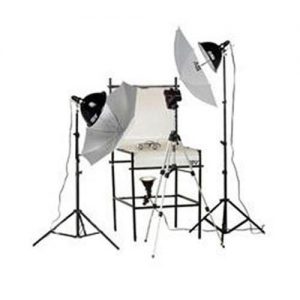
Smith-Victor TST Digital Desktop Studio Kit

Check on Amazon

It should be an ideal option for all your needs in product photography. The product comes complete with all the required components for your product shooting needs.

Here are the features that would make it an excellent option –

  • The package comes replete with shooting table, lights complete with dimmers, and mounting arms.
  • You can get almost all types of lightings included dramatic lighting and high essential lighting.
  • The product comes with the Q250 light head that would provide excellent illumination.
  • You may also get diffusion agents for a softer tone.

Looks inspiring enough? Check them out on Amazon.

Flashpoint Shooting Table with Plexi Glass

Check on Amazon

In case if you are looking for an affordable option and just the shooting table for your needs? Well, the Flashpoint Shooting Table with Plexi Glass can be your excellent choice. The bright white background required by your product images can be quite comfortable and straightforward with the shooting table.

Some of the salient features we would mention include –

  • It comes under the classic transit table that veteran photographers use.
  • It should be your ideal solution for shooting transparent items like crystal and glassware.
  • It can either be lit from the front to remove shadows or can be backlit for spotlighting the products.
  • You have access to a three-way translucency that can provide a shadow-free result.
  • Foldable design makes it extremely portable.

If you find it a practical solution for your needs, you may get more information from Amazon.

JTL Still Product Table

Check on Amazon

If you are into still product portfolio, the JTL Still Product Table can be your best option for your needs. The highly portable design is what would make it one of the excellent choices.

What are the features that would make it a great alternative to the expensive options you may have? Here are our reasons –

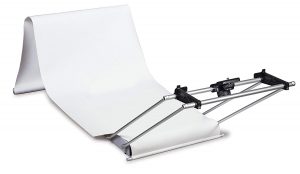
  • It features a milky white surface that would provide an excellent background for all your needs.
  • The fabric used is made of durable nylon and thus can take loads up to 18 pounds.
  • Assembly and dismantling of your shooting table are quite simple and easy to follow.
  • Highly portable design.
  • You can use lighting from any side or even from beneath.

If those features impress you enough, you can check the more features at Amazon.

Smith-Victor TST-P2

Check on Amazon

Economical, durable, and space-saving – that is precisely what we can term Smith-Victor TST-P2 as. The shooting table is available as part of a kit and comes with all the essential elements like lights and filters.

A few salient features we found interesting with the shooting table are –

  • It offers you a one-stop solution for all your product photography requirements.
  • The shooting table kit comes with one ST24 Opaque Base Module and CM24 Clear Module. You can use them together or separately.
  • The load capacity of the table is 30 pounds.
  • The package comes with two 12″ and one 5″ tungsten flashlights.
  • You have two white umbrellas as part of the kit.

If the features have made you opt for the product, you may consider checking it out at Amazon.

Kaiser 205906 Studio-Out-of-the-Box Kit

Check on Amazon

The shooting table kit in its utter simplicity. That should be what we treat the Kaiser 205906 Studio-Out-of-the-Box kit as. An affordable shooting table with smooth controls, it is one of the accessible tools for your product photography.

A few excellent features that would make it an excellent choice can be –

  • It comes with a trapeze that helps to position the camera at any position.
  • The shooting table is positioned on the pivot table.
  • You can also lock it for any vertical shooting position as well.
  • You can also use it with smartphone cameras – thanks to the rubberized clamp for the purpose.

You can check it out on Amazon.

The Concluding Thoughts

The Shooting Table is one of the excellent options for product photography. However, choosing one may not be an easier task. In fact, we would suggest you opt for the complete kit as that would offer you a perfect option for your needs. Moreover, the additional items included in the package would be entirely compatible with the shooting table, and as such, you would not need to search for the components.

What would you think of the products we have featured above as long as your product photography requirements are concerned? If you have used any of them, we will welcome your views, opinions, and experiences with the shooting tables featured in this compilation.

Best LED Ring Light For Macro Photography – Canon & Nikon DSLRs

Are you into Macro Photography and portraits? Ring lights and flashes are what you would invariably need for enhancing and improving the performance of your pictures and other masterpieces. The LED ring light would provide your objects with symmetrical lighting. Moreover, you can also use them for a wide variety of configurations for your creations. If you are using Nikon or Canon cameras and looking for the best-LED Ring light flashes for your portraits and macros – you have possibly reached the right spot. We are listing out the best-LED ring lights for Macro Photography for your world-class cameras.

Do you Need a Ring Flash?

Well, LED Ring Flash is an essential option if you are looking for even lighting on your object. They can indeed be the necessity in case you are into Macro photography. In fact, LED Ring flashes would be of much help in enhancing your macro photography to a greater extent.

Macro Photography involves shooting the smaller objects from close quarters. Your built-in flash may work wonders for your regular shots but may underperform in case of close up shots. Moreover, macro photography needs you to use specialized settings and shooting from the closer distances. In fact, closeup shots of flowers, plants or insects bring about those aspects out that may not be visible to the naked eye.

The closer distance will cast a shadow on the object and thus ruin your shots. A regular flash would not be practical in these cases. They would leave your shots either overexposed or underexposed. The LED Ring Flash would go a long way in solving these exposure and shadow related issues. These LED ring flashes produce an even illumination and enhance the effect of proper lighting. The possibility of getting diffused light from all directions would improve your macro masterpieces and get the desired effects easily.

LED Ring Light

Macro Photography needs closer attention to proper lighting. The shadows created by you or the lenses can ruin the entire experience of your photographs. That is precisely why you would need to have a proper light source to illuminate the object in an even manner.

Let us find a few LED Ring Light flashes for Macro Photography for your Canon and Nikon Cameras.

Canon MR-14EX II

Check on Amazon

Coming from the well-known camera manufacturer, the Canon MR – 14EX II comes with ergonomics and better controls. The E-TTL II technology ensures the best performance in its own right.

What are the features that we would appreciate on Canon MR-14EX II? Here are a few that may impress you –

  • It comes from two focusing lamps on either side for an efficient illumination.
  • An excellent focussing depth at lower aperture settings.
  • The 5.5 seconds recycling time will ensure that you can take a series of images so that you would not lose any moment.
  • You can control shades to provide different looks to your shots.
  • It comes with a unique carry bag that would make it easy to transport.

The Ring light LED flash from canon is outstanding with its features, but may not work with some cameras and you may need a special adapter for the purpose.

Want to check it out? You can get more info on Amazon.

Neewer Dimmable 18-inch Ring Light

Check on Amazon

Neewer has been a name to reckon with when it comes to flashes and lights for your cameras. The Neewer Dimmable 18-inch Ring Light should be an ideal companion for your clearer portraits and macros.

What are the features that make it one of the excellent options for your needs? Here are the features you may be interested in –

  • The LED ring flash comes with a hot shoe mount so that it can be used with any camera right away.
  • It offers you ample lighting and provides a high degree of flexibility and customization.
  • The height of the stand is quite suitable for most of your requirements.
  • A longer cord accompanying the light lets it be placed anywhere and thus ensures the kind of lighting you are looking for.
  • If you are into product photography for E-commerce sites, it can be a good option for your needs.
  • The ring flash comes with white and orange filters. You may use white filters if you are looking for milder light profiles, while the orange filter would help you get a better color effect.

The LED Ring flash has been considered to be your best option for all your needs in portraits, makeup, and video tutorials.

Did those features impress you? You may check out other features on Amazon.

Sigma EM-140 DG

Check on Amazon

Sigma is involved in the manufacturing of cameras, light filters, flashes and other photography accessories. The Sigma EM-140 DG is the LED Ring flashes that have been manufactured in a customized manner to suit different cameras. We have focussed on the Ring Flashes made explicitly for Nikon.

Here are a few excellent features that would make it a great option can be summed up as –

  • The flash is ideal for close up photographs.
  • The two lamps on the ring flash can work together or individually.
  • It comes with a high-speed synchro mode.
  • The recycling time for the flash is around 4 seconds, and thus should be enough for the series of photographs.
  • It is compatible with the latest TTL standards for the excellent automatic exposure.
  • They have been considered to be the best option for the medical applications.
  • Precise focusing is what you would love with the Sigma EM-140 DG.

The LED Ring flash comes with a four-year warranty which in itself should be a fantastic option.

Want to give it a try? You may check them out on Amazon.

Polaroid 48 Macro LED

Check on Amazon

Polaroid has been the world-class manufacturer with the product portfolio ranging across multiple services and accessories. Some of the relevant products include ring flashes and LED lights for an efficient flash requirement. Versatility should be one of the features that would make it an excellent choice.

A couple of the best features you would love with the Polaroid 48 Macro LED can be –

  • The Ring Flash LED is compatible with most camera models including Canon, Nikon or Panasonic.
  • It comes with eight compatible adapters for varied applications.
  • You can control the output to meet your needs – 48 LEDs for full-fledged lighting and 24 LEDs for purposeful shadows.
  • You may also choose the Continuous On functionality so that the camera can decide on the best exposure levels depending upon the lighting.
  • You have access to softening diffusers – translucent, warming, white, and blue. White would produce a milder light, while other diffusers would help you create excellent color effects.
  • You also have access to Power Saving LCD screen.
  • It works both as a ring flash and a ring light.

The ring flash should work best with your Nikon cameras. That is precisely why it comes with eight adapters to suit multiple lenses of your Nikon.

Would you want to give it a try? You can check them out on Amazon.

AW Pro 19″ Light

Check on Amazon

It is quite more prominent, and, you would need a tripod or a stand to use it. The lightweight and highly portable Ring LED flash should be ideal for those who are looking for affordable options in a ring flash. It has been considered to be the biggest among the LED flashes that usually have been used.

The salient features that we love with the ring flash LED are

  • It comes with a hot shoe mount for compatibility with almost all major camera brands.
  • The LED flash has been treated to be the best option for makeup and portrait light.
  • The wraparound light included would be helpful in reducing the wrinkles in your portraits.
  • Ease of setup can be one of the features that would help in an impromptu shooting mode.
  • The dimmable light feature lets you set the light intensity to a level that you are looking for.
  • It also has a bracket that would help you mount it on light stands.

If you are interested in opting for the Ring Flash, you can check it out on Amazon.

The Concluding Thoughts

Well, that was all we have concerning LED Ring Flash and its impact on the quality of your photography. We assume that we have been able to bring forth the practicability of using a LED flash for the Macro photography levels you may be planning to achieve. The Ring LED Flashes we have listed out in the above compilation should help you choose the best that would meet your requirements.

Have you used any of these LED Ring Flashes for enhancing your Macro Photography performances? If you have, do share your thoughts, experiences, and views with the ring flashes we have featured in this compilation. Do share your thoughts with us as it would help us enhance our knowledge further.

Best Budget Rugged Underwater Camera Around $500 Point Shoot Options

The cameras have not remained to be what they used to be in the past. You want to carry them wherever you go – whether to you are on vacation or visiting a pool. That would make a waterproof camera a need you cannot live without. If you are looking for the best Underwater Cameras, your search should end with this post. We would assist you in searching for the best option in Underwater Cameras under $500.

Best Budget Rugged Underwater Camera – Our Picks

Of course, some cameras would suit every requirement. An Underwater Camera is the one that would resist water-based activities and can be one of the best options for those looking for the underwater photographs and videos. However, getting an underwater camera should not be a more onerous task as such. But what if you are looking for the affordability as well? That is precisely why we have set a cut off pricing of $ 500 for the sake of this discussion.

Before making it to the list, we would also want to bring up a concept referred to as Underwater Housing. There are several housings available that would claim to convert your existing cameras into a waterproof camera straightaway, but that would be something that would only provide support against the accidental exposure to water. If you are looking ahead for a truly realistic underwater performance, you would indeed need to opt for a good camera that can provide the underwater performance on its own.

Check on Amazon Price: [amazon_textlink asin=’B00FAHFD6O’ text=’NIKON 1 AW1′ template=’PriceLink’ store=’foi04-20′ marketplace=’US’ link_id=”]

Nikon 1 AW1 is not only an underwater camera but doubles up as the best camera with interchangeable lenses. In fact, it is the only underwater camera that has the interchangeable lenses.

Some of the features that would make it an attractive option would be

  • It suits a host of terrains and activities including kayaking, mountaineering, and underwater photography.
  • It has waterproofing capacity at up to 49 feet deep into the water.
  • The lightweight would make it the best when portability is concerned.
  • Shockproof 6.6 feet and freezer proof to up to 14 degrees Fahrenheit.
  • Faster focussing would help you miss those crucial moments. You cannot be sure of what you may come across when you are wandering in the wild.
  • Wireless sharing enabled on WiFi-enabled devices.
  • Shoot enchanting videos in full HD resolution.

It offers you a high-speed continuous focusing at 15 fps, making it the best option for taking the breath-taking shots in the wild. The interchangeable lenses are what would come as a handy surprise. In fact, it is the only camera with underwater functionality coupled with the interchangeable lenses that work effectively underwater.

Canon PowerShot D30 Waterproof Digital Camera

Check on Amazon, Price: [amazon_link asins=’B00I58LNF0′ template=’PriceLink’ store=’foi04-20′ marketplace=’US’ link_id=’079d7d77-7499-11e8-9fba-f51b9fac6ca1′]

Looking for a waterproof camera that is simple and intuitive at its best? Canon PowerShot D30 Waterproof Digital Camera can be your best bet.

The camera has been treated to be the best choice for those who are always outdoors. It suits the extreme conditions like underwater to the hilt. The Canon PowerShot D30 Waterproof Digital Camera is undoubtedly the one that offers most in-depth underwater performance.

What did we like the most about it? Here are our reasons –

  • It comes with an excellent scuba and snorkeling flexibility for up to 82 feet deeper into the water.
  • The Camera is shockproof up to 6.5 feet
  • You have temperature resistance between 14 to 104 degree Fahrenheit.
  • An excellent low light performance at 12.1 MP highly sensitive CMOS sensor.
  • You have access to a stunning 1080p video recorded with a dedicated button for the purpose.
  • Built-in GPS functionality would automatically timestamp your shots and videos with the location and time details.
  • The smarter camera ensures that you get better shots and videos.

The rubberized grip should be what would help you get the best option for carrying it underwater. Some of the features we indeed love with the camera are built-in GPS, electronic compass, mapping and 5x optical zoom capability.

Olympus TG-4 16 MP

Check on Amazon, Price: [amazon_link asins=’B072NDVNPN’ template=’PriceLink’ store=’foi04-20′ marketplace=’US’ link_id=’1ba66c73-7499-11e8-bcff-656c7a15f77c’]

Olympus has been a veteran in the field of waterproof cameras. The TG-4 is its fourth underwater camera that has been popular enough and capable at that!

The camera can be the best accessory for the scuba divers with its waterproofing ability to up to 50 feet underwater. A host of underwater shooting modes that the camera offers you should be what you would appreciate.

Here we go with a few features that we loved with the iconic camera –

  • At 50 feet waterproof capacity, it should be one of the best for snorkeling.
  • The camera comes with crushproof properties up to 220 lbs and a shockproof capability up to 7 feet.
  • The Olympus TG-4 is freezer proof for up to 14 degrees Fahrenheit
  • The 16 MP shooter allows you shoot the stills in RAW mode – an excellent gift for the professionals out there!
  • Specific underwater modes that would make your underwater photography one of the best. Some honorable mentions can be the snapshot, macro, and HDR modes.
  • It can capture brighter and darker areas and then arrive at beautiful night pictures. Olympus uses the proprietary Live Composite mode for the purpose.
  • Built-in GPS and WiFi connectivity.

Though the land photographs may not be impressive enough, the camera excels with its emphasis on the underwater shooting capabilities. It is indeed the best self-contained underwater cameras. In fact, it is the best after the Canon Powershot D30. The Olympus TG-4 packs in everything you would be looking in an underwater camera. The dustproof functionality and freezer proof functionality at sub-zero temperatures should make it an excellent option.

Panasonic DMC TS25D

Check on Amazon, Price: [amazon_link asins=’B00KHW3HRY’ template=’PriceLink’ store=’foi04-20′ marketplace=’US’ link_id=’25f45d4a-7499-11e8-9423-211e1908d65b’]

In case if you are looking for a cheaper option for the best underwater camera? Panasonic DMC TS25D lives up to your expectations.

The camera offers you the essential features you would expect from a waterproof camera. We have included it in our compilation from the perspective of our readers who may be tight on budget.

A few features that the camera can offer you include –

  • Waterproof up to 23 feet and meet almost all necessary underwater photography requirements you may have.
  • The camera offers you the shockproof capacity of up to 5 feet
  • The image quality may not be on par with the one from the other cameras in this compilation.
  • Though it has 4X optical zoom which it may not be sufficient enough, you can rely on the smarter digital zoom functionality provided additionally.
  • The camera can shoot your videos in MP4 through HD quality at 720p.

The dry land images do not inspire much. However, it can be a good option for those who are on a tight budget, yet want to experience the underwater photography at its best.

RICOH WG-30W

Check on Amazon, Price: [amazon_link asins=’B00OUX740W’ template=’PriceLink’ store=’foi04-20′ marketplace=’US’ link_id=’3049044a-7499-11e8-aca9-a9149deea026′]

If you are looking ahead for an overall best performance of an underwater camera? Check out RICOH WG-30W, and you will not be disheartened. In fact, it is the latest entrant to the waterproof cameras and performs well enough.

What would make it an enchanting option would be the introduction of what is called the Mermaid mode. Specially designed for underwater photography, the camera shows excellent performance.

Some salient features we loved with the tool include –

  • The camera offers you the underwater capability of up to 39 feet underwater for up to 2 hours continuously.
  • It has an excellent heavy-duty construction is capable of working under in any harsher conditions.
  • The RICOH WG-30W offers you a shockproof endurance of up to 5 feet.
  • Freezer proof capability is as low as 14 degrees Fahrenheit.
  • The camera also offers you crushproof properties to up to 100 kg.
  • The camera can be operated through a smartphone remotely through the WiFi connectivity.
  • The Macro mode comes with the Macro lights for excellent macro images.

The camera also features a microscope mode for an extreme close up image. The 16 MP camera offers you a standard 5x optical zoom feature out of the box.

The Concluding Thoughts

Waterproof cameras have been moving ahead with a host of features that were never heard of before. You have a brighter choice of cameras in this genre at a more extensive price range; it should be practically quite more stringent to zero in on a particular model for your underwater photography needs. That is precisely why we have compiled this list of our top five picks.

We have ensured that we have been able to include the models that would suit almost all genres of buyers. We would assume that the list lives up to your expectations. Share your thoughts, experiences, and opinions about the cameras featured in this compilation so that our readers would get first-hand knowledge of the cameras we have featured here.

Do let us know your experiences with any of the cameras we have featured in this compilation. You may also share any of your favorite underwater cameras here so that we would have a better horizon of choice.

List of Best Nikon 4K DSLRs For Video Shooting and Filming in 2018

0

Professional photographers vouch in the name of DSLRs and mirrorless cameras. The resolution requirements have also been growing with the focus shifting to 4K. The 4K compatibility is the ability to shoot high-quality video clips, though the technology can also expand to the quality of images being shot on the camera. We will be focussing on the best Nikon 4K DSLRs that offer you the best 4K functionality for this post.

Nikon 4K DSLRs – Our Choice:

The photography enthusiasts world over have been aware of the fact that Nikon is one of the trusted brands regarding high-end functionality and service quality. Let us list out the best 4K DSLR cameras presented by Nikon.

An Overview of 4K Enabled DSLR Cameras

DSLRs were introduced around two decades ago. They soon became the hot favorites with both professional and amateur photographers. There are a host of advantages that make them the best choices for compelling photography. Larger sensor sizes and interchangeable lenses just a few of them.

The 4K technology has been a new technology that has been making inroads into the psyche of the photographers, and the new 4K enabled DSLR cameras should be what would redefine the clarity and cinematic experience of the video shots without using the cinematography cameras. There have been a host of players when it comes to the capable 4K cameras. Some of the names worth the consideration include Panasonic, Leica, Sony, Nikon, and Samsung. The range of models available differs consistently across multiple pricing. You have the affordable 4K DSLRs and have the higher priced ones as well.

One of the advantages of using a 4K enabled DSLR cameras is the capacity to have a better and non-pixelated cropped image. Panning, tilting, and zooming tend to provide you the best in class performance if you have a 4K DSLR camera rather than on a traditional full HD capable camera. They also offer you a better low light performance. The 4K resolution is bound to provide you with more details in your shots and clips and thus can be quite useful for shooting videos with a more precise depth of field.

Nikon D850

Check on Amazon, Price: [amazon_link asins=’B07524LHMT’ template=’PriceLink’ store=’foi04-20′ marketplace=’US’ link_id=’0323c27a-6fe1-11e8-89f9-9f1cf5f8f5ff’]

Nikon D850 has been one of the most popular and best DSLR cameras we have ever come across. The Nikon D850 has been the ultimate choice when it comes to the full frame DSLRs as it offers you everything that you have looking ahead for in a DSLR.

The Spec Sheet

  • It offers you a full frame CMPS sensor at 45.4 MP
  • The screen size reads 3.2-inch tilt-angle touchscreen
  • 153-point AF, 99 cross-type points
  • Best in class dynamic range and high ISO performance.
  • The camera offers you a 7 fps continuous shooting functionality.

Nikon D5

Check on Amazon, Price: [amazon_link asins=’B078LLNTS9′ template=’PriceLink’ store=’foi04-20′ marketplace=’US’ link_id=’3a3f9496-6fe1-11e8-bb4b-bd3f3bb93ebc’]

Are you looking for a camera system that excels with the best Auto Focus system, this is what should appeal to you the most. The flagship DSLR from Nikon would be a stealer – thanks to the properties it packs in.

A  few features that would make it an exceptional option can be summarised as

  • The full-frame CMOS sensor offers you a 20.8 MP functionality.
  • You have access to 12 fps continuous shooting capability.
  • The 173 AF points offer excellent performance.
  • The D5 has been a camera that professionals world over would prefer.
  • The massive ISO range should make it an excellent choice in its own right.

Nikon D500

Check on Amazon

Employing the same sensor as on the D5 featured above, the DSLR can shoot up to 10 frames per second. You would find the high-end DX format for the body and its design. Enhanced autofocus and better video capabilities are what should make it an excellent choice.

Some of the features that would make it one of the excellent options are

  • You have access to a 20.7 APS-C sensor.
  • The high-end Auto Focus module would offer you 153 point AF points of which 99 are cross-type points.
  • Continuous shooting speed of 10 fps performance.
  • A host of connectivity options which includes WiFi, Bluetooth, and NFC.

Nikon D7500

Check on Amazon

How about a DSLR camera with the 4K video recording functionality at an affordable price tag? The newly launched Nikon D7500 would provide you the best answer to your needs. The camera indeed offers the best alternative to the mirrorless cameras and offers you an exciting option among the DSLRs.

Some of the features worth mentioning can be summed up as

  • Smooth aperture changes will ensure an excellent functionality
  • You have access to UHD recording at 30 fps.
  • It ensures you a leading image quality and other benefits in tune with the Nikon D500.
  • The affordable system has 51 point AF option with 15 cross-type points
  • WiFi and Bluetooth connectivity are the two connectivity options that would serve as the best when it comes to connecting your camera to other devices.

In Conclusion

That should be the Nikon DSLR cameras with the 4K recording functionality that tend to offer you the best feature regarding video recording efficiency. You may not find many options as of now in the 4K genre in DSLR cameras as things stand as of now. Maybe, we can foresee a few launches in a couple of years. The 4K technology is just taking off, and it could take a while before it assumes the level of a mainstream industry.

Have you used any of the Nikon DSLR cameras for your video recording needs? If you have, do share your thoughts and views with us. We would welcome your feedback for a better and hands-on experience concerning the cameras of your choice.

Tamron 150-600mm g2 Vs. Sigma 150-600mm Sports Specs Comparison

0

If you are looking for a good quality telephoto lens, you have landed on the right post. Today here at LensXP, we are discussing two of the best budget telephoto zoom lenses available out there in the market. If you are already looking for one, we consider that you might understand how a telephoto lens is different from a regular zoom lens. Still, here is a quick difference comparison between two telephoto lenses which might help you, understand them more: Tamron 150-600mm g2 Vs. Sigma 150-600mm

A zoom lens goes from wide angle to telephoto range using its variable focal length. In other words, you can change smoothly from a long shot to a close-up or vice versa by varying the focal length. The lens element assembly allows the users to change the angle of view using its focal range. However, the convenience of using a variable focal length design on a lens assembly comes at the cost of the following:

  • Image resolution data loss at maximum aperture
  • More heavy than conventional lenses
  • Longer dimensions
  • Inaccuracy in focussing the subject, especially in low light
  • High price due to more lens elements (24 Elements in 16 Groups on the Sigma)

The Tamron and Sigma lenses comes with a range of 150mm-600mm of focusing distance. To put it even more simply, it goes from low focal length value to high focal length value. The telephoto lens is made to work in high telephoto range. The view you get on your camera is highly dependent on the focal length of the lens you are using. If the value is extended, the things in front of camera appear magnified. If the focal length is short, it captures full area and objects appear smaller. Technically, there is particular meaning to a telephoto lens, in simple words, a telephoto lens is a lens with really long focal length.

So coming back to our topic, today, we are discussing following lenses:

Tamron 150-600mm g2 Vs. Sigma 150-600mm

First, we will look at the Pros & Cons of these lenses. See below:

Pros & Cons Tamron-sp-150-600mm (F5.0 -6.3)

Check on Amazon India

Sigma 150-600mm F 5.0 -6.3

Check on Amazon India

Has full-time manual focus 50mm shorter minimum focal length
Front element doesn’t rotate Has rounded aperture blades
18f smaller aperture at maximum focal length

40f vs 22f

0.1m shorter minimum focus distance (2.6m vs 2.7m)
850g lighter – 2.01kgvs2860g
10f smaller aperture at minimum focal length

32f vs 22f

Comes with reversible Lens hood


We will be comparing all the important technical aspects and specifications side by side so you can get a better idea. Moreover, we will discuss all the major differences descriptively and understand how they leave an impact on the overall performance of the lens. So without any more delay, here we begin:

Specs Comparison:

General

Specifications Tamron 150-600mm G2

[amazon_link asins=’B00HR6IPSE’ template=’PriceLink’ store=’foi04-20′ marketplace=’US’ link_id=’f61f6de5-6bfe-11e8-9a26-a5283352b6ca’]

Sigma 150-600mm Sports

[amazon_link asins=’B01BXUJF2O’ template=’PriceLink’ store=’foi04-20′ marketplace=’US’ link_id=’042906e1-6bff-11e8-b495-a95213fa6910′]

Packaged Quantity 1 1
Diameter 4.3 in (108.4mm max) 4.8 in
Length 10.2 in 121 x 290.2mm & 4.8×11.4in
Weight 1.95 kg [68.78 oz] 2.9 KG [100.9 oz]
Accessory Type Lenses Lenses
Manufacturer Tamron USA, Inc SIGMA

Dimension & Weight:

Let’s talk about the basic things first. Tamron G2 has a diameter of 4.3 and is 10.2 inches long. On the other hand, Sigma Sports has 4.8 inches in diameter and is almost a foot long. This difference is because Tamron G2 has a (13, 21) lens structure and Sigma Sports has a (16, 24) lens structure. We will discuss more this later in the post. It also leaves an impact on their weight. Tamron G2 weights 4.43 lbs while Sigma Sports is a lot bulkier and weighs 6.31 lbs. These figures do not affect their performance, but lighter and compact lenses are more convenient to carry around or operate. So Tamron 150-600 mm G2 is the edge here.

Carrying Case

Specifications Tamron 150-600mm G2

Sigma 150-600mm Sports

Included Accessories dust cap

lens cap

lens hood

tripod collar

dust cap

lens cap

lens case

lens hood

shoulder strap

Carrying Accessories:

The table above shows various carrying accessories you get with each lens. Both Tamron G2 and Sigma Sports ship with a dust cap (to be attached on the front when not in use), lens cap (to be connected to the back) and a lens hood. The hood is used to protect lens glass from harmful rays when shooting in daylight. However, it is not as useful as various lens filters (or polarizers) available out there. Still, better than nothing. Moreover, Tamron G2 offers a Tripod Collar, which is essential for mounting heavy lenses on the tripod. Unfortunately, Sigma Sports doesn’t provide one. However, Sigma sports come with lens case and shoulder strap, which altogether make it convenient to carry the lens around. So as it is clear, both lenses have their advantages when it comes to included accessories.

Lens System

Specifications Tamron 150-600mm G2

Sigma 150-600mm Sports

Type Telephoto zoom lens Telephoto Zoom Lens
Focal Length 150 mm – 600 mm 150 mm – 600 mm
Magnification 0.25x 5x
Image Stabilizer Optical (4.5 stops (CIPA Standards Compliant)
Using in VC MODE 3 )
Optical
Smallest Aperture at minimum Focal Length 32f 22f
Intended For 35mm SLR, digital SLR (Canon, Nikon, Sony) 35 mm SLR, Digital SLR (Canon, Nikon, Sony)
Optical Zoom 4 x 6 x
Series Di VC USD G2 DG OS HSM
Lens Coating Broad-Band Anti-Reflection coating (BBAR)

Extended Bandwidth & Angular-Dependency coating (eBAND)

Fluorine coating

Super Multi-Layer Coating

Water and oil repellent coating on the front & rear lens elements

Mounting Type Canon EF, Nikon FX, Sony Nikon F (Canon, Nikon, Sigma)
Special Functions Tele, zoom Tele, Zoom
Lens Aperture f/5.0-6.3 f/5.0-6.3
Minimum Aperture f/32 – f/40 (F/32-40) f/22
Min Focal Length 150 mm 150 mm
Max Focal Length 600 mm 600 mm
Min Focus Distance 7 ft 8.5 ft
Focus Adjustment automatic, manual Automatic, Manual
Zoom Adjustment manual Manual
Max View Angle 16.25 degrees (16°25′ – 4°8′ (for full-frame format)
10°38′ – 2°40′ (for APS-C format))
16.4 degrees (16.4º-4.1º)
Min View Angle 4.8 degrees 4.1 degrees
Group Qty 13 16
Element Qty 21 24
Filter Size 95 mm 105 mm
Diaphragm Blades 9 9
Features LD glass, Ultrasonic Silent Drive (USD)

VC (Vibration Compensation)

full-time manual focusing

moisture-resistant

ELD (Extraordinary Low Dispersion) glass

FLD glass

Hyper Sonic Motor (HSM)

SLD (Special Low Dispersion) glass

Sigma USB dock compatible

Dustproof

Splash-proof

Let us take you a little bit deeper in technical perspective. Note that we will be discussing the differences in the above table, and not the similarities; since it does not simply make any sense to discuss in what criteria these lenses are similar. So, here we go:

Magnification Ratio:

In simple words, magnification measures the ability of a lens to make the objects appear bigger in produced images, especially for macro photography. It is a bit different than zooming / resolution, which is ability to make objects clearer and sharper. As shown in the table above, Tamron G2 offer 1/3.9 magnifications while Sigma Sports offers 1/5 magnification. A 1/3.0 magnification ratio means the leans can enlarge the object 3.9 times bigger than it is actually, without losing the sharpness. Means, it can make a 3 cm long cube appear as ~12cm long. A 1/5 magnification ratio means objects can appear 5 times bigger compared to their actual size. So now you can tell that Sigma Sports is much better when it comes to Magnification Ratio.

Lens Coating:

As shown in the table above, Tamron G2 Comes with Broad-Band Anti-Reflection coating (BBAR), Extended Bandwidth + Angular-Dependency coating (band), and Fluorine coating. All of them work together to protect the outer layer of the lens glass. Broad-band anti-reflection coating helps to reduce the fuss caused by sunlight or to reduce the reflections from final image results directly. On the other hand, Sigma Sports comes with a super multi-layer coating. They haven’t specified what exactly this “Multi-Layer” consist of, but we hope it at least consists of necessary protection for lens glass. Whatever it is, we highly recommend not to rely on them and use a protective filter instead.

Compatibility:

Both Tamron 150 – 600 mm G2 and Sigma 150 – 600 mm Sports are meant to be used with 35 mm SLRs and Digital SLRs. You can use Tamron G2 with any Canon SLR / DSLR offering Canon EF mount support. Sigma Sports is compatible with all Nikon SLRs / DSLRs offering Nikon F mount support.

Aperture:

Aperture allows you to control the light reaching to camera image sensor. Ultimately, the aperture value determines how darker your image will be. The aperture value range is same for both Tamron 150-600mm G2 and Sigma 150-600mm Sports. However, with Sigma Sports, you can lower the aperture down to f/22. On the other hand, Tamron sports allow f/32 as the lowest aperture value. This will affect the performance and final result images when you are shooting in bright daylight.

Minimum Focus Distance:

It is merely the shorter distance from which a lens can focus on the object in front of it. Tamron has 7 ft minimum focus distance, which means you need to be at least 7 ft away from the primary purpose to focus it. On the other hand, with sigma sports, you need to have at least 8.5 ft of distance from the subject to target it. This only affects the experience while capturing close up shots. Since no one uses a telephoto lens for capturing close-ups, we don’t think this matters at all while comparing these two lenses.

As diagram of both lenses is the difference, they need a different size of filters. Tamron G2 requires a 95 mm filters, and Sigma Sports requires a 105 mm filter. Moreover, their body structures are different as well. We mentioned these factors at the bottom since they do not affect performance in any way.

Conclusion:

We believe that we have discussed all the significant differences, which will help you to determine which lens fits best in your requirements. However, if you feel like we are missing something, or there is a question, doubt or suggestion on your mind, feel free to let us know in the comment section below, or contact us directly. Make sure you subscribe to our blog for regular tech updates right in your inbox. Thank You!

Best Telephoto Lens for Panasonic GX7: Compatible Micro 4/3 Budget Options

Panasonic GX7 is one of the best cameras in the Micro Four Thirds category you have if you are a professional photographer or someone who is interested in the beautiful world of photography in whatever capacity. The telephoto compatibility is what we would treat youselves as one of the excellent features of the camera in tune with the needs that photographers around us have. From that perspective, we thought of listing out the best telephoto lens for Panasonic GX7. Here is our list of top picks for the best telephoto lenses you can buy for your Panasonic masterpiece.

Panasonic GX7 – An Overview

Panasonic GX7 is indeed a great camera with advanced features you would expect from a camera of that genre. Some of the best features that it packs in are a tilting electronic viewfinder, high-end WiFi functionality, and a touchscreen LCD.

The camera is capable of capturing outstanding videos and still images. A reasonable pricing and an all-around performance are what would make it your best bet for all your photography requirements. We would consider it to be one of the excellent alternatives for the DSLRs out there.

Why Should You Need a Telephoto Lens?

The telephoto lenses have been growing favorite among the professional and amateurs alike. They enhance your photography experiences beyond expectations.

What is a Telephoto Lens? Well, it is a lens with a broader reach and allows you take a photograph of the object quite far away. They magnify the subject in your frame. A telephoto lens with zoom capability would indeed be what a professional photographer would cherish.

Some of the advantages of using a telephoto lens would be

  • They bring the far away objects closer to your camera.
  • The telephoto lenses tend to enhance the blurred background.
  • If you are into creating portraits, a telephoto lens is what you would need as an absolute necessity.

Best Telephoto Lens for Panasonic GX7

Now that we are aware of the excellent capabilities offered by both Panasonic GX7 and the telephoto lenses how about looking through a few good telephoto zoom lenses for your Panasonic GX7? So, here we go without any introduction.

Panasonic Lumix G X Vario 35-100mm F2.8 OIS 

Check on Amazon Price – [amazon_link asins=’B071H93GT9′ template=’PriceLink’ store=’foi04-20′ marketplace=’US’ link_id=’f0a86c2f-6b08-11e8-9fb5-8b3875915505′]

The Panasonic Lumix G X Vario 35-100mm F2.8 OIS is the Telephoto zoom lens with the Auto Focus and Four Thirds max sensor coverage. You get an excellent optical image stabilization that would let your shoot excellent images at lower shutter speeds.

Some of the features we would highlight include

  • High-performance image stabilization.
  • The lens comes with a weather sealing
  • The built-in autofocus should be ideal for your photography needs.
  • The lens offers a Constant f2.8 Aperture throughout

You can lay your hands on it at Amazon.

Olympus M.Zuiko ED 75-300mm f4.8-6.7 I

Check on Amazon Price – [amazon_link asins=’B016T26QQE’ template=’PriceLink’ store=’foi04-20′ marketplace=’US’ link_id=’44ffce1b-6b0a-11e8-b245-7dbb8785e3ba’]

That should be another great Auto Focus camera with Micro Four Thirds maximum sensor coverage. It comes with built-in autofocus but does not offer weather sealing. However, it can be your best bet if you are low on budget.

Here are a few features you would fall in love with the lens –

  • The lens offers you a full-time manual focusing
  • Inbuilt Autofocus functionality integrates well with your Panasonic GX7
  • It comes with a mount for the four-thirds microsensor.

Slow aperture at both ends and lack of weather sealing can be one of the features you would not find appealing.

If you are interested, you may give a try, available on Amazon.

Panasonic Lumix G Vario 45-200mm F4-5.6 II Power OIS

Check on Amazon Price –

The lens should be at par with the Panasonic Lumix G X Vario 35-100mm F2.8 OIS but lacks the weather sealing option. That would make it a wrong choice for outdoor photography in severe weather conditions. The lens is faster at the wider end.

Some salient features that the lens would offer you include

  • Built-in Auto Focus functionality
  • The lens offers you a complete manual focusing
  • The lens does come with a supplied hood.
  • You get Micro Four Thirds maximum sensor coverage.

If you find the lens an exciting option, you can gather more information from Amazon.

Olympus M.Zuiko Digital ED 40-150mm f4-5.6 R

Check on Amazon Price – [amazon_link asins=’B0058G40G6′ template=’PriceLink’ store=’foi04-20′ marketplace=’US’ link_id=’d77448a9-6b09-11e8-a375-75d06eedab3b’]

Olympus lenses always come under the affordable category, yet provide exceptional performance. The Olympus M.Zuiko Digital ED 40-150mm f4-5.6 R is not an exception either. Lack of weather sealing can be an issue, but that should be what you should be ready to accept given the low priced model that we are discussing.

A couple of the features we loved with the telephoto lens would be –

  • The lens comes with a fully automatic autofocus
  • Lightweight and design should make it a most portable lens you can ever have.
  • It should be an excellent option for sports and portrait shots.
  • The best in body optical image stabilization makes it an excellent choice.
  • The lens is Movie Still Compatibility.

Want to give it a try? Check it out on Amazon.

Panasonic Leica DG Vario-Elmar 100-400mm F4.0-6.3 ASPH Power OIS

Check on Amazon Price – [amazon_link asins=’B075NPMH21′ template=’PriceLink’ store=’foi04-20′ marketplace=’US’ link_id=’f82a7603-6b09-11e8-93c4-850f4b3b4104′]

The lens should be the best option for those professionals out there and an excellent accessory for your Panasonic GX7. It is an Auto Focus zoom telephoto lens with four thirds maximum sensor average. The included optical image stabilization should make it an excellent lens for shots with slow shutter speeds.

The features we loved with the lens include

  • The lens is lightweight and extremely portable.
  • It comes with weather sealing in the form of dust and splash proof.
  • The Optical image stabilization is what would make it an excellent choice for excellent low light and low shutter speed shots.
  • The lens comes with built-in hood support.

Want to have a look at it? You can give it a try on Amazon.

The Concluding Thoughts

Well, there are several lenses available that would satisfy your needs for the next telephoto zoom lenses for your Panasonic GX7. We have just chosen the five best options for you to give a try. The Panasonic GX 7 comes with its Optical Image stabilization functionality, and as such, all the lenses we have covered here should support the OIS functionality seamlessly.

Have you used any of the lenses that we have covered in this concise collection? If yes, do share your thoughts, opinions, and experiences with us. If you have any recommended options with any other best matches to the ones featured here, share them as well for us to get a better idea about them.

Feel free to drop us your suggestions in the comment section below. Thanks for visiting!