Home Blog Page 24

Best LED Ring Light For Macro Photography – Canon & Nikon DSLRs

Are you into Macro Photography and portraits? Ring lights and flashes are what you would invariably need for enhancing and improving the performance of your pictures and other masterpieces. The LED ring light would provide your objects with symmetrical lighting. Moreover, you can also use them for a wide variety of configurations for your creations. If you are using Nikon or Canon cameras and looking for the best-LED Ring light flashes for your portraits and macros – you have possibly reached the right spot. We are listing out the best-LED ring lights for Macro Photography for your world-class cameras.

Do you Need a Ring Flash?

Well, LED Ring Flash is an essential option if you are looking for even lighting on your object. They can indeed be the necessity in case you are into Macro photography. In fact, LED Ring flashes would be of much help in enhancing your macro photography to a greater extent.

Macro Photography involves shooting the smaller objects from close quarters. Your built-in flash may work wonders for your regular shots but may underperform in case of close up shots. Moreover, macro photography needs you to use specialized settings and shooting from the closer distances. In fact, closeup shots of flowers, plants or insects bring about those aspects out that may not be visible to the naked eye.

The closer distance will cast a shadow on the object and thus ruin your shots. A regular flash would not be practical in these cases. They would leave your shots either overexposed or underexposed. The LED Ring Flash would go a long way in solving these exposure and shadow related issues. These LED ring flashes produce an even illumination and enhance the effect of proper lighting. The possibility of getting diffused light from all directions would improve your macro masterpieces and get the desired effects easily.

LED Ring Light

Macro Photography needs closer attention to proper lighting. The shadows created by you or the lenses can ruin the entire experience of your photographs. That is precisely why you would need to have a proper light source to illuminate the object in an even manner.

Let us find a few LED Ring Light flashes for Macro Photography for your Canon and Nikon Cameras.

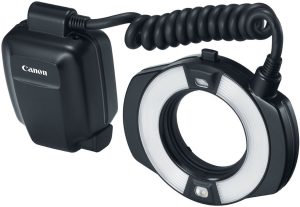
Canon MR-14EX II
Check on Amazon

Coming from the well-known camera manufacturer, the Canon MR – 14EX II comes with ergonomics and better controls. The E-TTL II technology ensures the best performance in its own right.

What are the features that we would appreciate on Canon MR-14EX II? Here are a few that may impress you –

  • It comes from two focusing lamps on either side for an efficient illumination.
  • An excellent focussing depth at lower aperture settings.
  • The 5.5 seconds recycling time will ensure that you can take a series of images so that you would not lose any moment.
  • You can control shades to provide different looks to your shots.
  • It comes with a unique carry bag that would make it easy to transport.

The Ring light LED flash from canon is outstanding with its features, but may not work with some cameras and you may need a special adapter for the purpose.

Want to check it out? You can get more info on Amazon.

Neewer Dimmable 18-inch Ring Light
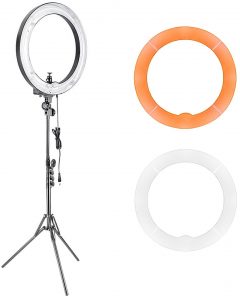
Check on Amazon

Neewer has been a name to reckon with when it comes to flashes and lights for your cameras. The Neewer Dimmable 18-inch Ring Light should be an ideal companion for your clearer portraits and macros.

What are the features that make it one of the excellent options for your needs? Here are the features you may be interested in –

  • The LED ring flash comes with a hot shoe mount so that it can be used with any camera right away.
  • It offers you ample lighting and provides a high degree of flexibility and customization.
  • The height of the stand is quite suitable for most of your requirements.
  • A longer cord accompanying the light lets it be placed anywhere and thus ensures the kind of lighting you are looking for.
  • If you are into product photography for E-commerce sites, it can be a good option for your needs.
  • The ring flash comes with white and orange filters. You may use white filters if you are looking for milder light profiles, while the orange filter would help you get a better color effect.

The LED Ring flash has been considered to be your best option for all your needs in portraits, makeup, and video tutorials.

Did those features impress you? You may check out other features on Amazon.

Sigma EM-140 DG
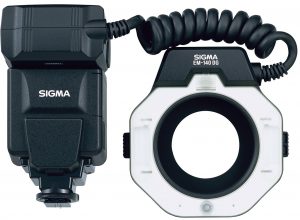
Check on Amazon

Sigma is involved in the manufacturing of cameras, light filters, flashes and other photography accessories. The Sigma EM-140 DG is the LED Ring flashes that have been manufactured in a customized manner to suit different cameras. We have focussed on the Ring Flashes made explicitly for Nikon.

Here are a few excellent features that would make it a great option can be summed up as –

  • The flash is ideal for close up photographs.
  • The two lamps on the ring flash can work together or individually.
  • It comes with a high-speed synchro mode.
  • The recycling time for the flash is around 4 seconds, and thus should be enough for the series of photographs.
  • It is compatible with the latest TTL standards for the excellent automatic exposure.
  • They have been considered to be the best option for the medical applications.
  • Precise focusing is what you would love with the Sigma EM-140 DG.

The LED Ring flash comes with a four-year warranty which in itself should be a fantastic option.

Want to give it a try? You may check them out on Amazon.

Polaroid 48 Macro LED
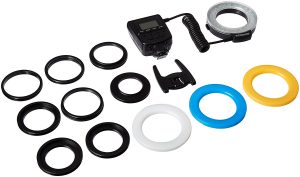
Check on Amazon

Polaroid has been the world-class manufacturer with the product portfolio ranging across multiple services and accessories. Some of the relevant products include ring flashes and LED lights for an efficient flash requirement. Versatility should be one of the features that would make it an excellent choice.

A couple of the best features you would love with the Polaroid 48 Macro LED can be –

  • The Ring Flash LED is compatible with most camera models including Canon, Nikon or Panasonic.
  • It comes with eight compatible adapters for varied applications.
  • You can control the output to meet your needs – 48 LEDs for full-fledged lighting and 24 LEDs for purposeful shadows.
  • You may also choose the Continuous On functionality so that the camera can decide on the best exposure levels depending upon the lighting.
  • You have access to softening diffusers – translucent, warming, white, and blue. White would produce a milder light, while other diffusers would help you create excellent color effects.
  • You also have access to Power Saving LCD screen.
  • It works both as a ring flash and a ring light.

The ring flash should work best with your Nikon cameras. That is precisely why it comes with eight adapters to suit multiple lenses of your Nikon.

Would you want to give it a try? You can check them out on Amazon.

AW Pro 19″ Light
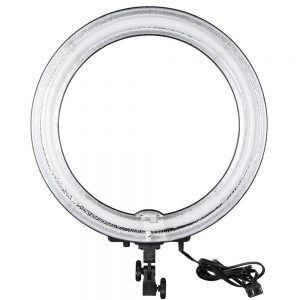
Check on Amazon

It is quite more prominent, and, you would need a tripod or a stand to use it. The lightweight and highly portable Ring LED flash should be ideal for those who are looking for affordable options in a ring flash. It has been considered to be the biggest among the LED flashes that usually have been used.

The salient features that we love with the ring flash LED are

  • It comes with a hot shoe mount for compatibility with almost all major camera brands.
  • The LED flash has been treated to be the best option for makeup and portrait light.
  • The wraparound light included would be helpful in reducing the wrinkles in your portraits.
  • Ease of setup can be one of the features that would help in an impromptu shooting mode.
  • The dimmable light feature lets you set the light intensity to a level that you are looking for.
  • It also has a bracket that would help you mount it on light stands.

If you are interested in opting for the Ring Flash, you can check it out on Amazon.

The Concluding Thoughts

Well, that was all we have concerning LED Ring Flash and its impact on the quality of your photography. We assume that we have been able to bring forth the practicability of using a LED flash for the Macro photography levels you may be planning to achieve. The Ring LED Flashes we have listed out in the above compilation should help you choose the best that would meet your requirements.

Have you used any of these LED Ring Flashes for enhancing your Macro Photography performances? If you have, do share your thoughts, experiences, and views with the ring flashes we have featured in this compilation. Do share your thoughts with us as it would help us enhance our knowledge further.

Best Budget Rugged Underwater Camera Around $500 Point Shoot Options

The cameras have not remained to be what they used to be in the past. You want to carry them wherever you go – whether to you are on vacation or visiting a pool. That would make a waterproof camera a need you cannot live without. If you are looking for the best Underwater Cameras, your search should end with this post. We would assist you in searching for the best option in Underwater Cameras under $500.

Best Budget Rugged Underwater Camera – Our Picks

Of course, some cameras would suit every requirement. An Underwater Camera is the one that would resist water-based activities and can be one of the best options for those looking for the underwater photographs and videos. However, getting an underwater camera should not be a more onerous task as such. But what if you are looking for the affordability as well? That is precisely why we have set a cut off pricing of $ 500 for the sake of this discussion.

Before making it to the list, we would also want to bring up a concept referred to as Underwater Housing. There are several housings available that would claim to convert your existing cameras into a waterproof camera straightaway, but that would be something that would only provide support against the accidental exposure to water. If you are looking ahead for a truly realistic underwater performance, you would indeed need to opt for a good camera that can provide the underwater performance on its own.

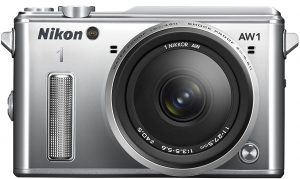
Check on Amazon Price: [amazon_textlink asin=’B00FAHFD6O’ text=’NIKON 1 AW1′ template=’PriceLink’ store=’foi04-20′ marketplace=’US’ link_id=”]

Nikon 1 AW1 is not only an underwater camera but doubles up as the best camera with interchangeable lenses. In fact, it is the only underwater camera that has the interchangeable lenses.

Some of the features that would make it an attractive option would be

  • It suits a host of terrains and activities including kayaking, mountaineering, and underwater photography.
  • It has waterproofing capacity at up to 49 feet deep into the water.
  • The lightweight would make it the best when portability is concerned.
  • Shockproof 6.6 feet and freezer proof to up to 14 degrees Fahrenheit.
  • Faster focussing would help you miss those crucial moments. You cannot be sure of what you may come across when you are wandering in the wild.
  • Wireless sharing enabled on WiFi-enabled devices.
  • Shoot enchanting videos in full HD resolution.

It offers you a high-speed continuous focusing at 15 fps, making it the best option for taking the breath-taking shots in the wild. The interchangeable lenses are what would come as a handy surprise. In fact, it is the only camera with underwater functionality coupled with the interchangeable lenses that work effectively underwater.

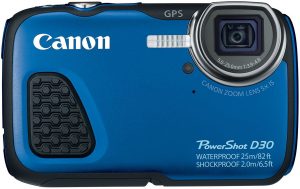
Canon PowerShot D30 Waterproof Digital Camera

Check on Amazon, Price: [amazon_link asins=’B00I58LNF0′ template=’PriceLink’ store=’foi04-20′ marketplace=’US’ link_id=’079d7d77-7499-11e8-9fba-f51b9fac6ca1′]

Looking for a waterproof camera that is simple and intuitive at its best? Canon PowerShot D30 Waterproof Digital Camera can be your best bet.

The camera has been treated to be the best choice for those who are always outdoors. It suits the extreme conditions like underwater to the hilt. The Canon PowerShot D30 Waterproof Digital Camera is undoubtedly the one that offers most in-depth underwater performance.

What did we like the most about it? Here are our reasons –

  • It comes with an excellent scuba and snorkeling flexibility for up to 82 feet deeper into the water.
  • The Camera is shockproof up to 6.5 feet
  • You have temperature resistance between 14 to 104 degree Fahrenheit.
  • An excellent low light performance at 12.1 MP highly sensitive CMOS sensor.
  • You have access to a stunning 1080p video recorded with a dedicated button for the purpose.
  • Built-in GPS functionality would automatically timestamp your shots and videos with the location and time details.
  • The smarter camera ensures that you get better shots and videos.

The rubberized grip should be what would help you get the best option for carrying it underwater. Some of the features we indeed love with the camera are built-in GPS, electronic compass, mapping and 5x optical zoom capability.

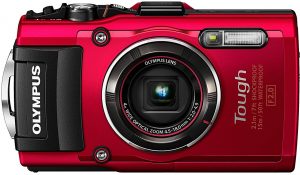
Olympus TG-4 16 MP

Check on Amazon, Price: [amazon_link asins=’B072NDVNPN’ template=’PriceLink’ store=’foi04-20′ marketplace=’US’ link_id=’1ba66c73-7499-11e8-bcff-656c7a15f77c’]

Olympus has been a veteran in the field of waterproof cameras. The TG-4 is its fourth underwater camera that has been popular enough and capable at that!

The camera can be the best accessory for the scuba divers with its waterproofing ability to up to 50 feet underwater. A host of underwater shooting modes that the camera offers you should be what you would appreciate.

Here we go with a few features that we loved with the iconic camera –

  • At 50 feet waterproof capacity, it should be one of the best for snorkeling.
  • The camera comes with crushproof properties up to 220 lbs and a shockproof capability up to 7 feet.
  • The Olympus TG-4 is freezer proof for up to 14 degrees Fahrenheit
  • The 16 MP shooter allows you shoot the stills in RAW mode – an excellent gift for the professionals out there!
  • Specific underwater modes that would make your underwater photography one of the best. Some honorable mentions can be the snapshot, macro, and HDR modes.
  • It can capture brighter and darker areas and then arrive at beautiful night pictures. Olympus uses the proprietary Live Composite mode for the purpose.
  • Built-in GPS and WiFi connectivity.

Though the land photographs may not be impressive enough, the camera excels with its emphasis on the underwater shooting capabilities. It is indeed the best self-contained underwater cameras. In fact, it is the best after the Canon Powershot D30. The Olympus TG-4 packs in everything you would be looking in an underwater camera. The dustproof functionality and freezer proof functionality at sub-zero temperatures should make it an excellent option.

Panasonic DMC TS25D

Check on Amazon, Price: [amazon_link asins=’B00KHW3HRY’ template=’PriceLink’ store=’foi04-20′ marketplace=’US’ link_id=’25f45d4a-7499-11e8-9423-211e1908d65b’]

In case if you are looking for a cheaper option for the best underwater camera? Panasonic DMC TS25D lives up to your expectations.

The camera offers you the essential features you would expect from a waterproof camera. We have included it in our compilation from the perspective of our readers who may be tight on budget.

A few features that the camera can offer you include –

  • Waterproof up to 23 feet and meet almost all necessary underwater photography requirements you may have.
  • The camera offers you the shockproof capacity of up to 5 feet
  • The image quality may not be on par with the one from the other cameras in this compilation.
  • Though it has 4X optical zoom which it may not be sufficient enough, you can rely on the smarter digital zoom functionality provided additionally.
  • The camera can shoot your videos in MP4 through HD quality at 720p.

The dry land images do not inspire much. However, it can be a good option for those who are on a tight budget, yet want to experience the underwater photography at its best.

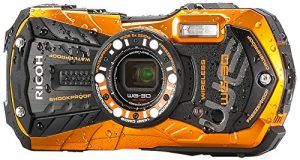
RICOH WG-30W

Check on Amazon, Price: [amazon_link asins=’B00OUX740W’ template=’PriceLink’ store=’foi04-20′ marketplace=’US’ link_id=’3049044a-7499-11e8-aca9-a9149deea026′]

If you are looking ahead for an overall best performance of an underwater camera? Check out RICOH WG-30W, and you will not be disheartened. In fact, it is the latest entrant to the waterproof cameras and performs well enough.

What would make it an enchanting option would be the introduction of what is called the Mermaid mode. Specially designed for underwater photography, the camera shows excellent performance.

Some salient features we loved with the tool include –

  • The camera offers you the underwater capability of up to 39 feet underwater for up to 2 hours continuously.
  • It has an excellent heavy-duty construction is capable of working under in any harsher conditions.
  • The RICOH WG-30W offers you a shockproof endurance of up to 5 feet.
  • Freezer proof capability is as low as 14 degrees Fahrenheit.
  • The camera also offers you crushproof properties to up to 100 kg.
  • The camera can be operated through a smartphone remotely through the WiFi connectivity.
  • The Macro mode comes with the Macro lights for excellent macro images.

The camera also features a microscope mode for an extreme close up image. The 16 MP camera offers you a standard 5x optical zoom feature out of the box.

The Concluding Thoughts

Waterproof cameras have been moving ahead with a host of features that were never heard of before. You have a brighter choice of cameras in this genre at a more extensive price range; it should be practically quite more stringent to zero in on a particular model for your underwater photography needs. That is precisely why we have compiled this list of our top five picks.

We have ensured that we have been able to include the models that would suit almost all genres of buyers. We would assume that the list lives up to your expectations. Share your thoughts, experiences, and opinions about the cameras featured in this compilation so that our readers would get first-hand knowledge of the cameras we have featured here.

Do let us know your experiences with any of the cameras we have featured in this compilation. You may also share any of your favorite underwater cameras here so that we would have a better horizon of choice.

List of Best Nikon 4K DSLRs For Video Shooting and Filming in 2018

0

Professional photographers vouch in the name of DSLRs and mirrorless cameras. The resolution requirements have also been growing with the focus shifting to 4K. The 4K compatibility is the ability to shoot high-quality video clips, though the technology can also expand to the quality of images being shot on the camera. We will be focussing on the best Nikon 4K DSLRs that offer you the best 4K functionality for this post.

Nikon 4K DSLRs – Our Choice:

The photography enthusiasts world over have been aware of the fact that Nikon is one of the trusted brands regarding high-end functionality and service quality. Let us list out the best 4K DSLR cameras presented by Nikon.

An Overview of 4K Enabled DSLR Cameras

DSLRs were introduced around two decades ago. They soon became the hot favorites with both professional and amateur photographers. There are a host of advantages that make them the best choices for compelling photography. Larger sensor sizes and interchangeable lenses just a few of them.

The 4K technology has been a new technology that has been making inroads into the psyche of the photographers, and the new 4K enabled DSLR cameras should be what would redefine the clarity and cinematic experience of the video shots without using the cinematography cameras. There have been a host of players when it comes to the capable 4K cameras. Some of the names worth the consideration include Panasonic, Leica, Sony, Nikon, and Samsung. The range of models available differs consistently across multiple pricing. You have the affordable 4K DSLRs and have the higher priced ones as well.

One of the advantages of using a 4K enabled DSLR cameras is the capacity to have a better and non-pixelated cropped image. Panning, tilting, and zooming tend to provide you the best in class performance if you have a 4K DSLR camera rather than on a traditional full HD capable camera. They also offer you a better low light performance. The 4K resolution is bound to provide you with more details in your shots and clips and thus can be quite useful for shooting videos with a more precise depth of field.

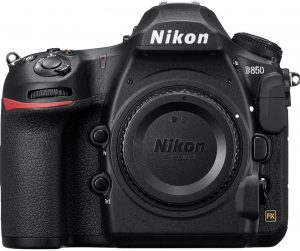
Nikon D850

Check on Amazon, Price: [amazon_link asins=’B07524LHMT’ template=’PriceLink’ store=’foi04-20′ marketplace=’US’ link_id=’0323c27a-6fe1-11e8-89f9-9f1cf5f8f5ff’]

Nikon D850 has been one of the most popular and best DSLR cameras we have ever come across. The Nikon D850 has been the ultimate choice when it comes to the full frame DSLRs as it offers you everything that you have looking ahead for in a DSLR.

The Spec Sheet

  • It offers you a full frame CMPS sensor at 45.4 MP
  • The screen size reads 3.2-inch tilt-angle touchscreen
  • 153-point AF, 99 cross-type points
  • Best in class dynamic range and high ISO performance.
  • The camera offers you a 7 fps continuous shooting functionality.

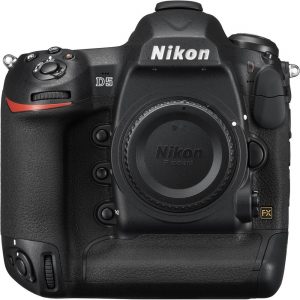
Nikon D5

Check on Amazon, Price: [amazon_link asins=’B078LLNTS9′ template=’PriceLink’ store=’foi04-20′ marketplace=’US’ link_id=’3a3f9496-6fe1-11e8-bb4b-bd3f3bb93ebc’]

Are you looking for a camera system that excels with the best Auto Focus system, this is what should appeal to you the most. The flagship DSLR from Nikon would be a stealer – thanks to the properties it packs in.

A  few features that would make it an exceptional option can be summarised as

  • The full-frame CMOS sensor offers you a 20.8 MP functionality.
  • You have access to 12 fps continuous shooting capability.
  • The 173 AF points offer excellent performance.
  • The D5 has been a camera that professionals world over would prefer.
  • The massive ISO range should make it an excellent choice in its own right.

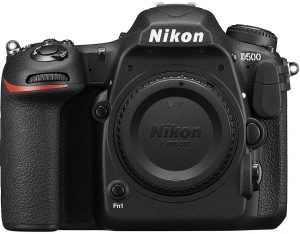
Nikon D500

Check on Amazon

Employing the same sensor as on the D5 featured above, the DSLR can shoot up to 10 frames per second. You would find the high-end DX format for the body and its design. Enhanced autofocus and better video capabilities are what should make it an excellent choice.

Some of the features that would make it one of the excellent options are

  • You have access to a 20.7 APS-C sensor.
  • The high-end Auto Focus module would offer you 153 point AF points of which 99 are cross-type points.
  • Continuous shooting speed of 10 fps performance.
  • A host of connectivity options which includes WiFi, Bluetooth, and NFC.

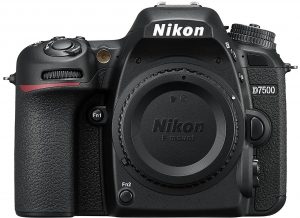
Nikon D7500

Check on Amazon

How about a DSLR camera with the 4K video recording functionality at an affordable price tag? The newly launched Nikon D7500 would provide you the best answer to your needs. The camera indeed offers the best alternative to the mirrorless cameras and offers you an exciting option among the DSLRs.

Some of the features worth mentioning can be summed up as

  • Smooth aperture changes will ensure an excellent functionality
  • You have access to UHD recording at 30 fps.
  • It ensures you a leading image quality and other benefits in tune with the Nikon D500.
  • The affordable system has 51 point AF option with 15 cross-type points
  • WiFi and Bluetooth connectivity are the two connectivity options that would serve as the best when it comes to connecting your camera to other devices.

In Conclusion

That should be the Nikon DSLR cameras with the 4K recording functionality that tend to offer you the best feature regarding video recording efficiency. You may not find many options as of now in the 4K genre in DSLR cameras as things stand as of now. Maybe, we can foresee a few launches in a couple of years. The 4K technology is just taking off, and it could take a while before it assumes the level of a mainstream industry.

Have you used any of the Nikon DSLR cameras for your video recording needs? If you have, do share your thoughts and views with us. We would welcome your feedback for a better and hands-on experience concerning the cameras of your choice.

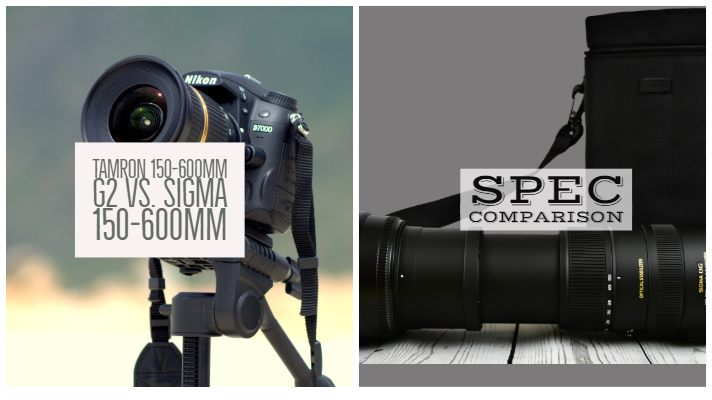
Tamron 150-600mm g2 Vs. Sigma 150-600mm Sports Specs Comparison

0

If you are looking for a good quality telephoto lens, you have landed on the right post. Today here at LensXP, we are discussing two of the best budget telephoto zoom lenses available out there in the market. If you are already looking for one, we consider that you might understand how a telephoto lens is different from a regular zoom lens. Still, here is a quick difference comparison between two telephoto lenses which might help you, understand them more: Tamron 150-600mm g2 Vs. Sigma 150-600mm

A zoom lens goes from wide angle to telephoto range using its variable focal length. In other words, you can change smoothly from a long shot to a close-up or vice versa by varying the focal length. The lens element assembly allows the users to change the angle of view using its focal range. However, the convenience of using a variable focal length design on a lens assembly comes at the cost of the following:

  • Image resolution data loss at maximum aperture
  • More heavy than conventional lenses
  • Longer dimensions
  • Inaccuracy in focussing the subject, especially in low light
  • High price due to more lens elements (24 Elements in 16 Groups on the Sigma)

The Tamron and Sigma lenses comes with a range of 150mm-600mm of focusing distance. To put it even more simply, it goes from low focal length value to high focal length value. The telephoto lens is made to work in high telephoto range. The view you get on your camera is highly dependent on the focal length of the lens you are using. If the value is extended, the things in front of camera appear magnified. If the focal length is short, it captures full area and objects appear smaller. Technically, there is particular meaning to a telephoto lens, in simple words, a telephoto lens is a lens with really long focal length.

So coming back to our topic, today, we are discussing following lenses:

Tamron 150-600mm g2 Vs. Sigma 150-600mm

First, we will look at the Pros & Cons of these lenses. See below:

Pros & Cons Tamron-sp-150-600mm (F5.0 -6.3)

Check on Amazon India

Sigma 150-600mm F 5.0 -6.3

Check on Amazon India

Has full-time manual focus 50mm shorter minimum focal length
Front element doesn’t rotate Has rounded aperture blades
18f smaller aperture at maximum focal length

40f vs 22f

0.1m shorter minimum focus distance (2.6m vs 2.7m)
850g lighter – 2.01kgvs2860g
10f smaller aperture at minimum focal length

32f vs 22f

Comes with reversible Lens hood


We will be comparing all the important technical aspects and specifications side by side so you can get a better idea. Moreover, we will discuss all the major differences descriptively and understand how they leave an impact on the overall performance of the lens. So without any more delay, here we begin:

Specs Comparison:

General

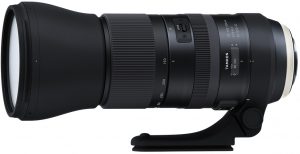
Specifications Tamron 150-600mm G2

[amazon_link asins=’B00HR6IPSE’ template=’PriceLink’ store=’foi04-20′ marketplace=’US’ link_id=’f61f6de5-6bfe-11e8-9a26-a5283352b6ca’]

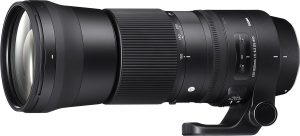
Sigma 150-600mm Sports

[amazon_link asins=’B01BXUJF2O’ template=’PriceLink’ store=’foi04-20′ marketplace=’US’ link_id=’042906e1-6bff-11e8-b495-a95213fa6910′]

Packaged Quantity 1 1
Diameter 4.3 in (108.4mm max) 4.8 in
Length 10.2 in 121 x 290.2mm & 4.8×11.4in
Weight 1.95 kg [68.78 oz] 2.9 KG [100.9 oz]
Accessory Type Lenses Lenses
Manufacturer Tamron USA, Inc SIGMA

Dimension & Weight:

Let’s talk about the basic things first. Tamron G2 has a diameter of 4.3 and is 10.2 inches long. On the other hand, Sigma Sports has 4.8 inches in diameter and is almost a foot long. This difference is because Tamron G2 has a (13, 21) lens structure and Sigma Sports has a (16, 24) lens structure. We will discuss more this later in the post. It also leaves an impact on their weight. Tamron G2 weights 4.43 lbs while Sigma Sports is a lot bulkier and weighs 6.31 lbs. These figures do not affect their performance, but lighter and compact lenses are more convenient to carry around or operate. So Tamron 150-600 mm G2 is the edge here.

Carrying Case

Specifications Tamron 150-600mm G2

Sigma 150-600mm Sports

Included Accessories dust cap

lens cap

lens hood

tripod collar

dust cap

lens cap

lens case

lens hood

shoulder strap

Carrying Accessories:

The table above shows various carrying accessories you get with each lens. Both Tamron G2 and Sigma Sports ship with a dust cap (to be attached on the front when not in use), lens cap (to be connected to the back) and a lens hood. The hood is used to protect lens glass from harmful rays when shooting in daylight. However, it is not as useful as various lens filters (or polarizers) available out there. Still, better than nothing. Moreover, Tamron G2 offers a Tripod Collar, which is essential for mounting heavy lenses on the tripod. Unfortunately, Sigma Sports doesn’t provide one. However, Sigma sports come with lens case and shoulder strap, which altogether make it convenient to carry the lens around. So as it is clear, both lenses have their advantages when it comes to included accessories.

Lens System

Specifications Tamron 150-600mm G2

Sigma 150-600mm Sports

Type Telephoto zoom lens Telephoto Zoom Lens
Focal Length 150 mm – 600 mm 150 mm – 600 mm
Magnification 0.25x 5x
Image Stabilizer Optical (4.5 stops (CIPA Standards Compliant)
Using in VC MODE 3 )
Optical
Smallest Aperture at minimum Focal Length 32f 22f
Intended For 35mm SLR, digital SLR (Canon, Nikon, Sony) 35 mm SLR, Digital SLR (Canon, Nikon, Sony)
Optical Zoom 4 x 6 x
Series Di VC USD G2 DG OS HSM
Lens Coating Broad-Band Anti-Reflection coating (BBAR)

Extended Bandwidth & Angular-Dependency coating (eBAND)

Fluorine coating

Super Multi-Layer Coating

Water and oil repellent coating on the front & rear lens elements

Mounting Type Canon EF, Nikon FX, Sony Nikon F (Canon, Nikon, Sigma)
Special Functions Tele, zoom Tele, Zoom
Lens Aperture f/5.0-6.3 f/5.0-6.3
Minimum Aperture f/32 – f/40 (F/32-40) f/22
Min Focal Length 150 mm 150 mm
Max Focal Length 600 mm 600 mm
Min Focus Distance 7 ft 8.5 ft
Focus Adjustment automatic, manual Automatic, Manual
Zoom Adjustment manual Manual
Max View Angle 16.25 degrees (16°25′ – 4°8′ (for full-frame format)
10°38′ – 2°40′ (for APS-C format))
16.4 degrees (16.4º-4.1º)
Min View Angle 4.8 degrees 4.1 degrees
Group Qty 13 16
Element Qty 21 24
Filter Size 95 mm 105 mm
Diaphragm Blades 9 9
Features LD glass, Ultrasonic Silent Drive (USD)

VC (Vibration Compensation)

full-time manual focusing

moisture-resistant

ELD (Extraordinary Low Dispersion) glass

FLD glass

Hyper Sonic Motor (HSM)

SLD (Special Low Dispersion) glass

Sigma USB dock compatible

Dustproof

Splash-proof

Let us take you a little bit deeper in technical perspective. Note that we will be discussing the differences in the above table, and not the similarities; since it does not simply make any sense to discuss in what criteria these lenses are similar. So, here we go:

Magnification Ratio:

In simple words, magnification measures the ability of a lens to make the objects appear bigger in produced images, especially for macro photography. It is a bit different than zooming / resolution, which is ability to make objects clearer and sharper. As shown in the table above, Tamron G2 offer 1/3.9 magnifications while Sigma Sports offers 1/5 magnification. A 1/3.0 magnification ratio means the leans can enlarge the object 3.9 times bigger than it is actually, without losing the sharpness. Means, it can make a 3 cm long cube appear as ~12cm long. A 1/5 magnification ratio means objects can appear 5 times bigger compared to their actual size. So now you can tell that Sigma Sports is much better when it comes to Magnification Ratio.

Lens Coating:

As shown in the table above, Tamron G2 Comes with Broad-Band Anti-Reflection coating (BBAR), Extended Bandwidth + Angular-Dependency coating (band), and Fluorine coating. All of them work together to protect the outer layer of the lens glass. Broad-band anti-reflection coating helps to reduce the fuss caused by sunlight or to reduce the reflections from final image results directly. On the other hand, Sigma Sports comes with a super multi-layer coating. They haven’t specified what exactly this “Multi-Layer” consist of, but we hope it at least consists of necessary protection for lens glass. Whatever it is, we highly recommend not to rely on them and use a protective filter instead.

Compatibility:

Both Tamron 150 – 600 mm G2 and Sigma 150 – 600 mm Sports are meant to be used with 35 mm SLRs and Digital SLRs. You can use Tamron G2 with any Canon SLR / DSLR offering Canon EF mount support. Sigma Sports is compatible with all Nikon SLRs / DSLRs offering Nikon F mount support.

Aperture:

Aperture allows you to control the light reaching to camera image sensor. Ultimately, the aperture value determines how darker your image will be. The aperture value range is same for both Tamron 150-600mm G2 and Sigma 150-600mm Sports. However, with Sigma Sports, you can lower the aperture down to f/22. On the other hand, Tamron sports allow f/32 as the lowest aperture value. This will affect the performance and final result images when you are shooting in bright daylight.

Minimum Focus Distance:

It is merely the shorter distance from which a lens can focus on the object in front of it. Tamron has 7 ft minimum focus distance, which means you need to be at least 7 ft away from the primary purpose to focus it. On the other hand, with sigma sports, you need to have at least 8.5 ft of distance from the subject to target it. This only affects the experience while capturing close up shots. Since no one uses a telephoto lens for capturing close-ups, we don’t think this matters at all while comparing these two lenses.

As diagram of both lenses is the difference, they need a different size of filters. Tamron G2 requires a 95 mm filters, and Sigma Sports requires a 105 mm filter. Moreover, their body structures are different as well. We mentioned these factors at the bottom since they do not affect performance in any way.

Conclusion:

We believe that we have discussed all the significant differences, which will help you to determine which lens fits best in your requirements. However, if you feel like we are missing something, or there is a question, doubt or suggestion on your mind, feel free to let us know in the comment section below, or contact us directly. Make sure you subscribe to our blog for regular tech updates right in your inbox. Thank You!

Best Telephoto Lens for Panasonic GX7: Compatible Micro 4/3 Budget Options

Panasonic GX7 is one of the best cameras in the Micro Four Thirds category you have if you are a professional photographer or someone who is interested in the beautiful world of photography in whatever capacity. The telephoto compatibility is what we would treat youselves as one of the excellent features of the camera in tune with the needs that photographers around us have. From that perspective, we thought of listing out the best telephoto lens for Panasonic GX7. Here is our list of top picks for the best telephoto lenses you can buy for your Panasonic masterpiece.

Panasonic GX7 – An Overview

Panasonic GX7 is indeed a great camera with advanced features you would expect from a camera of that genre. Some of the best features that it packs in are a tilting electronic viewfinder, high-end WiFi functionality, and a touchscreen LCD.

The camera is capable of capturing outstanding videos and still images. A reasonable pricing and an all-around performance are what would make it your best bet for all your photography requirements. We would consider it to be one of the excellent alternatives for the DSLRs out there.

Why Should You Need a Telephoto Lens?

The telephoto lenses have been growing favorite among the professional and amateurs alike. They enhance your photography experiences beyond expectations.

What is a Telephoto Lens? Well, it is a lens with a broader reach and allows you take a photograph of the object quite far away. They magnify the subject in your frame. A telephoto lens with zoom capability would indeed be what a professional photographer would cherish.

Some of the advantages of using a telephoto lens would be

  • They bring the far away objects closer to your camera.
  • The telephoto lenses tend to enhance the blurred background.
  • If you are into creating portraits, a telephoto lens is what you would need as an absolute necessity.

Best Telephoto Lens for Panasonic GX7

Now that we are aware of the excellent capabilities offered by both Panasonic GX7 and the telephoto lenses how about looking through a few good telephoto zoom lenses for your Panasonic GX7? So, here we go without any introduction.

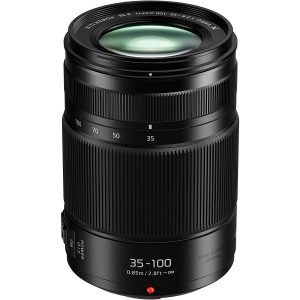
Panasonic Lumix G X Vario 35-100mm F2.8 OIS 

Check on Amazon Price – [amazon_link asins=’B071H93GT9′ template=’PriceLink’ store=’foi04-20′ marketplace=’US’ link_id=’f0a86c2f-6b08-11e8-9fb5-8b3875915505′]

The Panasonic Lumix G X Vario 35-100mm F2.8 OIS is the Telephoto zoom lens with the Auto Focus and Four Thirds max sensor coverage. You get an excellent optical image stabilization that would let your shoot excellent images at lower shutter speeds.

Some of the features we would highlight include

  • High-performance image stabilization.
  • The lens comes with a weather sealing
  • The built-in autofocus should be ideal for your photography needs.
  • The lens offers a Constant f2.8 Aperture throughout

You can lay your hands on it at Amazon.

Olympus M.Zuiko ED 75-300mm f4.8-6.7 I

Check on Amazon Price – [amazon_link asins=’B016T26QQE’ template=’PriceLink’ store=’foi04-20′ marketplace=’US’ link_id=’44ffce1b-6b0a-11e8-b245-7dbb8785e3ba’]

That should be another great Auto Focus camera with Micro Four Thirds maximum sensor coverage. It comes with built-in autofocus but does not offer weather sealing. However, it can be your best bet if you are low on budget.

Here are a few features you would fall in love with the lens –

  • The lens offers you a full-time manual focusing
  • Inbuilt Autofocus functionality integrates well with your Panasonic GX7
  • It comes with a mount for the four-thirds microsensor.

Slow aperture at both ends and lack of weather sealing can be one of the features you would not find appealing.

If you are interested, you may give a try, available on Amazon.

Panasonic Lumix G Vario 45-200mm F4-5.6 II Power OIS

Check on Amazon Price –

The lens should be at par with the Panasonic Lumix G X Vario 35-100mm F2.8 OIS but lacks the weather sealing option. That would make it a wrong choice for outdoor photography in severe weather conditions. The lens is faster at the wider end.

Some salient features that the lens would offer you include

  • Built-in Auto Focus functionality
  • The lens offers you a complete manual focusing
  • The lens does come with a supplied hood.
  • You get Micro Four Thirds maximum sensor coverage.

If you find the lens an exciting option, you can gather more information from Amazon.

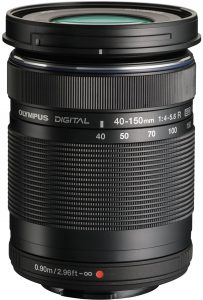
Olympus M.Zuiko Digital ED 40-150mm f4-5.6 R

Check on Amazon Price – [amazon_link asins=’B0058G40G6′ template=’PriceLink’ store=’foi04-20′ marketplace=’US’ link_id=’d77448a9-6b09-11e8-a375-75d06eedab3b’]

Olympus lenses always come under the affordable category, yet provide exceptional performance. The Olympus M.Zuiko Digital ED 40-150mm f4-5.6 R is not an exception either. Lack of weather sealing can be an issue, but that should be what you should be ready to accept given the low priced model that we are discussing.

A couple of the features we loved with the telephoto lens would be –

  • The lens comes with a fully automatic autofocus
  • Lightweight and design should make it a most portable lens you can ever have.
  • It should be an excellent option for sports and portrait shots.
  • The best in body optical image stabilization makes it an excellent choice.
  • The lens is Movie Still Compatibility.

Want to give it a try? Check it out on Amazon.

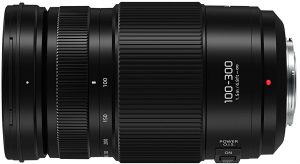
Panasonic Leica DG Vario-Elmar 100-400mm F4.0-6.3 ASPH Power OIS

Check on Amazon Price – [amazon_link asins=’B075NPMH21′ template=’PriceLink’ store=’foi04-20′ marketplace=’US’ link_id=’f82a7603-6b09-11e8-93c4-850f4b3b4104′]

The lens should be the best option for those professionals out there and an excellent accessory for your Panasonic GX7. It is an Auto Focus zoom telephoto lens with four thirds maximum sensor average. The included optical image stabilization should make it an excellent lens for shots with slow shutter speeds.

The features we loved with the lens include

  • The lens is lightweight and extremely portable.
  • It comes with weather sealing in the form of dust and splash proof.
  • The Optical image stabilization is what would make it an excellent choice for excellent low light and low shutter speed shots.
  • The lens comes with built-in hood support.

Want to have a look at it? You can give it a try on Amazon.

The Concluding Thoughts

Well, there are several lenses available that would satisfy your needs for the next telephoto zoom lenses for your Panasonic GX7. We have just chosen the five best options for you to give a try. The Panasonic GX 7 comes with its Optical Image stabilization functionality, and as such, all the lenses we have covered here should support the OIS functionality seamlessly.

Have you used any of the lenses that we have covered in this concise collection? If yes, do share your thoughts, opinions, and experiences with us. If you have any recommended options with any other best matches to the ones featured here, share them as well for us to get a better idea about them.

Feel free to drop us your suggestions in the comment section below. Thanks for visiting!

Best Budget Canon 70-200 F 2.8 IS II Alternatives From Tamron & Sigma

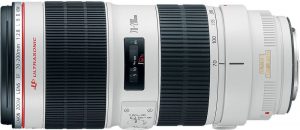
The Canon 70-200mm f/2.8 L IS II is undoubtedly one of the excellent lenses that would suit almost all the needs that a photographer– whether professional or otherwise – would look ahead to. Forming part of an all-powerful range of zoom lenses from Canon, the Canon 70-200mm f/2.8 L IS II promises to be one of the best in its class. The lens comes under the category of the most in-demand portrait and telephoto zoom lenses you would find from Canon. If, however, you are not able to see it for your area, maybe you would look for the choices to the camera. We will list out the best budget Canon 70-200 F 2.8 IS II alternatives in today’s post.

The Canon 70-200mm f/2.8 L IS Mark II – An Overview

The Canon Lens tends to be one of the best of its kind and offers you a faster f 2.8 aperture. It would be the best one for the low light advantage. In addition to the low light performance, you would also tend to get a better Image Stabilisation. In fact, this one is the distinguishing feature of the lens in comparison to the other competing products.

The lenses are the best in its class, but what may put you off from deciding to purchase one would be its expensive price tag. Of course, if you want quality, you should be ready to shell out that much money. Even then, if you are indeed on a tight budget, maybe the best we would suggest would be to look for the alternatives.

Budget Canon 70-200 F 2.8 IS II Alternatives

Without going into much details of the incumbent lens, we would attempt to find the alternatives you can look for budget glasses.

Canon 70-200mm f/2.8 L IS Mk I

Check on Amazon Price – [amazon_link asins=’B0033PRWSW’ template=’PriceLink’ store=’foi04-20′ marketplace=’US’ link_id=’700c370a-6b04-11e8-869d-7d7e31ccaf6e’]

The lens treats itself to be a capable upgrade on the Canon EF series of lenses. It packs in almost everything you would look for in a telephoto and zoom lens.

Some of the features we would appreciate on the Canon 70-200mm f/2.8 L IS Mk I include –

  • The lens is indeed quite robust to handle everything you throw at it.
  • It comes with 23 lenses in 19 groups. The list consists of one fluorite and 5 UD lenses.
  • The lenses would offer you a 34 degree – a 12-degree diagonal angle of view
  • You have access to the next gem Optical Image stabilization with the lens.

You may check out the lens from Amazon.

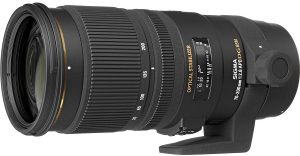
Sigma 70-200mm f/2.8 EX DG OS HSM

Check on Amazon, Price – [amazon_link asins=’B003HC8V9A’ template=’PriceLink’ store=’foi04-20′ marketplace=’US’ link_id=’0d79142e-6b04-11e8-96ca-61705b75331f’]

The Sigma 70-200mm f/2.8 EX DG OS HSM compares quite well with the incumbent lenses from Canon. The name itself should provide you a bright idea about the effectiveness and the features it has in comparison to the Canon 70-200mm f/2.8 L IS Mark II.

Some features worth the mention would be –

  • The large aperture lens should provide you striking zoom telephoto lens features.
  • It comes with Hyper Sonic Motor and Optical Stabiliser.
  • The Optical stabilizer feature would help you protect damaged shots due to camera shake.
  • The lenses are made from the high-quality water-resistant
  • You get a precision design backpack for storing the lenses.

You would also get a six-piece cleaning kit as well.

You may get it from Amazon.

Tamron 70-200mm f2.8 VC Di USD

Check on Amazon Price – [amazon_link asins=’B01MZIGOV9′ template=’PriceLink’ store=’foi04-20′ marketplace=’US’ link_id=’a4e089c9-6b04-11e8-aa61-9d74f3dad014′]

If you are looking for the sharper images and an excellent Bokeh effects, the Tamron 70-200mm f2.8 VC Di USD should be an attractive alternative for your requirements. The weather sealing and optical image stabilization are a couple of features you would indeed fall in love with the lens.

A few salient features that we would like to share with you include –

  • The lens offers you a faster autofocus functionality compared to other similar products.
  • You can be assured of a higher performance optical design.
  • The price point and the features should make it an excellent option.
  • The low cost of the lens should make it an excellent device in its own right.

You may check them out at Amazon.

Canon EF 70-300mm f/4-5.6 IS USM

Check on Amazon Price – [amazon_link asins=’B004DPQ1RY’ template=’PriceLink’ store=’foi04-20′ marketplace=’US’ link_id=’2fd61dd6-6b05-11e8-b397-9d8ad3ae2e8f’]

The lens can be one of the best options for the telephoto zoom lens functionality you would look ahead for and should suit the amateur photographers. It does come with a glass filter set with the pack enhancing your photography experience.

A few of the exciting features that we would like with the telephoto lenses can be summarised as –

  • You have access to two UD ultra-low dispersion glass elements for enhanced sharpness
  • The L series weather and dust sealing so that you would be able to shoot in harsher conditions.
  • Enhanced design and streamlined ergonomics would make it an excellent option for all your photography needs.
  • Lenses have been designed for enhanced protection against ghosting and flare.
  • The enhanced optical image stabilization ensures that any camera shake would not affect the quality of your images.

Interested? Would you want to give it a thought? Check them out at Amazon.

The Concluding Thoughts

Are you a professional photographer? The IS or Image stabilization is what you would need for a compelling sports photography. In fact, if you are looking for shooting anything that has a faster movement ( and that would include sports and other action sequences), you would indeed look for a lens that has an excellent zoom and image stabilization functionalities.

In fact, the Canon 70-200mm f/2.8 L IS Mark II should be one of the best lenses for those purposes. Weddings, sports photography, wildlife photography, and portraits are a few areas where you would find them practical and useful in many ways. However, they are a little expensive, and that could be one of the reasons you may not be comfortable with it. The alternatives we have listed here should go a long way in helping you find the best features equivalent to the incumbent lenses.

Have you used any of the lenses we have featured here? If yes, do share your thoughts about the functionality and your experiences with them. Also, share your views about any other alternatives you may have observed. That would help us choose the lenses that meet our needs quite wisely.

Best In Body Mirrorless Cameras With Built-in Image Stabilization

Cameras have been developing over the years. In fact, the technology behind cameras has been evolving given the stricter competition they have been receiving as part of the smartphone evolution. Mirrorless cameras are one such evolutionary step in the professional camera availability. One of the features you would typically expect in a camera you are about to purchase is the availability of Image Stabilisation functionality. We will today enlist the best Mirrorless Cameras With Built-in Image Stabilization feature included.

Mirrorless Cameras With Built-in Image Stabilization

Image stabilization is one of the features you would expect invariably in your new camera. Image Stabilisation is a feature that would help you shoot better and sharper pictures with the slower shutter speeds.

The feature has been so important that the manufacturers tend to label it in different manners. Some of the familiar brands you might find that is used to describe the Image Stabilisation feature are Vibration reduction (VR), Optical Image Stabilization (OIS), Optical Steady Shot, Shake Reduction (SR) and Vibration Compensation (VC). Whatever be the branding that manufacturers opt for, the functionality would remain the same as we have already explained.

Let us check out the best mirrorless cameras with Image Stabilisation feature in the following paragraphs.

Sony A7R III

Price: [amazon_link asins=’B076TGDHPT’ template=’PriceLink’ store=’foi04-20′ marketplace=’US’ link_id=’1c28c843-671c-11e8-bb14-036c13ec7244′]

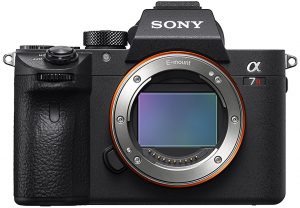
One of the latest members in the A7 series of cameras from Sony, the Sony A7R III is the best option for all your needs you would expect in a mirrorless camera. The camera has rightly been called the Megapixel monster for the right reasons.

If you are looking for the versatile camera that offers a complete package, you will opt for the Sony A7R III. Some of the excellent features that it packs in include

  • A full frame sensor size
  • High-end resolution of 42.2 MP
  • A 3-inch tilt angle monitor.
  • A maximum continuous shooting range of 10 fps
  • 4K shooting compatibility.

The advanced Autofocus system should make it one of the best option for sports, nature and casual photography alike.

Olympus OM-D E-M10 Mark III

Price: [amazon_link asins=’B0751B835N’ template=’PriceLink’ store=’foi04-20′ marketplace=’US’ link_id=’7b1f8b08-671c-11e8-9ac5-d9ac21ec5da3′]

Are you looking for a powerhouse camera performance? Olympus OM-D E-M10 Mark III is what would bring you the excellence beyond comparison. The lenses are compact wholly and enough lightweight.

The 5-axis image stabilization should make it a choicest mirrorless camera for any of your needs. Other features that would turn it into an excellent option for your shooting needs can be summed up as

  • It features a Micro Four-thirds sensor size
  • A maximum resolution of 16.1 MP
  • A 3.0-inch tilt angle display
  • You have access to a continuous shooting rate at 8.6 fps
  • 4K shooting compatibility
  • 5-axis image stabilizations

The sensor size is smaller compared to the competitors, but that does not compromise the image quality. The Olympus OM-D E-M10 Mark III is indeed a good buy for a solidly built camera.

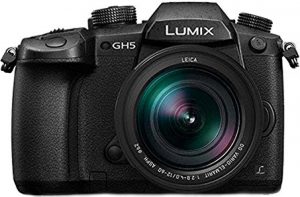
Panasonic Lumix GH5

Price: [amazon_link asins=’B01MZ3LQQ5′ template=’PriceLink’ store=’foi04-20′ marketplace=’US’ link_id=’cc45510a-671c-11e8-a357-dbb4360a566c’]

Launched under the top of the line GH series from Panasonic, the Panasonic Lumix GH5 is indeed the best 4K camera you can lay your hands on. In fact, it is the best one-stop solutions both for a still photographer and a videographer.

Designed as the best option for video shooting needs you may have, it also boasts of a few excellent features as outlined here –

  • It comes with a Micro Four Third Sensor.
  • You have a maximum resolution of 20. 3 MP
  • The camera provides you larger 3.2-inch display
  • An excellent continuous shooting rate of 12 fps.
  • The best in its class 4K shooting compatibility.

If you are someone looking for the best video capabilities, we would recommend you opt for the Panasonic Lumix GH5, though image quality could be a little below par.

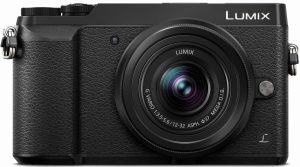
Panasonic Lumix GX85

Price: [amazon_link asins=’B01DOKHSH0′ template=’PriceLink’ store=’foi04-20′ marketplace=’US’ link_id=’745b1a5b-671d-11e8-b48a-37a1571f1a69′]

Panasonic has presented the Panasonic Lumix GX85 as a stripped-down version of the GX8, but most of the features do remain almost the same. You can capture stills from recorded footage which should be another added advantage.

The autofocus is quite faster and accurate. The 5-axis stabilization should be one of the features that would make it best option for those specifically looking for the best image stabilization features. Some of the excellent features would include

  • Micro four-thirds sensor.
  • A maximum resolution of 16 MP
  • You get a 3.00-inch touchscreen display
  • The camera has a maximum continuous shooting rate of 8 fps
  • 4K shooting compatibility

The consistent autofocus and the 5-axis stabilization should ideally make it the best option in its price range.

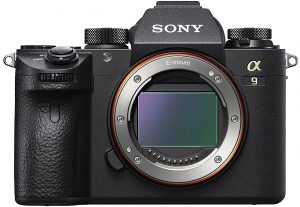
Sony Alpha A9

Price: [amazon_link asins=’B06ZY7GNKN’ template=’PriceLink’ store=’foi04-20′ marketplace=’US’ link_id=’d3495101-671d-11e8-8588-136554d9d055′]

A massive set of improvements is what should make it an excellent option for all your shooting needs. It does provide you a blackout-free shooting mode, possibly a unique feature in its own right.

The Sony Alpha A9 is equipped with 35mm full-frame stacked CMOS sensor making it the world’s first camera to feature the sensor. It is said to provide a 20 times faster data processing capability.

Some of the features worth mentioning can be summed up as

  • The world’s first full-frame CMOS sensor.
  • A maximum resolution of 24.2 MP
  • You have a 3.0-inch TFT display
  • It offers you the best continuous shooting rate of 20 fps.
  • 4K video shooting compatibility.

The 20 percent high-performance data processing is what would make it an excellent choice in its own right. It should be the best bet for those involved in sports and wildlife photographs.

In Conclusion

Gone are the days you had been dependent upon the DSLR cameras for excellent photography. But, the mirrorless cameras have changed it for better. The compact functionality that the mirrorless cameras would offer you should make it a great deal breaker in favor of these new variants.

We assume the top picks for the best mirrorless cameras with image stabilization should help almost all genres of photographers and photography lovers. If you have used any of those performance monsters, do share your thoughts and opinions with us. Also, share any of your favorite cameras that we may have missed.  Grab a camera of your choice and enjoy the photography to your heart’s content.

Best Mirrorless Cameras With Built-in Image Stabilization Weather Sealed

Cameras have been evolving over the years. In fact, the technology behind cameras has been changing given the stricter competition they have been receiving as part of the smartphone evolution. Mirrorless cameras are one such evolutionary step in the professional camera availability. One of the features you would typically expect in a camera you are about to purchase is the availability of Image Stabilization functionality. We will today enlist the best mirrorless cameras with Built-in image stabilization feature included.

Mirrorless Cameras With Built-in Image Stabilization

Image stabilization is one of the features you would expect invariably in your new camera. Image Stabilisation is a feature that would help you shoot better and sharper pictures with the slower shutter speeds.

The feature has been so important that the manufacturers tend to label it in different manners. Some of the familiar brandings you might find that is used to describe the Image Stabilisation feature are Vibration reduction (VR), Optical Image Stabilization (OIS), Optical SteadyShot, Shake Reduction (SR) and Vibration Compensation (VC). Whatever be the branding that manufacturers opt for, the functionality would remain the same as we have already explained.

Let us check out the best mirrorless cameras with Image Stabilisation feature in the following paragraphs.

Sony A7R III

Price - [amazon_link asins='B076TGDHPT' template='PriceLink' store='foi04-20' marketplace='US' link_id='66c4a9bb-6378-11e8-a0c1-55ca867c4624']

One of the latest members in the A7 series of cameras from Sony, the Sony A7R III is the best option for all your needs you would expect in a mirrorless camera. The camera has rightly been called the Megapixel monster for the right reasons.

If you are looking for the versatile camera that offers a complete package, you should opt for the Sony A7R III. Some of the excellent features that it packs in include

  • A full frame sensor size
  • High-end resolution of 42.2 MP
  • A 3-inch tilt angle monitor.
  • A maximum continuous shooting range of 10 fps
  • 4K shooting compatibility.

The advanced Autofocus system should make it one of the best option for sports, nature and casual photography alike.

Check it out on Amazon

Olympus OM-D E-M10 Mark III

[amazon_link asins='B0751B835N' template='PriceLink' store='foi04-20' marketplace='US' link_id='93793740-6378-11e8-8ebc-550b000e3c23']

In case if you are looking for a powerhouse camera performance, the Olympus OM-D E-M10 Mark III is what would bring you the excellence beyond comparison. The lenses are compact wholly and enough lightweight.

The 5-axis image stabilization should make it a choicest mirrorless camera for any of your needs. Other features that would turn it into an excellent option for your shooting needs can be summed up as

  • It features a Micro Four-thirds sensor size
  • A maximum resolution of 16.1 MP
  • A 3.0-inch tilt angle display
  • You have access to a continuous shooting rate at 8.6 fps
  • 4K shooting compatibility
  • 5-axis image stabilization

The sensor size is smaller compared to the competitors, but that does not compromise the image quality. The Olympus OM-D E-M10 Mark III is indeed a good buy for a solidly built camera.

You can find more information on Amazon.

Panasonic Lumix GH5

[amazon_link asins='B01MZ3LQQ5' template='PriceLink' store='foi04-20' marketplace='US' link_id='ea64312b-6378-11e8-a77c-871659535f0b']

Launched under the top of the line GH series from Panasonic, the Panasonic Lumix GH5 is indeed the best 4K camera you can lay your hands on. In fact, it is the best one-stop solutions both for a still photographer and a videographer.

Designed as the best option for video shooting needs you may have, it also boasts of a few excellent features as outlined here –

  • It comes with a Micro Four Third Sensor.
  • You have a maximum resolution of 20. 3 MP
  • The camera provides you larger 3.2-inch display
  • An excellent continuous shooting rate of 12 fps.
  • The best in its class 4K shooting compatibility.

If you are someone looking for the best video capabilities, we would recommend you opt for the Panasonic Lumix GH5, though image quality could be a little below par.

You can buy the camera at Amazon.

Panasonic Lumix GX85

[amazon_link asins='B01DOKHSH0' template='PriceLink' store='foi04-20' marketplace='US' link_id='26016ba4-6379-11e8-aee6-8da0379859cf']

Panasonic has presented the Panasonic Lumix GX85 as a stripped down version of the GX8, but most of the features do remain almost the same. You can capture stills from recorded footage which should be another added advantage.

The autofocus is quite faster and accurate. The 5-axis stabilization should be one of the features that would make it best option for those specifically looking for the best image stabilization features. Some of the excellent features would include

  • Micro four-thirds sensor.
  • A maximum resolution of 16 MP
  • You get a 3.00-inch touchscreen display
  • The camera has a maximum continuous shooting rate of 8 fps
  • 4K shooting compatibility

The consistent autofocus and the 5-axis stabilization should ideally make it the best option in its price range.

Find more about the camera at Amazon.

Sony Alpha A9

[amazon_link asins='B06ZY7GNKN' template='PriceLink' store='foi04-20' marketplace='US' link_id='5c533705-6379-11e8-925a-e793491647e1']

A massive set of improvements is what should make it an excellent option for all your shooting needs. It does provide you a blackout-free shooting mode, possibly a unique feature in its own right.

The Sony Alpha A9 is equipped with 35mm full-frame stacked CMOS sensor making it the world’s first camera to feature the sensor. It is said to provide a 20 times faster data processing capability.

Some of the features worth mentioning can be summed up as

  • The world’s first full-frame CMOS sensor.
  • A maximum resolution of 24.2 MP
  • You have a 3.0 inch TFT display
  • It offers you the best continuous shooting rate of 20 fps.
  • 4K video shooting compatibility.

The 20 percent high-performance data processing is what would make it an excellent choice in its own right. It should be the best bet for those involved in sports and wildlife photographs.

You may buy the camera at Amazon.

In Conclusion

Gone are the days you had been dependent upon the DSLR cameras for excellent photography. But, the mirrorless cameras have changed it for better. The compact functionality that the mirrorless cameras would offer you should make it a great deal breaker in favor of these new variants.

We assume the top picks for the best mirrorless cameras with image stabilization should help almost all genres of photographers and photography lovers. If you have used any of those performance monsters, do share your thoughts and opinions with us. Also, share any of your favorite cameras that we may have missed.  Grab a camera of your choice and enjoy the photography to your heart’s content.

Best 4K Canon DSLR Cameras For Video and Film Making across Budget

Whether you are a professional photographer or not, you would want to take a few crisper and more precise images so that you can immortalize your memories. Of course, there are a host of low-cost low-resolution cameras available in the market. However, how about the new age 4K video resolution? We will list out the best 4K Canon DSLR Cameras that have been popular enough for the best photography needs you may have.

Best 4K Canon DSLR Cameras

What are 4K Cameras?

Well, by definition, 4K cameras are those that can shoot videos in 4K resolution. They should help you achieve the best in video production and offer the real cinematic experience to suit your requirements. In fact, the camera can take better still shots as well; the primary focus of the 4K cameras would be to in the arena of shooting videos in the best possible resolution.

The 4K cameras are those that can take highly detailed images or videos at minimal resolution values of 3840 x 2160 pixels, though there are cameras that extend up to 4096 x 2160 pixels concerning resolution. In essence, a 4K camera should be the one that should be able to reproduce the same 4K quality on a UHD TV in the same level crystal clear performance.

What should you look for in a 4K Camera?

There are a few features that would decide which options you would go for while choosing a 4K camera. Your purpose should be dependent upon the exact use you would want to put it to. The 4K cameras would come with the features making it one of the best options to shoot high-quality videos.

Here are a few features you should pay attention to while choosing a 4K Camera

Skill Level –Check your skill levels before selecting the cameras. Of course, you would want to buy the best camera that money can buy. But, if you don’t have the level of skill – it would not be a good investment. Choose the camera that meets your exact qualifications.

“Simplicity of Using” –Check the features and functions. You may end up getting frustrated if the camera is beyond your capabilities of understanding. You can opt for professional 4K Camera if you have the requisite skill set. The best camera would be the one that would offer you the ease of learning. You should be able to master the controls and settings within a few minutes. In fact, shooting videos is an intuitive and creative part of your life and having to fiddle with the buttons at the right moment may be devastating.

Features –There are several aspects to the 4K cameras. In fact, several features would make it one of the best options right from sensors to lenses. Light gathering and low light performance are a couple of features that should offer you the best options. The maximum image quality can be one of the excellent features you would look for.

Budget – This can be yet another deciding feature while choosing the best 4K Camera. Choose the option that best meets your needs. Please note that it has nothing to do with affordability or your ability to buy a camera that would cost heavy. Anything that you do not need is not a good option.

List of 4K Video Cameras and DSLRs from Canon

Having gone through the best practices of choosing the best 4K cameras for your requirements, let us now check out the best cameras you can opt for your needs in 4K cameras and DSLRs. In fact, we have focussed on the Canon cameras for this article.

Canon EOS-1D DSLR Camera Mark IV

 [amazon_link asins='B002TG3ZYQ' template='PriceLink' store='foi04-20' marketplace='US' link_id='7156cfe7-5df7-11e8-892c-5169623ee8f8']

The camera is meant for professional photographers. One of the best models in the 1D series of DSLR cameras with the 4K compatibility; it has several features that would meet all your professional requirements.

Some of the features that would make it an exciting purchase can be summed up as

  • A full frame 20 MP sensor with dual pixel autofocus system
  • The best in class 360,000-pixel RGB+IR metering sensor
  • Flicker detector and 4K video at 60p.
  • 61 point autofocus system with 24 percent better coverage

Canon 1DX Mark II Digital SLR Camera

[amazon_link asins='B01B6OTTIM' template='PriceLink' store='foi04-20' marketplace='US' link_id='4564a8ed-5df7-11e8-a409-777d46f36f92'] on Amazon
If you are looking for the traditional best grade performance and professionalism in your camera, Canon 1DX Mark II Digital SLR Camera can be one of the best choices you can go for. The frame per second speed combined with a full tracking autofocus performance in every frame is what offers excellent performance.

Some dynamic features that would make it an excellent choice are

  • It should be one of the best options for shooting moving images with ease.
  • The camera offers you the excellent Canon trademark of 61 point autofocus system
  • An excellent low light performance would make it an ideal choice for wedding and other event photography
  • Support for CFast card lets you shoot as many RAW images as you can.
  • There is a headphone jack for the audio experience while shooting videos.

Canon Cinema EOS C500 4K Camera

[amazon_link asins='B01CYU2TMU' template='PriceLink' store='foi04-20' marketplace='US' link_id='b4804374-5df7-11e8-9d05-fd0260892207'] on Amazon

This is the professional video camera from Canon that would provide you exceptional performance regarding 4K recording. Launched in 2012, the camera has still been a force to reckon with, thanks to the features that the camera comes packed with.

What makes it a formidable choice among the 4K enabled cameras?  The following features should hold the key –

  • Reviews sites have claimed that it is the best cinematic video camera for your needs.
  • The best features from the DSLR range have been brought to the video camera, making it an excellent choice and almost equivalent to DSLRs.
  • It offers you the maximum video resolution of 4096×2160 pixels, thereby making it an excellent 4K video camera.
  • The camera offers the RAW support for the professionals.
  • It can rightly be considered to be the best option with excellent image quality, a good deal of shooting modes to choose from, and a professional quality performance.

Canon EOS 5D Mark IV

[amazon_link asins='B01KURGS9E' template='PriceLink' store='foi04-20' marketplace='US' link_id='eec42f84-5df7-11e8-9fc1-93e2c5825cab']

Another excellent DSLR from Canon, the Canon EOS 5D Mark IV should be one of the high-end full-frame DSLRs currently available from any manufacturer. It can indeed double up as the best upgrade for your existing DSLR if you a photography professional.

Here are a few unique features making it an excellent choice for the best 4K enabled camera –

  • It should be the one choice that would offer excellent color accuracy and excellent autofocus.
  • The easy to use functionality should make it a good buy for those who are still newbies in handling cameras.
  • Contrast and vibrant colors will add more life to your shots.
  • The body bulk has been reduced and thus would make it one of the excellent choices with a customer-centric approach.

Canon XC10 4K

[amazon_link asins='B00W2QBCZM' template='PriceLink' store='foi04-20' marketplace='US' link_id='172085bd-5df8-11e8-8b4a-d3e85ec83bfa']

Are you looking for a compact, capable and lightweight camera options for your 4K recordings? We would suggest you opt for Canon XC10 4K. You should be able to shoot 4K and full HD video in a 12 MP infrastructure. The camera is quite ergonomic in its design and should offer you excellent performance during long days in photography.

What’s so great about it? Maybe the following features have a reason –

  • The variable angle LCD monitor offers capacitive touch panel. This improves operability.
  • It has a 4K wide-angle 10x zoom that would suit professional photographers better.
  • It is powered by all new DIGIC DV5 signal processor, which provides high-quality images real faster.
  • You have access to unique new features like Canon XF-AVC codec that aid in a useful 4K and HD video recording.
  • The camera is compatible with image settings on cinema EOS cameras from Canon

In conclusion

Well, 4K technology is here to stay. As such, we would expect more video cameras and DSLRs compatible with 4K technology would be available from Canon quite soon. Not that the current breed of 4K enabled cameras and DSLRs do not live up to the mark.

The high definition content is still in demand, in fact, it has become a standard in itself. But, with the advent of 4K camcorders, cameras, and DSLRs – the shift has been towards the 4K technology. The cameras we featured here should be comfortable for all genres of users – whether you are a professional photographer or it is just your hobby.

That is precisely why we have added cameras with varied price points and features. We assume the listing would help all of you in an equal manner. Do share your thoughts and opinions with us about the cameras featured here. If you have used any of them, we will welcome you to share your experiences and ideas about the individual cameras.

Nikon D3300 vs. D3400 DSLR: Specifications Comparison & Differences

Nikon has been one of the most popular camera manufacturing companies that have become a hot favorite with the professional photographers worldwide. It has recently launched Nikon D3400 as part of its ever-growing portfolio. In fact, the camera has been designed as the go-to option for the newbie photographers. The camera is designed to be a predecessor for the Nikon D3300. Practically speaking, there are not many huge differences between the two cameras. How do Nikon D3300 vs. D3400 compare with each other? We will check it out in the following paragraphs.

Nikon D3300 vs. D3400

To begin with, we would reiterate what we said before; both Nikon D3300 and D3400 are almost similar in most of the functionalities. Almost all the features tend to be the same and that includes sensors, processors, ISO range and shutter speed. If you already have Nikon D3300 and eyeing a D3400 just because it has recently been announced, we find no reason why you should upgrade. Well, if you are about to buy a new camera, you may opt for the Nikon D3400.

The sensor and processor

The Nikon D3300 comes with a 24.2 MP APS CMOS sensor with an ISO range of ISO 100-12,800, while the Nikon D3400 has almost the same options except that the ISO range is 100 – 25600. Both have EXPEED 4 processor powering it.

The D3300 was launched in 2014 and the D3400 was made available in 2016. Even with the huge gap of over two years between the two cameras, Nikon has decided to continue with the same resolution and sensor on the latest option. The ISO levels do differ as we outlined above. However, the D3300 can have the maximum ISO of 25600, though not as a native option.

Powered by the same processor, both cameras offer you the ability to shoot 12-bit RAW files and JPGs.

Autofocus

The Nikon D3300 shares the specifications exactly the same as in the case of D3400. Both of them offer you 11 Autofocus points that include one cross type point.

The cameras use the Nikon’s own Multi-CAM 1000 module with TTL phase detection option. You have access to single focus, continuous focus and manuals focus options available as with any other camera in the same genre. The cross type focus point tends to be light sensitive and thus can be the best for the low light photography.

Burst Shooting

The maximum burst rate offered by both the cameras is the same 5 fps. Of course, there are cameras with the better burst shooting speeds like 8 fps in the more advanced cameras from Nikon. But, the 5 fps threshold available on the Nikon D3300 and D3400 would be suitable for all practical purposes.

The 5 fps autofocus system may not provide the faster performance as such, but should be quite ideal for a camera with a 24MP resolution. We would not consider the cameras being underpowered in any way as long as the burst shooting functionality is concerned.

Video Shooting Capabilities

Both the Nikon D3300 and D3400 offer you full HD recording functionality up to 60p and thus share the specifications without any differences between them. That would make them compatible with the standards that folks looking for entry-level cameras would opt for.

You have access to multiple frame rates that you can choose as per your preferences. There are options for 24 fps, 30 fps, and 50/60 fps. Opting for the 60 fps option can have better options for slow motion recording.

The older sibling, the D3300 has a positive feature in its favor. It supports port for an external microphone, while the newer D3400 lacks it. So, if you are opting to use an external microphone during the video recording, Nikon D3300 could be your best bet.

The Design

Well, that was a point we had to take up in the beginning. But, for a camera – the most crucial aspects would be its photography capability. Both the devices come under entry-level DSLR devices. That would be precisely what has been taken care of in the build and design for both the siblings.

Both of the cameras come with same dimensions at 124 x 98 x 75.5mm. Both of them weigh just less than 500 grams thus enhancing the compactness of the devices. The D3300 is slightly a little more substantial at 460 grams, while the D3400 weighs at 445 grams. Both the cameras have used polycarbonate for the body construction, but tend to durable enough.

We would find both the Nikon D3300 and D3400 would be capable of taking the daily handling with good ability. It is interesting to note that there are no enhancements of any nature between the two siblings even when they are two years apart from the launch point of view. Even the button configuration and D-Pad access remain same across both of them.

Viewfinder

The similarities do not stop at just the features we have discussed above. The saga continues with the LCD and viewfinder options as well.

Both the cameras come with the LCD screen resolutions of 921k dots. The eye-level pentamirror viewfinder is yet another standard feature between both the cameras. It offers you a 95 percent coverage.

Additional Features

This is where the siblings differ regarding their features. The major among them is the connectivity features available on the DSLRs.

The older D3300 does not offer you any connectivity options like Bluetooth. The D3400 comes with the Bluetooth connectivity option. In fact, the Bluetooth connectivity option provided on the D3400 is through the SnapBridge connectivity system, the proprietary connectivity solution from Nikon.

As for other additional features, both Nikon D3300 and D3400 come with the inbuilt flash system and hot shoe arrangement (for adding an external flash). Almost all alternatives remain similar across both of them.

Battery

Both D3300 and D3400 come with excellent battery life. Of course, there are differences between the two – though not many poles apart. Both Nikon D3300 and D3400 come with the same battery pack in the form of Li-ion EN-EL14a.

However, there are differences regarding the shots you would get per charge on either of the devices. The D3300 offers you 700 shots per charge. Using the Live View and Long exposures may drain the battery life further though. However, the D3400 appears to be more efficient regarding being energy consumption. You would get 1200 shots per charge with it. That will make D3400 a better option if you are going on a long trip that would last a day out.

The Tabular Comparison

The tabulated comparison arranged side by side would help to understand the differences between the two cameras with ease. Here is how we would go about it –

Features Nikon D3300

[amazon_link asins='B01JN28QQA' template='PriceLink' store='foi04-20' marketplace='US' link_id='98b8932a-55b3-11e8-a5e1-4b0eebb478c4']

Nikon D3400

[amazon_link asins='B01KITZKDE' template='PriceLink' store='foi04-20' marketplace='US' link_id='a4ee2ea3-55b3-11e8-87ef-3d4a6606216e']

Sensor 24.2 MP 24.2 MP
Processor EXPEED 4 EXPEED 4
Autofocus 11 Focus points with one cross type 11 point with one cross type
ISO range 100-12800(max at 25600) 100-25600 native
Viewfinder 0.85x at 95% coverage 0.85x at 95% coverage
Connectivity No (optional with WU-1a Mobile Adapter) SnapBridge aided Bluetooth
LCD Fixed 3.0″ 921k-dot LCD Fixed 3.0″ 921k-dot LCD
Maximum video capture 1080 at 60p 1080 at 60p
Continuous/burst shoot 5 fps 5 fps
Built-in flash Yes – 12m Yes – 7m
External Microphone slot Yes No
Weather sealing No No
Battery Li-ion EN-EL14a Li-ion EN-EL14a
Battery life per charge 700 shots 1200 shots
Physical dimensions 124 x 98 x 76mm 124 x 98 x 76mm
Weight 460 grams 445 grams

Which one would we suggest?

The D3400 comes with two best features that may make it one of the best choices. The integrated connectivity options aided by the SnapBridge technology should make it one of the excellent opportunity for sharing your masterpieces. Battery performance is yet another feature that would make it an attractive option. It can take almost the double shots at the same battery charge in comparison to the D3300.

On the other hand, the D3300 has a few factors in its favor making it one of the excellent options in its own right. If you are getting almost all the features at the same level in comparison to the D3400, why spend extra for the D3400? Then there is another feature that would make it an exceptional service. It offers you a port for the external microphone. Shooting a video without external mic may not provide you the kind of audio quality you may be expecting.

The final choice should rest with you. In fact, the lack of huge differences between the two cameras would make the decision a little tougher. The exact choice rests with the personal preferences you have. Opt for the one that appeals to you the most and share your experiences with your new camera. Of course, with the launch of D3400 – the D3300 would be son going out of stock. If you are planning to opt for the D3300, do it fast before it is late. Or else, you have the equally capable D3400 at your disposal.