Best Nikkor Z Lenses & Primes For NIKON Z6 VS Z7 MIRRORLESS

0

Are you looking for the best Nikkor Z Lenses? Nikon’s Z series cameras have been a significant changeover for the company’s strategy concerning full-frame mirrorless cameras. One of the significant changes that have come across would be the Z Mount introduced with the new cameras. So, are there any compatible lenses for the Z mount? Let us check out the options currently available for the Z Lenses in this post.

Related: Best Budget Nikon F to Z Mount Adapters

What is Nikkor Z Lens?

Well, Nikon changed one of the most common aspects of their cameras – the mounting system for the lenses which have been used for over 60 years, the Nikon F mount has now given way to the Nikon Z mount.

The Nikon Z mount is specially created to work with the new Z series cameras – Nikon Z6 and Z7. The new mount has been designed for improving the performance of image quality and focusses on reliability and performance. Of course, there are not many lenses currently available that will comply with the new Z mount. However, Nikon has released a few great options in the form of the Nikkor Z Lenses. We will check them out one by one.

Also Read: Nikon Z6 vs Z7 Mirrorless

Best Nikkor Z Lenses

As of now, Nikon has announced three lenses compatible with the Nikon Z mount. Before you may get confused with the concept of Z mount and the lenses thereof, here is a little background information that may prove to help understand them.

Nikon will do away all the nomenclatures currently in use and stick to only one in the form of S. All the lenses that have been launched so far and the subsequent launches in the year ahead will come with the suffix S to indicate that they belong to the new generation of the mount.

Almost all the lenses under the Nikkor Z category will come with nanocrystal coating and offer you freedom from glare and reflection issues to a significant extent. The glasses have also been designed to make use of the new stepping motor and thus let you experience the best in class autofocus functionality that tends to be noiseless.

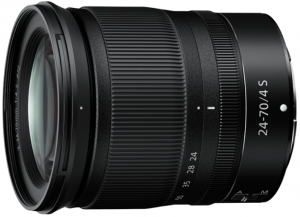
Nikon Z 24-70 F4 S

Check on Amazon

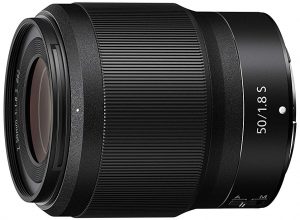
Nikon Nikkor Z 50mm F1.8 S

Check on Amazon

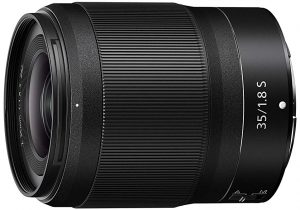
Nikon Nikkor Z 35mm F1.8 S

Check on Amazon

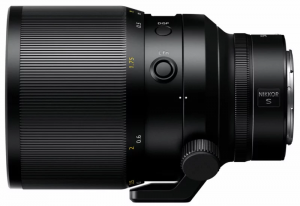
Nikon Nikkor 58mm F0.95 Noct

Check on Amazon

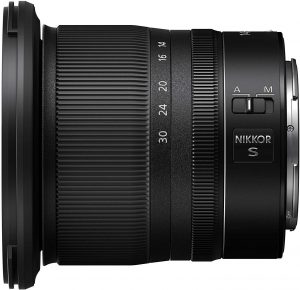
Nikon Nikkor Z 14-30mm F4 S

Check on Amazon

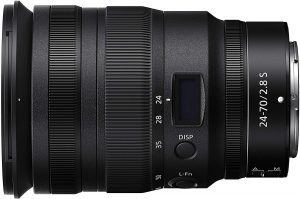
Nikon Nikkor Z 24-70 F2.8 S

Check on Amazon

Nikon Nikkor Z 14-30mm F4 S

Check on Amazon

Nikon Nikkor Z 24-70 F2.8 S

Check on Amazon

Nikkor Z 24-70 F4 S

Check on Amazon

This forms part of the standard lens kit that comes with the Nikon Z6 and Z7 cameras. The lens is lightweight and comes with a buttonless retractable design. The constant aperture lens is made of 14 elements in 11 groups.

In addition to the nano-coating we just mentioned, you will also find the fluorine coating that should make it easier for cleaning the moisture and fingerprints. While the autofocus functionality is offered through the stepping motor, the manual focus option is also available. You can also make use of the control ring to allow the control over aperture or for exposure compensation depending upon your exact needs.

The features that the lens offers include

  • Lightweight, but a well-made design
  • A minimum focus distance of 30 cm
  • Filter thread value of 72 mm
  • Weight – 500 grams

Nikkor Z 50mm F1.8 S

Check on Amazon

It is one of the standard prime lenses and one of the best from Nikon for the Z mount. The company claims that the lens is one of the best with virtually zero aberrations. It comes with a nine-blade design and is made of 12 elements in 9 groups.

This Nikkor Z lens also comes with the nano-coating along with the fluorine coating for enhanced performance. The autofocus system seems in tune with the other non-Z mount Nikkor lenses we have come to find. The lens offers you a minimum focus distance of 40 cm.

One of the best additions to the nifty fifty lenses, it comes with the following features –

  • Weight – 415 grams
  • Minimum aperture – f/16
  • Maximum aperture – f/1.8
  • Nine-blade construction.

Nikkor Z 35mm F1.8 S

Check on Amazon

The medium prime wide lens, the Nikkor Z 35mm F1.8 S, is almost similar to the 50 mm lens we just checked out. It is made from 11 elements in 9 groups – This lens is an excellent option for sharper photography.

The optical construction of the lens has a nano-coating and fluorine coating for the apparent benefits that we have already covered. The minimum focus distance offered by the glass is 25 cm. Featuring a nine-blade aperture, it has the same 62 mm filter thread. This is the lightest lens among the Nikkor Z lenses launched so far. The bokeh effects are impressive enough.

Some of the features worth mentioning:

  • Weight – 370 grams
  • Diaphragm – nine rounded blades
  • Minimum aperture – f/16
  • Maximum Aperture – f/1.8

Nikkor 58mm F0.95 Noct

Check on Amazon

The lens has not yet been launched and is likely to make its appearance in early 2019. As per the company updates, the lens will be designed as the best lens for excellent rendering performance. It has been stated to be one of the best options for transitioning between the in focus and out of focus areas.

The lens is also expected to come with a new ARNEO coating for the best anti-reflective performance. The lens will also offer an LCD panel for displaying aperture, depth-of-field, and focal length.

Nikkor Z 14-30mm F4 S

Check on Amazon

One of the prominent wide-angle zoom lens, the Nikkor Z 14-30mm F4 S is highly compact and portable in every aspect. It offers you a constant aperture for better results. The lens is constructed with 14 elements in 12 groups, and four of them are extra-low dispersion glass. Four other elements have aspherical surfaces.

The lens has a flat front and thus is capable of handling a standard 82 mm screw-in filters. You also have access to a quiet stepping motor and an internal focusing system. The minimum focus distance reads 28 cm. The lens also has the option to reduce the focus of breathing and its effects.

Nikkor Z 24-70 F2.8 S

Check on Amazon

The lens comes with a standard zoom performance. This has been considered as the faster cousin of the Nikkor Z 24-70 mm F 4S. The lens is supposed to be the best option for use with the professional and dedicated professional enthusiasts. It can be the right choice for those looking for a restricted depth of filed.

The lens construction is made of 17 elements in 15 groups. This includes two ED low dispersion elements and four aspherical elements. The focusing is internal, and this will be helpful enough in assuring that the lens does not change the length when it is focussing. You also have access to a weather sealing and also offers you access to a small LED screen.

<Update> Best Nikkor Z Lenses:

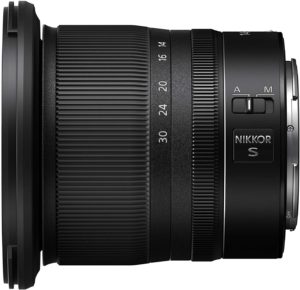
Nikkor Z 14-30mm F4 S
Check on Amazon

One of the prominent wide-angle zoom lens, the Nikkor Z 14-30mm F4 S is highly compact and portable in every aspect. It offers you a constant aperture for better results. The lens is constructed with 14 elements in 12 groups, and four of them are extra-low dispersion glass. Four other parts have aspherical surfaces.

The lens has a flat front and thus is capable of handling a standard 82 mm screw-in filters. You also have access to a quiet stepping motor and an internal focusing system. The minimum focus distance reads 28 cm. The lens also has the option to reduce the focus of breathing and its effects.

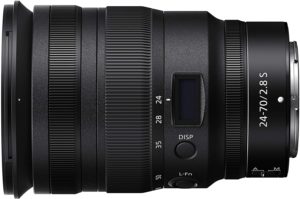
Nikkor Z 24-70 F2.8 S
Check on Amazon

The lens comes with a standard zoom performance. This has been considered as the faster cousin of the Nikkor Z 24-70 mm F 4S. The lens is supposed to be the best option for use with the professional and dedicated professional enthusiasts. It can be the right choice for those looking for a restricted depth of filed.

The lens construction is made of 17 elements in 15 groups. This includes two ED low dispersion elements and four aspherical elements. The focusing is internal, and this will be helpful enough in assuring that lens does not change the length when it is targeting. You also have access to a weather sealing and also offers you access to a small LED screen.

How do Nikkor Z Lenses differ from the Nikkor Z Lenses?

There are a few unique features that make the Z lenses an excellent option for your photography requirements. Some of the subtle options that the glasses offer you can be summed up as

  • The Z lenses come with a stepping motor. This will help you focus through the electrical means and thus provide access to silent autofocus.
  • The Z lenses have an 11 point contact functionality as compared to the 8 point contact observed on the traditional glasses. This will translate into an improved shooting experience.
  • Using and managing the buttons and aperture controls would be better and smoother on the Z lenses.

Any more Nikkor Z Lenses?

Well, Nikon has a streamlined roadmap planned for the Nikkor Z lenses. The scheduled launch of the lenses is spread over three years. Initially, Nikon has already started with the launch of three lenses so far.

Here is the roadmap for the Nikkor Z lenses going forward –

Lenses Lined for 2019

Lenses Planned for 2020

There are further plans that run through to 2021, but Nikon has not yet revealed them as yet.

The Concluding Thoughts

That was the list of the currently available Nikkor Z Prime lenses so far. However, if you find the number of lenses presently available is not enough, you may opt for the Nikon FTZ adapter that lets you use any of your existing lenses with the F mount with your new Z series cameras.

We will keep updating the post as and when we find new launches for the Nikkor Z lenses. Meanwhile, you may keep referring to the roadmap cited above and share with us whenever you notice any of the new lenses are launched.
Best Budget Nikon F to Z Mount Adapters (FTZ) For Mirrorless Cameras

Already invested into the Nikon ecosystem? Looking for cheap Nikon F to Z Mount Adapters? If yes, then you have landed in the right spot!

The new Nikon Z7 and Z6 created a massive interest in the hearts and minds of the photography enthusiasts. However, one of the huge concerns that they bought up was the focus on the new lens mount system. The new Z mount has created havoc and made the photographers who have opted for the new cameras search for the compatible lenses. However, what if you already have a good collection of lenses and want to use them with your new Nikon Z mirrorless cameras? Nikon understands this concern, and that is precisely why the options of using an FTZ mount so that you can use the F mount lenses with your new shining Z6 or Z7 easily.

Related: List of Canon EOS R Adapters

What advantages does the Nikon Z provide?

Those of us who have got used to the Nikon F mounts have been confused about the need for a new mount. This has made most of them postpone their decision of buying the new cameras until there is a considerable number of Z mount lenses. Some of us are also worried about the usability of the good old collection of lenses that we already have with us.

Why was the new Z mount system introduced and what advantages does it come with? If those are the queries even you have, these points may clear your doubts.

To begin with, the Nikon Z mount is much larger than the traditional Nikon F mount. The F mount has an inner diameter of 47 mm, while the Z counterpart comes with a whopping inside diameter of 55 mm. That would perhaps make it the most substantial full frame mount we have across manufacturers.

The larger angle of incidence will help you design the high-performance lenses easily. Besides, the mount has been so designed that it can adapt to any of the lens adapters being manufactured by the third party providers. The system should suit even the other mirrorless systems.

The last, but not the least advantage is the Z mount lets you bind the lens more closely to the camera body, thanks to the four claws now, instead of the previous three found on the FX mount and DX mount systems.

Best Nikon F to Z Mount adapters

Well, Nikon has opened the doors for the third party developers and manufacturers to come up with their adapters for the Nikon Z mount. Of course, we may not be able to find many of the options as of now, but it can be too early to rule out the possibilities.

Let us check out the best options currently available from that perspective.

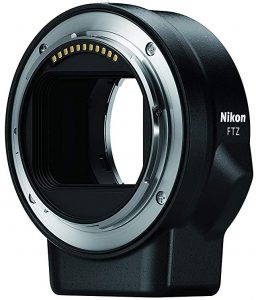
1. Nikon FTZ Mount adapter

Check on Amazon

The first option comes from the house of Nikon itself. Yes, Nikon does not want till the third party operators begin launching their adapters and has come up with its solution. The Nikon FTZ Mount adapter is the best Z mount adapter you can go with for obvious reasons.

The features that will make it the main choice can be summarised as follows:

  • The adapter is precisely engineered for using the Nikon F mount lenses on the Z series cameras.
  • The adapter is compatible with more than 360 F mount lenses from Nikon.
  • While the lenses attached will retain their features, they will gain additional benefits in the form of in-camera VR, Hybrid AF*, silent shooting, and Focus Peaking.
  • The mount is manufactured with magnesium alloy and offers you weather sealed performance.

Against:

  • High Price

If you find it interesting, you can check it out at this link o Amazon.

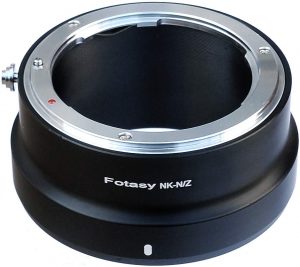
2. Fotasy Nikon Lens to Nikon Z Mount

Check on Amazon

This is one of the third party Z mount options we were mentioning a few moments before. The mount adapter is designed to suit almost all the Nikon F lenses to your Nikon Z mirrorless camera. You need not shim or collimate the lens to suit the adapter.

Some of the features that the adapter offers you can be summarised as

  • It can be used with all Nikon F lenses. The adapter supports Ai, non-AI, and AIS lenses.
  • The finest and precise finishing will help you fit and remove the adapter with ease as it suits your needs.
  • It provides you extreme protection with the built-in hood
  • In addition to the Nikon Z series DSLR cameras, it can also be used with the other mirrorless cameras as well.

If those features impress you, it may be a good idea to know more about the adapter here from Amazon.

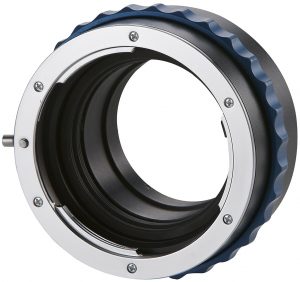
3. Novoflex Adapter Nikon F-lenses to Nikon Z-Mount

Check on Amazon

Coming from Novoflex, a company known for the best adapters for a wide variety of camera mounts and lenses, the Novoflex adapter for Nikon F to Z mount lives up to the expectations. The precision based design fits the lenses and the Z mount precisely the way you expect it to.

Some of the features worthy of mentioning can be

  • The lenses you connect to the camera can be used with infinity focus.
  • You can use the exposure metering in a manual mode or through aperture priority mode
  • The mount adapter comes with the exact compensation for the flange focal length.

In case you are interested, you will need to check out the lens mount adapter from the official Novoflex and Amazon sites at this link.

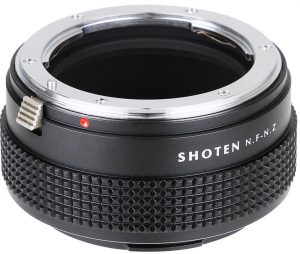
4. SHOTEN adapter for NIKON AUTO AIS AI F mount lens to Nikon Z mount

Check on Amazon

The Shoten NF – NZ adapters are exclusively sold on eBay and not available anywhere else. While they have several lens mount adapters for the Nikon Z mount, we have chosen the product as our focus is on the F to Z adapter compatibility.

Some features that the adapter packs in can be listed as

  • It offers you a high-quality performance with a good build quality
  • The lens adapter is made of brass and aluminum and provides you a durable functionality.
  • The compact design should ideally make it one of the preferred choices.
  • The internals has matt finish painting and thus reduces the internal reflection to a greater extent.

If you want to give them a try, you may check them out here.

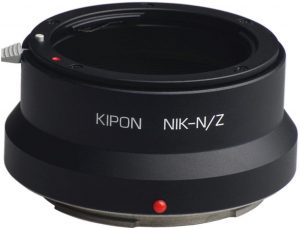
5.  Kipon Nikon F Mount Lens to Nikon Z Mount Camera Adapter


Check on Amazon

After Novoflex and Shoten, Kiplon is perhaps the next best options for the mount adapters for any cameras. Having launched mount adapters for the other mounts, they have now released a series of Z mount adapters. The NF – NZ adapter will help you mount the older F mount lenses easily onto the Nikon Z series cameras.

Some salient features worthy of mentioning can be

  • Only manual focus will be available while shooting as the mount does not come with any electrical components.
  • The adapter is manufactured using the High-quality aviation aluminum
  • It features an excellent solid coupling while fitting it with the lens.
  • The adapter offers a nice infinity focussing with ease.

The Kiplon range of mount adapters is exclusively available on Adorama. You can find the F to Z mount adapter for Nikon Z series cameras at this link.

The Concluding Thoughts

Well, the Z series cameras from Nikon are a new breed as of now and finding the perfect Nikon Z mount adapters is not that easy. Moreover, we found that a few of them are not available on the known E-commerce sites like Amazon. We have featured the best options we could scrape through while surfing for the best FTZ mount adapters.

As things stand as of now, opting for the Nikon FTZ mount adapter should be a great option as it comes straight from Nikon and should offer you better compatibility with both the Z mount on your camera and the Nikon F lenses you are going to use with them.

Have you used any of these mounts for your older F mount lenses? Do share your experiences with those adapters so that our readers get hands-on details. You may also share other adapters we have not featured here, but you have found interesting enough.

Fujifilm Instax Mini 9 vs 25 Polaroid Cameras Specifications Comparison

Still a Polaroid Camera fan? If yes, then check out our Fujifilm Instax mini 9 vs 25 comparisons before buying one!

Of course, there are several camera options when you set out to search for a good Instant-camera for your hobbies. The DSLRs and such high-end options may be the best tones for the professionals out there, but for the hobbyists like us, the instant film cameras can be one of the excellent options by every standard and nostalgic.

The cameras are best suited for the easy shoot options and the instant printing that we have always wanted to show off on the social media profiles. If you are looking for the best instant film cameras, the Fujifilm Instax Mini 9 and Fujifilm Mini 25 are the two viable options to try out for the best results. How do these two cameras compare between themselves? We will check out the functionality in finer detail.

Also Read: Best DSLRs with HDR Built-In

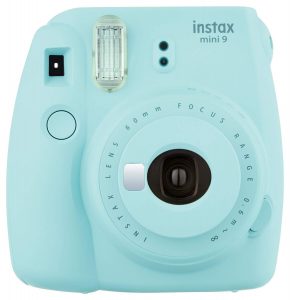
Fujifilm Instax Mini 9 – An Introduction

Check on Amazon

Well, Fujifilm focusses on making the instant camera a perfect choice in almost every standard. You need to buy the instant film separately for the needs you may have. Though it comes with an entire plastic build, it has a significant degree of professional design.

The camera provides you access to the instant film sheets of 62 x 46 cm. What makes it even more interesting is it will offer you the same additional functionality that you may have come to expect from the Polaroid camera. You also have access to personalization of your photos with messages and drawings.

It has a two element lens with the fixed shutter speed of 1/60th of a second. The camera has an always-on flash that flashes irrespective of the light conditions. You should be able to shoot close enough to the subject  – as close as one foot. You don’t have any display to judge the quality of the image as on a digital camera. You will get the print on the sheet, and that is all about the quality.

When it comes to the performance, you will find it easy to handle for one-handed use. However, positioning the image can be an issue as the viewfinder is to the left and may need some practice to get used to. Outdoor shoots may get a little overexposed if you are taking them in the daylight. The shots in the indoor atmosphere come out well enough. If you are shooting in low light, make sure you are shooting. It may be a good idea to use the ‘Hi’ key mode for better effects.

We would not advise using it for close up shots as you may find a little overexposure.

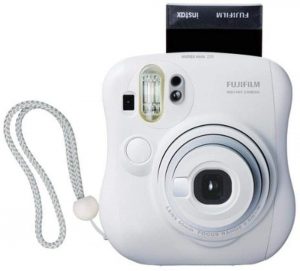
Fujifilm Mini 25 instant camera – What it is?

Check on Amazon

Another Polaroid camera that offers you features almost equivalent to the Instax Mini 9. The camera is more into automatic mode when compared to the previous versions of the devices. The camera does offer an auto exposure mode for the shooting ease, but if you are looking for the additional control over the functionality, you can do it through the digital control screen.

The camera is not heavy. It is quite light and has an excellent curvy design to make it more good looking. The camera can shoot images sized 2.13″ x 3.4″. The functionality is quite excellent, and even the kids can take their turn to shoot the photos.

It is equipped with a high-quality Fujinon lens. The exposure is easy and straightforward enough with the auto built-in intelligent flash. The lens is motorized with three positions collapsible design.

How do these two compare with one Another?

Having understood a little enough detail about either of the cameras, let us now check out the cameras in a side by side comparison. This should be helpful for you if you are looking to clearly understand the difference between the two options from Fujifilm and choose the one that best meets your requirements.

Features / Particulars

Fujifilm Instax Mini 9

Fujifilm Mini 25

Type of camera Instant photos  camera Instant photos  camera
Battery Type Standard AA battery Rechargeable Li-on battery
Exposure Modes Complete manual Automatic Mode, Program Mode
Exposure Lock Not available Not available
Weight 307 grams 275 grams
Physical Dimensions 118.3 x 116 x 68.2 mm 112 x 121 x 50.5 mm
Weather sealing No No
Scene Modes Indoor and self-portrait Self-portrait
White balance modes Cloud, Sunny Auto
Iris control Yes No
Warranty Two years One year
Lens type Prime Zoom (3 Positions)
Viewfinder Yes, available – Optical type Yes, available – Optical type
Brightness adjustment Yes, through levels Yes, lighten darken control levels
Flash range 2.7 meters 2.5 Metres
Color Options Cobalt Blue, Flamingo Pink, Ice Blue, Smoky white, Lime green White
Shooting range 0.6 meters to infinity 0.5 meters to infinity
Shutter speed 1/60 sec 1/3 to 1/400 sec


You would see that while both the cameras are excellent regarding their functionality, the Fujifilm Mini 25 comes with a few additional features packed in. In any case, you can choose the camera that best meets your shooting requirements by making a perfect comparison based on the above chart.

The Polaroid cameras are not used widely enough. You can opt for it if you love the retro look that these cameras offer you. These shots can be excellent for those social media shares.

The Concluding Thoughts

The Polaroid cameras have not yet gone out of fashion, though we do not use them like the DSLRs or other similar options.  However, the two offerings coming from Fujifilm should help you achieve the best performance about Polaroid cameras. The Fujifilm Mini 25 is one of the prominent choices among the two and come with a few salient features that borrow a few options from the mainstream cameras in the digital era.

Have you used any of the two polaroid cameras – at least for fun or the functionality? If you have used them at least once, you may share your experiences and opinions with either of them so that our readers will get a piece of good information about the cameras and make a learned choice.

Waze Cam vs Ring Stick Up Security Camera Specifications Comparison

Security cameras have been one of the essential choices in today’s world filled with frauds and other safety concerns. If you are looking for the options to check out the best security cameras for your home or office, we have two most popular options you can have a look at. Yes, we are talking about Waze Cam vs Ring Stick Up security cameras. How do these two cameras compare against one another? We will check out the two well-known security cameras and compare them with one another.

Also Read: Amazon Cloud Cam vs Ring Stick Up Cam

Wyze Cam – A Sneak Peek into it

Check on Amazon

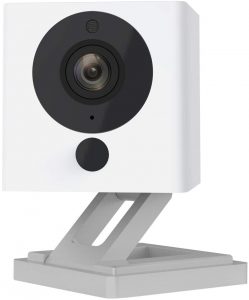
When the first version of Wyze cam was introduced, it had all the features you have come to see in a high-end security camera. It featured the two-way audio, HD recording, best in class night vision and motion sensors and all this was made available at an affordable price – in fact, at an unbelievable amount of under 30 bucks.

The Wyze Cam 2 comes with all these features and more. The camera now comes with a matte finish and a unique hideaway stand. Wyze Cam offers you an exceptional image quality and a fantastic two-way audio performance. The camera features a powerful 1/2.7″ CMOS sensor that gives you amazing 1080p HD recording. The sensor offers you a smoother night vision and better clarity during the day time recordings. The power audio chip inside the cameras and the Class K amplifiers are the two factors that help you with the best in class audio performance.

The enhanced motion detection technology should aid you in following the moving object right from where the activity initiated to all the way till where it goes. The Wyze cam also has an excellent personal assistant integration making it easy to communicate with the camera. It supports IFTTT and Amazon Alexa.

The companion app comes is polished and provides you access to a great deal of performance and camera controls. While the clips are saved to the cloud, you can configure them to be recorded on the SD card as well. However, accessing the triggered recordings can be a little difficult to find.

The Pros

  • Integration with Amazon Alexa and IFTTT.
  • It offers you 14 days rolling history for free.
  • The excellent motion tracking functionality.

The Cons

  • The recorded video may not have found easily.

The Ring Stick Up Cam – An Introduction

Check on Amazon

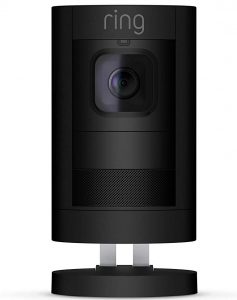
This is one of the most versatile security cameras we have ever come across. It offers you multiple features and functions. You can use it both indoors and outdoors, and it offers you a slighter degree of weather sealing (Read: Splash Proof) as well. Another feature that made us go gaga over it is the support for either WiFi or Ethernet connectivity – thereby enhancing its versatility.

The image quality and the motion tracking functionalities are one of the best when compared to the competitors. Setting it up should not take more than five minutes. However, you may need enough time to install the system on the wall mount.

The camera can record the videos in 1080p HD resolution and offers you a 155 degree of diagonal field of view. The 150 degrees horizontal and 85-degree vertical field of view should be able to provide you access to a broader view no matter where you have installed it.

The camera also comes with a motion detection functionality that can be switched on or off as per your needs. However, an automatic recording of motion detection will need a paid Ring Protect plan which is optional. The motion detection sensitivity can be adjusted as per your needs. If you are looking for smart home integration, the camera offers you both Google Assistant and Amazon Alexa integration. The Alexa integration is full-fledged, while the Google Assistant integration covers only a few areas.

The Pros

  • The camera offers you a versatile functionality and can be used both indoors and outdoors
  • You can use it over WiFi or through an Ethernet connection.
  • The image and video quality along with the motion detection work great.
  • The night vision performance tends to be top notch.

The Cons

  • The two-way audio can get a little choppy sometimes

Comparison Chart for the security cameras: Waze Cam vs Ring Stick Up

That was a brief review of the two powerful security cameras you can make use of for your security concerns. Having gone through those details of either of the cameras, how about checking about the features in a head to head comparison? The side by side comparison should help you make your choice in a better manner.

Features / Particulars

Wyze cam

Ring Stick Up cam

Physical Dimensions 2.2 x 1.97 x 1.97 inches 2.4 x 1.4 x 5 inches
Weight 100 grams
Weather sealing No Yes, IPX5 “splashproof.”
Suitability Indoor use only Indoor and outdoor
Connectivity WiFi WiFi and Ethernet
Personal Assistant integration Amazon Alexa Amazon Alexa and Google Assistant
Video Quality 1080p HD 1080p HD
Field of view 110 degrees diagonal 150 degree horizontal, 85 degrees vertical and 155 degrees diagonal
Option for Siren No Yes
Power connections USB USB and Ethernet


The above table should provide you a fair idea about the functionalities offered by the two competing security cameras. The Ring Stick Up cam tends to give you a few additional features and makes it one of the prominent options to go with. The versatile functionality, suitability for both indoor and outdoor usage and multiple personal assistant integrations are a few features that make it an excellent option for your safety.

The Concluding Thoughts

That was a precise comparison between the two capable security cameras offering you respite from the possible to your property or loved ones. Based on what your exact requirements are, you can go with either of them after comparing them through the chart and concise review above.

Have you used either of the security cameras for your needs? Why not share your thoughts, experiences, and opinions with us through the comments here below? That can perhaps help our readers arrive at a wiser decision to choose the best among them.

Amazon Cloud Cam vs Ring Stick Up Cam Specifications Comparison

Why an Amazon Cloud Cam vs Ring Stick Up Cam article you ask? It is because in today’s world of nuclear families and a hectic lifestyle comprises of 21st Century risks and safety concerns, a security camera should be one of the prominent choices you need to make. With such a massive number of security cameras available at our disposal, it may be a little difficult task to find the best cameras that meet most of your requirements. Of the currently available breed of cameras, we have picked two most capable and popular options and will make a comparison between the two compelling security cameras.

Also Read: Best Windows Hello Compatible Webcams

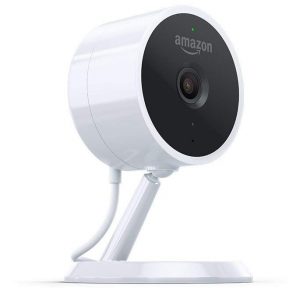
The Amazon Cloud Cam – An Overview

Check on Amazon

As with most of the Amazon products, you will find that the packaging and contents out of the box are impressive and satisfying. The box contents include Cloud Cam itself, a USB wall adapter, nine-foot USB power cable, a mounting plate, and wall-mount hardware.

The Amazon Cloud camera is capable of shooting in HD and offers you 30 frames per second clarity. You should shoot high-quality videos, unlike most security cameras. During dusk or lower light levels, the images and videos get a little blurry, especially when things are moving faster. However, the night videos are quite crisp and clear. The faces and clothing patterns in night shooting are visible.

The clips could be viewed only through the app initially, but Amazon has now introduced the options to see them on your computer as well. One of the features we loved the most is the two-way audio communication that it offers you. That means while you can hear the sounds of the video clips being recorded, you will also be able to talk to the people on the other side of the camera from afar!

The speaker and microphone are quite capable enough. It can, of course, pick the raised voices – but also, it can also get the lower level in room conversations as well.

The camera can record up to 24 hours of footage, but you may buy additional footage and storage options from Amazon. There are a few plans available which go like Basic, Extended, and Pro. Coming from Amazon, the security camera is equipped with the options for activating and interacting with Alexa, Amazon’s in-house AI Personal voice assistant.

The Pros

  • Easier setup options
  • The video quality is quite good including the best night vision
  • The two-way audio functionality is much better than the competitions and clear enough.
  • You can customize the motion sensing

The Cons

  • You will need to opt for a subscription if you want to download the videos.
  • If you are opting for basic tier, the motion sensing can be an issue.
  • Though night vision is excellent, low light performance tends to be blurry

Ring Stick Up Cam – An Introduction

Check on Amazon

As with Amazon Cloud Cam, the Ring stick cam comes with an attractive package with almost all the accessories, and mounting paraphernalia included. The sales pack comes equipped with the camera itself, the base, two USB power supply options (indoor and outdoor), a Power over Ethernet cable, and all the anchors, mounting screws, and wire clips.

The configuration of your camera is quite simple and easy to work with. Just download the app, scan the barcode and follow the instructions on both the app and the device. You should be done within around five minutes. Of course, mounting the camera on he wall should take more time.

The feature that we love the most with the camera is the ability to be used under a wide range of options. It can be used indoors or outdoors, can work with WiFi or ethernet, and can be placed on a table or used on the wall. The app lets you perform an infinite range of options to manage your camera. Some of the options worth mentioning can be viewing the live or recorded footage, setting up motion sensors and zones, or even adjust the motion sensitivity. The app also lets you set off a siren or even talk to the others on the other side of the camera.

The Stick Cam can record the footage in 1080p HD and offers you a 150 degree horizontal or 85-degree vertical field of view. As for the low light performance or the night vision functionality – you will find the camera performing quite well enough. Just the way you can do it with the Amazon Cloud cam, you can also use the two-way audio functionality on the Ring Stick up cam as well.

The protect plan comes with subscription charges of $3 per month. That should be a good option for every standard.

The Pros

  • Versatile functionality makes it one of the prominent selections
  • It can be used both for indoor or outdoor usage
  • You have access to full HD video recording at 1080p
  • You can choose between USB usage or Ethernet connectivity

The Cons

  • The siren tends to be low volume
  • The two-way communication is not up to the mark.
  • The subscription charges may not be something you will be comfortable with

The Comparison Chart: Amazon Cloud Cam vs Ring Stick Up Cam

After having gone through the details of the two cameras, it may be practical enough to understand the differences between the two cameras. We thought of sharing the differences in a side by side comparison chart for a better understanding of the two cameras and their features.

Features / Particulars

Amazon Cloud Cam

Ring Stick Up Cam

Indoor / Outdoor usage Indoor only Outdoor and indoor usage
Power connections MicroUSB and Ethernet MicroUSB
Connectivity options Ethernet and WiFi WiFi
Weather Sealing No IPX5 “splashproof.”
Field of view 120 degree diagonal 150 degree horizontal, 85 degrees vertical and 155 degrees diagonal
Video Quality 1080p HD 1080p HD
IR Night Vision Yes, available Yes, available
Siren functionality No Yes
Two-way audio Yes, crystal clear Yes, but a little choppy
Personal Assistant Integration Google Assistant and Amazon Alexa Amazon Alexa

Which One should you Go With?

The Amazon Cloud cam comes from a huge brand, but still, the Ring Stick Up Cam has a lot of features and functions making it one of the prime choices. The versatility, better connectivity options, and outdoor visibility are a few features that would make it a formidable choice in comparison.

However, that should not make Amazon inferior in any manner. In fact, when it comes to the features available on the free tier, you will find the Amazon Cloud Cam one of the good choices. Even in terms of other functions, it offers you a couple of good features. The clear two-way audio communication is one of the prominent options.

The Concluding Thoughts

So, that was what we have to do with the two cameras for your security requirements. In fact, we would consider both of them capable enough when it comes to the features and functions that they offer you.

Have you used either of those options for your security needs? If you have, do share your thoughts and experiences with those two cameras with us through the comments here. This will help our readers make a valuable decision.

Best DSLR Cameras with Optical Low Pass Filter – Anti Aliasing Filter

0

Camera technology is growing with a lot of performance improvements. One of the major elements you should now pay attention would be the low pass filter and its lack on your chosen DSLR camera. So, what is this optical low pass filter and what effects does it have on your camera? Which DSLR cameras have no low pass filter and how does that affect your camera performance? We will check out the features and the cameras with no low pass filters in today’s post.

What is Optical Low Pass Filter?

The Optical Low pass Filter, often abbreviated as OPLF is also referred to as the Anti-aliasing filter. The filter was earlier built within most of the digital cameras and DSLRs. The filter is ideally located in front of the image sensor. The primary purpose of the AA filter is to reduce the aliasing effects or to stop the high-frequency image information from being recorded.

What are the aliasing effects? Well, when your subject has repetitive details, you will find the result more pronounced. The adjoining pixels tend to get overlapped with each other and thus to offer a strange impact on your images. The anti-aliasing filter helps you avoid this aliasing effect or if you want us to use a more technical word, Moiré effect.

Source: Wikipedia

However, while these low pass filter can be useful in handling the moiré effect efficiently, they reduce the sharpness of your images. In case if you are into landscape or nature photography, the use of an anti-aliasing filter can result in not so great photos. That is precisely why DSLR manufacturers have begun avoiding the use of these low pass filters on their devices.

Since the newer range of cameras come with high-resolution sensors with a more significant number of pixels, the moiré effect is considerably reduced.

Best DSLR cameras with Optical low pass filter

The Optical low pass filters or anti-aliasing filters tend to offer assistance in avoiding the Moire effect to a greater extent and preferred by those involved in portrait photography. However, the photography enthusiasts these days are more focused on the sharpness of their images. Thus the use of an Optical low pass filter is slowly being avoided.

This makes finding the DSLR cameras with optical low pass filters a real pain in the neck. We have attempted finding the top end cameras with the optical low pass filters and ended up with the following list of the choicest options in the genre.

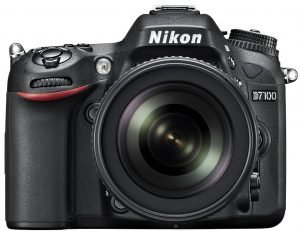
1. Nikon D7100

DSLR Cameras with Built In HDR

Check on Amazon

One of the best cameras from Nikon to feature the DX-format HD-SLR, the Nikon D7100 brings to the fore an exciting range of image quality, speed, connectivity, and creativity. Superior low light performance, precise autofocus, and built-in HDR are some of the features that should make it a great choice.

Some of the best options that the camera offers you can be summarised as

  • Sharper images, thanks to the powerful 24.1 MP CMOS sensor.
  • You have access to continuous shooting at 7 fps.
  • The smaller and compact design should make it one of the best options to work with an excellent set ergonomic options
  • A massive list of connectivity options in the form of a microphone port, USB terminal, HDMI out, headphone jack, and a GPS port.
  • The 3D tracking mode for capturing the moving objects without any loss of details.

The Pros

  • An excellent image quality
  • A great ergonomics performance
  • A great build quality

The Cons

  • Video recording has no aperture control.

You can check it out on Amazon at this link.

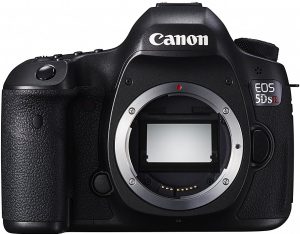
2. Canon EOS 5DS Digital SLR

Check on Amazon

Looking for a 50MP beast for your shooting needs? The Canon EOS 5DS should be the best you can go with. It offers you an ultra high definition performance and an excellent scene detection functionality for an added performance.

A few salient features that should make it a great choice to go with can be

  • It features the excellent beastly resolution of 50.6 MP for almost all your commercial and fine art photography requirements.
  • You have access to an advanced set of 61 point autofocus system of which 41 are cross type AF compatibility.
  • It offers you a fine detail mode in picture style. This should help you get the fantastic results for the fine edges and patterns.
  • The Intelligent Scene Analysis system lets you choose the correct mode for the settings.

The Pros

  • Highest resolution in its class of cameras.
  • An excellent build quality
  • A deep color visibility
  • Weather sealed body

The Cons

  • No WiFi connectivity available
  • The ISO range is a little limited.

If you think the features are worth what you are looking for, you may get more details from here on Amazon.

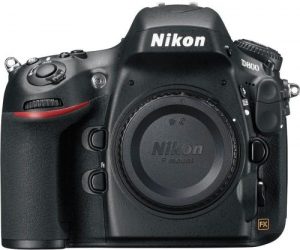
3. Nikon D800

DSLR Cameras with Built In HDR

Check on Amazon

The Nikon D800 features an excellent 36.3 MP resolution sensor with FX format. The advanced scene recognition is one of the other superior functionality you will fall with. You will find the incredible dynamic range for shooting your favorite images.

Some of the features that you would love include

  • The D800 is an excellent option for getting the best details.
  • The DX format camera should help you shoot every occasion with ease – whether weddings, events or landscape.
  • It offers you more extensive cinematic shooting experience with access to Full HD 1080p at 30/25/24p or 720p at 60/50p in AVC-HD format
  • The precise autofocus functionality with an improved 51 point autofocus points of which 15 are cross type autofocus points.
  • The EXPEED 3 technology ensures you richer image features and functionality that reduces noise even at higher values of ISO

The Pros

  • Best in class performance at high ISO settings
  • Manual audio controls
  • Support for RAW formats
  • Convenient placement of buttons

The Cons

  • Autofocus can get slower in Live mode
  • The grip may be too small, and handling may be a little difficult
  • Slow-Mo continuous shooting at just 4 fps

The Comparison Chart for the Best DSLRs with Low pass Filter

That was a short list we could come up with the best DSLR options with the optical low pass filters. Having gone through the salient features of the options in the genre, we thought, it should be a good idea to compare the DSLR cameras in a head to head comparison chart for an easy understanding of the features and functions that they offer.

Features Nikon D7100

DSLR Cameras with Built In HDR

Canon EOS 5DS

Nikon D800

DSLR Cameras with Built In HDR

Screen size 3.2 inches 3.2 inches 3.2 inches
Continuous shooting 7 fps 5 fps 6 fps
Focus Manual and autofocus Manual and autofocus Manual and autofocus
Resolution 24.1 MP 50.6 MP 36.3 MP
Sensor type APS-C (DX) APS -C (EF) Full frame (FX)
Video capture Full HD at 1080p Full HD at 1080p Full HD at 1080p
Dimensions 5.35 x 2.99 x 4.21 in 5.98 x 2.99 x 4.57 in 5.75 x 3.23 x 4.84 in

The Concluding Thoughts

Sadly enough, we could not find many of the options for the best DSLR cameras with the low pass filter. Of course, there may be a few options in low-end DSLR camera range. Our focus has been on the best cameras that offer good functionality along with the low pass filter included.

Have you used any of the DSLR cameras featured in this compilation? Do share your experience with the cameras, primarily focussing on the advantages of having the low optical pass filter on those cameras. You may also share the information on any other better camera that has an Optical low pass filter options on it that you may have come across. We can indeed update this post with the additions you may suggest.

Also Read:

Sigma 105mm F1.4 Art vs Nikon 105mm F1.4 Specifications Comparison

0

Looking for a comparison between the Sigma 105mm F1.4 Art vs Nikon 105mm F1.4 portrait lenses?

The portrait lenses have always been one of the most difficult choices for a professional photographer. Today, we have selected two capable choices when it comes to portrait lenses. We will compare the Nikon 105mm F/1.4 with the Sigma 105 mm f/1.4 Art for arriving at the best results in term of efficient performance.

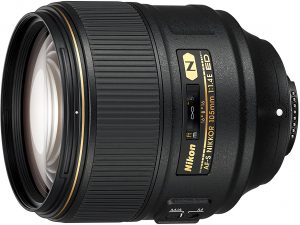
The Nikon 105 mm f/1.4 – An overview

Check on Amazon

One of the best lenses in the short telephoto lens market, the AF-S NIKKOR 105mm f/1.4E ED Lens has been a favorite choice for photography enthusiasts around the globe. The lens is designed to work with the FX-format F-mount DSLRs and offers you an excellent low light functionality.

The lens also comes with incredible control over the focus. Thus you have access to a shallow depth of field. The lens also comes with nanocrystal coating to provide you relief from ghosting and flare.

A few features we found interesting enough include

  • Though the lens has been designed for the FX format, you can also use it for the cameras with DX format as well.
  • The f/1.4 maximum aperture is faster enough and offers you precise control over the depth of field.
  • It has been one of the excellent performers for the low light conditions.
  • The lens is made of three extra-low dispersion glass elements for reducing chromatic aberration.
  • The fluorine coating on the surface provides support against the damage to the optical system.
  • The silent wave motor will ensure that you get faster and smoother autofocus that does not disturb your audio recording.

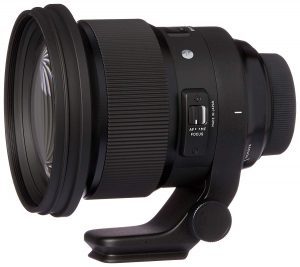
Sigma 105 mm f/1.4 Art – An Overview

Check on Amazon

The advanced optical layout and a bright maximum aperture are the two features that make the Sigma 105 mm f/1.4 Art an exceptional choice and a formidable competitor to the Nikon 105 mm f/1.4 lens.

It offers you the same set of benefits like the excellent functionality under low light conditions and extensive control over the depth of field. You can work efficiently with the isolation of the objects and using a selective focus. It uses FLD and SLD glasses to avoid or reduce the chromatic aberration. The lens also comes with the Super multi-layer coating for reducing and eliminating the lens flare and ghosting effects.

Some of the features that may make it a good choice can be summed up as here below –

  • Part of the Sigma’s Global Vision series of the lenses, it offers you exceptional optical performance and thus suits the artistic or creative masterpieces.
  • While specifically designed for the FX-format of the camera mount, it can also work with the DX format as well.
  • The f/1.4 aperture is bright enough and works skillfully for the low light situations.
  • You can exercise greater control over the focus and provides you with a shallow depth of field.
  • It uses three F low dispersion glasses and two Special low dispersion glass elements for reducing the flare and chromatic aberrations.
  • The lens should be an excellent option for the bokeh effects. The nine-blade diaphragm enhances the smoother and better bokeh functionality.

How do the lenses Compare? Sigma 105mm F1.4 Art vs Nikon 105mm F1.4

Well, from the above description – it should be evident that both the competing lenses come with an almost similar degree of compatibility, features, and functionality. However, there are a few minor differences that may make them slightly stay apart.

To begin with, the Sigma  105 mm f/1.4 Art is less expensive when you compare it to the Nikon 105 mm f/1.4. We have observed the price difference of around $ 500 to $ 600. If you are on a budget and still looking for a good quality of performance from your portrait lens, the Sigma offering should be an ideal choice for your needs.

The Sigma 105 mm lens is a more robust option when compared to the Nikon lens. It weighs almost double than the Nikon lens. This can be one of the reasons you may hesitate buying this lens, especially if you value portability as one of the crucial factors.

When it comes to letting in more light into the lens, the Nikon lens offers you better functionality and for the same image and exposure – it will let more light. One of the things we noticed from the usability point of view was that the Nikon lens has a focusing ring that can be moved quickly enough, while that on the Sigma lens felt somewhat tighter.

Tabular Comparison: Sigma 105mm F1.4 Art vs Nikon 105mm F1.4

A side by side comparison between the two lenses should ideally help you make the right decision concerning which lens would you want to go with. We will compare the features so that you can make it a perfect choice between the two.

Features

Nikon 105 mm f/1.4

[amazon_link asins=’B01J4S9YRI’ template=’PriceLink’ store=’foi04-20′ marketplace=’US’ link_id=’9151b896-3222-4b70-8e04-01d578d9d1eb’]

Sigma 105 mm f/1.4

[amazon_link asins=’B07D9YGP5S’ template=’PriceLink’ store=’foi04-20′ marketplace=’US’ link_id=’f11ece96-0832-47f4-9cb2-19efd137f98a’]

Focal Length 105 mm 105 mm
Camera mount Nikon F Nikon F
Angle of view 23°10′ degrees 23.3 degrees
Minimum focal distance 1 m 1 m
Lens construction 14 elements in 9 groups 17 elements in 12 groups
Diaphragm Nine rounded blades Nine rounded blades
Filter thread 82 mm 105 mm
Physical dimensions 94.5 x 106 mm 115.9 x 131.5 mm
Weight 985 grams 1640 grams


As can be seen from the above comparison table and the discussion we have had above – it should be clear enough that the two lenses offer you the same kind of functionality regarding their features and construction.

The Concluding Thoughts

Ultimately, based on what we could find from our time with the lenses and the specifications thereof, we fond that both the glasses come with the similar level of functionality and features, and produced an almost identical degree of image quality. The deciding factors, therefore, should ideally be the price which differs by nearly $600 and the weight of the lenses.

Which among those two lenses would you prefer for your experiments with the low light photography? Do share your expectations and experiences if any with these two competing capable f/1.4 lenses.

Nikon Z6 vs Z7 Mirrorless FX Format Camera Specifications Comparison

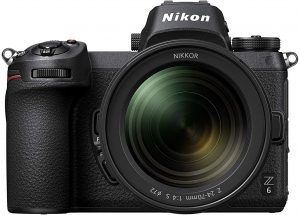
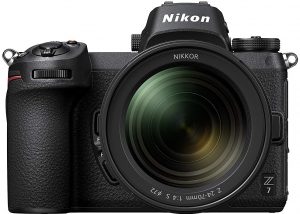
Almost a decade after the launch of its mirrorless cameras, Nikon finally launched the new full-frame mirrorless cameras in the form of Nikon Z6 and Nikon Z7. The cameras have been almost similar in most aspects – at least from the looks of it. However, you will find a huge list of differences under the hood (Nikon Z6 vs Z7). So, if you are thinking of opting for either Nikon Z6 and Nikon Z7 – we will provide you a complete comparison between the two devices.

RelatedNikon D850 vs D750 vs D810 

Nikon Z6 vs Z7 – The Comparison

Like we said already, they share most of the features between them. With a few exceptions, they have almost everything in common. The memory card slot, the button layout, the touchscreen and USB charging are a few features that will make them look identical.

However, understanding the differences based on a few parameters will be helpful in letting us find the exact comparison.

Sensor Comparison

Both Nikon Z6 and Nikon Z7 come with the same 35 mm sensor and offers a back-illuminated functionality. This is helpful in getting more light into the sensor than the conventional sensors. However, there is a massive difference in the resolution. The Z6 comes with a resolution of 24.5 MP, and the Z7 offers you a pixel count, that is two times the value at 45.7 MP. Another difference between the two is the Z6 comes with the low pass filter, while the Z7 has no low pass filter.

ISO

The ISO sensitivity and values are better for the Nikon Z6. It offers you the lowest ISO value of 100 and goes up to 51200 in standard mode. There is also an extended ISO value ranges from 50 to 204800. The Nikon Z7, on the other hand, begins a native ISO range from 64 and reaches up to 25600. The corresponding ISO values would be 32 to 102400. This should ideally make the Nikon Z6 a better option for the low light photography – But it is not!

4K Video Shooting

Both the cameras are capable of 4K video shooting. Of course, the difference in the sensor resolution can differentiate wholly. The Z7 can do a DX mode and “Line Skipping” in the full frame mode. This will mean you may not get better sharpness at the higher ISO values. The Nikon Z6 delivers the highest quality in both FX and a full frame mode.

Autofocus

You have access to a hybrid autofocus functionality on both the camera options. You have access to both contrast, and phase detection focus and the detection points cover 90 percent of the sensor area. The Nikon Z6 offers you a total of 273 detection points regarding autofocus and the Nikon Z7, on the other hand, comes with 493 points. There is also an option for face detection if you are looking for it.

Continuous Shooting performance

The Nikon Z6 has an advantage of having a lower megapixel count here. It can shoot at up to 12 fps, while the Nikon Z7 can handle it only up to 9 fps. The RAW format may just be available up to 12 bit. The buffer depth is almost similar across both the models.

Battery Performance

The official specifications have been entirely forthcoming concerning the battery performance expected from the two cameras from Nikon. The Nikon Z6 appears to be a little more power hungry and thus provides you around 310 shots per single charge. The bigger sibling Nikon Z7 comes with a slightly better performance at 330 shots per single charge. Please note that these figures may be the minimum standard you would be able to achieve. The actual shots per load will be more than those values. You should be able to use the older batteries like EN-EL15a/EN-EL15, but Nikon suggests opting for the new 15B types. Both of them have USB charging and come with a specialized charger.

Tabular Comparison – Nikon Z6 vs Z7

The side by side comparison should ideally provide you with an excellent option for the two cameras so that you will be able to choose the right kind of device based on your actual preferences.

Features / Particulars

Nikon Z6

[amazon_link asins=’B07GPH7M5X’ template=’PriceLink’ store=’foi04-20′ marketplace=’US’ link_id=’ad1c385f-87f4-442d-92a9-aedf149d20f6′]

Nikon Z7

[amazon_link asins=’B07GQ3HVW1′ template=’PriceLink’ store=’foi04-20′ marketplace=’US’ link_id=’7b7908bc-8da8-41e7-8cf6-cfc1a94e79e5′]

Sensor resolution 24.5 MP 45.7 MP
Low pass filer availability Yes No
Image stabilization Available, 5-axis Available, 5-axis
Sensor size 35.9 x 24. Mm 35.9 x 23.9 mm
Image Size 6000 x 4000 8256 x 5504
Sensor type BIS CMOS  BIS CMOS
Storage media XQD cards XQD cards
Continuous shooting speed 12 fps 9 fps
Maximum Shutter speed 1/8000 sec 1/8000 sec
Minimum ISO 100 64
Minimum extended ISO 50 32
Maximum ISO 51200 25600
Maximum extended ISO 204800 102400
Autofocus system Hybrid Phase detection, contrast Hybrid phase-detection contrast
Autofocus points 273 493
Maximum video resolution 4K @ 24/25/30 fps, 1080p @ 120fps 4K @ 24/25/30 fps, 1080p @ 120fps
LCD 3.2″ Diagonal LCD 3.2″ Diagonal LCD
LCD articulation Yes, tilting Yes, tilting
Resolution of LCD 2100000 dots 2100000 dots
GPS No No
Battery type EN-EL15b EN-EL15b
Battery backup 310 shots per charge 330 shots per charge
Weather sealing Yes, available Yes, available
Connectivity options WiFi and Bluetooth WiFi and Bluetooth
Weight 585 grams 585 grams
Physical Dimensions 134 x 100.5 x 67.5mm (5.3 x 4.0 x 2.7″) 134 x 100.5 x 67.5mm (5.3 x 4.0 x 2.7″)


As is evident from the above table of comparison, both the Nikon Z6 and Z7 come with almost similar features and functions. Of course, there are a few features that make them stand slightly apart.

The Concluding Thoughts

Well, both Nikon Z6 and Nikon Z7 are the first attempts of Nikon at the full frame mirrorless cameras. In terms of ergonomics and design language, you will find both the devices equally capable. The fact that both the cameras share most of the features should make it a great choice by every standard. The final decision rests on three major vital points – sensor resolution, continuous shooting performance, and the price.

Choose the right camera depending on your preferences based on those key points and share your opinions and experiences with us.

Related Articles:

List of the Best Point and Shoot Cameras with Optical Viewfinder or EVF

In recent times, the smartphone cameras are the most common choice when it comes to snapping something on the go. A person of any age can easily use the camera phone to capture any picture or shoot video instantly. However, the point and shoot cameras claim to capture an image and shoot videos with high-quality output. In different lighting conditions, there would be no compromise in the output image quality and video quality. Moreover, you get more creative control over your captured photos.

It is difficult to hold the camera steady while capturing and shooting with your arms outstretched. Therefore, point and shoot cameras equipped with optical viewfinder enables you to press the camera easily against your face. In this way, these cameras improve stability and decrease the issues of shaking. Let’s take a look at the best “point and shoot” cameras with optical viewfinder:
<Updated List> Point and Shoot Cameras with Optical Viewfinder

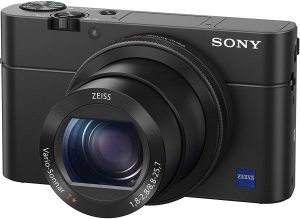
Sony RX100 Mark IV

Check on Amazon

One of the best options for the point and shoot camera, the Sony RX100 Mark IV is one of the excellent options you can lay your hands on. There are several options available among the point and shoot cameras offered by RX100. You can check out one that best meets your needs.

You have a 20.1 MP sensor on the camera along with ZEISS Vario-Sonnar T* 24-70mm f/1.8-2.8. The strength of the device lies in its high quality EVF viewfinder that comes with a pop-up function. The tilting LCD screen should be yet another excellent options for an improved performance. You can have access to an excellent burst shooting capability.

The capabilities of 4K video and HD capability along with the 960-fps slow motion recording is one of the excellent features of the camera. You also have access to an enhanced wireless communication between the devices through the WiFi and NFC connectivity.

The Features –

  • Type of the camera – Compact
  • An excellent 4K video recording compatibility
  • 36 million dots EVF viewfinder
  • 6 X optical zoom

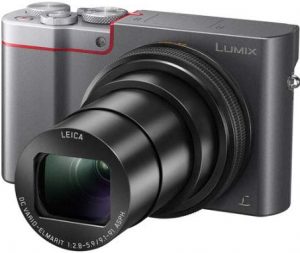
Panasonic Lumix ZS100 / TZ100

Check on Amazon

The camera is one of the most capable options in its genre. It offers you plenty of features packed in a small form factor. You can be assured of a 4K video capture along with a full HD capability. The 5-axis correction is one of the unique features. The camera also comes with a Level Shot function that automatically corrects the camera tilt.

It features the Venus Engine as the perfect Panasonic premier processor. The 1-inch 20.1-megapixel MOS sensor provides you access to an enhanced and improved night photography at its best. The high-end auto focusing offered by the camera can be one of the best options for a crystal clear shooting.

The camera is configured to suit practically any shooting condition. The Post Focus feature offered by the camera lets you refocus after the image has been taken. It is impressive enough to find Panasonic packing in a host of features in a tiny model.

The Features –

  • A larger sensor in a compact form factor.
  • A high-end zoom range
  • 16 million dots EVF viewfinder
  • Maximum burst speed – 30 fps

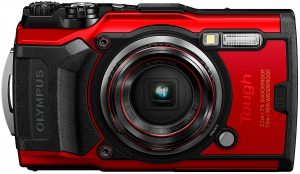
Olympus Tough TG-6 (Note: LCD Viewfinder Type)

Check on Amazon

The best feature offered by the camera would include the best possible waterproof protection. The 12 MP camera from Olympus offers waterproofing for up to 15 metres. It also comes with shockproof and crushproof properties as well making it one of the toughest cameras ever. An extremely useful and practical zoom range makes it a preferred destination for the camera lovers out there.

You have access to 4 macro shooting modes along with the option for magnified shooting for up to 1 cm. The Olympus Tough TG 6 offers a 4K movie and 120 fps full HD recording. The underwater capability offered by the camera will provide an enhanced experience. The five underwater microscope mode along with three underwater white balance modes.

The Features –

  • The 1.04 million dots EVF viewfinder
  • Maximum burst speed of 20 fps
  • 4K video recording at 30 fps
  • Enhanced Macro capability that can shoot a distance between 1 cm and 30 cm.

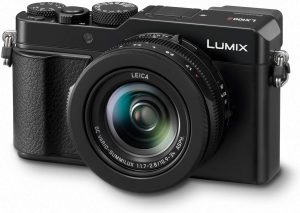
Panasonic LX100 II

Check on Amazon

Equipped with a multi aspect sensor, the Panasonic LX100 II should be one of the best cameras in the point and shoot genre for style. It comes with an excellent larger sensor. The switchable aspect ratios are what would make it a versatile camera ever. The solid build with metal construction and the tactile dual LED controls are the other two features that should ideally make it a big layer in its genre.

The camera also comes with a super sharp optic at 24-75mm (equiv.) f/1.7-2.8. Yet another plus point that we would want to focus on would be the maximum aperture of f/1.7. You can play with multiple 4K modes if you are trying to shoot videos in 4K.

The Features

  • The 276000 dots EVF viewfinder is yet another excellent feature on the camera
  • A continuous burst shooting at 11 fps.
  • Fixed LCD screen. A tilting screen would have been an added advantage.
  • Three-inch touchscreen at 1,240,000 dots.

List of the best point and shoot cameras with optical viewfinder:

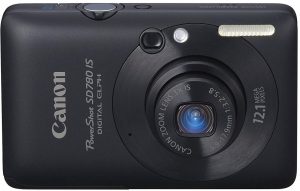
1. Canon PowerShot SD780IS 12.1 MP, 3x Optical Image Stabilized (OIS) Zoom & 2.5-inch LCD:

Check on Amazon

The present model of point and shoot camera might be the slimmest digital camera from Canon. The PowerShot SD780 IS Digital ELPH camera is capable of enthralling the senses with the use of the bold, saturated colors and an original design resembling the intensity of brand’s cutting-edge camera technology. Whatever shots you take in any alignment, you would be able to share them and make them unforgettable.

To begin using this digital camera, all you need to do is set merely this device to Smart AUTO, and then you would be ready to capture pictures for enjoyment. One of the most appealing traits of this Canon camera is you can solely focus on your subject because the camera covers all the technical details.

Features:

  • This Canon point and shoot camera come with 12.1-megapixel CCD capable of capturing enough detail for excellent photo-quality and the poster-size prints.
  • It comes with the 3x optical zoom lens along with Optical Image Stabilizer.
  • There is the presence of 2.5-inch widescreen PureColor LCD II screen for clearly viewing the objects.
  • Implementation of Face Detection technique is there.
  • The camera is equipped with HD movie shooting potential along with HDMI output.
  • Its high compatibility allows it to be used with SD/SDHC, MMC Plus, and MMC/MMC Plus/HC.
  • Use of the Advanced Canon technology smartly investigates the prevailing situation and shooting conditions. After that, it automatically chooses a suitable setting from 18 specially defined parameters.

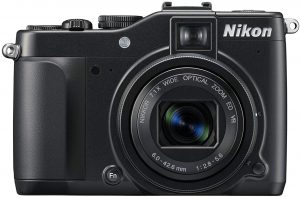
2. Nikon Coolpix P7000 – 10.1 MP Digital Camera, 7.1x Wide Zoom-Nikkor ED Lens, and 3-Inch LCD:

Check on Amazon

Designed particularly for fast and comfortable handling, the Nikon Coolpix P7000 digital camera comes with 10.1 megapixels resolution featured on a large 1/1.7-inch CCD Sensor. With the use of the advanced glass lens, this Nikon point and shoot camera are designed from the ground up to present excellent image quality. The users would be facilitated with excellent control and creative options. Its low-light performance is improved through an ISO sensitivity varying up to 6400 at full resolution.

In this camera, a luminous 3-inch, 921,000-dot Clear Color Display along with an optical viewfinder and electronic Virtual Horizon Indicator offers illuminated pictures for crystal-clear viewing. In addition to capturing images, the P7000 camera also presents HD movie recording facility with zoom, autofocus as well as stereo sound recording. Overall, you will be benefitted with a wide range of creative control functions to explore your creativity.

Features:

  • Superb image quality at the output is made possible with the use of advanced Nikon EXPEED C2 imaging engine and a flexible 7.1x optical 28-200mm Wide Zoom-Nikkor ED glass lens.
  • In this camera, the versatile 28-200mm lens varies wide to snap landscapes. Moreover, the lens zooms in to snap a picture with excellent clarity.
  • It comes with the 5-way VR image stabilization system. The optical VR image stabilization by lens shift reduces the impacts of camera shake.
  • The motion detection technology automatically detects any moving entities. After this detection, it automatically adjusts shutter speed and ISO to reimburse for subject movement and camera shake.
  • Nikon’s Best Shot Selector (BSS) is dedicated to automatically capture up to ten shots whenever the shutter is pressed. Once the images are captured, this selector chooses and saves the sharpest image.
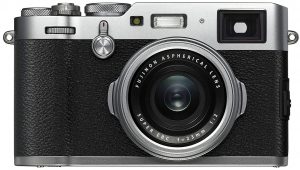
3. Fujifilm X100F 24.3 MP APS-C Sensor:

Check on Amazon

The eye-catching aspect of this camera from Fujifilm is it comes with the advanced hybrid viewfinder. This model of point and shoot camera proves to be an excellent day to day camera capable of surpassing your typical expectations. Its solid metal construction gives you feeling as if you are holding a metal-based device. On its surface, the knob, switches, and buttons are perfectly positioned to let you use this unit easily. The built-in speed dials, excellent viewfinder technique, and expanded phase detection system makes your investment worthy.

 Features:

  • The X100F digital camera comes with the 24.3MP X-Trans CMOS III APS-C sensor with X-Processor Pro and no low-pass filter.
  • This point and shoot camera are equipped with the 8-way focus lever. Moreover, the number of focusing points is expanded from 49 (found in previous models) to 91.
  • You can use it on the go with the presence of the latest np-w126s lithium battery.
  • It comes with the incorporated ISO dial, present inside the shutter speed dial.
  • The operating temperature is in range of 0 degree Celsius to 40 degree Celsius.
  • This Fujifilm X100F camera showcases phase detection AF with the use of the phase detection pixels over the sensor. Compared to the previous models, the phase detection area over the sensor is enhanced by approximately 230%.
  • The advanced hybrid viewfinder uniquely blends the functionalities of an optical viewfinder (OVF) and electronic viewfinder (EVF).
  • You can easily switch between OVF and EVF by using the viewfinder switch lever present at the front part of the camera body.

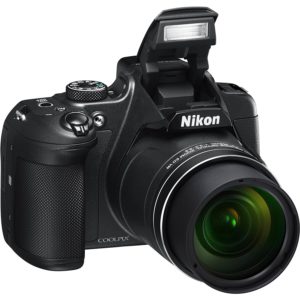
4. Nikon COOLPIX B700 Superzoom Digital Camera:

Top Superzoom Bridge Cameras

Check on Amazon

Initially, when you use the Nikon B700 digital camera to zoom an object or scene, you will speculate whether any shot would ever be out of reach again. Its unique specialty is it subjects hardly visible scene to your naked eye with excellent clarity. Besides, the tight focus is made possible with the use of advanced Vibration Reduction technology. This digital camera’s DSLR-style design, along with a PSAM mode dial precisely positions key controls to the place you wish them. Thus, the camera would certainly feel great in your hands.

Features:

  • You can capture spectacular 2-megapixel RAW images and 4K Ultra High Definition (UHD) videos along with stereo sound. Furthermore, you can quickly capture five FPS high-speed sequences in all the light conditions.
  • When you are busy shooting, the Nikon COOLPIX B700 camera can be easily connected to a compatible smartphone via the cutting-edge Bluetooth Low Energy (BLE) technology. This technology helps you to share photos instantly and employs remote camera control.
  • It comes with the NIKKOR Super ED 60x Optical Zoom Lens for precise focus.
  • There is the inclusion of the rechargeable Li-ion battery EN-EL23.
  • UHD 4K video recording is possible at 30p.
  • For employing smart functionalities, it comes with Wi-Fi along with NFC & Bluetooth BLE.

5. Sony DSCHX90V/B Digital Camera:

Check on Amazon

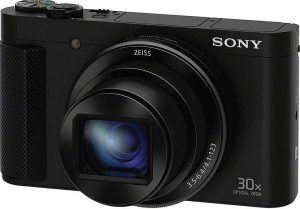
Now you can attain sharp detail of any scene or object with the help of this compact and lightweight camera from Sony. Presented in classic black color, you can conveniently use this digital camera for casual and professional uses. The spectacular picture quality is due to the use of the low light Exmor R sensor and superior quality ZEISS lens equipped with 5-axis image stabilization. You can instantly share the captured photos and shot videos via the built-in Wi-Fi and NFC. The credit of the stunning and lifelike picture quality at the output goes to the 30x zoom functionality. In this point and shoot camera, there is a pop-up electronic viewfinder to employ eye-level framing. Besides, the selfie-lovers can use the 180° tilt screen to capture selfies at 18.2MP selfies.

Features:

  • This DSCHX90V/B is packed with the retractable OLED Tru-FinderTM viewfinder.
  • High-quality capturing and shooting are made possible with the use of the 30x Optical/60x Clear Image Zoom ZEISS (Trademarked) Vario-Sonnar T Lens.
  • It can shot videos in MP4, XAVC S, and AVCHD formats.
  • You can observe all the scenes in rich detail through the bright and high contrast, pop-up OLED Tru-Finder equipped with 638k dots resolution.
  • Its electronic viewfinder realistically displays all the scenes included in the recording. This comprises the effects of camera settings. Hence, you will be able to monitor the results precisely.
  • Presence of the aspherical lenses within the eyepiece optics enhances the performance and reduces size.
  • With the help of a handy eye sensor, this Sony point and shoot camera automatically transit between LCD and EVF screen. In this way, it makes the operation simple.

Conclusion:

For capturing stunning pictures and lifelike videos with excellent stability, the point and shoot cameras with viewfinder work the best. These modern point and shoot cameras are equipped with the cutting-edge technology to present high-quality results at the output.

GoPro Hero 7 Black vs Silver – Specifications & Cost Comparison

When it comes to cameras, the most prominent brands that come to our mind would be the major brands like Nikon, Sony, or Canon. However, GoPro has been one of the manufacturers who has carved a name for itself with a focus on action cameras, a category which never existed before. They recently announced their new range of cameras in the Hero 7 series. Let us check out the two promising options available in the series – the GoPro Hero 7 Black and GoPro Hero 7 Silver. We will compare the two siblings (GoPro Hero 7 Black vs Silver) in finer detail in this post.

RelatedBest 4K HDR Camcorders and Action Cameras

GoPro Hero7 Black vs Silver – The differences

GoPro Hero 7 Black vs Silver

One may as well get confused that the Black and Silver are the color options available for the cameras available in the Hero7 series. They aren’t. The Black and Silver refer to the different models with a few changes in the design, features, and functionalities.

Comparison Table: GoPro Hero 7 Black vs Silver

Features

GoPro Hero7 Black

[amazon_link asins=’B07GDGZCCH’ template=’PriceLink’ store=’foi04-20′ marketplace=’US’ link_id=’3c95e72f-53a2-4ed8-ba63-3c422645799f’]

GoPro Hero7 Silver

[amazon_link asins=’B07GDGZCCJ’ template=’PriceLink’ store=’foi04-20′ marketplace=’US’ link_id=’312a13fe-7cd8-439c-9b94-b991ee61c3ae’]

Physical Dimensions 62.3 x 44.9 x 33 mm 62.3 x 44.9 x 28.3 mm
Weight 116 grams 94.4 grams
Weather sealing Yes, available Yes, available
Maximum Resolution 4K / 60

4K (4:3) / 30

2.7K / 120

2.7K (4:3) / 60

1440p / 120

1080p / 240

960p / 240

720p / 240

4K / 30

1440p / 60

1080p / 60

Stabilization HyperSmooth Standard
FOV options Wide

Medium

Linear

SuperView

Wide
Video File format supported MP4 (HEVC / H.265)

MP4 (H.264 / AVC)

MP4 (H.264 / AVC
Digital Zoom Yes, available Yes, available
Maximum Bitrate supported 78 MB per sec 60 MB per sec
Audio Codecs supported WAV and AAC AAC
HDMI compatibility Yes, available  No
External Microphone support Yes, available  No
Live Streaming Yes No
Maximum Image size 12 MP 10 MP
Image file format RAW and JPG  JPG
USB Port type USB Type C  USB Type c
Battery Capacity 1220 mAh 1220 mAh
Protune function Yes No
Digital Zoom Yes, available Yes, available
Time-lapse video options Yes No
WiFi and Bluetooth Yes Yes

Design and Build

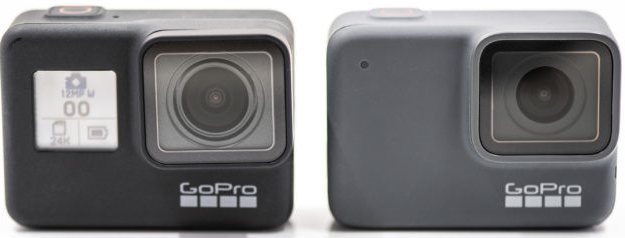
Well, this is where they look almost similar and do not differ much. Except that the Silver model is slightly lighter in comparison, they share virtually the same features and looks. Both of them are rated waterproof and have a 33 feet water resistance.

The silver model has only two microphone ports when compared to the Black model which has three microphone ports. It has a lighter shade of gray (not precisely silver colored) and has the engraving that says 7 Silver in comparison to 7Black on the Black model.

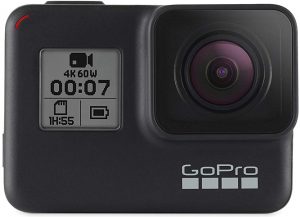
The Black model comes with a small LCD screen at the front, while the Silver model lacks it.

The lens cover on the Black model protrudes a bit towards the outside, while it does not rely on the Silver. The cover can be replaced in case of the GoPro Hero7 Black, while this will not be possible on the Silver model.

The Silver model offers you a nonremovable battery and thus has only one opening. The Black gives you a USB and HDMI connectivity, while Silver model only offers you USB port option.

The Batteries

You have a Li-ion battery with a capacity of 1220 mAh on both the devices. GoPro Hero 7 Black features a removable battery, whereas the battery pack on the Silver model cannot be removed. The recording times are similar given the same battery capacity.

The significant difference lies in how you charge and use the battery. Since the Black model comes with a removable battery, you can use a spare battery so that your shooting spree goes on unhindered. The Silver model, however, does not offer you this liberty. The charging option remains same across both the devices. Both of them rely on USB Type C port for charging.

Shooting

The shooting capabilities remain almost similar across both the devices. Both can shoot videos in 4K. However, the video parameters are a little different across the two models.

The Black Model offers you a better combination of resolutions and frame rates to choose from. The following table should provide a good provide a good idea –

Resolutions GoPro Hero7 Black

[amazon_link asins=’B07GDGZCCH’ template=’PriceLink’ store=’foi04-20′ marketplace=’US’ link_id=’3c95e72f-53a2-4ed8-ba63-3c422645799f’]

GoPro Hero7 Silver

[amazon_link asins=’B07GDGZCCJ’ template=’PriceLink’ store=’foi04-20′ marketplace=’US’ link_id=’312a13fe-7cd8-439c-9b94-b991ee61c3ae’]

4K Yes Yes (16:3) Wide
4K in 4:3 Yes (Linear, Wide) No
2.7K Yes No
2.7K in 4:3 Yes No
1440p Yes Yes (4:3) Wide
1080p Yes No
960p Yes No
720p Yes No


The Black model also provides a higher framerate. This can be quite helpful in slow motion shooting as well. The Silver model offers a maximum frame rate of 60 FPS, while the frame rates available on the Black model extends up to 240 FPS in 1080p, 960p and 720p resolutions. There is a difference concerning Bitrates as well. The Silver maxes out at 60 Mb per sec, while the corresponding figure for the Black model is 78 Mb per sec.

The use of video codecs again is a huge differentiator. The Silver model works with the H. 264 codec for all its video recordings. The Black model on the other hand invariably uses the H.264 as the default codec but also features an option to go for the newer standard H.265, also known as HVAC. This can help you improved performance and smaller file sizes for the same quality available on H.264.

The Stabilisation

Both the black and Silver models come with an electronic stabilization functionality. There is a slight degree of difference between the stabilization method employed in the two models.

For the Black model, GoPro has opted for a new standard of in-camera stabilization and calls it ‘HyperSmooth.’ The one used in the Silver model is standard. However, there should be not much of s difference in the functionalities of either of those options.

The Images

Once again, both the Black and Silver models come with good shooting capabilities when it comes to shooting images. Of course, there is a difference in the resolutions.

The Black has a resolution of 12 MP as compared to the 10 MP resolution on the Silver model. There are a few additional functionalities included in the Black Model like the ability to shoot in RAW and an enhanced HDR feature. The pictures shot n the Black model come up somewhat crystal clear and are available with a faster burst mode in sharp contrast to the Silver model.

The Black saves a JPG version automatically if you are shooting in RAW for an occasional fall-back. The Silver version cannot shoot in RAW and JPG is the only option. So, from a professional photographers’ point of view, the Black version carries more weight.

The resolution difference will make the images shot on the two models slightly different. The Black model shoots in 12 MP, and thus offer you a 4000 x 3000 pixels. The corresponding figures for the Silver which captures in 10 MP are 3648 x 2736. However, for printing an 8 x 10 print, that should ideally be a minor difference.

Timelapse

Well, this is an important area that needs consideration for professional photographers. Again, the black model offers you multiple options to choose from while shooting a time-lapse video. The significant difference would be the time lapse interval. The Silver model has a fixed time-lapse intervals of 0.5 sec, while the Black version offers you the options of 0.5, 1, 2, 5, 10, 30, or 60 seconds.

There are a few differences regarding the saved format of the time-lapse video. The Silver model always keeps it in 4K MP4 file, and the Black model offers you the options of 4K, 2.7K, 1440p, or 1080p file.

Audio

The audio recording on the GoPro Black model will be in Stereo, while the same on the Silver model is in Mono. As we found out while discussing the physical features of the models, the Silver version has only two microphones, while the Black variant has three mics.

However, if you are about to create a movie on your GoPro camera, you cannot rely on the built-in microphones as the quality will always be not up to the mark. However, the black model offers you an option for using an external microphone whereas the Silver model does not come with this benefit.

Additional features

Apart from the key parameters we studied, there are a few other features that may interest you as well. Some of these features can be summed up as here below.

  • As for GPS, both the Black and Silver models support the functionality.
  • If you are looking for the Live Video streaming while you shoot, it will not be available on the Silver version, but the Black version provides you the feature.
  • The Black model supports the advanced metadata features when compared to the Silver model that does not come with the feature enabled.

Both the Black and the Silver models are available on Amazon. The models are priced at $ [amazon_link asins=’B07GDGZCCH’ template=’PriceLink’ store=’foi04-20′ marketplace=’US’ link_id=’3c95e72f-53a2-4ed8-ba63-3c422645799f’] and [amazon_link asins=’B07GDGZCCJ’ template=’PriceLink’ store=’foi04-20′ marketplace=’US’ link_id=’312a13fe-7cd8-439c-9b94-b991ee61c3ae’] respectively.

So Which One Should You go For?

It depends upon the profession you are in or the features you are looking for. From the first glance, it would be evident that the Black model takes the lead when compared to the Silver. That should not mean that the Silver model is inferior in any case. Black may have a few advanced features, but do you use them? You may need to analyze your needs before you make a decision.

The advanced features come with a premium. Yes, the GoPro Hero7 Black is expensive. If you are not interested in those advanced features and do not use most of them, we do not see any point in opting for the higher price tag.

Of course, there are a few professional requirements like Time-lapse recording, numerous slow-motion recordings, and a need for excellent sound quality. These situations will indeed demand a full-fledged camera, and only GoPro Hero7 Black can fulfill those needs.

So, ultimately it is a call you need to take depending upon the exact requirements that you may be having. Choose the one that best matters to you and shares your thoughts, experiences, and opinions with us.

Related Reading: