back to top

Exclusive Content:

Home Blog Page 19

Sigma 105mm F1.4 Art vs Nikon 105mm F1.4 Specifications Comparison

0

Looking for a comparison between the Sigma 105mm F1.4 Art vs Nikon 105mm F1.4 portrait lenses?

The portrait lenses have always been one of the most difficult choices for a professional photographer. Today, we have selected two capable choices when it comes to portrait lenses. We will compare the Nikon 105mm F/1.4 with the Sigma 105 mm f/1.4 Art for arriving at the best results in term of efficient performance.

The Nikon 105 mm f/1.4 – An overview

Check on Amazon

One of the best lenses in the short telephoto lens market, the AF-S NIKKOR 105mm f/1.4E ED Lens has been a favorite choice for photography enthusiasts around the globe. The lens is designed to work with the FX-format F-mount DSLRs and offers you an excellent low light functionality.

The lens also comes with incredible control over the focus. Thus you have access to a shallow depth of field. The lens also comes with nanocrystal coating to provide you relief from ghosting and flare.

A few features we found interesting enough include

  • Though the lens has been designed for the FX format, you can also use it for the cameras with DX format as well.
  • The f/1.4 maximum aperture is faster enough and offers you precise control over the depth of field.
  • It has been one of the excellent performers for the low light conditions.
  • The lens is made of three extra-low dispersion glass elements for reducing chromatic aberration.
  • The fluorine coating on the surface provides support against the damage to the optical system.
  • The silent wave motor will ensure that you get faster and smoother autofocus that does not disturb your audio recording.

Sigma 105 mm f/1.4 Art – An Overview

Check on Amazon

The advanced optical layout and a bright maximum aperture are the two features that make the Sigma 105 mm f/1.4 Art an exceptional choice and a formidable competitor to the Nikon 105 mm f/1.4 lens.

It offers you the same set of benefits like the excellent functionality under low light conditions and extensive control over the depth of field. You can work efficiently with the isolation of the objects and using a selective focus. It uses FLD and SLD glasses to avoid or reduce the chromatic aberration. The lens also comes with the Super multi-layer coating for reducing and eliminating the lens flare and ghosting effects.

Some of the features that may make it a good choice can be summed up as here below –

  • Part of the Sigma’s Global Vision series of the lenses, it offers you exceptional optical performance and thus suits the artistic or creative masterpieces.
  • While specifically designed for the FX-format of the camera mount, it can also work with the DX format as well.
  • The f/1.4 aperture is bright enough and works skillfully for the low light situations.
  • You can exercise greater control over the focus and provides you with a shallow depth of field.
  • It uses three F low dispersion glasses and two Special low dispersion glass elements for reducing the flare and chromatic aberrations.
  • The lens should be an excellent option for the bokeh effects. The nine-blade diaphragm enhances the smoother and better bokeh functionality.

How do the lenses Compare? Sigma 105mm F1.4 Art vs Nikon 105mm F1.4

Well, from the above description – it should be evident that both the competing lenses come with an almost similar degree of compatibility, features, and functionality. However, there are a few minor differences that may make them slightly stay apart.

To begin with, the Sigma  105 mm f/1.4 Art is less expensive when you compare it to the Nikon 105 mm f/1.4. We have observed the price difference of around $ 500 to $ 600. If you are on a budget and still looking for a good quality of performance from your portrait lens, the Sigma offering should be an ideal choice for your needs.

The Sigma 105 mm lens is a more robust option when compared to the Nikon lens. It weighs almost double than the Nikon lens. This can be one of the reasons you may hesitate buying this lens, especially if you value portability as one of the crucial factors.

When it comes to letting in more light into the lens, the Nikon lens offers you better functionality and for the same image and exposure – it will let more light. One of the things we noticed from the usability point of view was that the Nikon lens has a focusing ring that can be moved quickly enough, while that on the Sigma lens felt somewhat tighter.

Tabular Comparison: Sigma 105mm F1.4 Art vs Nikon 105mm F1.4

A side by side comparison between the two lenses should ideally help you make the right decision concerning which lens would you want to go with. We will compare the features so that you can make it a perfect choice between the two.

Features

Nikon 105 mm f/1.4

[amazon_link asins=’B01J4S9YRI’ template=’PriceLink’ store=’foi04-20′ marketplace=’US’ link_id=’9151b896-3222-4b70-8e04-01d578d9d1eb’]

Sigma 105 mm f/1.4

[amazon_link asins=’B07D9YGP5S’ template=’PriceLink’ store=’foi04-20′ marketplace=’US’ link_id=’f11ece96-0832-47f4-9cb2-19efd137f98a’]

Focal Length 105 mm 105 mm
Camera mount Nikon F Nikon F
Angle of view 23°10′ degrees 23.3 degrees
Minimum focal distance 1 m 1 m
Lens construction 14 elements in 9 groups 17 elements in 12 groups
Diaphragm Nine rounded blades Nine rounded blades
Filter thread 82 mm 105 mm
Physical dimensions 94.5 x 106 mm 115.9 x 131.5 mm
Weight 985 grams 1640 grams


As can be seen from the above comparison table and the discussion we have had above – it should be clear enough that the two lenses offer you the same kind of functionality regarding their features and construction.

The Concluding Thoughts

Ultimately, based on what we could find from our time with the lenses and the specifications thereof, we fond that both the glasses come with the similar level of functionality and features, and produced an almost identical degree of image quality. The deciding factors, therefore, should ideally be the price which differs by nearly $600 and the weight of the lenses.

Which among those two lenses would you prefer for your experiments with the low light photography? Do share your expectations and experiences if any with these two competing capable f/1.4 lenses.

Nikon Z6 vs Z7 Mirrorless FX Format Camera Specifications Comparison

Almost a decade after the launch of its mirrorless cameras, Nikon finally launched the new full-frame mirrorless cameras in the form of Nikon Z6 and Nikon Z7. The cameras have been almost similar in most aspects – at least from the looks of it. However, you will find a huge list of differences under the hood (Nikon Z6 vs Z7). So, if you are thinking of opting for either Nikon Z6 and Nikon Z7 – we will provide you a complete comparison between the two devices.

RelatedNikon D850 vs D750 vs D810 

Nikon Z6 vs Z7 – The Comparison

Like we said already, they share most of the features between them. With a few exceptions, they have almost everything in common. The memory card slot, the button layout, the touchscreen and USB charging are a few features that will make them look identical.

However, understanding the differences based on a few parameters will be helpful in letting us find the exact comparison.

Sensor Comparison

Both Nikon Z6 and Nikon Z7 come with the same 35 mm sensor and offers a back-illuminated functionality. This is helpful in getting more light into the sensor than the conventional sensors. However, there is a massive difference in the resolution. The Z6 comes with a resolution of 24.5 MP, and the Z7 offers you a pixel count, that is two times the value at 45.7 MP. Another difference between the two is the Z6 comes with the low pass filter, while the Z7 has no low pass filter.

ISO

The ISO sensitivity and values are better for the Nikon Z6. It offers you the lowest ISO value of 100 and goes up to 51200 in standard mode. There is also an extended ISO value ranges from 50 to 204800. The Nikon Z7, on the other hand, begins a native ISO range from 64 and reaches up to 25600. The corresponding ISO values would be 32 to 102400. This should ideally make the Nikon Z6 a better option for the low light photography – But it is not!

4K Video Shooting

Both the cameras are capable of 4K video shooting. Of course, the difference in the sensor resolution can differentiate wholly. The Z7 can do a DX mode and “Line Skipping” in the full frame mode. This will mean you may not get better sharpness at the higher ISO values. The Nikon Z6 delivers the highest quality in both FX and a full frame mode.

Autofocus

You have access to a hybrid autofocus functionality on both the camera options. You have access to both contrast, and phase detection focus and the detection points cover 90 percent of the sensor area. The Nikon Z6 offers you a total of 273 detection points regarding autofocus and the Nikon Z7, on the other hand, comes with 493 points. There is also an option for face detection if you are looking for it.

Continuous Shooting performance

The Nikon Z6 has an advantage of having a lower megapixel count here. It can shoot at up to 12 fps, while the Nikon Z7 can handle it only up to 9 fps. The RAW format may just be available up to 12 bit. The buffer depth is almost similar across both the models.

Battery Performance

The official specifications have been entirely forthcoming concerning the battery performance expected from the two cameras from Nikon. The Nikon Z6 appears to be a little more power hungry and thus provides you around 310 shots per single charge. The bigger sibling Nikon Z7 comes with a slightly better performance at 330 shots per single charge. Please note that these figures may be the minimum standard you would be able to achieve. The actual shots per load will be more than those values. You should be able to use the older batteries like EN-EL15a/EN-EL15, but Nikon suggests opting for the new 15B types. Both of them have USB charging and come with a specialized charger.

Tabular Comparison – Nikon Z6 vs Z7

The side by side comparison should ideally provide you with an excellent option for the two cameras so that you will be able to choose the right kind of device based on your actual preferences.

Features / Particulars

Nikon Z6

[amazon_link asins=’B07GPH7M5X’ template=’PriceLink’ store=’foi04-20′ marketplace=’US’ link_id=’ad1c385f-87f4-442d-92a9-aedf149d20f6′]

Nikon Z7

[amazon_link asins=’B07GQ3HVW1′ template=’PriceLink’ store=’foi04-20′ marketplace=’US’ link_id=’7b7908bc-8da8-41e7-8cf6-cfc1a94e79e5′]

Sensor resolution 24.5 MP 45.7 MP
Low pass filer availability Yes No
Image stabilization Available, 5-axis Available, 5-axis
Sensor size 35.9 x 24. Mm 35.9 x 23.9 mm
Image Size 6000 x 4000 8256 x 5504
Sensor type BIS CMOS  BIS CMOS
Storage media XQD cards XQD cards
Continuous shooting speed 12 fps 9 fps
Maximum Shutter speed 1/8000 sec 1/8000 sec
Minimum ISO 100 64
Minimum extended ISO 50 32
Maximum ISO 51200 25600
Maximum extended ISO 204800 102400
Autofocus system Hybrid Phase detection, contrast Hybrid phase-detection contrast
Autofocus points 273 493
Maximum video resolution 4K @ 24/25/30 fps, 1080p @ 120fps 4K @ 24/25/30 fps, 1080p @ 120fps
LCD 3.2″ Diagonal LCD 3.2″ Diagonal LCD
LCD articulation Yes, tilting Yes, tilting
Resolution of LCD 2100000 dots 2100000 dots
GPS No No
Battery type EN-EL15b EN-EL15b
Battery backup 310 shots per charge 330 shots per charge
Weather sealing Yes, available Yes, available
Connectivity options WiFi and Bluetooth WiFi and Bluetooth
Weight 585 grams 585 grams
Physical Dimensions 134 x 100.5 x 67.5mm (5.3 x 4.0 x 2.7″) 134 x 100.5 x 67.5mm (5.3 x 4.0 x 2.7″)


As is evident from the above table of comparison, both the Nikon Z6 and Z7 come with almost similar features and functions. Of course, there are a few features that make them stand slightly apart.

The Concluding Thoughts

Well, both Nikon Z6 and Nikon Z7 are the first attempts of Nikon at the full frame mirrorless cameras. In terms of ergonomics and design language, you will find both the devices equally capable. The fact that both the cameras share most of the features should make it a great choice by every standard. The final decision rests on three major vital points – sensor resolution, continuous shooting performance, and the price.

Choose the right camera depending on your preferences based on those key points and share your opinions and experiences with us.

Related Articles:

List of the Best Point and Shoot Cameras with Optical Viewfinder or EVF

In recent times, the smartphone cameras are the most common choice when it comes to snapping something on the go. A person of any age can easily use the camera phone to capture any picture or shoot video instantly. However, the point and shoot cameras claim to capture an image and shoot videos with high-quality output. In different lighting conditions, there would be no compromise in the output image quality and video quality. Moreover, you get more creative control over your captured photos.

It is difficult to hold the camera steady while capturing and shooting with your arms outstretched. Therefore, point and shoot cameras equipped with optical viewfinder enables you to press the camera easily against your face. In this way, these cameras improve stability and decrease the issues of shaking. Let’s take a look at the best “point and shoot” cameras with optical viewfinder:

<Updated List> Point and Shoot Cameras with Optical Viewfinder

Sony RX100 Mark IV

Check on Amazon

One of the best options for the point and shoot camera, the Sony RX100 Mark IV is one of the excellent options you can lay your hands on. There are several options available among the point and shoot cameras offered by RX100. You can check out one that best meets your needs.

You have a 20.1 MP sensor on the camera along with ZEISS Vario-Sonnar T* 24-70mm f/1.8-2.8. The strength of the device lies in its high quality EVF viewfinder that comes with a pop-up function. The tilting LCD screen should be yet another excellent options for an improved performance. You can have access to an excellent burst shooting capability.

The capabilities of 4K video and HD capability along with the 960-fps slow motion recording is one of the excellent features of the camera. You also have access to an enhanced wireless communication between the devices through the WiFi and NFC connectivity.

The Features –

  • Type of the camera – Compact
  • An excellent 4K video recording compatibility
  • 36 million dots EVF viewfinder
  • 6 X optical zoom

Panasonic Lumix ZS100 / TZ100

Check on Amazon

The camera is one of the most capable options in its genre. It offers you plenty of features packed in a small form factor. You can be assured of a 4K video capture along with a full HD capability. The 5-axis correction is one of the unique features. The camera also comes with a Level Shot function that automatically corrects the camera tilt.

It features the Venus Engine as the perfect Panasonic premier processor. The 1-inch 20.1-megapixel MOS sensor provides you access to an enhanced and improved night photography at its best. The high-end auto focusing offered by the camera can be one of the best options for a crystal clear shooting.

The camera is configured to suit practically any shooting condition. The Post Focus feature offered by the camera lets you refocus after the image has been taken. It is impressive enough to find Panasonic packing in a host of features in a tiny model.

The Features –

  • A larger sensor in a compact form factor.
  • A high-end zoom range
  • 16 million dots EVF viewfinder
  • Maximum burst speed – 30 fps

Olympus Tough TG-6 (Note: LCD Viewfinder Type)

Check on Amazon

The best feature offered by the camera would include the best possible waterproof protection. The 12 MP camera from Olympus offers waterproofing for up to 15 metres. It also comes with shockproof and crushproof properties as well making it one of the toughest cameras ever. An extremely useful and practical zoom range makes it a preferred destination for the camera lovers out there.

You have access to 4 macro shooting modes along with the option for magnified shooting for up to 1 cm. The Olympus Tough TG 6 offers a 4K movie and 120 fps full HD recording. The underwater capability offered by the camera will provide an enhanced experience. The five underwater microscope mode along with three underwater white balance modes.

The Features –

  • The 1.04 million dots EVF viewfinder
  • Maximum burst speed of 20 fps
  • 4K video recording at 30 fps
  • Enhanced Macro capability that can shoot a distance between 1 cm and 30 cm.

Panasonic LX100 II

Check on Amazon

Equipped with a multi aspect sensor, the Panasonic LX100 II should be one of the best cameras in the point and shoot genre for style. It comes with an excellent larger sensor. The switchable aspect ratios are what would make it a versatile camera ever. The solid build with metal construction and the tactile dual LED controls are the other two features that should ideally make it a big layer in its genre.

The camera also comes with a super sharp optic at 24-75mm (equiv.) f/1.7-2.8. Yet another plus point that we would want to focus on would be the maximum aperture of f/1.7. You can play with multiple 4K modes if you are trying to shoot videos in 4K.

The Features

  • The 276000 dots EVF viewfinder is yet another excellent feature on the camera
  • A continuous burst shooting at 11 fps.
  • Fixed LCD screen. A tilting screen would have been an added advantage.
  • Three-inch touchscreen at 1,240,000 dots.

List of the best point and shoot cameras with optical viewfinder:

1. Canon PowerShot SD780IS 12.1 MP, 3x Optical Image Stabilized (OIS) Zoom & 2.5-inch LCD:

Check on Amazon

The present model of point and shoot camera might be the slimmest digital camera from Canon. The PowerShot SD780 IS Digital ELPH camera is capable of enthralling the senses with the use of the bold, saturated colors and an original design resembling the intensity of brand’s cutting-edge camera technology. Whatever shots you take in any alignment, you would be able to share them and make them unforgettable.

To begin using this digital camera, all you need to do is set merely this device to Smart AUTO, and then you would be ready to capture pictures for enjoyment. One of the most appealing traits of this Canon camera is you can solely focus on your subject because the camera covers all the technical details.

Features:

  • This Canon point and shoot camera come with 12.1-megapixel CCD capable of capturing enough detail for excellent photo-quality and the poster-size prints.
  • It comes with the 3x optical zoom lens along with Optical Image Stabilizer.
  • There is the presence of 2.5-inch widescreen PureColor LCD II screen for clearly viewing the objects.
  • Implementation of Face Detection technique is there.
  • The camera is equipped with HD movie shooting potential along with HDMI output.
  • Its high compatibility allows it to be used with SD/SDHC, MMC Plus, and MMC/MMC Plus/HC.
  • Use of the Advanced Canon technology smartly investigates the prevailing situation and shooting conditions. After that, it automatically chooses a suitable setting from 18 specially defined parameters.

2. Nikon Coolpix P7000 – 10.1 MP Digital Camera, 7.1x Wide Zoom-Nikkor ED Lens, and 3-Inch LCD:

Check on Amazon

Designed particularly for fast and comfortable handling, the Nikon Coolpix P7000 digital camera comes with 10.1 megapixels resolution featured on a large 1/1.7-inch CCD Sensor. With the use of the advanced glass lens, this Nikon point and shoot camera are designed from the ground up to present excellent image quality. The users would be facilitated with excellent control and creative options. Its low-light performance is improved through an ISO sensitivity varying up to 6400 at full resolution.

In this camera, a luminous 3-inch, 921,000-dot Clear Color Display along with an optical viewfinder and electronic Virtual Horizon Indicator offers illuminated pictures for crystal-clear viewing. In addition to capturing images, the P7000 camera also presents HD movie recording facility with zoom, autofocus as well as stereo sound recording. Overall, you will be benefitted with a wide range of creative control functions to explore your creativity.

Features:

  • Superb image quality at the output is made possible with the use of advanced Nikon EXPEED C2 imaging engine and a flexible 7.1x optical 28-200mm Wide Zoom-Nikkor ED glass lens.
  • In this camera, the versatile 28-200mm lens varies wide to snap landscapes. Moreover, the lens zooms in to snap a picture with excellent clarity.
  • It comes with the 5-way VR image stabilization system. The optical VR image stabilization by lens shift reduces the impacts of camera shake.
  • The motion detection technology automatically detects any moving entities. After this detection, it automatically adjusts shutter speed and ISO to reimburse for subject movement and camera shake.
  • Nikon’s Best Shot Selector (BSS) is dedicated to automatically capture up to ten shots whenever the shutter is pressed. Once the images are captured, this selector chooses and saves the sharpest image.

3. Fujifilm X100F 24.3 MP APS-C Sensor:

Check on Amazon

The eye-catching aspect of this camera from Fujifilm is it comes with the advanced hybrid viewfinder. This model of point and shoot camera proves to be an excellent day to day camera capable of surpassing your typical expectations. Its solid metal construction gives you feeling as if you are holding a metal-based device. On its surface, the knob, switches, and buttons are perfectly positioned to let you use this unit easily. The built-in speed dials, excellent viewfinder technique, and expanded phase detection system makes your investment worthy.

 Features:

  • The X100F digital camera comes with the 24.3MP X-Trans CMOS III APS-C sensor with X-Processor Pro and no low-pass filter.
  • This point and shoot camera are equipped with the 8-way focus lever. Moreover, the number of focusing points is expanded from 49 (found in previous models) to 91.
  • You can use it on the go with the presence of the latest np-w126s lithium battery.
  • It comes with the incorporated ISO dial, present inside the shutter speed dial.
  • The operating temperature is in range of 0 degree Celsius to 40 degree Celsius.
  • This Fujifilm X100F camera showcases phase detection AF with the use of the phase detection pixels over the sensor. Compared to the previous models, the phase detection area over the sensor is enhanced by approximately 230%.
  • The advanced hybrid viewfinder uniquely blends the functionalities of an optical viewfinder (OVF) and electronic viewfinder (EVF).
  • You can easily switch between OVF and EVF by using the viewfinder switch lever present at the front part of the camera body.

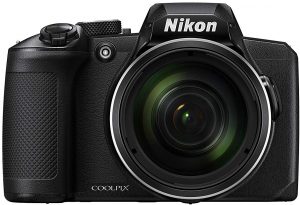
4. Nikon COOLPIX B700 Superzoom Digital Camera:

Top Superzoom Bridge Cameras

Check on Amazon

Initially, when you use the Nikon B700 digital camera to zoom an object or scene, you will speculate whether any shot would ever be out of reach again. Its unique specialty is it subjects hardly visible scene to your naked eye with excellent clarity. Besides, the tight focus is made possible with the use of advanced Vibration Reduction technology. This digital camera’s DSLR-style design, along with a PSAM mode dial precisely positions key controls to the place you wish them. Thus, the camera would certainly feel great in your hands.

Features:

  • You can capture spectacular 2-megapixel RAW images and 4K Ultra High Definition (UHD) videos along with stereo sound. Furthermore, you can quickly capture five FPS high-speed sequences in all the light conditions.
  • When you are busy shooting, the Nikon COOLPIX B700 camera can be easily connected to a compatible smartphone via the cutting-edge Bluetooth Low Energy (BLE) technology. This technology helps you to share photos instantly and employs remote camera control.
  • It comes with the NIKKOR Super ED 60x Optical Zoom Lens for precise focus.
  • There is the inclusion of the rechargeable Li-ion battery EN-EL23.
  • UHD 4K video recording is possible at 30p.
  • For employing smart functionalities, it comes with Wi-Fi along with NFC & Bluetooth BLE.

5. Sony DSCHX90V/B Digital Camera:

Check on Amazon

Now you can attain sharp detail of any scene or object with the help of this compact and lightweight camera from Sony. Presented in classic black color, you can conveniently use this digital camera for casual and professional uses. The spectacular picture quality is due to the use of the low light Exmor R sensor and superior quality ZEISS lens equipped with 5-axis image stabilization. You can instantly share the captured photos and shot videos via the built-in Wi-Fi and NFC. The credit of the stunning and lifelike picture quality at the output goes to the 30x zoom functionality. In this point and shoot camera, there is a pop-up electronic viewfinder to employ eye-level framing. Besides, the selfie-lovers can use the 180° tilt screen to capture selfies at 18.2MP selfies.

Features:

  • This DSCHX90V/B is packed with the retractable OLED Tru-FinderTM viewfinder.
  • High-quality capturing and shooting are made possible with the use of the 30x Optical/60x Clear Image Zoom ZEISS (Trademarked) Vario-Sonnar T Lens.
  • It can shot videos in MP4, XAVC S, and AVCHD formats.
  • You can observe all the scenes in rich detail through the bright and high contrast, pop-up OLED Tru-Finder equipped with 638k dots resolution.
  • Its electronic viewfinder realistically displays all the scenes included in the recording. This comprises the effects of camera settings. Hence, you will be able to monitor the results precisely.
  • Presence of the aspherical lenses within the eyepiece optics enhances the performance and reduces size.
  • With the help of a handy eye sensor, this Sony point and shoot camera automatically transit between LCD and EVF screen. In this way, it makes the operation simple.

Conclusion:

For capturing stunning pictures and lifelike videos with excellent stability, the point and shoot cameras with viewfinder work the best. These modern point and shoot cameras are equipped with the cutting-edge technology to present high-quality results at the output.

GoPro Hero 7 Black vs Silver – Specifications & Cost Comparison

When it comes to cameras, the most prominent brands that come to our mind would be the major brands like Nikon, Sony, or Canon. However, GoPro has been one of the manufacturers who has carved a name for itself with a focus on action cameras, a category which never existed before. They recently announced their new range of cameras in the Hero 7 series. Let us check out the two promising options available in the series – the GoPro Hero 7 Black and GoPro Hero 7 Silver. We will compare the two siblings (GoPro Hero 7 Black vs Silver) in finer detail in this post.

RelatedBest 4K HDR Camcorders and Action Cameras

GoPro Hero7 Black vs Silver – The differences

GoPro Hero 7 Black vs Silver

One may as well get confused that the Black and Silver are the color options available for the cameras available in the Hero7 series. They aren’t. The Black and Silver refer to the different models with a few changes in the design, features, and functionalities.

Comparison Table: GoPro Hero 7 Black vs Silver

Features

GoPro Hero7 Black

[amazon_link asins=’B07GDGZCCH’ template=’PriceLink’ store=’foi04-20′ marketplace=’US’ link_id=’3c95e72f-53a2-4ed8-ba63-3c422645799f’]

GoPro Hero7 Silver

[amazon_link asins=’B07GDGZCCJ’ template=’PriceLink’ store=’foi04-20′ marketplace=’US’ link_id=’312a13fe-7cd8-439c-9b94-b991ee61c3ae’]

Physical Dimensions 62.3 x 44.9 x 33 mm 62.3 x 44.9 x 28.3 mm
Weight 116 grams 94.4 grams
Weather sealing Yes, available Yes, available
Maximum Resolution 4K / 60

4K (4:3) / 30

2.7K / 120

2.7K (4:3) / 60

1440p / 120

1080p / 240

960p / 240

720p / 240

4K / 30

1440p / 60

1080p / 60

Stabilization HyperSmooth Standard
FOV options Wide

Medium

Linear

SuperView

Wide
Video File format supported MP4 (HEVC / H.265)

MP4 (H.264 / AVC)

MP4 (H.264 / AVC
Digital Zoom Yes, available Yes, available
Maximum Bitrate supported 78 MB per sec 60 MB per sec
Audio Codecs supported WAV and AAC AAC
HDMI compatibility Yes, available  No
External Microphone support Yes, available  No
Live Streaming Yes No
Maximum Image size 12 MP 10 MP
Image file format RAW and JPG  JPG
USB Port type USB Type C  USB Type c
Battery Capacity 1220 mAh 1220 mAh
Protune function Yes No
Digital Zoom Yes, available Yes, available
Time-lapse video options Yes No
WiFi and Bluetooth Yes Yes

Design and Build

Well, this is where they look almost similar and do not differ much. Except that the Silver model is slightly lighter in comparison, they share virtually the same features and looks. Both of them are rated waterproof and have a 33 feet water resistance.

The silver model has only two microphone ports when compared to the Black model which has three microphone ports. It has a lighter shade of gray (not precisely silver colored) and has the engraving that says 7 Silver in comparison to 7Black on the Black model.

The Black model comes with a small LCD screen at the front, while the Silver model lacks it.

The lens cover on the Black model protrudes a bit towards the outside, while it does not rely on the Silver. The cover can be replaced in case of the GoPro Hero7 Black, while this will not be possible on the Silver model.

The Silver model offers you a nonremovable battery and thus has only one opening. The Black gives you a USB and HDMI connectivity, while Silver model only offers you USB port option.

The Batteries

You have a Li-ion battery with a capacity of 1220 mAh on both the devices. GoPro Hero 7 Black features a removable battery, whereas the battery pack on the Silver model cannot be removed. The recording times are similar given the same battery capacity.

The significant difference lies in how you charge and use the battery. Since the Black model comes with a removable battery, you can use a spare battery so that your shooting spree goes on unhindered. The Silver model, however, does not offer you this liberty. The charging option remains same across both the devices. Both of them rely on USB Type C port for charging.

Shooting

The shooting capabilities remain almost similar across both the devices. Both can shoot videos in 4K. However, the video parameters are a little different across the two models.

The Black Model offers you a better combination of resolutions and frame rates to choose from. The following table should provide a good provide a good idea –

Resolutions GoPro Hero7 Black

[amazon_link asins=’B07GDGZCCH’ template=’PriceLink’ store=’foi04-20′ marketplace=’US’ link_id=’3c95e72f-53a2-4ed8-ba63-3c422645799f’]

GoPro Hero7 Silver

[amazon_link asins=’B07GDGZCCJ’ template=’PriceLink’ store=’foi04-20′ marketplace=’US’ link_id=’312a13fe-7cd8-439c-9b94-b991ee61c3ae’]

4K Yes Yes (16:3) Wide
4K in 4:3 Yes (Linear, Wide) No
2.7K Yes No
2.7K in 4:3 Yes No
1440p Yes Yes (4:3) Wide
1080p Yes No
960p Yes No
720p Yes No


The Black model also provides a higher framerate. This can be quite helpful in slow motion shooting as well. The Silver model offers a maximum frame rate of 60 FPS, while the frame rates available on the Black model extends up to 240 FPS in 1080p, 960p and 720p resolutions. There is a difference concerning Bitrates as well. The Silver maxes out at 60 Mb per sec, while the corresponding figure for the Black model is 78 Mb per sec.

The use of video codecs again is a huge differentiator. The Silver model works with the H. 264 codec for all its video recordings. The Black model on the other hand invariably uses the H.264 as the default codec but also features an option to go for the newer standard H.265, also known as HVAC. This can help you improved performance and smaller file sizes for the same quality available on H.264.

The Stabilisation

Both the black and Silver models come with an electronic stabilization functionality. There is a slight degree of difference between the stabilization method employed in the two models.

For the Black model, GoPro has opted for a new standard of in-camera stabilization and calls it ‘HyperSmooth.’ The one used in the Silver model is standard. However, there should be not much of s difference in the functionalities of either of those options.

The Images

Once again, both the Black and Silver models come with good shooting capabilities when it comes to shooting images. Of course, there is a difference in the resolutions.

The Black has a resolution of 12 MP as compared to the 10 MP resolution on the Silver model. There are a few additional functionalities included in the Black Model like the ability to shoot in RAW and an enhanced HDR feature. The pictures shot n the Black model come up somewhat crystal clear and are available with a faster burst mode in sharp contrast to the Silver model.

The Black saves a JPG version automatically if you are shooting in RAW for an occasional fall-back. The Silver version cannot shoot in RAW and JPG is the only option. So, from a professional photographers’ point of view, the Black version carries more weight.

The resolution difference will make the images shot on the two models slightly different. The Black model shoots in 12 MP, and thus offer you a 4000 x 3000 pixels. The corresponding figures for the Silver which captures in 10 MP are 3648 x 2736. However, for printing an 8 x 10 print, that should ideally be a minor difference.

Timelapse

Well, this is an important area that needs consideration for professional photographers. Again, the black model offers you multiple options to choose from while shooting a time-lapse video. The significant difference would be the time lapse interval. The Silver model has a fixed time-lapse intervals of 0.5 sec, while the Black version offers you the options of 0.5, 1, 2, 5, 10, 30, or 60 seconds.

There are a few differences regarding the saved format of the time-lapse video. The Silver model always keeps it in 4K MP4 file, and the Black model offers you the options of 4K, 2.7K, 1440p, or 1080p file.

Audio

The audio recording on the GoPro Black model will be in Stereo, while the same on the Silver model is in Mono. As we found out while discussing the physical features of the models, the Silver version has only two microphones, while the Black variant has three mics.

However, if you are about to create a movie on your GoPro camera, you cannot rely on the built-in microphones as the quality will always be not up to the mark. However, the black model offers you an option for using an external microphone whereas the Silver model does not come with this benefit.

Additional features

Apart from the key parameters we studied, there are a few other features that may interest you as well. Some of these features can be summed up as here below.

  • As for GPS, both the Black and Silver models support the functionality.
  • If you are looking for the Live Video streaming while you shoot, it will not be available on the Silver version, but the Black version provides you the feature.
  • The Black model supports the advanced metadata features when compared to the Silver model that does not come with the feature enabled.

Both the Black and the Silver models are available on Amazon. The models are priced at $ [amazon_link asins=’B07GDGZCCH’ template=’PriceLink’ store=’foi04-20′ marketplace=’US’ link_id=’3c95e72f-53a2-4ed8-ba63-3c422645799f’] and [amazon_link asins=’B07GDGZCCJ’ template=’PriceLink’ store=’foi04-20′ marketplace=’US’ link_id=’312a13fe-7cd8-439c-9b94-b991ee61c3ae’] respectively.

So Which One Should You go For?

It depends upon the profession you are in or the features you are looking for. From the first glance, it would be evident that the Black model takes the lead when compared to the Silver. That should not mean that the Silver model is inferior in any case. Black may have a few advanced features, but do you use them? You may need to analyze your needs before you make a decision.

The advanced features come with a premium. Yes, the GoPro Hero7 Black is expensive. If you are not interested in those advanced features and do not use most of them, we do not see any point in opting for the higher price tag.

Of course, there are a few professional requirements like Time-lapse recording, numerous slow-motion recordings, and a need for excellent sound quality. These situations will indeed demand a full-fledged camera, and only GoPro Hero7 Black can fulfill those needs.

So, ultimately it is a call you need to take depending upon the exact requirements that you may be having. Choose the one that best matters to you and shares your thoughts, experiences, and opinions with us.

Related Reading:

Nikon D850 vs D750 vs D810 DSLR Specifications & Pricing Comparison

Nikon is one of the well-known, prominent manufacturers of DSLR cameras. Their recent launch, Nikon D850 has been one of the valuable additions to its portfolio. The D850 has been one of those devices that have brought a new dimension to the world of cameras and their efficiency. How does it compare with the Nikon D750 and D810? Let us check out the differences and similarities between the three cameras in finer detail.

Related Reading: List of Nikon DSLR Cameras Without Low Pass Filter

The Nikon D850 – An Overview

Check on Amazon

The Nikon D850 is a unique offering from Nikon. One of the excellent professional cameras, it combines the high-resolution performance with a high speed. This is one of the outstanding options, and possibly it is what most of us will find a difficult task to dislike it.

The 45.7 MP full frame camera comes with a backlit sensor for advanced light sensitivity. An increased (extended) ISO sensitivity that ranges up to 25600. That will mean you stand to get an excellent performance coupled with a high speed shooting at 7fps that can reach up to 9 fps if you are using it with an external battery grip.

The camera has been touted to be an upgrade for you no matter which category you belong to including sports, portraits or night photography.  How does the camera compare with the older options like D750 and D810? Here are the differences and similarities that the three cameras offer.

Nikon D850 vs Nikon D750 vs Nikon D810 – A Comparison

We will compare the three cameras from the house of Nikon in a tabulated format. The side by side comparison will help you arrive at the right decision.

First things first. What do the sales packages consist of for the three cameras?

The D750 comes with a Nikon MB-D16 Multi Battery Power Pack, Watson, Watson EN-EL15 Lithium-Ion Battery Pack, SanDisk 64GB Extreme PRO SDXC UHS-I Memory Card and Ruggard Journey 44 DSLR Shoulder Bag (Black). The D810 sales package contains Watson Watson EN-EL15 Lithium-Ion Battery Pack, SanDisk 64GB Extreme PRO SDXC UHS-I Memory Card, Ruggard Journey 44 DSLR Shoulder Bag (Black) and Nikon MB-D12 Multi-Power Battery Pack. The D850 will come with Nikon DSLR Laptop Shoulder Bag and SanDisk 64GB Extreme PRO SDXC UHS-I, Memory Card.

The Tech Specs

Features /Particulars Nikon D750

[amazon_link asins=’B0060MVJ1Q’ template=’PriceLink’ store=’foi04-20′ marketplace=’US’ link_id=’0986e089-8d99-4193-a5fd-0b2517392139′]

Nikon D810

[amazon_link asins=’B00LAJQVR6′ template=’PriceLink’ store=’foi04-20′ marketplace=’US’ link_id=’c114edf4-dec4-4c06-882f-a758e3cbdae5′]

Nikon D850

[amazon_link asins=’B07524LHMT’ template=’PriceLink’ store=’foi04-20′ marketplace=’US’ link_id=’11a142d6-f9f0-4c05-9f5d-728cb70714e1′]

Camera format  Full frame Full frame Full frame
Mount Nikon F Nikon F Nikon F
Resolution Actual at 24.93 MP

Effective 24.3 MP

Actual 36.3 MP

Effective 37.09 MP

Actual 46.89 MP

Effective 45.7 MP

Maximum resolution 24.1 MP at 6016 x 4016 37 MP at 7360 x 4912 45.7 MP at 8256 x 5504
Aspect ratio 3:2 3:2 1:1, 3:2 and 4:5
Sensor type CMOS CMOS CMOS
Sensor Size 35.9 x 24 mm 35.9 x 24.mm 35.9 x 23.9 mm
Storage formats supported SD

SDHC

SDXC

CompactFlash

SD

SDHC

SDXC

XQD

SD

SDHC

SDXC

Bit depth 14 bit 14 Bit  14 Bit
File formats Images: JPEG, RAW

Movies: MOV,

Audio: Linear PCM

Images: JPEG, RAW, TIFF

Movies: MOV,

Audio: Linear PCM

Images: JPEG, RAW, TIFF

Movies: MOV, MP4,

Audio: AAC, Linear PCM (Stereo)

Nikon D850 is the only camera that supports the XQD card format. This will work as an excellent option towards the high-speed performance since the XQD cards come with reading and write speeds exceeding the 400 MB per sec mark. The optimized file-system to store image and video formats available can make it one of the excellent option compared to the other two.

The Focus World

Features /Particulars

Nikon D750

[amazon_link asins=’B0060MVJ1Q’ template=’PriceLink’ store=’foi04-20′ marketplace=’US’ link_id=’0986e089-8d99-4193-a5fd-0b2517392139′]

Nikon D810

[amazon_link asins=’B00LAJQVR6′ template=’PriceLink’ store=’foi04-20′ marketplace=’US’ link_id=’c114edf4-dec4-4c06-882f-a758e3cbdae5′]

Nikon D850

[amazon_link asins=’B07524LHMT’ template=’PriceLink’ store=’foi04-20′ marketplace=’US’ link_id=’11a142d6-f9f0-4c05-9f5d-728cb70714e1′]

Focus type Auto and manual focus Autofocus & M Autofocus & M
Focus Modes Automatic (A), Single-servo AF (S), Continuous-Servo AF (C), Full-time Servo (F), Manual Focus (M) Continuous-Servo AF (C), Manual Focus (M), Single-servo AF (S) Automatic (A), Continuous-Servo AF (C), Manual Focus (M), Single-servo AF (S)
Autofocus points Phase detection autofocus with 51 (or 11) focus points of which 15 are cross type Phase detection with 51 focus points of which 15 cross type Phase detection autofocus with 153 focus points of which 99 are cross type


The autofocus functionality of D850 once again takes the cake. The whopping 153 focus points should make it an excellent choice for every standard.

Display

Features /Particulars Nikon D750

[amazon_link asins=’B0060MVJ1Q’ template=’PriceLink’ store=’foi04-20′ marketplace=’US’ link_id=’0986e089-8d99-4193-a5fd-0b2517392139′]

Nikon D810

[amazon_link asins=’B00LAJQVR6′ template=’PriceLink’ store=’foi04-20′ marketplace=’US’ link_id=’c114edf4-dec4-4c06-882f-a758e3cbdae5′]

Nikon D850

[amazon_link asins=’B07524LHMT’ template=’PriceLink’ store=’foi04-20′ marketplace=’US’ link_id=’11a142d6-f9f0-4c05-9f5d-728cb70714e1′]

Display screen 3.2″ Rear Screen Tilting LCD 3.2″ Rear Screen LCD 3.2″ Rear Touchscreen Tilting LCD
Angle of view 170 degrees 170 degrees 170 degrees
Viewfinder Eyepoint 21 mm 17 mm 17mm
Viewfinder type Pentaprism Pentaprism Pentaprism
Viewfinder magnification  0.7X  0.7X  0.75X

Video recording

Features /Particulars Nikon D750

[amazon_link asins=’B0060MVJ1Q’ template=’PriceLink’ store=’foi04-20′ marketplace=’US’ link_id=’0986e089-8d99-4193-a5fd-0b2517392139′]

Nikon D810

[amazon_link asins=’B00LAJQVR6′ template=’PriceLink’ store=’foi04-20′ marketplace=’US’ link_id=’c114edf4-dec4-4c06-882f-a758e3cbdae5′]

Nikon D850

[amazon_link asins=’B07524LHMT’ template=’PriceLink’ store=’foi04-20′ marketplace=’US’ link_id=’11a142d6-f9f0-4c05-9f5d-728cb70714e1′]

File size for video 1920 x 1080p (Full HD)

1280 x 720p (HD)

1920 x 1080p (Full HD)

1280 x 720p (HD)

3840 x 2160 @ 30p (progressive), or 25p, 24p

Full HD: 1920 x 1080; 60p

Frame rate @ 1920 x 1080: 60 fps, 50 fps, 30 fps, 25 fps, 24 fps

@ 1280 x 720: 60 fps, 50 fps, 30 fps, 25 fps

@ 1920 x 1080: 60 fps, 30 fps, 24 fps, 50 fps, 25 fps

@ 1280 x 720: 60 fps, 50 fps

4K at 30 fps (1080 to 120 fps)

@ 1920 x 1080: 60 fps, 30 fps, 24 fps, 50 fps, 25 fps

@ 1280 x 720: 60 fps, 50 fps

ISO sensitivity Auto, 200 – 12800 64 – 12800, Expandable to 51200 Up to 25,600 expandable up to 105400
Aspect Ratio 16:9 16:9
Video Recording NTSC and PAL NTSC NTSC and PAL

Other Features

Features /Particulars Nikon D750

[amazon_link asins=’B0060MVJ1Q’ template=’PriceLink’ store=’foi04-20′ marketplace=’US’ link_id=’0986e089-8d99-4193-a5fd-0b2517392139′]

Nikon D810

[amazon_link asins=’B00LAJQVR6′ template=’PriceLink’ store=’foi04-20′ marketplace=’US’ link_id=’c114edf4-dec4-4c06-882f-a758e3cbdae5′]

Nikon D850

[amazon_link asins=’B07524LHMT’ template=’PriceLink’ store=’foi04-20′ marketplace=’US’ link_id=’11a142d6-f9f0-4c05-9f5d-728cb70714e1′]

Connectivity options Headphone, microphone, HDMI and USB 2.0 Headphone, microphone, HDMI and USB 3.0 Headphone, microphone, HDMI, Nikon 10 pin, X-Sync socket, USB 3.0 Micro B
Self Timer 20 Seconds, 10 Seconds, 5 Seconds, 2 Seconds

Custom: 0 – 3 Seconds at 0.5-, 1.0-, 2.0-, 3.0Second Intervals

Number of Shots: 1 – 9

2 Seconds, 5 Seconds, 10 Seconds, 20 Seconds

Custom: 1 – 20 Seconds at 0.5-, 1.0-, 2.0-, 3.0Second Intervals

Number of Shots: 1 – 9

20 Seconds, 10 Seconds, 5 Seconds, 2 Seconds
Physical Dimensions 5.5 x 4.4 x 3.1″ / 140.5 x 113.0 x 78.0 mm 5.7 x 4.8 x 3.2″ / 146.0 x 123.0 x 81.5 mm 5.7 x 4.9 x 3.1″ / 146.0 x 124.0 x 78.5 mm
Weight 750 grams 880 grams 915 grams

A few defining differences

While the two predecessors come with Sony made sensors, the Nikon D850 offers you a sensor designed by Nikon themselves. It also comes with a backside illuminated design, making it an excellent option for low light performance. The autofocus functionality too is a deciding factor for the Nikon D850 with its high end 153 autofocus points. The light meter reads -4V compared to the -3V and -2V on D750 and D810. The D810 and D850 come with no low pass filter making them capable of sharper images.

The image quality to speaks a lot going in favor of the Nikon D850. The high resolution coupled with a faster shooting at seven fps will make it a great choice when compared to the D750 with five fps and D810 with 6.5 fps.

So, which Nikon should you go with?

That would be something that will be dependent upon what your preferences are. The choices will depend on your usage patterns.

If you do not tend to print your shots and do not show them off on anything other than the computer screen, the D750 would be an excellent choice for you. Of course, the camera lacks the touchscreen and the better live view feature observed in the other two Nikon devices we just discussed, but the imaging performance has been nothing to be complaining about.

The same cannot be said about the Nikon D810. It is slightly affordable than the Nikon D850. Of course, you can opt for the D810 only if you are tight on budget. The Nikon D850 is the new camera we would want to talk about. It offers you excellent performance concerning the image quality and a good resolution for your imaging requirements. If you are a professional photographer and serious about the night photography, the Nikon D850 should be a great camera you can opt for by every standard.

It can also be a good choice for those who have been looking for the new features introduced by the latest technologies. However, unless you are not using any of those advanced features, there may not be any point in opting for the expensive cameras.

The Concluding Thoughts

Well, that was the complete comparison between the three capable cameras from the Nikon brand. We assume we have been able to put across the multiple features and functionalities that all these three cameras have been offering you.

Which among them would you go with? If you have used any of the three Nikon cameras, do share your opinions, views, and experiences with us.

Best Full Spectrum Camcorders With 4K Nightvision For Ghost Hunting

Are you looking for full spectrum Camcorders with infrared for night vision? If yes, then you have landed at the right spot!

If you have been into photography and looking to experience unique night photography, the Full Spectrum cameras can be exciting prospects. These night hunting cameras can also help those involved in Ghost hunting and similar related paranormal activities of sorts. If you are looking into exploring into the dark and showcase what you have witnessed, the night vision cameras or the full spectrum cameras can be quite exciting options to go with.

How do the Full Spectrum Cameras work?

The significant difference between the full spectrum cameras and the standard video cameras lies in the way they capture light. A conventional video camera will record a dimly lit scenario. This is done to protect the quality of the image and the camera sensors.

On the other hand, the full spectrum cameras capture the entire spectrum of light than just the visible light. This will include the near-infra-red and near-ultraviolet light rays. These light frequencies can capture more than what a standard camera with conventional light can do.

Where do You Use Full Spectrum Cameras?

The full spectrums cameras have been the hot preference for those who tend to venture into the night. Those who are fond of camping and exploring the forests at night should be a few essential user categories for the full spectrum cameras.

Another genre of people who find it interesting enough includes those involved in the research of paranormal activities or the so-called ghost hunters. The paranormal researchers believe that the spirits are visible only in the ultraviolet and infra-red light. Thus, if there is any remote chance of the existence of a soul or the so-called ghosts, only the full spectrum cameras can capture them.

With that knowledge on how the night vision cameras or the full spectrum cameras are beneficial for the ghost hunters and explorers alike, how about listing out a few best choices you have in this genre?

Best Full Spectrum Camcorders In 2019

Ancter Full Spectrum Infrared Camcorder Best Full Spectrum Camcorders

Check on Amazon

Bestguarder 6x50mm HD Digital Night Vision Monocular

Check on Amazon

Cleveland 4K Ultra HD Infrared Night Vision and Full Spectrum Camcorder

Check on Amazon

Hausbell 5052 Full Spectrum Camcorder

Check on Amazon

Ghost Hunting Full Spectrum Night vision camera

Check on Amazon

WEILIANTE Full HD Night Vision Digital Camcorder

Check on Amazon

BESTEKER Night Vision Camcorder

Check on Amazon

Aabeloy

IR Night Vision 3.0″ LCD Touch Screen Camcorder

best full spectrum camera

Check on Amazon

You have plenty of options available at your disposal for the best full spectrum camcorders you can get in 2021. We thought of listing out the top five choices for the best full spectrum camcorders you can choose for your explorations.

A camcorder records audio and video through the built-in recording function. The functionalities of typical camcorders are limited. They cannot work in all light conditions. To record audio and video in all lighting conditions, you will need a full spectrum camcorder. For a long time, ghost hunters are using full spectrum camcorders.  Though the popularity of such devices is immense, some people haven’t tried them.

The full spectrum implies the ability to see beyond the ability of the human eye.  The same encompasses visible light, ultraviolet, infrared, and anything within the range. The corresponding camcorders can receive as well as process all kinds of light in the spectrum. These devices use the whole spectrum of light to create visible images.  When it comes to recording audio and video in low light conditions or dark, these camcorders help a lot. Let’s go through the article below to pick a full spectrum camcorder:

Sr. No. Image Product Name Manufacturer Buy Now
1  


Sony HDR-CX405 Full HD Camcorder

Sony  

Check on Amazon

2


Ghost Hunting Night Vision Full Spectrum Video Camera

GhostStop Check on Amazon
3  


ZOHULU 4K Wifi Full Spectrum Camcorders

ZOHULU Check on Amazon


  1. ZOHULU 4K Wifi Full Spectrum Camcorders:

Check on Amazon

When you want to explore the unaccompanied places in the dark, you can use this WiFi-enabled camcorder. It is essentially a night vision camcorder that is extensively used for ghost hunting and paranormal investigations. It is known to be the only colorful infrared and full spectrum camcorder in the market.

If you want, you can use it as a regular camcorder.  You can easily mount it on tripods. It can shoot clear images with vibrant colors and high contrast. Moreover, the video output is quite admirable when you playback it on a 4K HDTV.

The built-in wide-angle lens can flawlessly record a wide field of view.  You will obtain a smooth and responsive zoom experience. So, it is a piece of cake to shoot zoom the subjects with exceptional stability. The video quality is so wonderful that it facilitates clean filming. Use the built-in Wi-Fi for downloading video files from the camera to your mobile phones. It is also helpful for remote viewing.

Features:

  • To let you shoot in any light conditions, it comes with an infrared flashlight.
  • It comes with Sony 24 MP CMOS sensor and a dual-core smart chip.
  • You can zoom any subject to fine details with the 4K Ultra HD 30x zoom feature’s help. It provides a digitally enhanced zoom effect. So, the images and videos appear lifelike.
  • The camcorder comes with a 32GB SD card.
  • T supports IR mode that does not use the incorporated IR LED. It directly works with external infrared light. So, it improves the battery life.
  • There is the implementation of the latest unzip and restore technology.
  • The compressing of files is automatic while saving them. When you play them, they will restore 4K quality.
  • The zoom function can be enabled for live video recording.
  1. Ghost Hunting Night Vision Full Spectrum Video Camera:


Check on Amazon

This ghost hunting camera comes with free IR light and built-in WiFi. It is uniquely manufactured with the hardware specs aimed for the wonderful full spectrum night vision. It can shoot videos in infrared light and also comes with a low-light lens. Any image and video appear clear even when captured in the dark. You can effortlessly record full spectrum HD video and audio in a hands-free manner.

The compact design suggests that it is primarily designed for GoPro usage rather than use in hand. Due to its versatility, you can use it in any place for recording audio and video at any time.  It is important to understand that this camcorder is specifically manufactured for full spectrum. So, it might not be the best fit for everyday use for capturing family events. For everyday use, you may notice that the pictures appear pinkish in the daylight. Prominently, it is more useful for low light situations and night vision.

Features:

  • To capture images and record videos in any light condition, it works on the 4K night vision.
  • It comes with a removable infrared (IR) night vision light that produces outstanding quality pictures, even in complete darkness.
  • It is a POV (Point of View) that can be steadily mounted on various surfaces.
  • Being capable of working with GoPro style mounts and tripod mounts, you can use any mounting system.
  • The built-in WiFi works with the mobile APP.
  1. Sony HDR-CX405 Full HD Camcorder:

Check on Amazon

Sony equips this camcorder with all the necessary accessories an avid photographer or videographer may need. It comes with a video case, a 32 GB Class 10 MicroSDHC Card, a rechargeable battery pack, USB AC adapter, USB connection support cable, an HDMI (micro) cable, and an operating guide.

And cleaning kit. The entire design is geared towards providing flexibility to the users while creating, sharing, and exploring better capturing ways. The design also focuses on the functional approaches to ensure the user can only focus on the subject if the need arises. It is extremely portable and lightweight. Now you can perceive the scenes around in new light supported with visionary technology.

Features:

  • It can record videos at 1920×1080 pixels resolution. Also, it supports AVCHD and MP4 codecs.
  • The HDR-CX405 camcorder comes with the Optical SteadyShot with the Intelligent Active Mode that can record steady images while you walk or zoom in.
  • The advanced image stabilization neutralizes for camera shake up to 13×1 more efficiently than standard mode.
  • It includes an Exmor R CMOS 2.3 MP image sensor, a wide-angle ZEISS lens, and a BIONZ X image processing engine for outstanding picture performance.
  • The zoom coverage is up to 26.8 mm.
  • With the Clear Image Zoom (60x) and Optical Zoom (30x), the images appear extremely sharp and with minimum degradation.
  • With the XAVC S 50Mbps recording, the devices capture scenes with vitality in detail.
  • The wide-angle lens covers more part of the indoor scenes and landscape shots.
  • This camcorder can automatically create highlight videos in MP4 quality from multiple clips.

1. Ancter Full Spectrum Infrared Camcorder

Best Full Spectrum Camcorders

Check on Amazon

The Ancter full spectrum camera has been considered one of the prime options for the scenarios concerning night vision cameras. Of course, it is a new entrant in the sphere of the night vision full spectrum camcorders but has achieved better standards within no time.

The camcorder features a 30 fps night vision mode for enhanced performance as a night vision camera with a particular infra-red mode. It comes with a small footprint but offers you an excellent performance. The relatively inexpensive model comes with the following salient features –

  • An excellent battery life – A night vision camera – whether used for exploring the forest or for ghost hunting, needs to have extraordinary battery life. You should invariably be able to use it for a prolonged period without a need for a charge. The Ancter camcorder offers you up to 200 minutes of usage on a single charge.
  • An exclusive IR system – Ancter has developed a unique Infrared system for the night vision camera. It makes use of a specific IR mode without using the IR LED on the camera. Instead, it uses the external infra-red light source. This helps you in the reduction of battery usage and offers you better performance.
  • Extensive Performance orients Specs – It has been treated as the world’s best colorful infrared and full spectrum camcorder you can go with. It supports a full HD video recording.

A few other features that can be helpful can be

  • It has a WiFi feature making it a flexible connectivity option.
  • You have access to a high-quality microphone for enhanced performance.
  • It does not use the infra-red board LED, thus saving battery life.

If you are interested, you can check it out on Amazon here.

2. Bestguarder 6x50mm HD Digital Night Vision Monocular

Check on Amazon

It is specially designed to be the night vision digital monocular but doubles up as a camera and camcorder with a rugged design. The camera comes with a 50mm objective lens and 6x optical zoom, and up to 5x digital zoom.

The camcorder has a built-in infra-red illuminator that offers you a viewing distance of around 350 meters. It has the IPX4 standards and thus can be one of the best water-resistant camcorders to go with. Now that it is used for exploring forests and even for hunting, the rugged design should be what you will indeed fall in love with.

A few features that make it a great choice can include

  • A longer viewing distance for enhanced performance and clarity of what’s ahead.
  • It serves you the double benefit of being a monocular and a camcorder.
  • The built-in powerful microphone can efficiently record audio.
  • You have access to four IR levels and three brightness levels.

The camcorder can be rested on a tripod. That should make it one of the best options for recording the activities of wildlife for prolonged periods. One of the best full spectrum cameras for the researchers. It can also be a great option if you are ghost hunting or into paranormal researches.

If you want to know more about the camcorder with full-spectrum compatibility, it may be a good idea to check it out at this link on Amazon.

3. Cleveland 4K Ultra HD Infrared Night Vision and Full Spectrum Camcorder

Check on Amazon

Manufactured by Cleveland Paranormal Supply company, the camcorder is specially designed for those involved in ghost hunting and paranormal activities. However, whether you believe in it or not, you should be able to opt for it for your needs in night vision cameras.

Some of the outstanding features you will find on the camcorder include the 4K recording and a QHD video display functionality. It is perhaps the only full-spectrum camera in the world that comes with a 4K recording compatibility. The camcorder comes with an extra 4K UHD wide-angle lens and a spare battery for an added advantage.

A few salient features we found promising enough include

  • You have access to multiple video recording modes – record 4K at 24 fps, QHD video recording at 30 fps, and Full HD recording at 60 fps.
  • 30 X digital zoom should make it an excellent choice for viewing longer distances and taking videos.
  • The video recorder records the clips in the universal H.264 AVI format.
  • You can switch between an infra-red mode, normal camera mode, and full-spectrum mode at the touch of a button.

In case you, too, are impressed with those features just as we have been, check out the camcorder and its features on Amazon.

4. Hausbell 5052 Full Spectrum Camcorder

Check on Amazon

This is yet another camcorder that we will consider to be an excellent option among the full spectrum cameras that offer you complete Night Vision functionality. It has the night vision mode supported by a 5MP CMOS sensor, 16x zoom capability making it one of the rare options.

The high-end night vision functionality, coupled with the full spectrum compatibility, should ideally make it a great choice if you are into forest exploration and tracking. The WiFi connectivity is an added advantage that should help transfer the images straight to your smartphone or laptop instantly.

A few features we loved with the camcorder include.

  • The compact and lightweight design makes it an exceptional choice concerning portability.
  • One of the first handheld full spectrum camcorders, it doesn’t tire your hand or arms. The camcorder also comes with a wrist strap.
  • It should be best to go if you are a beginner with simple operation and ease of use.
  • The camcorder provides you high-quality audio and video at an affordable price point.
  • You can either use the best camera with multiple functionalities as your regular camera or a full-spectrum option for those night-vision requirements.

Sounds interesting enough? You can check it out at this link on Amazon.

5. Ghost Hunting Full Spectrum Night vision camera

Check on Amazon

The Ghost Hunting Full Spectrum Night Vision camera is manufactured by Paranormal Playground from yet another company specializing in Paranormal activities and devices. It is indeed a modified version from the company to work as a full spectrum camcorder for night vision and ghost hunting.

The camera also comes with motion detection sensors, and thus you can even leave it on to capture sudden movements or activities in the dark of the night. The camcorder can capture videos in full HD but does not support the 4K recording functions.  You have no access to the illuminator functionality though it does not come with the illuminator included.

Some of the features we found intriguing include the following –

  • The waterproof functionality should make it one of the best options for any of your requirements for hunting or forest explorations.
  • You also have access to the camera mount for added functionality based on your needs.
  • The camera can further be customized with popular GoPro Camera accessories as it is compatible with them.

Though the camcorder lacks a few features, it can be a good option if you are looking for something with a high degree of customization options. Check it out on Amazon here.

WEILIANTE Full HD Night Vision Digital Camcorder

Check on Amazon

In case you are on a budget, the Weiliante Full Hd Night Vision Digital Camcorder can be the right choice for your night vision requirements and ghost hunting. The camcorder comes with a resolution of 1920 x 1080 and can shoot images at 24MP. The 3-inch display can be rotated up to 270 degrees for more comfortable viewing.

The infrared night vision component of the camera is what would interest us. If you are investigating paranormal activities, this can be an added advantage for your needs. The remote control functionality that helps you control the feature would be one of the vast options.

Some of the specific features that should make it one of the great options would include

  • Availability of pause functionality can be one of the great features making it an excellent option for YouTubers and vloggers.
  • The built-in fill-in light and 16x digital zoom are the two salient features you would find impressive enough.
  • The 1500 mAh battery provides you with a backup of up to 60 to 90 minutes on a full charge.
  • You also have webcam functionality.
  • The webcam functionality is quite small and lightweight. This can be one of the best options making it highly portable.

In case those features impress you enough, you may check them out on Amazon.

BESTEKER Night Vision Camcorder

Check on Amazon

Another great budget option provides you access to an external microphone along with the night vision camera functionality. The 1080p full HD recording functionality is what would help you achieve the best results. Get access to the high quality of 24 MP images. The external microphone helps you with the best options for paranormal ghost hunting.

All the operations n your camcorder can be controlled with remote control, which can be a great option. Just mount it on the tripod and control it the way you would want to. The microphone that comes built-in with the camera can address the background noise cancellation features as well.

Some of the salient features worthy of mentioning would include

  • The 16X digital zoom should be the right choice for regular shoots or even for the night vision shooting needs you may have.
  • The 1250 mAh battery can take videos for up to 1.5 hours and images for up to 2.5 hours.
  • The extensive-angle performance would be one of the unique concepts that have brought a new dimension to your ghost hunting endeavors.
  • The package also comes with an extra battery.

Check out the budget camcorder at Amazon.

Aabeloy IR Night Vision Camcorder 2.7K

best full spectrum camera

Check on Amazon

The camcorder comes with a Handheld Stabilizer that can capture up to 2.7K 2688X1520 @ 30fps. Not bad considering the price point at which this retails on most marketplaces. The camcorder comes with a built-in lens hood. It can help block excess light and protect your camcorder lens and from accidental damage as well.

Under IR Night Vision, the camera can shoot high-definition images and videos that work perfectly in the darkness in the article’s current context. It can also shoot great in low-light conditions. It Adopts X-Y stereo pickup tech that offers clear and stable sound image localization. It is suitable for video cameras with microphones for bloggers and videography hobbyists.

The Parting Thoughts

Well, we think that was a formidable enough list for the full spectrum night vision camcorders for your photography and videography experimentations. We assume we have provided you enough food for thought with that compilation of the best camcorder options for your ghost hunting at night.

Have you used any of those cameras and camcorders for your full spectrum needs? If you have, do share your thoughts, experiences, and opinions with us through the comments. You may also share information about any other better options worthy of being on this list.

Concluding Note:

For image and video recording in any light spectrum, these are some of the best camcorders to consider. With outstanding quality images and videos, they make your memories cherished for a lifetime.
Related Reading:

Best Flash Trigger Kit for Canon and Nikon DSLRs With Budget Options

When you are looking for the Best Flash Trigger Kit on the market, you should look for low sync speeds and multi-channel options. In this article, we will be looking for some of the budget options that we have today.
Related: Best Budget Canon speedlite Flashes

With technology gradually spreading through almost every walk of our lives, even traditional photography is not left behind. These days, you no longer need to connect the flash to your DSLR cameras. This has been made possible with the wireless flash triggers introduced by different manufacturers. What makes it even more convenient is these flash triggers work seamlessly with almost all major camera brands. If you are looking to buy the ideal flash trigger kits for your Nikon or Canon cameras, here are the best options you can check out.

The Buying Guide for the best Flash Trigger Kits

Before you choose a Flash Trigger for your Nikon or Canon camera, it is essential enough to give a thought to a few important characteristics that your new flash trigger comes with. So, what should you look forward to in your flash trigger kit?

Working Distance

This is an important factor that plays a significant role in a flash trigger kit. If you are frequently shooting in the outdoors and want to keep a distance from the subject, the working distance should be the primary criterion. Ideally, a distance of 30 meters should be the best, while you have the options that offer a range of 100 meters.

Speed and Sync

The rate and sync should be dependent on the wireless remote control that it comes with. A few ideal speed options you can go with include ½s, 1/8000s, and 1/200 seconds.

Installation

An easy installation should be the prime factor when buying a flash trigger. It should take the least possible installation time. You are pressed for time when working with a photo session and spending a whole lot of time on the installation may not be advisable

Compatibility

Which are camera are you going to use the flash trigger kit with? In case you are not going for the right kind of package that is compatible with your camera, you may end up with a wasted purchase. Of course, there are flash trigger kits that work with practically all major models and manufacturers, but there may be cases where you want a package explicitly made for a particular model or manufacturer.

Best Flash Trigger Kits for Canon and Nikon DSLRs in 2019

With a wide range of options available at your disposal to choose the best options for the flash trigger kits for Nikon and Canon, we will let you select the best through the choicest options through our top picks.

1. Yongnuo RF-603 II RF603 II 603II Wireless Flash Trigger

Check on Amazon

Adopting a global free FSK 2.4GHz wireless channel, the Yongnuo RF-603 II RF603 II 603II Wireless Flash Trigger should be compatible in most countries without hiccups. The remote control ranges with the flash trigger can reach up to 100 meters.

The Yongnuo flash trigger offers you a budget option for an effortless functionality for your flash requirements. It comes with multiple features packed into one and works both as a flash trigger and as a receiver. It can also be used as the remote shutter release for your camera.

Some of the features that the flash trigger offers you include

  • The unit is operated with two AAA batteries. The battery backup is reasonably good enough, and you do not need to switch them quite often.
  • These triggers are compatible with most of the camera brands, making them universally suitable.
  • The slimmer and lightweight design makes them the best option for your needs for travel and portability
  • The trigger comes with an enhanced on-off switch that is easy to access.

If you are starting with the off-camera flash, this can be an excellent option for your needs. Of course, being a basic model and a simple one at that, it does not offer you additional functionalities.

You can have a look at them at this link on Amazon.

2. Altura Photo Wireless Flash Trigger

Check on Amazon

If you are looking for a flash trigger kit that meets your day to day requirements, the Altura Photo Wireless Flash Trigger can be an excellent alternative for your Canon range of DSLRs. The camera flash trigger is compatible with almost all models of your Canon cameras.

The Wireless Flash Trigger and Dual Receiver Kit from Altura Photo should let you get a wireless triggering of up to 100 feet distance. A flash trigger kit is an excellent option for photographers with any level of expertise. One of the best choices among the high-quality products, it is available at an affordable price band.

Some of the features that the flash trigger kit offers you include

  • An excellent 30-meter operating distance that should suit a wide range of situations like events, groups, and portraits.
  • The kit comes with a microfiber cleaning cloth for an added advantage
  • The kit comes with multiple purpose functionalities.
  • It comes with 16-channel transmitter and receiver unit with an operating range of 30m (100ft)

If those features tend to impress you, why not check it out here on Amazon?

3. Powerextra Professional Wireless Flash Trigger

Check on Amazon

Own a Nikon DSLR camera and looking for a good flash trigger kit for it? Look no further than the Powerextra Professional Wireless Flash Trigger. What makes it one of the prime options is it suits all the Nikon camera models. It comes with a trans-receiver function where it acts as both as a wireless flash trigger and receiver.

The flash trigger kit also offers you an excellent autofocus functionality. With a working distance of around 100 meters, it should suit most of your requirements. You also have access to a 2.4 GHz wireless remote control for easy access too most of its functions.

A few salient features may be summed up as

  • The seven-channel functionality to avoid any sort of interference.
  • The battery offers you 48 hours of standby time
  • Flash trigger can fire two flashes at the same time.
  • The flash trigger is compatible with almost all Nikon DSLR models, some representative models being DSLR D90, D600, D610, D750, D3100, D3200, and D5000.
  • It can be one of the ideal options for a wide range of purposes that includes portraits, group shots, event photography and many more.

Want to give it a try? You can check it out and know more about it at this link on Amazon.

4. Neewer RT-16 Wireless Flash Trigger

Check on Amazon

If affordability is what matters to you, the NEEWER RT-16 Wireless Studio Flash Trigger should be an ideal choice for any of your requirements in a flash trigger for Nikon and Canon DSLR cameras. Given the fact that the working distance is one of the major areas that you need to give a thought to while buying a flash trigger, the 30 meters range offered by Neewer should be the best you can go with.

The flash trigger also offers excellent sync speed and also comes with an ergonomic design for easy handling. The trigger is one of the best alternatives for a long-range shooting where you have minimal or no interference.

A few features that would make it a good option can be summarised as

  • It does not need you to be a professional to use it. The flash trigger comes with an easy installation option.
  • High speed and synchronous operation should make it a great choice.
  • It works with two AAA batteries and offers you a lifetime of over 20,000 triggers continuously.
  • You have access to a 16 channel selectable functionality.

Sounds impressive enough? You can get more information about the flash trigger on Amazon.

5. Vello FreeWave LR Wireless Flash Trigger and Receiver Kit

Check on Amazon

One of the best in terms of a reliable and versatile control kit for the best experience for off-camera flash units, the Vello FreeWave LR Wireless Flash Trigger and Receiver Kit should be an excellent option for your needs.

The flash trigger uses the 2.4 GHz frequency that will provide you with an interference-free performance. Since the radio frequency does not need a line of sight function, you will have no issues like the interference from the walls and other elements.

Some salient features worth the attention should include:

  • It has a range of up-to 600 feet that should be an excellent option for the long-range shots
  • The metal foot on the trans-receiver should provide you with an excellent choice concerning durability.
  • Compatible with most cameras except Pentax, Sony/Minolta, and Sony Multi-Interface Shoe flash units
  • Eight channel functionality that can be used simultaneously or individually

If that is what you are looking for, you can check it out at this link on Amazon.

The Concluding Thoughts

Given the full range of options available for the wireless flash triggers, it should be evident that you will find that you should have no issues firing the flash easily in a broadcast mode. We have made it a point to list out the user-friendly and practical options for the best flash trigger kits you can use on your Canon and Nikon cameras.

Have you used any of these flash triggers for your flash requirements? If you have, do share your thoughts and opinions with us through the comments section here below.

Nikon 18-200mm vs 24-120mm ED VR II Zoom Lens For DSLRs

0

Nikon has been actively involved in manufacturing outstanding lenses for most of your requirements. Of course, the Nikon lenses can also be used on other DSLRs provided they come with the support for the mount. However, if you are confused between the two most widely used Nikon lenses, here is a comparison for the best option among the two favorite lenses from Nikon. We will compare the Nikon 18-200mm vs 24-120mm lenses and check out how do they differentiate between themselves.

Related:  Nikon 18-200mm vs 70-300mm DSLR Lenses

Nikon 18-200mm f/3.5-5.6G ED VR II – An Overview

Check on Amazon

In case you are looking for the best lenses for a wide range of shooting options, the NIKKOR 18-200mm f/3.5-5.6G ED VR II should be an optimum choice for most of your needs. The glass is robust in terms of best zoom features with an 11X zoom capabilities.

The lens offers a broader option right from 18mm wide-angle performance to a 200 mm telephoto option. This will make it a formidable choice for group shots and vast landscapes, while the telephoto compatibility will make it a good option for excellent portraits and action sequences — the VR or Vibration Reduction technique which is proprietary for Nikon that ensures an enhanced image clarity. The performance will also make it a good option for those conditions where proper lighting can be a big challenge.

Some features worthy of mentioning will include

  • The 11X zoom compatibility makes it an excellent choice for an all in one lens for any of your shooting needs for a DX format DSLRs. The lens is capable of wide-angle cityscapes to action close-ups.
  • Quality of images is yet another area that you will find quite exceptional with the Nikon 18-200 mm lens.
  • The 3.5 stops image stabilization lets you shoot sharper images and high clarity HD video capture.
  • The extra low dispersion glass elements ensure a maximized optical performance and aids you in reducing the chromatic aberration to a considerably greater extent.

Nikon 24-120mm f/4G ED VR – An Introduction

Check on Amazon

The f/4 standard zoom lens is an expert when you are looking for the admirable image quality at any value of aperture and focal length. The slim design and compact form factor make it a portable option. You have access to a 5X standard to a telephoto zoom lens functionality. The built-in Vibration Reduction and the Nikon’s advanced lens technology are the two features that will take you places. If you are an FX-format user, the lens should be the best you can go with.

The perfect compact design standard zoom lens can handle a wide range of shooting requirements. You can shoot any scenarios right from landscapes, portraits, weddings to distant subjects. It also offers you a constant maximum aperture for managing the actual exposure settings. The image stabilization through VR II lets you shoot the world-class images without having to worry about the shaking hands.

What are the salient features that will make it a formidable choice for your needs? Here are our picks for the best that Nikon 24-120 lens offers –

  • The lens comes with a host of Nikon’s advanced lens technologies. Noteworthy among them can be VR II image stabilization, proprietary Silent wave motor, and Nano crystal coating.
  • The Nano crystal coating is anti-reflective and eliminates the internal lens element reflections. The technology is supported across a wide range of wavelengths.
  • The Extra-low dispersion or ED lens optical glass offers the maximum correction for the chromatic aberration.

How do the two lenses (Nikon 18-200mm vs 24-120mm) Compare with each other?

We thought of providing you a tabulated side by side comparison of the two competing lenses instead of a descriptive model of comparison. We believe that the side by side comparison can be helpful in comparing the best features and help you choose the one that best meets your requirements.

Features / Particulars

Nikon 18-200mm

[amazon_link asins=’B002JCSV8A’ template=’PriceLink’ store=’foi04-20′ marketplace=’US’ link_id=’5c7a73d1-1349-11e9-bc26-87b31b90a984′]

Nikon 24-120mm

[amazon_link asins=’B003ZSHNEK’ template=’PriceLink’ store=’foi04-20′ marketplace=’US’ link_id=’384a6ef8-1359-11e9-970e-7dd33d1c0bc8′]

Lens Mount Type Nikon F Nikon F
Focal length 18 to 200 mm 24 to 120 mm
Maximum Aperture f/3.5 to 5.6 f/4
Minimum Aperture f/22 f/22
Format compatibility Nikon DX Nikon FX
Angle of view 76 degrees to 8 degrees 84 degrees to 20 degrees
Magnification 0.22x 0.24x
Lens construction 16 elements in 12 groups 17 elements in 13 groups
Diaphragm blades Seven rounded blades Nine rounded blades
Filter thread 72 mm 77 mm
Physical dimensions 3.03 x 3.80″ / 77 x 96.5 mm 3.31 x 4.06″ / 84 x 103 mm
Weight 560 grams 710 grams
Maximum Focal length 200 mm 120mm
Metal Mount Yes, available Yes, available
Reversible lens hood Yes, available No
Optical Zoom 11x 5x
Minimum focus distance 0.5 m 0.45 m

Which One Should You Go with?

Well, that should be something that should be dependent on what you are looking for as a photographer. Both of them come with almost all similar features and options to aid you as a photographer.

The Nikon 24-120 mm lens, however, offers you a few features that make it a better choice compared to the Nikon 18-200 mm. Some of these features can be summed up as

  • A wider aperture at the maximum focal length
  • A reversible lens hood
  • A shorter minimum focus distance.
  • A wider maximum angle of view

Not that the latter is not a good option. The full range of zoom capability makes it an excellent choice. Ultimately, it should be dependent upon what you are looking for your photographic journey.

The Concluding Thoughts

That was a complete comparison between the two most capable lenses from Nikon. We assume we have covered almost all important aspects of both the lenses based on what photography enthusiasts would be looking ahead for. The side by side comparison chart should go a long way in aiding you to arrive at the right kind of decision when choosing your favorite lenses.

Have you used either of the two lenses among the Nikon 18-200 mm and Nikon 24-120 mm options for your photography expressions? If you have, we will welcome you to share your thoughts and experiences with us for arriving at the best comparison based on user experiences.

Nikon 18-200mm vs 70-300mm ED VR II Telephoto Zoom Lens For DSLRs

0

Like a series of comparisons between the different lenses that we have been carrying out here, we have another comparison coming up for the benefit of the photography enthusiasts. Nikon has been a clear leader when it comes to presenting the best lenses and camera equipment. From this perspective, we will compare the two capable lenses from Nikon 18-200mm vs 70-300mm in today’s comparison. So, how do these two lenses compare with one another? We will check it out in the following detailed description.

NIKKOR 18-200mm f/3.5-5.6G ED VR II – An Overview

Check on Amazon

The 11X zoom capability is what would make the Nikon 18-200 mm lens one of the excellent options you can go with. If you are trying to find a piece of glass (Lens) that will meet practically every one of your shooting scenarios, the Nikon 18-200 mm lens should be the ideal choice by almost every standard.

It offers you a more comprehensive option – right from the full, wide angle option to the maximum telephoto performance. That would make it an excellent lens for anything that you would throw at it – right from those group shots, more fuller landscapes, sporting events to the much closer affairs like portraits and close-ups.

It should be the ideal one lens solution for all photography scenarios. The 11x zoom functionality should make it an excellent option for shooting practically any sort of scene. Wide angle cityscapes and the landscapes are a cakewalk, and so are the action shots and those closer close-ups.

The lens comes with a 3.5 stops image stabilization that helps you out both regarding sharper images and high-level HD capturing performance if you are into shooting videos. The extra low dispersion glass provides you with one of the best options for a maximized visual experience. The Super Integrated coating is one of the worthwhile features that aids in reducing the flare. The Silent Wave Motor is one of the features that will provide you an excellent silent autofocus functionality.

Some of the features worthy of mentioning will include

  • The ED glass provides a maximum reduction of chromatic aberration.
  • The aspherical lens elements will help you eliminate the lens aberration.
  • The vibration reduction (VR) feature is one of the areas that we find an attractive option with the lens. The feature adjusts automatically for the camera shake.

The Nikon 18-200 mm lens is an excellent option to be included in a photographer’s bag.

NIKKOR 70-300mm f/4.5-5.6E ED VR – An Introduction

Check on Amazon

The Nikon 70-300 mm lens has several variations, and the NIKKOR 70-300mm f/4.5-5.6E ED VR is an upgraded version and worthy of being in any photographers accessories. The Nikon 70-300 mm lens is versatile at its best and provides you an improvement in terms f focus, image quality, stabilization, and other factors.

It strikes the right balance between size, compactness, speed, and stabilization and thus works out to be an excellent choice for your handheld devices. It should suit a wide range of aspects and scene modes that support practically any scene requirements. A few representative ideas can be sports, action, concerts, weddings, wildlife and a lot more. Another aspect that makes it a great choice can be the compatibility with both FX and DX format.

Targetting entry-level DSLRs, the lens lets you draw a peak level zoom performance from your DSLR cameras. The versatile lens can be an excellent option for any shoots from portraits to close-ups to wildlife images to practically everything. The AF-P stepping motor provides you a faster and quieter autofocus functionality. It can also be an excellent option for more rapid action and better video shooting.

The Bokeh shots have been gaining all the more essential, and the lens offers you an excellent option concerning those blurred background shots. The 4.5 stops image stabilization functionality helps you obtaining better effects in handheld shooting and enhanced low light performance. The Vibration Reduction technology offers you innovative performance for live events like weddings, sporting action, and other school or family events.

A few advanced features that the lens comes with include

  • The compact and lightweight design offer you enhanced performance concerning portability and ease of use.
  • An enhanced zoom control should make your zooming experience smoother and stutter free.
  • You also have the dust and drip resistant functionality for your requirements.
  • You can be assured of consistent high-speed performance and faster autofocusing.

How do the Lenses Compare with One another? Nikon 18-200mm vs 70-300mm

Now that we are aware of what these two lenses come with, it should be a good idea to go with a side by side comparison between the two capable lenses. This can help you arrive at the right decisions for your purchase decisions.

Here is the tabulated comparison for the two competing lenses

Features / Particulars

NIKKOR 18-200mm f/3.5-5.6G ED VR II

[amazon_link asins=’B002JCSV8A’ template=’PriceLink’ store=’foi04-20′ marketplace=’US’ link_id=’5c7a73d1-1349-11e9-bc26-87b31b90a984′]

NIKKOR 70-300mm f/4.5-5.6E ED VR

[amazon_link asins=’B073V6HXZZ’ template=’PriceLink’ store=’foi04-20′ marketplace=’US’ link_id=’6489e5d8-1349-11e9-9497-bf6b9ff0ffc2′]

Camera Mount Nikon F Nikon F
Focal Length 18 mm to 200 mm 70 mm to 300 mm
Maximum Aperture f/3.5 to 5.6 f/4.5 to 5.6
Format Compatibility Nikon FX Nikon FX and Nikon DX
Angle of view 76 degrees to 8 degrees 34 degrees to 8 degrees
Minimum focus distance 50 cm 1.2 m
Magnification 0.22x 0.24x
Lens construction 16 elements in 12 groups 18 elements in 14 groups
Diaphragm blades Seven rounded blades Nine rounded blades
Filet thread 72 m 67 mm
Physical dimensions 3.03 x 3.80″ / 77 x 96.5 mm 3.17 x 5.75″ / 80.5 x 146 mm
Weight 560 grams 680 grams
Reversible lens hood availability No Yes
Minimum Focal length 18 mm 70 mm
Optical Zoom 11x 4.3x
Infinite focus Yes No

Which One should you go with?

Once again, we will leave it to you. The choice of the best lens should be dependent upon what features you are looking ahead for in your lens and the shooting scenarios you would want to opt for. The 11 x zoom compatibility and a more fuller range of focal lengths should make the Nikon 18-200 mm lens a formidable choice.

However, the Nikon 70-300 mm lens also comes with a few advanced features as well. The reversible hood and a narrower angle of view are a couple of them that can make you go with the option.

The Parting Thoughts

Which among them will you go with? The complete detailed description and comparison chart should help you arrive at the right decision. If you are opting for any of them, feel free to share your views, experiences, and opinions with us through the comments here below.

List of Cameras using XQD Cards and Card Readers For Nikon DSLRs

The photography arena today has gone through tremendous innovations. The latest in the line up is XQD Cards. Designed to offer excellent read and write speeds and enhanced storage options. But which cameras do support the XQD cards? Let us check out the Cameras using XQD Cards.

XQD Card Format – The History

The need for the new version of the memory card was necessitated because of the focus on high-resolution photography and faster cameras. A considerably higher degree of reading and write speeds along with increased storage was what necessitated the launch of high-efficiency cards.

The new format was first announced by Sony, Nikon, and SanDisk in 2010. However, it remained a possibility on paper for quite an extended period. The final draft on the specifications was announced in 2011. The first XQD card was finally made available in 2012 by Sony. It came with a whopping 1 Gbps of reading and write speeds.

As the development of the XQD cards progressed, there were several new cards launched and offered a read and write speeds of around 400 MB per sec and storage capacity extended to 2 TB.

Cameras using XQD Cards – The List

Well, it was Nikon that brought ahead of the concept of XQD cards. It has already released a good range of cameras that record on an XQD card. Not to be left behind, Sony has announced that its broadcast cameras – XDCAM and XDCAM EX will feature the option for XQD cards.

Some of the best cameras that support the XQD format can be summed as here below –

Nikon D850 (FX)

Check on Amazon

The full frame camera from Nikon is a high-resolution beast in whatever it performs in. At a time when it is much difficult to find a camera that can offer a high resolution along with a faster speed, Nikon D850 outperforms with the best of both worlds.

Some features that should sweep you off can be –

  • FX format, 45.7 MP (46.89 million Pixels) full-frame sensor that can capture every detail of your subject
  • Nikon’s F mount
  • A speedier 153 point autofocus system (55/15 are available for selection)
  • It supports 4K, 1080p, and slow-motion recording
  • You have access to a seven fps continuous shoot. You can scale it up to 9 fps with a battery grip
  • No optical “low-pass” filter
  • Weather sealed design makes it an excellent option for any terrain & climatic conditions.

From the connectivity point of view, the camera comes with Bluetooth Low Energy (BLE) and WiFi options. The Bluetooth connectivity can help you transfer 2 MP JPG versions of your images as you keep shooting. You can even control your camera remotely.

Even with such a high resolution, you will not come across much noise in your shots. The camera has a backside illuminated sensor that improves the light sensitivity considerably.

Nikon D5

Check on Amazon

One of the flagship cameras from Nikon in the full frame category, it boasts of several features. Launched in 2016, the camera supports the XQD card format for a high-speed functionality.

A few features would include

  • 21.3 MP CMOS FX-Format sensor is capable of excellent low-light performance.
  • The 153 point autofocus system ensures better and faster performance.
  • An unprecedented local ISO sensitivity (ISO 100 to Hi 5) should make it a great option by almost all standards.
  • A staggering ISO range for 50 to 3280000 (Native ISO @ 102400) should make it best suited for all lighting conditions.
  • You can choose either of the two options – the XQD version for accepting the XQD cards and the one with dual CF card compatibility.

With an instant Auto Focus mode, it should be an exceptional option for your needs for highly professional photographs. It offers an improved alternative for a high degree of customization for shooting at faster speeds.

Ideally, the camera is best suited for those who usually shoot faster action like those in sports photography or for those who need the right kind of light compensation. If you are regularly shooting in the adverse conditions, you can indeed go with the Nikon D5.

Phase One XF IQ4

With a whopping 151 MP resolution, it should be the unparalleled resolution and detail in every respect. Best suited for producing the RAW images beyond what the competitors were able to achieve, the camera should aptly be referred to as World’s first camera with that kind of resolution.

Some of the best features that the camera comes with include

  • Support for both XQD and SD card offers you’re the flexibility to choose the format that meets your workflow.
  • The backside illumination ensures that you can be assured of a better light sensitivity for your shots.
  • It comes with multiple tethering options that include Wireless, Ethernet and USB Type C.
  • The expandable and modular design lets you add the additional functionalities to meet your needs.

The camera system is indeed a beast in terms of performance and functions that it offers, and possibly an unmatched one n most respects.

Nikon Z6 – Mirrorless

Check on Amazon

One of the recently launched Nikon Z6 also comes with support for the XQD format along with its bigger sibling, the Nikon Z7. Of course, both of them started at the same time, and the Nikon Z7 has been somewhat overshadowing the Nikon Z6.

A few specific features include

  • An excellent 12 fps burst mode for the best experience.
  • 24.5MP BSI Sensor (Backside Illuminated sensor)
  • Superior ISO range of 51,200 (Expandable by up to 204,800)
  • 273 phase detection AutoFocus system
  • It comes with an excellent range of Z mount lenses.
  • It comes with in-body stabilization and 4K video compatibility.

To Summarize:

Nikon has indeed been on the forefront of making the XQD card format a popular option for your storage requirements. While their Nikon D850 has been a camera that specially designed for the format, even the previous flagships introduced by the brand have been sporting the compatibility with XQD storage format. A few prime examples can be Nikon D4. Nikon D4S and Nikon D500.

The format is still evolving, and we would foresee a bright future for the file format. With the launch of the cards by several manufacturers has been instrumental in bringing in more awareness about the size. Let us wait and see how does the game unfold in terms an excellent storage option for our cameras.

At this stage, you might have you heard of XQD card format. As we mentioned, it is the new design of the memory cards and is designed to be the existing standards of CompactFlash memory cards. What exactly are these cards and which cards do support the XQD card specifications? Let us check out the details of the new standard in the expandable memory and storage and understand the intricate details involved.

How the XQD Card Evolved?

The major card formats we are used to till now are CompactFlash or CF and Secure Digital or SD. The conglomerate of the memory card manufacturers like SanDisk, Sony, and Nikon, make announcements that they were developing a card format that can support speeds of 500 MB per sec. The cards were supposed to have a storage upwards of 2 terabytes.

The higher resolutions like 4K have been resulting in the need for cards with more memory capacity and data rates. The CompactFlash cards were limited with the speeds peeking out at 167 Mbps. Moreover, CG+F cards tend to consume much space. The camera manufacturers noticed this like Nikon and Sony, and the result was the development of XQD cards that would offer higher transfer speeds and more storage options. Nikon identified the concept of XQD, and they are the first camera manufacturers to come with the support for XQD cards.

The XQD Advantage

The XQD cards offer advantages ranging across three major areas – the storage space, the read speed and write speed. The theoretical write speeds offered by the XQD speeds would be around 1 GB per second. Of course, the possible speeds have not yet reached those levels, but have reached speeds up to 350 MB per second.

Why should you use the XQD memory cards? That would be a valid question. There are not many cameras that come with support for the XQD cards. As things stand of now, it is only Nikon that supports the technology. Even on Nikon – the functionality is available only on the flagship models. However, there is a possibility of using an XQD card reader and other options to introduce the XQD support on the older models as well.

What does an XQD card mean to you? What advantages doe it offer you? If you want to know the technology in a nutshell, here is an excellent compilation of the benefits –

  • They can keep up with the shooting speeds of the camera. Thus they can help to clear the buffer in a faster manner
  • The increased storage amounts would be helpful enough in storing a host of RAW images that can be processed later on.
  • We do not expect any more instances of disruptions in shooting to change the cards when you are into video shooting.
  • Faster transfer rates when you are moving the data to your computer so that you can resume your shoots faster
  • The cards tend to be durable with their robust design.

Best XQD Memory Cards – Our Recommendations

If you are looking for the best and faster performance in terms of shooting and take full advantage of the excellent features of the Nikon cameras. But, the technology is still nascent, and there are not many options currently available.

Let us check out a few options available if you are checking out the best XQD memory cards.

Sony M Series XQD Card

Check on Amazon

The card features excellent read and writes speeds of 440 MB per sec and 400 MB per sec respectively. This can be one of the unique options for an efficient 4K video recording. The functionality is designed to avoid the speed degradation to a greater extent.

These cards are designed to be shockproof and antistatic. They also come with unique properties like magnet proof and resistant to breakage. They can even perform at the extreme temperatures. The card is available in 64 GB storage capacity.

Lexar 2933x XQD 2.0 Memory Card

Check on Amazon

The only XQD memory card from Lexar, the card is available in storage options of 32, 64 and 128 GB capacity. The cards are available with the maximum read capacity of up to 440 MB per sec.

The rugged design ensures you that it will perform under for extreme conditions. The cards come with a write speed of up to 400 MB per sec. The card comes with support for the PCI Express Gen 2 and USB 3.0 interfaces for connectivity. The memory card is resistant to water, temperature, and shock/vibration. The cards come with a lifetime downloadable Image Rescue software to assist you to recover your photo.

Sony Professional XQD G Series Memory Card

Check on Amazon

Compatible with both PCI Express Gen2 Interface and USB 3.0 interfaces, the Sony Professional XQD G series memory card is best suited for high-speed burst shooting. The card comes with the recessed pins for protection against damage, dust, and electrostatic shock.

The card comes with the Image Rescue software included. Equipped with a five year warranty period, it offers you a read speed of 440 MB per sec and a write speed of up to 400 MB per sec. The cards are designed for reliable and durable use with the robust construction. The G series XQD card from Sony is available in multiple storage options like 32, 64 and 128 GB.

Those were a few memory cards with the XQD technology and offered you excellent performance with the faster performance of the cameras like Nikon 850. The technology is still not in vogue, and it may take a while till the cards are made available in abundance.

Best XQD card Readers in 2018

What if you want to transfer the files from your XQD cards to your computer easily so that you can resume your workflow easily and faster? That is where the memory card readers may come in handy. Let us find a few best XQD card readers.

Lexar Professional XQD Reader USB 3.0

Check on Amazon

Providing an excellent workflow, the memory card readers let you get back to your task real quicker. It is designed to offer a superb transfer speed at USB 3.0 levels to ensure that you can transfer the files from your XQD card to your computer rather easily.

It can help you transfer your files without any hiccups even when you have loads of RAW images and 4K videos. The card reader is specifically designed for working with XQD 2.0 cards. The convenient and compact design makes it an excellent option for portability. The simple plug and play functionality and the USB 3.0 functionality make it a great choice for almost all your needs. What’s more, the memory card reader is backward compatible and supports the USB 2.0 speeds.

Lexar Professional Workflow XR2 XQD 2.0 USB 3.0 Reader

Check on Amazon

The memory card can work with effectively with multiple memory cards and thus operates as a versatile card in every respect. The cards support both Thunderbolt 2 and USB 3.0 compatibility.

The Lexar Professional Workflow reader suits all your needs in RAW images, high-res photos, and videos captured in HD, 3D, and 4K video formats. Apart from the XQD cards, the memory card reader can also work with other regular cards like SDHC/SDXC UHS I and UHS-II, CompactFlash UDMA 7, XQD 2.0, CFast and CFast 2.0. It also comes with a two-port USB hub that can be used to plug in USB flash drives, readers, or charge devices. One of the features that would make it a great choice would include the innovative and modular design.

Sony MRW-E90/BC2 XQD USB 3.0 Reader

Check on Amazon

The card reader is compatible with both XQD series and UHS-II SD memory cards. The interface supports a super speed USB 3.1 Gen 1 standards. You have access to XQD high-speed driver and XQD drive letter recognition through the Sony official website.

It should be one of the excellent choices for all your needs in the high-speed data transfers for providing faster and unhindered workflow requirements. Small and portable to the core, the card reader is useful for a wide range of cards. It is one of those card readers that can read both on XQD cards as well.

The Concluding Thoughts

Well, given the fact that the XQD cards are the future, especially with the focus on the RAW images and 4K resolution. We expect more camera manufacturers following the footsteps of the Nikon 850. If that happens, the XQD memory cards will be in vogue and so would be the need for the card readers used for the purpose.

Have you used any of the XQD memory cards featured in the above compilation? If you have, do share your thoughts, experiences, and opinions concerning these cards with us. Also, share your inputs on the memory card readers used for a streamlined workflow with your XQD cards. If you are aware of any of the XQD memory cards and card readers that support XQD cards, you may share them with us as well.