back to top

Exclusive Content:

Home Blog Page 2

iPhone 17 Pro & Pro Max Camera Specs: 48MP with 8K Video & 8x Zoom?

The iPhone 17 Pro and Pro Max camera systems are shaping up to be a revolutionary leap in mobile photography. Based on the latest September 2025 leaks and analyst reports, Apple is moving towards a unified 48MP sensor philosophy for its entire rear camera array—including the Main, Ultra-Wide, and a dramatically upgraded Telephoto lens. This deep-dive explores all the rumored iPhone 17 Pro camera specs, from the potential for 8K video recording and a game-changing variable aperture to the A19 Pro chip’s computational power. We’ll analyze the groundbreaking 24MP front camera, the conflicting reports on an 8x optical zoom, and compare it all to the iPhone 16 Pro baseline. iPhone 17 Pro & Pro Max Camera Deep-Dive | LensXP.com

DEEP-DIVE ANALYSIS

iPhone 17 Pro Camera Systems: A Unified 48MP Revolution

Last Updated: September 8, 2025

The upcoming iPhone 17 Pro models are poised to introduce the most significant architectural evolution in Apple's mobile imaging strategy, pivoting to a unified, high-resolution sensor philosophy across all cameras.

This strategic shift is built upon standardizing a 48-megapixel sensor across the entire rear camera system—encompassing the Main (Wide), Ultra-Wide, and Telephoto lenses—for the first time. It's a deliberate and aggressive strategy to transcend the traditional boundaries of smartphone photography. The move promises unprecedented consistency in detail, color science, and image processing across all focal lengths, further consolidating the iPhone's position as a primary capture device for both enthusiasts and creative professionals.

The Triple 48MP Architecture

Ultra-Wide

48MP

Main (Wide)

48MP

Telephoto

48MP

Behind the Glass: The Sensor Supplier Story

The technological prowess of the iPhone camera system is built on a long-standing, symbiotic partnership between Apple and Sony. For the iPhone 17 Pro, all signs point to Sony continuing as the exclusive supplier for all three rear camera sensors. Sony's cutting-edge stacked CMOS technology allows for faster readout speeds and improved noise reduction, which are critical for features like 48MP ProRAW and advanced video modes. While rumors of Apple diversifying its supply chain with Samsung LSI are circulating, this strategic shift is widely expected to be for the iPhone 18 or later, making the iPhone 17 Pro the potential zenith of the current Apple-Sony collaboration.

The Main Camera: An Engineering Trade-Off

The Main camera is set to continue its use of a 48MP sensor with a 1.22μm pixel size. However, credible reports suggest a slight decrease in physical size to 1/1.3-inch from the 1/1.28-inch sensor in the iPhone 16 Pro. This seems counterintuitive but is likely a calculated engineering trade-off to accommodate a much larger, more complex telephoto system and a new vapor chamber for cooling. Apple is betting that the new A19 Pro chip's ISP and advanced computational photography can more than compensate for the fractional reduction in the sensor's native light-gathering capability.

The Brains of the Operation: A19 Pro ISP

A sensor only captures raw data; the magic happens in the processing. The iPhone 17 Pro will debut the A19 Pro chip, featuring a significantly enhanced Image Signal Processor (ISP). This dedicated silicon is the heart of Apple's computational photography, responsible for billions of operations per second. It handles real-time noise reduction, color science, dynamic range optimization (Deep Fusion, Photonic Engine), and geometric correction. The unified 48MP sensor array will provide the ISP with a richer stream of data than ever before, enabling more intelligent and nuanced processing across every lens.

The Modern Imaging Pipeline

📷

Lens & Sensor

Light Capture

🧠

A19 Pro ISP

Raw Data Processing

Computational AI

Deep Fusion / HDR 5

🖼️

Final Image

HEIC/ProRAW

The Telephoto Revolution

The telephoto system represents the most ambitious upgrade, moving from 12MP to a 48MP sensor. This fourfold resolution increase enables high-quality "in-sensor zoom" by cropping the central 12MP portion of the sensor, effectively creating a 2x digital zoom with near-optical quality. A native 5x optical lens, for example, could also provide a high-quality 10x hybrid zoom.

The rumor mill is divided on the native optical focal length, with possibilities ranging from 3.5x (ideal for portraits), 5x, or even a class-leading 8x continuous optical zoom, potentially exclusive to the Pro Max model.

Proposed Telephoto Zoom Scenarios

Zoom Mode Technology Use Case
3.5x Optical Native Tetraprism Lens (~85mm) Portraiture, short-telephoto subjects
5x-7x Hybrid 48MP In-Sensor Crop General purpose telephoto, events
8x Optical (Pro Max) Moving Lens Mechanism (~200mm) Sports, wildlife, distant subjects

Front Camera & New Capabilities

The front-facing TrueDepth camera is also getting its most substantial upgrade in years, moving to a 24MP sensor with a more complex six-element (6P) lens. This transforms it from a simple "selfie" shooter into a high-performance imaging tool for content creators. Key hardware improvements include:

  • Phase Detection Autofocus (PDAF): For the first time, the front camera will gain PDAF, allowing for rapid and accurate focus on subjects at varying distances, crucial for vlogging and dynamic self-portraits.
  • Optical Image Stabilization (OIS): The addition of sensor-shift OIS will dramatically improve low-light selfies and stabilize handheld video, resulting in smoother, more professional-looking content.
  • Six-Element (6P) Lens: An upgrade from the previous 5P lens, the new design will improve image sharpness and reduce optical aberrations.

Next-Generation Video Capabilities

The Leap to 8K

The powerful combination of 48MP sensors and the A19 Pro chip will finally unlock 8K video recording on an iPhone. This feature is not just about higher resolution for 8K displays; it provides filmmakers with significant creative flexibility, allowing them to crop, reframe, and stabilize footage in a 4K timeline without losing any quality.

Dual-Stream Recording for Creators

A rumored "pro" camera app may enable dual-stream recording, allowing users to capture video from two cameras simultaneously (e.g., front and rear, or wide and telephoto). This is a game-changer for interviews, reaction videos, and behind-the-scenes content, streamlining production workflows.

Pioneering: Mechanical Variable Aperture

One of the most exciting rumors is a mechanical variable aperture, giving photographers true control over depth of field, from a blurry background (wide aperture) to a sharp scene (narrow aperture).

Shallow Depth of Field

A wide aperture (low f-number) isolates the subject by creating a beautifully blurred background. Perfect for portraits.

Data Visualized

Sensor Size Comparison (Main & Telephoto)

A physically larger sensor can capture more light, improving low-light performance. Note the slight decrease in the Main sensor to accommodate a significantly larger Telephoto sensor.

Megapixel Evolution by Lens

The most dramatic shift is the Telephoto lens jumping from 12MP to 48MP, completing the all-48MP rear system and unlocking powerful hybrid zoom capabilities.

Spec-for-Spec Comparison

Use the filters below to compare the rumored iPhone 17 Pro models against the established iPhone 16 Pro baseline.

Feature iPhone 16 Pro / Max iPhone 17 Pro iPhone 17 Pro Max
Main Camera 48MP, 1/1.28" 48MP, 1/1.3" 48MP, 1/1.3"
Ultra-Wide Camera 48MP, 1/2.55" 48MP, 1/2.55" 48MP, 1/2.55"
Telephoto Camera 12MP, 1/3.06" 48MP, 1/2.55" 48MP, 1/2.55"
Optical Zoom 5x Optical 3.5x - 5x Optical Up to 8x Continuous
Front Camera 12MP, 5P Lens 24MP, 6P Lens, OIS 24MP, 6P Lens, OIS
New Tech N/A Variable Aperture, 8K Video Variable Aperture, 8K Video

Key Technology Spotlight

Advanced Thermal Management: Vapor Chamber

The immense processing load from three 48MP sensors, 8K video recording, and the A19 Pro chip generates significant heat. To prevent thermal throttling and maintain peak performance, Apple is rumored to be introducing a new vapor chamber cooling system. This is a more efficient thermal solution than the graphite sheets used in previous models and is a critical enabling technology for the camera system's most demanding features. This focus on cooling is what necessitates the slight reduction in the main sensor's size, showcasing Apple's holistic approach to system design.

Final Outlook: An Architectural Statement

The camera system of the iPhone 17 Pro is not simply an upgrade; it is a statement. It signals a strategic shift away from improving individual cameras in isolation and toward engineering a seamlessly integrated, high-resolution imaging system. It prioritizes consistency, telephoto versatility, and professional-level control above all else.

As the pinnacle of the long-standing Apple-Sony imaging partnership, it is set to establish a new benchmark for mobile photography and videography, setting an incredibly high bar for the next era that will commence with the iPhone 18. The ultimate takeaway is clear: Apple is no longer just competing in the smartphone camera space; it is redefining its boundaries.

Faceofit.com

Your daily source for tech analysis and insight.

© 2025 LensXP.com. All Rights Reserved.

Compare Canon C70 vs Sony FX3: Filmmaker’s Specs & Limits

0

Choosing between the Canon C70 and Sony FX3 is one of the biggest decisions a modern filmmaker can make in 2025. It’s a battle of philosophies: Canon’s ready-to-shoot cinema workhorse against Sony’s modular low-light powerhouse. This definitive guide goes beyond simple spec sheets to deliver an in-depth comparison of what truly matters on set. We analyze everything from the C70’s game-changing internal ND filters and Cinema RAW Light against the FX3’s legendary full-frame low-light performance and tenacious autofocus. From ergonomics and color science to the true cost of ownership, we provide the clarity you need to invest in the right tool for your filmmaking future. Canon C70 vs. Sony FX3: The Ultimate Filmmaker's Guide | LensXP.com

IN-DEPTH ANALYSIS

A Definitive Analysis: Canon EOS C70 vs. Sony FX3

Which compact cinema camera reigns supreme for the modern filmmaker? We break down the philosophy, performance, and price of these two titans.

By Alex Hawthorne | Last Updated: September 8, 2025

The choice between the Canon C70 and Sony FX3 is more than a spec comparison—it's a commitment to a workflow, an ecosystem, and a creative philosophy. The C70 is a pure cinema camera shrunk down; the FX3 is a mirrorless camera scaled up. This report dives deep to help you decide which tool is the right strategic partner for your filmmaking career.

Which Camera Is Right For You?

Select your primary filmmaking needs to get an instant recommendation.

Recommendation: Canon EOS C70

Ideal for professionals prioritizing a "ready-to-shoot" cinema package. Its built-in NDs, pro audio, and timecode make it a workhorse for efficient, reliable production in documentary, event, and corporate settings.

Recommendation: Sony FX3

The perfect tool for solo creators who demand ultimate low-light capability, a compact form factor for specialized rigging, and access to a vast lens ecosystem. A powerhouse for gimbal work and hybrid shooting.

At a Glance: Core Specifications

Feature Canon EOS C70 Sony FX3
Sensor SizeSuper 35 DGO CMOSFull-Frame BSI-CMOS
Internal ND FiltersYes, Mechanical (2-10 Stops)No
Image Stabilization5-Axis Digital IS5-Axis In-Body (IBIS)
Internal RAWYes, 12-bit Cinema RAW LightNo (External Only)
Base ISO (Log)ISO 800 (Dual Gain)Dual Base: 640 & 12,800
Audio Inputs2x Mini-XLR (Built-in)2x Full-XLR (via Handle)
TimecodeYes, BNC In/Out (Built-in)Requires Adapter
Weight (Body + Batt)~1340 g~716 g

Infographic: Sensor Size Matters

Full-Frame

(35.6 x 23.8 mm)

Sony FX3

Shallower DoF, Wider FoV

Super 35

(26.2 x 13.8 mm)

Canon C70

Industry Standard, Cinema Look

The FX3's full-frame sensor has ~2.3 times the surface area of the C70's Super 35 sensor, impacting depth of field and low light performance.

The Workflow Game-Changer: Built-in ND Filters

Arguably the single greatest practical advantage of the Canon C70 is its integrated mechanical ND filter system. This is a cornerstone of professional cinema workflow, allowing the filmmaker to maintain a consistent aperture and shutter angle in changing light. The Sony FX3 has no built-in ND, forcing reliance on slower, external solutions.

Interactive Demo: The Power of Internal ND

Click the buttons to see how the C70 can instantly control bright light without changing aperture or shutter speed.

A bright outdoor scene

ND: 0 Stops

Low-Light Performance: A Nuanced Battle

The FX3 is a low-light champion, leveraging its large sensor and incredible dual base ISO of 640 and 12,800. The C70's DGO sensor prioritizes signal integrity, producing exceptionally clean images in its native range but without the extreme high-ISO reach of the Sony.

Interactive Chart: ISO Performance

The FX3's high base ISO of 12,800 is a production-enabling feature for capturing clean images in near darkness, a feat the C70 cannot match.

The Ecosystem Factor: Lens Selection

A camera is an entry point into a lens ecosystem. The Sony E-mount is the most mature mirrorless system, with vast third-party support offering incredible choice and value. The Canon RF mount features superb native optics and excellent adaptation for legacy EF lenses, but has limited third-party autofocus options.

314+

Lenses

Sony E-Mount

Unmatched variety and value from Sony and third-parties like Sigma & Tamron.

88+

Lenses

Canon RF Mount

Exceptional native quality and powerful adaptation of the vast EF lens library.

Handling & Philosophy: A Tale of Two Designs

Beyond specs, the physical experience of using these cameras reveals their core identities. The C70 is built as a self-contained cinema tool with a focus on operator control. The FX3 is a master of modularity, designed to be built up or stripped down as needed.

Canon C70: The Operator's Camera

  • Vertical Grip: Designed for comfortable handheld shooting, with a prominent record button and multi-function grip.
  • Assignable Buttons: 13 customizable buttons allow operators to tailor the camera to their exact needs, minimizing menu dives.
  • Cinema Menus: The professional Canon Cinema EOS menu system provides deep, granular control over every image parameter.
  • Taller Form Factor: Can be more challenging to balance on smaller gimbals compared to the FX3.

Sony FX3: The Modular Powerhouse

  • Compact Body: A "cage-free" design with multiple 1/4"-20 mounting points for ultimate rigging flexibility.
  • Top Handle Unit: The included handle not only provides XLR inputs but also a robust and comfortable way to carry and get low-angle shots.
  • Tally Lamps: Front and rear tally lamps are a clear indicator of recording status, invaluable for on-camera talent and crew.
  • Mirrorless Menus: While improved with touch capability, the menu system is still adapted from Alpha still cameras, feeling less intuitive for dedicated video shooters.

The Heart of the Image: Codecs & Media

The format you record in dictates your flexibility in post-production and your storage requirements. The C70 offers a powerful internal RAW codec, while the FX3 provides highly efficient and widely compatible options.

Recording Format Canon C70 Sony FX3
Internal RAW12-bit Cinema RAW Light (ST, LT, HQ)Not Available
External RAWNot Available16-bit ProRes RAW via HDMI
Primary 10-bit CodecXF-AVC (4:2:2, Intra-Frame)XAVC S-I (4:2:2, Intra-Frame)
High Frame Rate CodecH.264/MP4 (4:2:0 8-bit at 180fps)XAVC HS/S (4:2:2 or 4:2:0 10-bit)
Media Slots2x SD UHS-II2x CFexpress Type A / SD UHS-II

Key Takeaway: The C70's internal Cinema RAW Light is a massive advantage for colorists who want maximum flexibility without needing an external recorder. The FX3 counters with more robust high-frame-rate options and faster, though more expensive, CFexpress Type A media cards which are required for its highest quality codecs.

Built for the Crew: I/O and Connectivity

A camera's ports determine how it integrates into a professional production environment. The C70 is built with on-set needs in mind, featuring professional locking connectors and built-in functionality that often requires adapters on the FX3.

Canon C70 Ports

✅ Full-Size HDMI Out

✅ 2x Mini-XLR Audio In

✅ 3.5mm Mic & Headphone

✅ Timecode BNC In/Out

✅ USB-C

❌ SDI Out

The dedicated Timecode BNC port is critical for multi-camera shoots, eliminating sync issues in post. Mini-XLRs provide pro audio without extra hardware.

Sony FX3 Ports

✅ Full-Size HDMI Out

✅ 2x Full-XLR (via Handle)

✅ 3.5mm Mic & Headphone

❌ Dedicated Timecode Port

✅ USB-C & Micro USB

❌ SDI Out

The full-size HDMI is a welcome feature for reliability. Pro audio relies entirely on the included top handle, and timecode sync requires a separate adapter cable.

All-Day Shooting: Battery & Power

Reliable power is non-negotiable on set. The C70 uses larger, professional cinema batteries, while the FX3 uses the smaller, ubiquitous batteries from Sony's Alpha mirrorless line.

Approximate 4K/24p Continuous Record Time

Canon C70 (BP-A30 Battery) ~175 Minutes
Sony FX3 (NP-FZ100 Battery) ~135 Minutes

While the C70 offers longer runtimes with its standard battery, the FX3's NP-FZ100 batteries are smaller, cheaper, and widely available. Both cameras can be powered externally via USB-C PD for extended shooting.

The Autofocus Showdown

For solo operators and small crews, a reliable autofocus system is mission-critical. Both Canon and Sony are at the top of their game, but their systems have distinct strengths and operational feel.

Canon: Dual Pixel CMOS AF II

  • Strengths: Renowned for its smooth, cinematic, and "human-like" focus pulls. The touch-and-drag functionality on the rear screen is incredibly intuitive for racking focus. Excellent face and eye detection that is predictable and rarely hunts.
  • Best For: Interviews, narrative work, and situations where smooth, organic focus transitions are paramount.

Sony: Real-time Tracking AF

  • Strengths: Unbelievably "sticky" and tenacious. Sony's AI-driven subject recognition for humans, animals, and vehicles is industry-leading. Once it locks onto a subject, it refuses to let go, even if they turn away or are briefly obstructed.
  • Best For: Sports, wildlife, documentary follow-scenes, and any scenario where a subject is moving erratically and cannot be missed.

Slow Motion Capabilities

High frame rate (HFR) recording is a key creative tool. Here's how the cameras stack up when you need to slow things down.

Frame Rate Canon C70 Sony FX3
4K up to 60pFull Sensor Readout, 10-bit 4:2:2Full Sensor Readout, 10-bit 4:2:2
4K at 120pSuper 16mm Crop, 10-bit 4:2:2~1.1x Crop, 10-bit 4:2:2
2K / 1080p at 120pSuper 16mm Crop, 10-bit 4:2:2Full Sensor Readout, 10-bit 4:2:2
Max Frame Rate180p (2K/1080p, S16 Crop)240p (1080p, via S&Q mode)
Audio in HFRYes, up to 120pNo (S&Q Mode)

Key Takeaway: The Sony FX3 is the clear winner for 4K slow motion, offering 120p with a barely noticeable crop. The C70's significant Super 16mm crop at 4K/120p is a major creative limitation, requiring different framing and lenses. However, the C70's ability to record audio at high frame rates is a professional advantage for conforming audio later.

Color Science: The Soul of the Image

Color is subjective, but each brand has a "look" that serves as a starting point for the grade. Canon is famed for its pleasing skin tones, while Sony offers a clean, modern, and highly flexible image.

Canon Cinema EOS Color

With C-Log 2, C-Log 3, and Wide DR Gamut, Canon provides a rich cinematic base. The color science is often described as "organic" and is particularly flattering for skin tones straight out of the camera. Many DPs feel they have to do less work to get a beautiful image from Canon footage, making it a favorite for fast-turnaround projects that still require a high-quality look.


Sony Cinema Line Color

The FX3 features S-Log3 and the popular S-Cinetone picture profile. S-Log3 captures an enormous amount of dynamic range, providing a very flat but data-rich file perfect for heavy color grading. S-Cinetone is Sony's answer to the demand for a pleasing, ready-to-use look with rich colors and soft highlight roll-off, inspired by their VENICE cinema camera. It offers a great balance of quality and efficiency.

Cost of Ownership: Beyond the Body

A true cost analysis must include the accessories required to make each camera fully functional on set. The C70's higher initial price includes key features that must be purchased separately for the FX3.

Interactive Calculator: Total Rig Cost

Canon C70 Rig

Features like ND, Timecode, and Pro Audio are built-in.

Body Price$4,800
Included
Included
Included

Total Rig Cost: $4,800
Sony FX3 Rig

Select accessories to match the C70's core features.

Body Price$3,900

Total Rig Cost: $3,900

Final Verdict and Recommendations

The Canon EOS C70 and Sony FX3 are both exceptional filmmaking tools, but they are designed for different users with different priorities. The final choice should be guided by a strategic assessment of your primary shooting style, workflow needs, and existing equipment.

Profile 1: The Documentary, Event, and Corporate Filmmaker

Recommendation: Canon EOS C70. This user thrives on efficiency and reliability. The C70's built-in ND filters, integrated audio, and dedicated timecode create a self-contained workhorse that is faster to deploy and operate on set.

Profile 2: The Solo Creator, Gimbal Operator, and Low-Light Specialist

Recommendation: Sony FX3. This user prioritizes portability and creative flexibility. The FX3's compact body, phenomenal high-ISO performance, and 5-axis IBIS are game-changing for filmmakers who rely on available light and dynamic camera movement.

Profile 3: The Hybrid Shooter and Small Production House

Recommendation: Sony FX3. For a team needing one camera for high-quality video and competent stills, the FX3 is the more versatile hybrid tool. Its superior stills capabilities and cohesive E-mount ecosystem make it a more flexible system for a small company.

LensXP.com

Your definitive source for modern filmmaking gear analysis.

Join Our Newsletter

Get the latest reviews and deals straight to your inbox.

© 2025 LensXP.com. All Rights Reserved.

Samsung HP2 vs HP9 vs HP5: 200MP Sensor Specs Comparison

The 200MP camera is no longer a novelty; it’s the new battleground for flagship smartphones, and Samsung is the chief architect. But with a growing family of sensors like the ISOCELL HP2, the specialized HP9, and the rumored HP5, it’s easy to get lost. Are these just simple upgrades, or is there a bigger strategy at play? This is not a story of simple progression. This is a deep dive into a meticulously crafted portfolio. Join us as we deconstruct the core technologies, analyze the unique role of each sensor, and uncover Samsung’s grand strategy to dominate the future of mobile photography. Samsung HP2 vs HP5 vs HP9: A Deep Dive | LensXP.com

Deep Dive Analysis

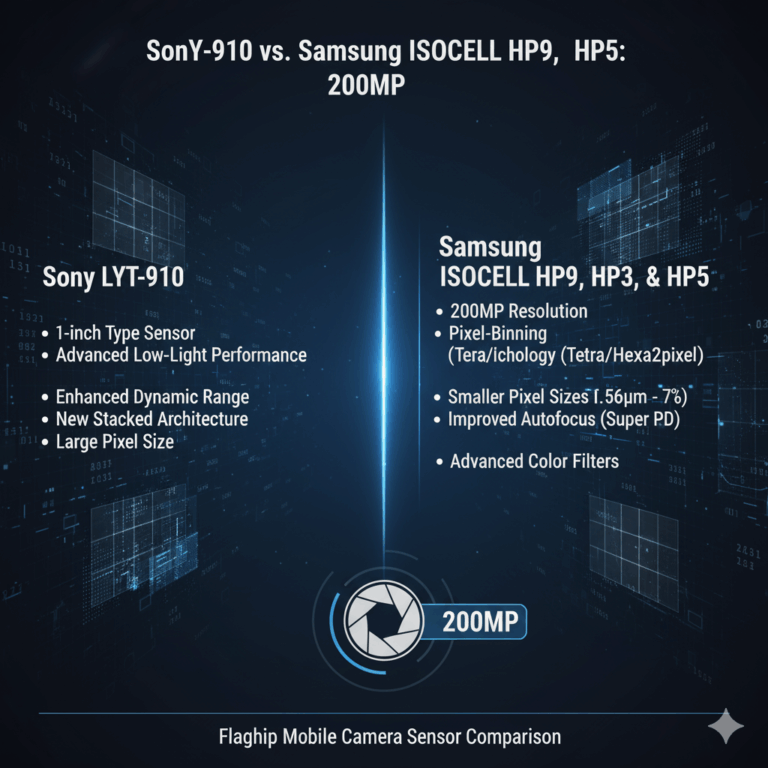
An Analytical Deep Dive into Samsung's 200MP ISOCELL Sensor Portfolio: HP2 vs. HP5 vs. HP9

By Alex Gearhart | Published on September 3, 2025

The proliferation of 200-megapixel sensors in smartphone cameras marks a significant milestone in mobile imaging. Samsung, a principal architect of this ultra-high-resolution trend, has evolved its strategy from a singular pursuit of pixel count to a more nuanced, diversified approach. The ISOCELL HP series exemplifies this maturation, representing not a simple iterative progression but a family of specialized sensors engineered for distinct roles and constraints within a modern smartphone's complex camera system. The ISOCELL HP2, the rumored HP5, and the telephoto-centric HP9 are distinct engineering solutions, each tailored to a specific balance of performance, physical volume, and application. This report will deconstruct the foundational technologies shared across the HP line, provide an in-depth analysis of each sensor's unique architecture and market application, and culminate in a comparative analysis that illuminates Samsung's overarching strategy in the competitive mobile imaging landscape.

Section 1: Deconstruction of Samsung's Core Imaging Technologies

To fully appreciate the distinctions between the HP2, HP5, and HP9 sensors, it is essential to first understand the integrated suite of core technologies that form their foundation. These innovations are not isolated features but a cohesive technology stack designed to address the fundamental challenges of capturing high-quality images with physically small, high-resolution sensors.

D-VTG: Maximizing Light Capacity

Dual Vertical Transfer Gate (D-VTG) technology adds a second 'lane' for electrons, boosting a pixel's storage capacity by over 33% to prevent overexposure and improve color.

Standard Gate

Lower Capacity

Dual Gate (D-VTG)

+33% Capacity

Tetra²pixel: Adaptive Imaging

This advanced pixel-binning technology combines 16 pixels into one giant "super pixel" for amazing low-light shots, or uses all 200 million for incredible detail.

16 Small Pixels

200MP Mode

1 Super Pixel

12.5MP Mode

Super QPD: All-Pixel Autofocus

Unlike systems that use only a fraction of pixels for focus, Super Quad Phase Detection gives every single pixel autofocus capabilities for incredible speed and accuracy.

1 Lens, 4 Pixels

Detects phase shifts horizontally & vertically

Single-Exposure HDR

Smart-ISO Pro, DSG, and Staggered HDR capture shadow and highlight detail in a single shot, eliminating ghosting from multi-frame HDR.

Full Dynamic Range

One frame, multiple exposures combined

Specifically, the HDR mechanism leverages Smart-ISO Pro, which creates two simultaneous readouts of the same frame at high and low ISO levels. These are then merged to produce a single, high-dynamic-range image. Staggered HDR further refines this by capturing short, medium, and long exposures of the same scene within a single frame, drastically reducing motion artifacts. The on-chip Dual Slope Gain (DSG) amplifies the analog signal before it's converted to digital, preserving intricate detail in both the brightest highlights and deepest shadows. This multi-layered, single-exposure approach is what allows for instantaneous HDR capture, a critical advantage for both photography and high-frame-rate video.

Section 2: ISOCELL HP2: The Flagship Main Camera Standard

HP2 Key Takeaway:

The HP2 is the balanced workhorse, designed as a "drop-in" 200MP upgrade for existing 108MP phone designs. Its continued use in the Galaxy S23 and S24 Ultra highlights its mature, reliable performance for main cameras.

The ISOCELL HP2 was engineered to be the balanced workhorse for flagship smartphone main cameras, delivering a significant resolution upgrade without imposing disruptive physical changes on device design. Its 1/1.3-inch optical format is the same size widely used in previous-generation 108MP main cameras, allowing manufacturers to upgrade to 200MP without a larger camera bump. Famously used in the Samsung Galaxy S23 Ultra and S24 Ultra, its performance is well-documented, offering remarkable cropping flexibility and excellent low-light "Nightography" through its 16-to-1 pixel binning.

Analysis of Samsung ISOCELL HP Sensors

An In-Depth Analysis of Samsung's 200MP ISOCELL Image Sensors

From the Foundational HP2 to the Specialized HP5 and HP9

The ISOCELL HP2: A Flagship Foundation

Architectural Foundation

The HP2 is constructed on a 1/1.3-inch optical format, a sensor size that became a standard in the industry with the widespread adoption of 108MP main cameras.[1, 2] This choice provides a proven and well-understood foundation for a high-performance primary camera, positioning it as a strategic "drop-in" 200MP upgrade for manufacturers familiar with 108MP modules. Within this format, the sensor packs 200 million pixels, each measuring 0.6 micrometers (0.6μm).[1, 3] This specification represents a critical engineering trade-off: it delivers the headline 200MP resolution while maintaining a pixel size large enough to offer respectable native light-gathering capability. This design allows smartphone manufacturers, including Samsung's own mobile division, to integrate a powerful main camera without requiring an excessively large and costly camera module—a key consideration for the industrial design and bill of materials of a mainstream flagship device like the Samsung Galaxy S23 Ultra and its successor, the S24 Ultra.[4, 5]

Pioneering Technologies

The HP2 was not merely an increase in pixel count; it served as a launch platform for several key technologies that have since become staples in Samsung's high-end sensor lineup. A standout feature is the introduction of Dual Slope Gain (DSG). This technology, a first for Samsung's image sensors, applies two distinct conversion values to the analog signal at the pixel level. Its significance lies in enabling high-quality High Dynamic Range (HDR) imaging at 50MP resolution directly from the sensor, a task that was previously limited to the 12.5MP binned mode and was heavily reliant on the mobile application processor for merging frames.[2, 6]

Comparative Analysis: HP2 vs. HP5 vs. HP9

Advancements in Autofocus

All three sensors utilize Samsung's advanced Super QPD (Super Quad Phase Detection) technology, which represents a significant upgrade over older phase-detection autofocus (PDAF) systems.[6, 15, 20] The HP2 established a powerful baseline by enabling all 200 million pixels to be used for phase detection, providing a wealth of pattern data for fast and accurate focusing by detecting phase shifts both horizontally and vertically.[6] The HP5 and HP9 build upon this foundation with specific enhancements tailored to their roles. The HP5's unique DTI Center Cut (DCC) structure is claimed to not only reduce noise but also improve autofocus accuracy.[9] The HP9, designed for the challenges of telephoto optics, uses its high-refractive microlens to improve autofocus contrast by a claimed 10%, which is critical for achieving a decisive focus lock on distant subjects through a long lens.[19, 21]

HDR and Color Depth

The approach to High Dynamic Range is a key point of technological divergence. The ISOCELL HP2 stands alone with its inclusion of Dual Slope Gain (DSG). This unique feature allows it to capture high-quality 50MP HDR images directly from the sensor, a significant advantage for capturing detailed, well-exposed shots in high-contrast scenes.[2, 6] In contrast, the newer HP5 and HP9 sensors do not feature DSG but instead rely on a combination of Smart-ISO Pro and Staggered HDR.[10, 12, 20] Staggered HDR works by capturing long, medium, and short exposures on a line-by-line basis within a single frame and merging them into a single HDR output, which helps reduce motion artifacts common in multi-exposure HDR methods. This difference in HDR hardware is accompanied by a clear evolution in color depth and processing power. While the HP2's advanced HDR was a major selling point, the HP5 takes a step forward by supporting a 13-bit color depth, capable of representing over 550 billion color combinations.[9, 11, 15] The HP9 pushes this boundary even further. Its implementation of Smart-ISO Pro enables a true 14-bit color depth, allowing it to express over 4 trillion colors—64 times more than a 12-bit sensor.[20] This vast increase in color information provides significantly more latitude for professional-grade color grading and post-processing, making the HP9's output particularly valuable for serious photographers.

Market Strategy and Adoption

Samsung (HP2 & HP9): The "No Compromise" Flagship

Samsung's strategy for its own flagship Galaxy S Ultra series is to deploy the largest and most capable sensors, like the HP2 and its successor, the HP9. This is a high-risk, high-reward strategy. They accept the engineering challenge and potential aesthetic trade-off of a larger camera bump in exchange for a category-defining capability that sets their products apart from the competition.[30]

Realme & Mid-Tier Brands (HP5): The Strategy of Democratization

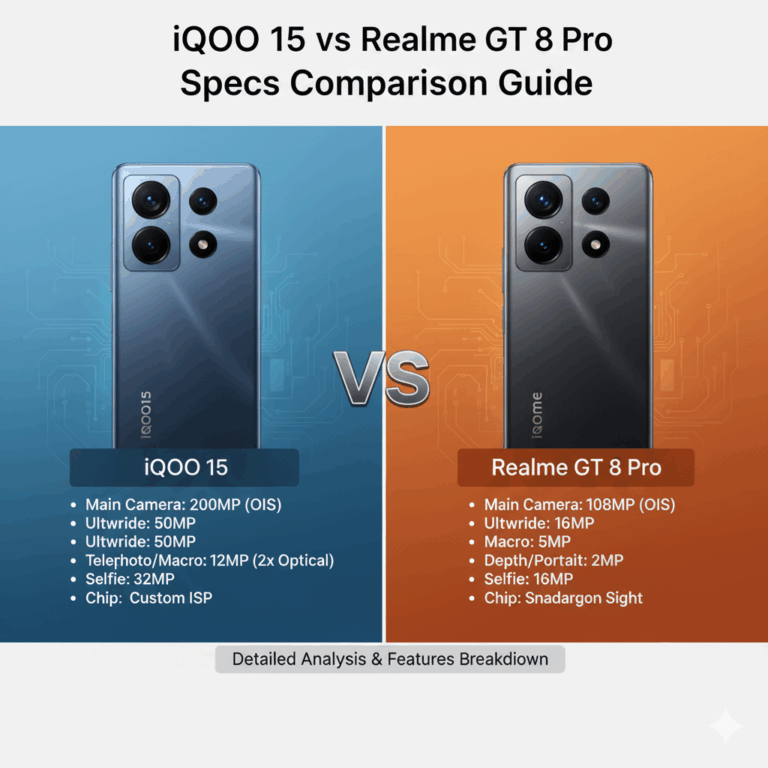
The adoption of the ISOCELL HP5 by brands like Realme for its GT 8 Pro, Vivo for its Y-series phones, and its rumored inclusion in devices like the Oppo Find X9 Pro reveals the sensor's role in the market.[10, 12, 16, 17] The HP5 offers the powerful "200MP" marketing headline in a smaller, more versatile, and more cost-effective package. This is an ideal solution for brands competing in the fiercely contested $500-$800 "flagship killer" price bracket, where consumers are highly attuned to on-paper specifications. The HP5 allows these brands to offer a premium-sounding camera feature, giving them a competitive edge on retail shelves and online spec comparisons, without incurring the full cost and complex engineering requirements of integrating a true flagship-sized sensor like the HP2 or HP9. It effectively democratizes the 200MP feature, making it accessible to a wider audience.

Section 3: ISOCELL HP9: The Telephoto Paradigm Shift

HP9 Key Takeaway:

The HP9 is a specialized, no-compromise telephoto sensor. Its large 1/1.4-inch size and 200MP resolution are designed to make zoom photos as good as main camera photos, first demonstrated in the Vivo X100 Ultra.

The ISOCELL HP9 represents a fundamental rethinking of the role of a telephoto camera. It is the industry's first 200MP sensor designed specifically for telephoto applications. Its pixels are smaller than the HP2's (0.56μm vs 0.6μm), but its overall 1/1.4-inch sensor area is larger. This large physical size is its defining characteristic, enabling 2x or 4x in-sensor zoom that can achieve up to 12x "lossless" zoom when paired with a 3x optical lens. Its debut in the Vivo X100 Ultra validates its design goal: to eliminate the quality drop-off users typically experience when zooming.

Section 4: ISOCELL HP5: The Unannounced Variable

HP5 Key Takeaway (Rumored):

The HP5 is expected to be the "compact 200MP" solution. Its smaller 1/1.56-inch format would allow the marketing power of 200MP to fit into super-thin phones or smaller telephoto modules where the HP2 or HP9 won't fit.

Information regarding the ISOCELL HP5 is based entirely on unconfirmed leaks and rumors. Leaks suggest it will be a 200MP sensor with a smaller 1/1.56-inch optical format. This positions it as the ideal solution for devices where physical space is at a premium, such as a rumored super-thin "Galaxy S25 Slim" or the periscope telephoto in the upcoming Oppo Find X9 Pro. Its existence would complete a strategic, three-tiered portfolio for Samsung: HP9 for max performance, HP2 for balanced flagships, and HP5 for compact designs.

Deep Dive Module: E2E AI Remosaic Processing

What is E2E AI Remosaic?

Traditionally, demosaicing (reconstructing a full-color image from the sensor's color filter array) is a slow, sequential process. E2E (End-to-End) AI Remosaic uses a dedicated on-chip AI processor to perform this task in parallel, dramatically speeding up capture time for 200MP shots. This reduces the "shot-to-shot" delay and improves image detail by using a trained neural network to interpret the raw sensor data more intelligently.

The introduction of an end-to-end AI Remosaic algorithm, particularly in the HP9, represents a pivotal architectural shift. This technology moves a significant portion of the image signal processing (ISP) pipeline directly onto the sensor. The AI-driven process not only accelerates image capture by up to 2x but also enhances image quality. By training the AI model on vast datasets of high-quality images, the remosaic process can make more intelligent decisions about color and detail reconstruction than traditional algorithms, leading to sharper textures and more accurate color fidelity, especially at high zoom levels.

Deep Dive Module: In-Sensor Zoom

How In-Sensor Zoom Works

Instead of digitally stretching a low-resolution image, in-sensor zoom uses a direct 1:1 readout from a specific area of the high-resolution sensor. A 50MP "zoom" is not an upscaled 12MP photo; it's a native 50MP crop from the full 200MP sensor area, preserving far more detail.

200MP Full Sensor
50MP 2x Zoom (1:1 Pixel Crop)

The concept of "lossless" zoom is redefined by these high-resolution sensors. By leveraging the vast 200MP canvas, the sensor can execute a direct readout of a smaller region (e.g., 50MP for 2x zoom or 12.5MP for 4x zoom) without any digital upscaling. This "in-sensor zoom" is computationally more efficient and produces significantly higher-quality results than traditional digital zoom, which relies on interpolation and often results in soft, artifact-laden images. When combined with the optical magnification of a telephoto lens, this technique allows for extreme hybrid zoom levels (10x and beyond) that retain a remarkable degree of clarity, effectively bridging the gap between optical and digital magnification.

Section 5: Synoptic Analysis and Strategic Outlook

A direct comparison of the technical specifications of the three sensors clearly illustrates their distinct design philosophies and intended applications. This data, combined with their market placement, reveals Samsung's dual-pronged strategy as both a leading device manufacturer and a dominant component supplier.

Interactive Comparison

Use the filters below to compare the sensors in the chart and table.

Comparative Technical Matrix

Feature ISOCELL HP2 ISOCELL HP5 (Rumored) ISOCELL HP9
Primary Application Main Camera Compact Main/Telephoto Premium Telephoto
Pixel Size 0.6 μm ~0.56 μm (Hypothesized) 0.56 μm
Optical Format 1/1.3" 1/1.56" 1/1.4"
Binned Pixel Size 2.4 μm (12.5MP) Assumed similar 2.24 μm (12.5MP)
Known Implementations Samsung Galaxy S23/S24 Ultra Oppo Find X9 Pro (Rumored) Vivo X100 Ultra

Section 6: Market Strategy & Competitive Landscape

Samsung's multi-tiered HP sensor strategy serves two distinct business objectives. Internally, for its own Galaxy devices, it allows for clear product differentiation. The premier "Ultra" models receive the best-balanced (HP2) or most specialized (HP9) sensors, while future "Fan Edition" or "Slim" models could leverage the compact HP5 to offer a 200MP feature at a different price point or form factor. Externally, as a component supplier to other Android manufacturers like Vivo, Xiaomi, and Oppo, this portfolio allows Samsung to capture a wide swath of the market. They can sell the cutting-edge HP9 to competitors aiming to build the ultimate "camera phone," while offering the cost-effective and space-saving HP5 to brands competing in the upper-mid-range.

This positions Samsung in direct competition with Sony's Lytia brand, which has historically dominated the premium sensor market. Sony's strategy has often focused on larger pixel sizes and stacked sensor designs for superior dynamic range and readout speed, as seen in their 1-inch type IMX989 sensor. Samsung's 200MP strategy is a direct counter, arguing that extreme resolution, combined with advanced pixel binning and on-sensor AI, can match or exceed the low-light and HDR performance of larger-pixel sensors while offering unparalleled zoom and detail capabilities. The success of devices like the Vivo X100 Ultra (using the HP9) versus a hypothetical Sony-powered competitor will be a key battleground in the coming years.

Conclusion: The Future of Computational Sensors

The comparison of the ISOCELL HP2, HP5, and HP9 reveals a clear strategic segmentation. The HP2 serves as the balanced, mass-market flagship main camera; the HP9 is the uncompromised, performance-driven telephoto specialist; and the rumored HP5 is poised to be the compact solution for design-first devices. Together, they form a comprehensive portfolio that addresses the varied demands of the modern smartphone market.

Looking forward, the innovations seen in this series, particularly the on-sensor processing capabilities like the E2E AI Remosaic in the HP9, signal the next major shift in mobile imaging. The industry is moving toward "computational sensors" where AI and advanced ISP functions are integrated directly at the hardware level. This will shift the battleground from raw pixel counts to the intelligence and efficiency of real-time, on-sensor image processing. The ISOCELL HP series is a significant step on this path, laying the groundwork for a future where the sensor itself is an active participant in creating the final image.

Ultimately, the ISOCELL HP portfolio is Samsung's declaration that the future of mobile photography is not monolithic. It will be a modular, adaptable ecosystem where different sensors are deployed like specialized tools for specific tasks. The success of this strategy will depend on the software and ISP integration by device manufacturers, but the hardware foundation laid by the HP2, HP9, and the anticipated HP5 provides a powerful and flexible toolkit for the next generation of smartphone cameras.

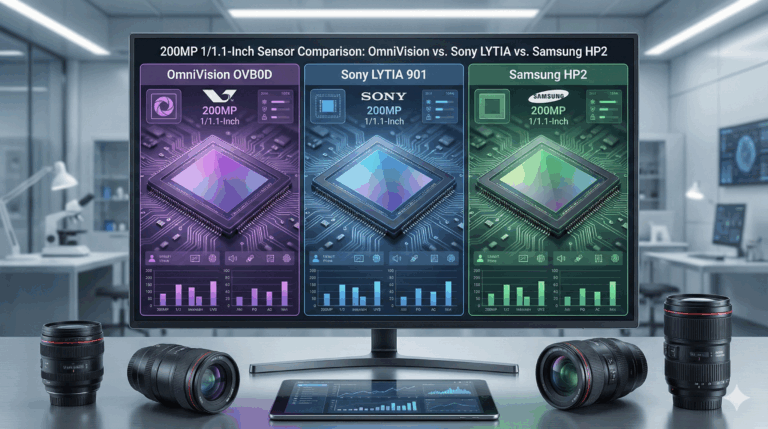
Compare Sony LYTIA 500 & 600 vs. Samsung & OmniVision Specs

Welcome to the ultimate 50MP sensor showdown. In this in-depth analysis, we put Sony’s new LYTIA 500 and LYT-600 sensors to the test against the best from Samsung ISOCELL and OmniVision. Through interactive charts, detailed comparisons, and real-world performance analysis, we’ll help you understand the technology that powers your next smartphone camera and see who truly comes out on top in the battle for mobile imaging supremacy. LensXP | 50MP Sensor Showdown: Sony LYTIA 500 & 600 vs Samsung vs OmniVision

The 50MP Sensor Showdown

A deep dive into Sony's LYTIA 500 & 600 series against heavyweights from Samsung and OmniVision. We analyze the tech, performance, and market strategy shaping your next smartphone camera.

Sony's LYTIA Initiative: A New Vision

From IMX to LYTIA: More Than a Name

Sony's shift to the LYTIA brand is a strategic move to build consumer recognition for its market-leading sensor technology. By rebranding proven sensors like the IMX882 to LYT-600, Sony leverages established trust while signaling a new era of innovation. This creates a powerful "halo effect," ensuring OEMs and consumers see LYTIA as the next chapter in imaging excellence.

IMX LYTIA

The 50MP Mandate

The "sweet spot" for mobile photography.

High-Res Detail
2x In-Sensor Zoom
Pixel Binning

Why 50 Megapixels?

Sony's strategy standardizes its lineup around 50MP, calling it the most versatile resolution. It balances high-resolution detail with advanced techniques like 4-in-1 pixel binning for superior low-light shots. This simplifies development for phone makers and challenges competitors to compete on pixel quality, not just megapixel counts.

A Deeper Look at LYTIA's Core Technologies

2-Layer Transistor Pixel

Separates photodiodes and transistors into stacked layers. This allows for larger components, boosting dynamic range and reducing noise, a key feature in premium LYTIA sensors.

All-Pixel Autofocus

A key feature in the LYT-600. Unlike traditional systems, it uses every pixel for phase detection, resulting in dramatically faster and more accurate focus, especially on moving subjects.

Advanced HDR & Low Light

Technologies like Dual Conversion Gain (DCG-HDR) capture multiple exposures simultaneously to maximize detail in both bright highlights and dark shadows for a balanced image.

Real-World Performance: The SoC Bottleneck

A sensor's potential is only half the story. The phone's System-on-Chip (SoC) and its Image Signal Processor (ISP) determine the final output, especially for video. A powerful sensor paired with a budget SoC can lead to disappointing results.

LYT-600 Sensor

Capability: 4K @ 60fps

Mid-Range SoC/ISP

Limitation: e.g., 1080p @ 30fps

Final Video Output

Result: 1080p @ 30fps

This shows how a sensor capable of 4K video can be limited by the SoC, a common scenario in mid-range phones. The final image quality, color science, and dynamic range are all heavily influenced by the ISP's processing power.

Market Adoption & The SoC Factor in Action

Who Uses the LYT-600?

The LYT-600 has become a popular choice for the main camera in many mid-range smartphones. Brands like OnePlus, Realme, Poco, and Motorola have adopted it, showcasing its role as a reliable workhorse for this competitive segment.

OnePlus Nord CE4 Lite Realme 12+ Poco F6 Moto G85 5G

Case Study: Video Limitations

The OnePlus Nord CE4 Lite is a perfect example of the SoC bottleneck. While its LYT-600 sensor is fully capable of recording 4K video, the phone's Snapdragon 695 chipset limits its video capture to a maximum of 1080p at 30fps. This is not a sensor flaw, but a system-level constraint that prevents users from accessing the hardware's full potential.

Real-World Performance Synthesis

Daylight Photography

In good light, sensors like the LYT-600 produce detailed, sharp, and vibrant photos. However, the final image is heavily dependent on the phone maker's software tuning. Some brands oversaturate colors or apply aggressive sharpening. A common weakness in this class is a limited dynamic range, leading to blown-out highlights in bright skies or noisy, crushed shadows in high-contrast scenes.

Low-Light Photography

Performance here is decent but not exceptional. The presence of Optical Image Stabilization (OIS) is critical for getting sharp shots. Without it, images can be blurry. Even with OIS and Night Mode, photos can lose fine detail, appearing "smudgy" or soft. Visible noise is a challenge, though it's often reduced by software, sometimes at the cost of a natural look.

Head-to-Head Technical Breakdown

Filter by manufacturer to compare the key players in the 50MP arena.

Sensor Optical Format Pixel Size (μm) Binned Pixel (μm) Target Segment

Visualizing the Specs

Optical Format (Sensor Size)

Smaller denominator means a larger sensor.

Pixel Size (Raw & Binned)

Larger pixels capture more light.

Meet the Competition

Samsung ISOCELL: The Small Pixel Specialist

Samsung's strength lies in miniaturization. The ISOCELL JN-series packs high resolution and advanced features into incredibly compact sensors. This makes them the ideal choice for auxiliary cameras like ultrawide and telephoto, where minimizing the camera bump is a top priority.

  • Key Strength: Superior performance in a small package.
  • Core Tech: Super QPD for fast, accurate autofocus across the sensor.

Key Sensor: ISOCELL JN1

A landmark sensor featuring the industry's smallest pixel size (0.64μm) at launch. Its versatility makes it a go-to for ultrawide and front-facing cameras in many mid-range devices.

OmniVision: The Challenger

OmniVision competes by offering superior on-paper specs. The OV50E, a direct rival to the LYT-600, boasts a physically larger sensor and bigger pixels. This gives it a fundamental advantage in light-gathering, giving it a higher potential for low-light photography and dynamic range.

  • Key Strength: Larger sensor size for better light capture.
  • Core Tech: 100% Quad Phase Detection (QPD) for reliable autofocus.

Key Sensor: OV50E

Positioned against the LYT-600, its larger 1/1.55" format and 1.0μm pixels give it a physical advantage in light gathering, making it a strong choice for OEMs prioritizing low-light performance.

Technological Superiority: The Core Strengths

Sony: Autofocus

Sony's key differentiator is its All-Pixel AF on the LYT-600. This provides a tangible user benefit in the form of faster and more reliable focusing, which is critical for capturing moving subjects and achieving sharp focus in tricky conditions.

OmniVision: Physics

OmniVision's advantage is rooted in physics. The OV50E's larger sensor and bigger pixels give it a fundamental edge in low-light performance and dynamic range that is difficult for smaller sensors to overcome with software alone.

Samsung: Miniaturization

Samsung excels at miniaturization and tech density. The JN-series packs advanced features into an extremely compact package, making it the superior choice for high-quality auxiliary cameras where a small footprint is crucial.

Our Recommendations for Phone Makers

Budget Main Camera (Sub-$250)

The OmniVision OV50D and Samsung JN1 are the top contenders here. The choice comes down to cost and supply, with software tuning being the key differentiator.

Core Mid-Range ($250-$450)

The Sony LYT-600 is a balanced, low-risk choice with great AF. For top-tier low-light, the larger OmniVision OV50E is a compelling alternative.

Front-Facing & Premium Auxiliary

The Sony LYT-500 excels here, offering a high-res selfie experience. It competes directly with Samsung's JN-series for ultrawide and telephoto roles.

Future Outlook: Beyond the Sensor

The battle for mobile imaging supremacy is moving beyond hardware specs. While larger sensors and advanced pixel tech will continue to evolve, the next frontier is on-sensor processing and computational photography. Expect to see more AI-driven features, smarter HDR video, and tighter integration between the sensor, the ISP, and software algorithms. For consumers, this means the name on the sensor (be it Sony, Samsung, or OmniVision) is only one part of a complex ecosystem that creates the final image. The winner will be the company that best masters this entire imaging pipeline.

LensXP.com

© 2025 LensXP. All rights reserved. An in-depth analysis of mobile imaging technology.

Cinema Camera Comparison: Sony FX3 vs Canon C70 vs BMPCC 4K

0

Choosing the right cinema camera in 2025 is a high-stakes decision. It’s not just about specs—it’s a long-term investment in a workflow, a lens ecosystem, and a creative partner. In this ultimate guide, we go head-to-head, comparing today’s most popular contenders: the Sony FX3, Sony a7S III, Canon C70, and the Blackmagic Pocket Cinema Camera 4K. Forget simple spec sheets. We’re diving deep with interactive charts and real-world data to analyze everything from autofocus reliability and true ‘ready-to-shoot’ costs to the practical ergonomics that make or break a shoot. Find out which camera is the right tool for your vision. The Ultimate Cinematic Camera Comparison | LensXP.com

The Modern Cinematographer's Toolkit

An in-depth, interactive comparison of today's most popular cinema cameras. We dive deep into specs, ergonomics, and real-world costs to help you find the perfect tool for your vision.

Meet the Five Contenders

Sony FX3

The compact, "cage-free" cinema powerhouse. All the quality of the a7S III in a video-first body.

Sony a7S III

The legendary low-light hybrid king. A master of both high-end video and professional stills.

Blackmagic PCC 4K

The indie filmmaker's dream. Democratizes RAW recording at an unbeatable price point.

Canon C70

The integrated workhorse. Built for speed and efficiency with built-in NDs and pro I/O.

Sony ZV-E10

The accessible entry point. A vlogging-focused camera that opens the door to the E-mount ecosystem.

Interactive Feature Comparison

Click the filters below to instantly highlight the cameras that match your needs. Which features are non-negotiable for your workflow?

Feature Sony FX3 Sony a7S III Canon C70 Blackmagic PCC 4K Sony ZV-E10
Sensor Size Full-Frame Full-Frame Super 35 Micro Four Thirds APS-C
Max 4K Frame Rate 120p 120p 120p 60p 30p
Internal Codec 10-bit 4:2:2 10-bit 4:2:2 12-bit RAW Light 12-bit BRAW 8-bit 4:2:0
Autofocus Real-time Eye AF Real-time Eye AF Dual Pixel AF Contrast (No C-AF) Hybrid AF
Key Feature XLR Handle & Fan High-Res EVF Built-in ND Filters Internal RAW to SSD Vlogging Features

Technical Deep Dive

The Heart of the Image: Sensor & Color

Dynamic Range & Log Profiles

Log profiles capture a flat, desaturated image designed for maximum flexibility in color grading. The C70's DGO sensor leads with a claimed 16+ stops of dynamic range, while the Sonys offer 15+ stops. This latitude is key to retaining detail in both the brightest highlights and darkest shadows of a high-contrast scene.

The RAW Divide: Internal vs. External

The BMPCC 4K and C70 offer internal RAW recording, a transformative feature for image control that streamlines the camera build. The Sonys require a costly and bulky external recorder to capture ProRes RAW, creating a major workflow divergence for those needing the ultimate post-production flexibility.

Low-Light Philosophies

The Sonys use a high-sensitivity sensor with a high base ISO of 12,800 for incredibly clean images in near darkness. The BMPCC 4K and C70 use Dual Native ISO/DGO technology, providing two distinct "cleanest" sensitivity ranges to work within—a different but equally powerful strategy for managing noise.

"Out-of-the-Box" Color

For fast turnarounds, Sony's S-Cinetone profile provides a beautiful, cinematic look straight out of camera, derived from their high-end VENICE cinema camera. This is invaluable for corporate and event work where extensive color grading isn't feasible.

The Autofocus Divide: A Decisive Factor

For solo operators, autofocus isn't a convenience—it's a critical tool. The performance of a camera's AF system can be the single most important factor for unscripted genres like documentaries, weddings, and live events.

Tier 1: Elite Tracking AF

Cameras: Sony FX3, Sony a7S III, Canon C70

State-of-the-art, AI-driven systems. Sony's Real-time Eye AF and Canon's Dual Pixel AF are famously tenacious, reliably locking onto subjects and dramatically increasing the ratio of usable shots for solo operators.

Tier 2: Capable AF

Camera: Sony ZV-E10

Inherits excellent technology from higher-end models. Fast and reliable for its intended vlogging purpose, but lacks the advanced customization and nuance required for professional cinematic focus pulling.

Tier 3: Manual Focus Centric

Camera: Blackmagic PCC 4K

Features no continuous autofocus. This is a core design choice, not a flaw. It makes the camera unsuitable for unscripted event coverage but perfectly suited for controlled, narrative environments where manual focus is the standard.

Workflow & On-Set Reality

Codecs & Data: The Recording Engine

The difference between an 8-bit file and a 10-bit or RAW file is not subtle; it represents a fundamental divide in creative potential for color grading and visual effects.

RAW & 12-bit

Best for: Maximum grading flexibility, VFX.

The ultimate in image data. The BMPCC 4K and C70's internal RAW provides complete control over ISO, white balance, and exposure in post. This is the choice for narrative films and high-end commercial work.

10-bit 4:2:2

Best for: Professional delivery, green screen.

The professional standard. With over a billion colors, 10-bit eliminates banding in gradients (like skies) and provides the robust color information needed for clean chroma keying. The go-to for the Sonys and C70.

8-bit 4:2:0

Best for: Fast turnaround, minimal grading.

A significant creative bottleneck. The ZV-E10's 8-bit files are great for content with little-to-no color correction, but can show artifacts and banding under a heavy grade, limiting professional use.

Ergonomics: Design Philosophy

A camera's physical design dictates how it is handled, rigged, and deployed. This choice has profound effects on speed and efficiency on set.

Integrated Efficiency: Canon C70

Engineered as a self-contained production tool. The built-in motorized ND filter system is a game-changer for solo operators, allowing precise exposure control with the press of a button. It is designed to be ready to shoot straight out of the bag.

Compact Cinema: Sony FX3

Embodies a "cage-free" design. Multiple mounting points, an included XLR audio handle, and an active cooling fan make it a highly efficient video-first tool that is reliable for long takes without needing a complex rig.

Hybrid Flexibility: Sony a7S III

The traditional mirrorless form factor. Its key advantage is the phenomenal high-resolution EVF, indispensable for shooting in bright daylight and enhancing handheld stability. A master of both stills and video.

Rig-Dependent Modularity: BMPCC 4K

A camera that demands to be rigged. Poor internal battery life, no IBIS, and a fixed screen necessitate a cage, external power, and monitor for professional use, transforming its compact body into a complex setup.

The Ecosystem Investment

Lens Mounts: The Gateway to Optics

A camera body is temporary, but glass is an investment. The lens mount defines the range, quality, and cost of available optics.

Sony E-Mount

Cameras: FX3, a7S III, ZV-E10

The most mature and expansive full-frame mirrorless ecosystem. Its key advantage is choice, with vast third-party lens support from brands like Sigma and Tamron, making it more affordable to build a versatile kit.

Canon RF Mount

Camera: C70

A newer system with exceptional, but expensive, native lenses. Its "killer app" is the 0.71x EF-RF adapter, allowing use of the massive library of Canon EF lenses on the Super 35 sensor with an added stop of light.

Micro Four Thirds

Camera: BMPCC 4K

Unparalleled adaptability. The short flange distance allows it to be adapted to nearly any lens format, from vintage glass to PL-mount cinema lenses. A tinkerer's dream that offers immense creative flexibility via speedboosters.

The Hidden Costs: Media & Power

High-bitrate video demands fast, expensive media and robust power solutions. These recurring costs are a critical part of the total cost of ownership.

Media: The Price of Speed

The Sonys' highest quality modes require expensive CFexpress Type A cards. The C70 offers a cost-saving by recording its highest quality RAW to dual V90 SD cards. The BMPCC 4K's ability to record directly to an external SSD via USB-C is its most cost-effective media solution.

Power: The Achilles' Heel

The BMPCC 4K's internal battery life is notoriously poor (30-50 mins), making an external power solution a near-necessity. The C70 leads with its professional BP-A batteries (3+ hours), while the Sonys offer a respectable 2-2.5 hours from their NP-FZ100 batteries.

Visualizing the Differences

Sensor Size Comparison

Full-Frame
Super 35
APS-C
MFT

Visual representation of relative sensor sizes, impacting depth of field and field of view.

Workflow Efficiency Spectrum

BMPCC 4K

Setup-Intensive

a7S III

Hybrid Efficiency

FX3

High Efficiency

C70

Integrated

From rig-dependent systems to ready-to-shoot tools, a camera's design directly impacts on-set speed.

Data-Driven Insights

Estimated 'Ready-to-Shoot' Cost

The body is just the beginning. This chart shows the estimated total cost including a pro lens, media, and power.

Battery Life (Continuous 4K Recording)

Real-world power performance is critical. Note the BMPCC 4K's reliance on external power solutions.

Which Camera is Right For You?

Indie Narrative Filmmaker: Blackmagic PCC 4K

For controlled sets where manual focus is king. Unbeatable image quality for the price, if you're willing to build a rig and manage its quirks.

Doc & Corporate Shooter: Canon C70

When time is money. The ultimate solo-operator tool for fast-paced, unpredictable environments. The built-in NDs are a game-changer.

Low-Light & Event Specialist: Sony a7S III

The king of the dark. Unmatched high-ISO performance and tenacious autofocus make it perfect for weddings, concerts, and run-and-gun shoots.

Modern Content Creator: Sony FX3

The sweet spot. A video-first camera with the a7S III's incredible image, but with better cooling, audio, and mounting options for a streamlined workflow.

LensXP.com

© 2024 LensXP. All Rights Reserved. Data-driven insights for creative professionals.

The Definitive 2025 Guide to Entry-Level 10-Bit Video Cameras

0

The world of digital video has changed. Features once reserved for expensive cinema cameras, like 10-bit color, are now available to a new generation of creators. For aspiring filmmakers and YouTubers looking to elevate their work, choosing the right budget 10-bit camera is a critical first step. This guide provides a complete strategic analysis of the best new and used options on the market in 2025, helping you understand the technical details, key compromises, and long-term value to make the perfect choice. The Definitive 2025 Guide to Entry-Level 10-Bit Video Cameras | LensXP.com

LensXP.com

In-Depth Analysis

The Definitive 2025 Guide to Entry-Level 10-Bit Video Cameras

A strategic analysis for aspiring creators looking to master color and elevate their filmmaking beyond the 8-bit barrier.

Part 1: Decoding 10-Bit Video for the Budget Filmmaker

The landscape of digital video has undergone a profound transformation, with features once exclusive to high-end cinema cameras now becoming accessible to a new generation of creators. Central to this shift is the availability of 10-bit color depth in entry-level and budget-conscious cameras.

The Power of Color Depth: Why 10-Bit Matters

At its core, bit depth refers to the amount of color information a camera can capture. The difference between 8-bit and 10-bit is not incremental; it's exponential.

Visualizing Color Depth

8-Bit (16.7 Million Colors)

Notice the potential for "banding" in smooth gradients.

10-Bit (1.07 Billion Colors)

Vastly more color information creates perfectly smooth transitions.

  • Elimination of Color Banding: The most visible artifact of 8-bit video is "banding," where smooth gradients, such as a clear blue sky, display distinct, step-like bands of color. 10-bit video renders these gradients with far greater fidelity.
  • Enhanced Color Grading Latitude: This is the most crucial advantage. Pushing the colors of an 8-bit file often causes it to "break." A 10-bit file can withstand much more aggressive adjustments, allowing creators to define a unique visual style.
  • Improved Dynamic Range Capture: 10-bit color is intrinsically linked to Logarithmic (Log) recording profiles, designed to capture the maximum possible dynamic range from the camera's sensor.

The Videographer's Lexicon: Demystifying the Jargon

Navigating the world of 10-bit video requires understanding key technical terms that directly impact image quality.

Chroma Subsampling: 4:2:2 vs. 4:2:0

4:2:0

Common standard, efficient but with less color data. Good for delivery, less ideal for heavy grading or effects.

4:2:2

Captures twice the color information. Critical for visual effects like green screen keying.

Grey squares represent brightness (luma) samples; blue squares represent color (chroma) samples for a block of pixels.

Picture Profiles: Log vs. HDR PQ

Log Profiles (e.g., S-Log, F-Log)
Flat, desaturated image designed for maximum flexibility in color grading.

Workflow: Shoot for post-production. Requires color grading to look correct. Offers complete creative control.

HDR PQ
Vibrant, high-contrast image ready for HDR displays.

Workflow: Shoot for delivery. Looks great immediately on compatible screens but offers less creative flexibility.

Codecs and Bitrates (H.265, ProRes, BRAW)

A codec is the algorithm used to compress and decompress video data. The choice of codec impacts file size, editing performance, and image quality.

  • H.265 (HEVC): A highly efficient modern codec that compresses 10-bit video into small files. It's the standard for internal recording on most new cameras but can be demanding for older computers to edit.
  • ProRes & Blackmagic RAW (BRAW): Professional-grade codecs. ProRes is easier for editing software to process but creates large files. BRAW captures data directly from the sensor, offering the absolute maximum post-production flexibility, similar to a RAW photo.

Defining the "Entry-Level Budget" Landscape

For this analysis, the "entry-level budget" is sub-$1,500 USD for a new camera body. While 10-bit features appear below $1,000, they are often heavily compromised. The $1,000 to $1,500 range is the sweet spot where the feature set becomes robust for serious use.

However, the used market is a powerful disruptor, offering older, professional-grade cameras for the same price. This dynamic is central to a strategic purchase. Manufacturers carefully segment the market, enticing buyers with a headline feature like 10-bit video while withholding others (like IBIS or a full-size HDMI port) to protect higher-tier models. A budget 10-bit camera is a curated set of strategic compromises; understanding this allows you to choose the set that best aligns with your needs.

Part 2 & 3: In-Depth Camera Analysis

We've analyzed the best new and used cameras on the market. Newer cameras prioritize computational features like AI-driven autofocus, while older pro-grade cameras on the used market offer more robust codecs and professional I/O.

Price Comparison: New vs. Used

Modern Contenders (New Cameras)

Fujifilm X-S20: The All-Rounder's Choice

The most complete and well-balanced hybrid camera in its class. It excels at both advanced video and high-quality stills without critical compromises.

Core Strengths:

  • Internal 6.2K "Open Gate" & 4K/60p 4:2:2 10-bit video.
  • F-Log2 profile with 13+ stops of dynamic range.
  • Effective 5-axis IBIS (7 stops).

Weaknesses:

  • Autofocus is less reliable than Sony/Canon.
  • Micro-HDMI port is less durable.

Sony ZV-E10 II: The Autofocus King

Designed for the solo content creator who prioritizes speed and reliability. Its design makes getting a perfectly focused shot effortless.

Core Strengths:

  • Class-leading AI-powered autofocus system.
  • Internal 4K/60p 4:2:2 10-bit video.
  • Access to the vast E-mount lens ecosystem.

Weaknesses:

  • Complete absence of IBIS (relies on digital).
  • No mechanical shutter.
  • Potential for overheating in long takes.

Canon EOS R10: The Hybrid Entry Point

An accessible entry into Canon's RF ecosystem, leveraging strengths in stills and ergonomics while providing capable 10-bit video.

Core Strengths:

  • Flagship-level Dual Pixel CMOS AF II.
  • Fast burst shooting for stills (15/23 fps).
  • Sharp 4K/30p oversampled from 6K.

Weaknesses:

  • 10-bit is HDR PQ only (less flexible).
  • No IBIS.
  • Heavy crop in 4K/60p.

The Used Market Champions

Panasonic Lumix GH5: The Enduring Workhorse

A landmark camera built for professional video work. Years later, it remains an exceptionally capable tool and one of the best values in video production.

Core Strengths:

  • Robust internal 4K/30p 4:2:2 10-bit (All-Intra).
  • No recording time limits.
  • Full-size HDMI port and dual card slots.

Weaknesses:

  • Contrast-detect autofocus is unreliable for video.
  • Smaller MFT sensor has weaker low-light performance.

Panasonic Lumix G9: The Photographer's Video Powerhouse

Initially a stills camera, a firmware update turned it into a video powerhouse, making it one of the most versatile used cameras available.

Core Strengths:

  • Internal 4K/30p 4:2:2 10-bit video.
  • Even more advanced IBIS (6.5 stops).
  • Excellent EVF and stills features.

Weaknesses:

  • Same unreliable contrast-detect AF as the GH5.
  • Requires firmware v2.0+ for 10-bit video.

Blackmagic Pocket 4K: The Cinema Purist's Tool

An unapologetic, single-purpose tool designed for one thing: capturing the highest possible cinematic image quality at an accessible price.

Core Strengths:

  • Internal 12-bit Blackmagic RAW & 10-bit ProRes.
  • Dual Native ISO for amazing low light.
  • Professional audio (Mini XLR) and I/O.

Weaknesses:

  • Autofocus is unusable for video (manual focus only).
  • No IBIS.
  • Extremely poor battery life; requires rigging.

Part 4: Comparative Analysis & Feature Breakdown

To make a decision, a direct comparison is essential. Use the filters below to narrow down the options based on your specific needs.

Filter The Cameras

Stabilization

Autofocus

HDMI Port

Feature Fujifilm X-S20 Sony ZV-E10 II Canon EOS R10 Fujifilm X-S10 Panasonic GH5 Panasonic G9 Blackmagic Pocket 4K
Price (Used)~$1,400~$915~$830~$900~$575~$600~$850
Price (New)$1,299$999$1,049DiscontinuedDiscontinuedDiscontinued$1,185
Stabilization5-Axis IBISDigital OnlyDigital Only5-Axis IBIS5-Axis IBIS5-Axis IBISNone
AutofocusPhase DetectPhase Detect (AI)Dual Pixel AF IIPhase DetectContrast DetectContrast DetectContrast (Single)
Internal 10-Bit✅ Yes (4K/60)✅ Yes (4K/60)⚠️ HDR PQ Only❌ No (External Only)✅ Yes (4K/30)✅ Yes (4K/30)✅ Yes (4K/60)
Log ProfileF-Log2S-Log3❌ NoF-LogV-Log L (Paid)V-Log LBlackmagic Film
HDMI PortMicroMicroMicroMicroFull-SizeFull-SizeFull-Size
Headphone Out✅ Yes✅ Yes❌ No⚠️ Via Adapter✅ Yes✅ Yes✅ Yes
Weight (Body)491 g377 g429 g465 g725 g658 g722 g

Feature Comparison Radar

A visual summary of key strengths. Higher scores are better. (Scores assigned by LensXP analysis).

The Ecosystem Investment: Lenses and Long-Term Costs

A camera body is only the starting point; the associated lens ecosystem dictates long-term cost and creative potential. The choice of lens mount is as significant as the choice of the camera itself.

Sony E-Mount

The most mature and flexible ecosystem. Its primary advantage is the vast selection of high-quality, affordable autofocus lenses from third-party manufacturers like Sigma and Tamron, making it the most budget-friendly system for long-term growth.

Fujifilm X-Mount

Renowned for the exceptional optical quality of its first-party lenses. The system has opened up in recent years, with brands like Sigma and Viltrox now producing strong, budget-friendly autofocus options.

Canon RF-S Mount

The newest ecosystem with the least developed native lens lineup. Canon has historically been restrictive with third-party AF lenses, meaning users may face higher costs and fewer choices as they expand their kit.

Micro Four Thirds

The most established mirrorless system with an immense and diverse lens market, especially used. A vast array of compact, high-quality, and inexpensive lenses are available, making it incredibly cost-effective.

Decision-Making Flowchart

Feeling overwhelmed? Follow this simple flowchart to find the camera that best matches your creative priorities.

START HERE: What's your main focus?

Solo Vlogging / Content Creation

Is "never-miss" Autofocus your #1 priority?

Sony ZV-E10 II

Narrative Filmmaking / Cinema

Is maximum image quality (RAW/ProRes) the goal?

Yes, I'll build a rig

Blackmagic Pocket 4K

No, I need an all-in-one

Panasonic GH5

Hybrid (Stills & Video)

What's more important?

Best overall value (Used)

Panasonic G9

Best modern all-rounder (New)

Fujifilm X-S20

Part 5: Tailored Recommendations & Final Verdict

The optimal camera is a strategic decision based on your primary goals. Here are our top picks for different types of creators.

For the Solo Vlogger & Run-and-Gun Creator:

Sony ZV-E10 II

For this user, autofocus is the foundation of their workflow. The ZV-E10 II's AI-driven subject tracking is the most reliable system in its class, ensuring a solo creator can stay perfectly in focus without a camera operator.

For the Aspiring Narrative Filmmaker:

Blackmagic Pocket Cinema Camera 4K (Used)

For pure cinematic image-making, the BMPCC 4K is in a class of its own. The ability to record in 12-bit Blackmagic RAW internally provides a level of quality and flexibility that no hybrid camera can match.

For the Budget-Conscious Hybrid Shooter:

Panasonic Lumix G9 (Used)

This is the undisputed value king. It offers robust 10-bit video, world-class IBIS, an excellent EVF, and faster burst shooting for stills. It provides professional-level performance for an entry-level price.

Expert's Conclusion: Choosing Your Compromise

The journey to an entry-level 10-bit camera is ultimately an exercise in making an informed and strategic compromise. At this price point, no single camera does everything perfectly. The market has diverged, forcing a choice between modern usability and legacy image fidelity. Do you prioritize a camera that makes capture effortless through intelligent autofocus, or one that provides the purest data for a manual, craft-driven post-production workflow?

  • Best Overall Value: For the creator seeking the most capability per dollar, the Panasonic Lumix G9 (Used) is the clear winner.
  • Best for Pure Image Quality: For the aspiring filmmaker, the Blackmagic Pocket Cinema Camera 4K (Used) offers a level of quality that is in a different category from its hybrid competitors.
  • Best for Usability & Autofocus: For the solo creator or vlogger, the Sony ZV-E10 II provides a state-of-the-art autofocus system that ensures the shot is always captured perfectly.
  • Best Modern All-Rounder: For those buying new and wanting a single, versatile tool with no critical flaws, the Fujifilm X-S20 stands out as the most balanced package available.

The ultimate decision rests on a clear self-assessment of your creative priorities. By understanding that each of these excellent cameras represents a different philosophy and a different set of trade-offs, you are empowered to select not simply the "best camera," but the camera that is unequivocally the best tool for you.

© 2025 LensXP.com. All Rights Reserved.

Helping you find the perfect gear to tell your story.

Sony A7IV vs FX3: 5 Reasons the A7IV is the Smarter Choice for Video

In the heated A7IV vs. FX3 debate, the dedicated cinema camera often seems like the default choice for serious video work. But what if the “hybrid” camera is actually the more powerful and strategic tool? This report goes beyond the spec sheet to show how the A7IV’s superior 7K oversampled image, high-fidelity Super 35 mode, and exclusive features give it a decisive edge in professional workflows. We break down why this versatile powerhouse isn’t just an alternative—it’s often the smarter investment for the modern creator. Why I Choose the A7IV Over the FX3 for Video 🎥 | LensXP.com

A Strategic Analysis: Why the A7IV Can Be a Smarter Choice Than the FX3

Published on August 21, 2025 by Alex Rivera

Sony A7IV and FX3 cameras side by side

In the world of digital filmmaking, dedicated cinema cameras like the Sony FX3 are often seen as the ultimate choice. But this report challenges that idea, arguing that the Sony A7IV, a so-called "hybrid" camera, is often a more strategic and flexible investment for many professional video workflows.

We'll go beyond labels to show how the A7IV's unique image processing and incredible versatility give it a decisive edge in many real-world scenarios, making it a smarter choice for the modern, multi-talented video pro.

The Resolution Doctrine: Why Oversampled 4K is the A7IV's Defining Advantage

The biggest difference isn't in the features list—it's in how each camera creates an image. The A7IV uses its high-resolution 33MP sensor to create a data-rich "digital negative," offering more detail and post-production flexibility than the FX3's more efficient 12MP sensor.

Infographic: The Power of Oversampling

A7IV Sensor (7K Readout)

Captures a massive 33MP of data.

BIONZ XR Processor

Intelligently downscales the 7K data.

Superior 4K Video

Sharper, more detailed, with fewer artifacts.

"An image that begins with more detail, like the A7IV's, provides the ultimate flexibility. It is a trivial matter to subtract detail in post. Conversely, it is impossible to add genuine, resolved detail back into a softer source file."

At a Glance: A7IV vs. FX3

Feature Sony A7IV Sony FX3
Sensor Resolution 33MP 12.1MP
Full-Frame 4K/24p Readout 7K Oversampling ~4.2K 1:1 Readout
APS-C/Super 35 4K Mode Yes (4.6K Oversampling) No (Insufficient Resolution)
Base ISOs (S-Log3) 800 / 3200 800 / 12,800
Electronic Viewfinder (EVF) Yes (3.68m-dot) No
Lens Breathing Compensation Yes No

The Super 35 Powerhouse: Unlocking Versatility with APS-C Mode

The A7IV's APS-C mode isn't just a crop; it's a high-fidelity Super 35 camera packed inside a full-frame body. It oversamples from a 4.6K area of its sensor, producing an incredibly detailed 4K image up to 60p—a feat the FX3's lower-resolution sensor simply can't achieve.

Infographic: The "One Lens, Two Focal Lengths" Advantage

50mm Prime Lens

Single 50mm Prime Lens

Medium Shot

Full-Frame Mode

Standard 50mm Field of View

Close-up Shot

APS-C Mode (1.5x Crop)

Effective 75mm Field of View

Instantly get more reach from any lens with the press of a button, without losing image quality.

The Strategic Solution for 4K 60p

While the A7IV's full-frame 4K 60p has a slight crop and is not oversampled, its APS-C mode delivers pristine, oversampled 4K at 60p. This strategically positions the camera's Super 35 mode as the go-to choice for high-quality slow motion, aligning with the industry-standard format for narrative and commercial filmmaking.

A Pragmatic Assessment of Performance

No camera is perfect. The FX3 excels in thermal management, rolling shutter, and extreme low-light, but these strengths are most critical in specific, uncontrolled environments. For many professional shoots, the A7IV's limitations are easily managed through smart workflow adjustments.

Thermal Management

The A7IV is passively cooled and can overheat in high-stress scenarios. However, this is predictable and manageable.

  • Set "Auto Power OFF Temp" to "High".
  • Open the articulating screen to improve airflow.
  • The FX3's internal fan eliminates this concern entirely.

Rolling Shutter

The A7IV's 33MP sensor has a slower readout, leading to more rolling shutter ("jello" effect) than the FX3.

This is a non-issue for controlled shoots (tripods, gimbals, slow pans) but makes the FX3 superior for fast-paced action or rapid handheld work.

Low Light Performance

The FX3 is the low-light champion with its second base ISO of 12,800. The A7IV's is a more modest 3200.

For controlled shoots with proper lighting, both perform exceptionally at their base ISO of 800, where the A7IV's oversampled image provides more detail.

Interactive Chart: Performance Metrics

The Complete Production Tool

The final argument for the A7IV is its identity as a complete production tool. It's a professional-grade stills camera and a video powerhouse in one, with exclusive features that make it a more valuable and sustainable business asset for the modern creator.

True Hybrid Power

With its 33MP sensor, the A7IV delivers stunning photos suitable for commercial use, a key advantage for hybrid shooters. The FX3's 12MP sensor is far more limited for photography.

The Indispensable EVF

The A7IV's high-resolution electronic viewfinder is crucial for shooting in bright light and provides a stable third point of contact (pressed to your face) for smoother handheld footage. The FX3 has no EVF.

Exclusive Feature: Lens Breathing Compensation

Without Compensation

Field of view changes during focus pulls.

"Breathing" Effect

A7IV with Compensation

Field of view remains stable and cinematic.

Stable Image

This A7IV-exclusive feature gives affordable stills lenses the characteristics of expensive cinema lenses, a huge value-add.

Conclusion: A Strategic Choice for the Modern Creator

The decision between the A7IV and FX3 is one of production philosophy. The FX3 is a specialized instrument, excelling in uncontrolled environments where its active cooling, minimal rolling shutter, and extreme low-light sensitivity are paramount. It's the superior choice for long-form event coverage and fast-paced documentary work.

However, for the versatile modern creator who needs to deliver both photos and videos, the A7IV presents a more compelling and intelligent value proposition. Its core strength—the 7K oversampled 4K image—provides superior detail and post-production latitude. Its high-quality Super 35 mode effectively delivers two professional camera formats in a single body, enhancing on-set versatility. Augmented by exclusive, value-adding features like Lens Breathing Compensation and the indispensable EVF, the A7IV stands as the more complete, capable, and financially sound investment for the professional who must do it all.

LensXP.com

Your source for expert camera analysis and reviews.

© 2025 LensXP.com. All rights reserved.

Compare Light Hunter 800 vs Sony LYT-600 50MP Camera Sensor

In the fierce battle for smartphone camera supremacy, the 50MP mid-range segment is the new frontline. Two sensors dominate this space: the OmniVision Light Hunter 800, with its hardware-first focus on a larger sensor for superior light capture, and the Sony LYT-600, which leverages a software-forward strategy with advanced autofocus technology. This analysis goes beyond the specs, diving deep into their core technologies, real-world performance in popular phones, and the strategic philosophies that define them. Join us as we break down which sensor truly has the edge and what it means for your next smartphone purchase. Sensor Showdown: Light Hunter 800 vs. Sony LYT-600 | LensXP.com

The 50MP Mid-Range Battleground

An in-depth comparative analysis of the OmniVision Light Hunter 800 and the Sony LYT-600 camera sensors.

Executive Summary

The contest between the OmniVision Light Hunter 800 and Sony LYT-600 is not a simple comparison of specs but a reflection of divergent corporate strategies. OmniVision champions a hardware-first approach with a larger sensor for superior light-gathering, while Sony defends its market leadership with a software-forward strategy, compensating for a smaller sensor with advanced All-Pixel Autofocus technology. The ultimate real-world performance hinges critically on the smartphone manufacturer's software tuning, making the choice for consumers a nuanced one.

The Ascendant Challenger: OmniVision Light Hunter 800

Hardware-First Philosophy

Identified as the OV50E, this sensor leverages a larger 1/1.55-inch optical format and 1.008µm pixels. This physics-based advantage allows for superior light collection, forming the basis for better low-light performance and wider native dynamic range.

Built on PureCel®Plus-S stacked die technology, it moves processing circuitry beneath the pixel array to maximize light-sensitive area. It integrates 100% Quad Phase Detection (QPD) for autofocus and Dual Conversion Gain (DCG) for single-exposure HDR, minimizing motion artifacts.

The Incumbent's New Guard: Sony LYT-600

Software-Forward Strategy

The LYT-600 prioritizes efficiency with a smaller 1/1.95-inch format and 0.8µm pixels. This allows for more compact and cost-effective camera modules, a key factor in the mid-range market.

Its standout feature is advanced All-Pixel AF. Using a Dual Photodiode structure, every pixel contributes to both imaging and phase detection. This creates a highly detailed depth map for exceptionally fast and accurate autofocus, but it relies on multi-frame processing for HDR, making it more dependent on the phone's ISP.

The Physics of Performance

A larger sensor and bigger pixels capture more light, which is the fundamental basis for image quality. This chart visualizes the significant physical advantage of the Light Hunter 800.

Technology Deep Dive

Click on a feature to compare the different technological approaches each sensor takes.

Light Hunter 800: Quad Phase Detection (QPD)

Implements on-sensor phase detection in a 2x2 grid within every pixel across the entire sensor. This 100% coverage provides fast focus acquisition and reliable subject tracking, especially in low light.

Sony LYT-600: All-Pixel AF

A more advanced system where every single pixel performs both imaging and phase-detection functions. This creates a highly detailed depth map of the scene, resulting in superior autofocus speed, accuracy, and reliability, particularly on low-contrast subjects.

Head-to-Head Specification Matrix

Feature Light Hunter 800 (OV50E) Sony LYT-600
Optical Format 1/1.55" 1/1.95"
Pixel Size 1.008 µm 0.8 µm
Autofocus System Quad Phase Detection (QPD) All-Pixel AF
HDR Technology Dual Conversion Gain (DCG) Multi-Frame HDR
Video Capability 8K@30fps, 4K@60fps 4K@60fps

Divergent Philosophies: Hardware vs. Software

The technical differences reveal a clear split in how each manufacturer approaches the balance of responsibilities with the smartphone OEM.

OmniVision's Hardware-First Approach

By providing a sensor with superior physical light-gathering capabilities and a hardware-based HDR solution (DCG), OmniVision delivers a strong hardware foundation. This simplifies the task for the OEM's ISP in terms of basic image capture, as the raw data from the sensor is theoretically cleaner and contains more information, especially in challenging light. An OEM choosing the OV50E is investing in the appeal of a superior hardware baseline.

Sony's Software-Forward Strategy

Sony provides a more cost-effective and compact sensor with a technologically superior autofocus system. This shifts the responsibility for achieving high-quality low-light and HDR results more heavily onto the OEM's software and processing capabilities. The LYT-600's reliance on multi-frame HDR and its smaller pixels means it depends more on the phone's ISP to execute advanced noise reduction and computational techniques.

The Broader Competitive Ecosystem

These sensors don't exist in a vacuum. Here's how they stack up against other key players in the mid-to-premium market.

Sensor Model Manufacturer Optical Format Pixel Size Key Tech
Sony LYT-600 Sony 1/1.95" 0.8 µm All-Pixel AF
Light Hunter 800 (OV50E) OmniVision 1/1.55" 1.0 µm DCG HDR
Samsung ISOCELL GN5 Samsung 1/1.57" 1.0 µm Dual Pixel Pro AF
Sony LYT-700 Sony 1/1.56" 1.0 µm All-Pixel AF
OmniVision OV50H OmniVision 1/1.3" 1.2 µm H/V QPD AF

The Sensor Hierarchy

Both manufacturers offer a clear progression of sensors, allowing phone makers to select components that match their product's target segment.

OmniVision's Portfolio

The Light Hunter 800 (OV50E) is the strong upper-mid-range offering. Above it sits the more premium **OV50H** (1/1.3", 1.2µm pixels), and at the top is the flagship **OV50K** with groundbreaking TheiaCel™ HDR technology.

Sony's LYTIA Portfolio

The LYT-600 is the mainstream workhorse. A step up is the **LYT-700** (1/1.56", 1.0µm pixels), followed by the premium **LYT-800 series** which introduces Sony's innovative 2-Layer Transistor Pixel architecture for enhanced dynamic range.

The Samsung Paradigm

Samsung competes fiercely with its ISOCELL line. The **ISOCELL GN5** (1/1.57", 1.0µm pixels) is a direct competitor, while the larger **ISOCELL GNK** (1/1.3", 1.2µm pixels) targets the premium segment, both featuring advanced Dual Pixel Pro AF.

From Silicon to Snapshot: Real-World Performance

Specs only tell half the story. The final image is a product of the sensor, the phone's ISP, and the manufacturer's software tuning. Here's how these sensors perform in actual devices.

Case Study: Light Hunter 800

(e.g., in Redmi Note 14 Pro+)

  • ☀️ Daylight: Produces good detail, but processing can smear fine textures. Tends towards a cooler white balance and high-contrast look, sometimes limiting dynamic range.
  • 🌙 Low-Light: Hardware potential is high, but final quality depends heavily on the OEM's ability to manage noise without sacrificing detail.
  • 🎬 Video: 4K footage is generally good, but some implementations show a noticeable "pulsing" from the autofocus during motion, indicating a tuning issue.

Case Study: Sony LYT-600

(e.g., in Realme 12+ 5G)

  • ☀️ Daylight: Detail is acceptable but not exceptional. Processing is often aggressive, with heavily saturated, unnatural colors and a narrow dynamic range (clipped highlights and crushed shadows).
  • 🌙 Low-Light: Performance is decent but requires heavy computational lifting, often resulting in aggressive sharpening and visible noise in darker areas.
  • 🎬 Video: 4K quality is decent but suffers from the same issues as stills: extremely saturated colors and a limited dynamic range.

The Great Equalizer: Software & ISP Tuning

Real-world examples show a paradox: weaknesses in final output often don't align with the sensor's hardware strengths. This highlights that the phone's ISP and software tuning are the most critical factors, capable of elevating a modest sensor or bottlenecking a superior one.

Strategic Outlook & Future Trends

The sensor battle reflects wider shifts in the semiconductor market and points towards an AI-driven future for mobile photography.

Market Trajectory

Sony's long-held market leadership is being challenged. Competitors like OmniVision and GalaxyCore are gaining significant market share, driven by strong adoption from major Chinese smartphone brands. This increased competition is accelerating innovation and providing OEMs with more high-quality options at various price points.

The Future is AI-Powered

The next wave of innovation will be driven by AI. As mid-range chipsets gain more powerful Neural Processing Units (NPUs), expect advanced features like real-time semantic segmentation in video and AI-driven noise reduction that can make smaller sensors perform like larger ones. The quality of a manufacturer's AI algorithms will become a key differentiator.

Prosumer Guidance: Making an Informed Choice

The best sensor for you depends on your priorities. The ultimate image quality is determined by the phone's software, but the hardware sets the potential.

Choose a phone with the Light Hunter 800 if...

  • You prioritize the highest possible hardware potential for raw image quality and low-light performance.
  • You are willing to accept potentially unrefined stock software.
  • You enjoy using third-party camera apps (like GCam) to unlock the sensor's full potential.

Choose a phone with the Sony LYT-600 if...

  • Your top priority is fast, reliable, and consistently accurate autofocus for moving subjects.
  • You value "point-and-shoot" confidence and a dependable experience.
  • You prefer a vibrant, processed look straight from the camera and are less concerned with absolute color accuracy.

Final Verdict: It's All About Implementation

There is no single winner. The Light Hunter 800 offers superior hardware potential, while the LYT-600 provides a more advanced autofocus system. The most critical takeaway for any buyer is that the phone's ISP and software tuning are the ultimate arbiters of photo and video quality. Look beyond the sensor name and evaluate comprehensive reviews of the specific smartphone you're considering.

LensXP.com

© 2024 LensXP.com. All Rights Reserved. In-depth analysis for the modern photographer.

Samsung ISOCELL GN8 vs 3J1: Sensor Specification Comparison

In the world of mobile photography, the sensor is king. But not all kings rule the same kingdom. Today, we’re dissecting two fascinating image sensors from Samsung’s ISOCELL lineup: the high-resolution 50MP GN8 and the compact, performance-focused 10.87MP 3J1. This isn’t a story of which is “better,” but rather a deep dive into how specialized hardware is engineered to excel in very different roles—from a main camera in a foldable to the autofocus engine in a flagship telephoto lens. Samsung ISOCELL GN8 vs 3J1: A Deep Dive | LensXP.com

Sensor Showdown

ISOCELL GN8 vs 3J1: A Tale of Two Sensors

Samsung's strategy isn't about one-size-fits-all. We're diving deep into two purpose-built sensors to see how they power everything from mid-range heroes to flagship telephoto lenses.

In the world of mobile photography, the sensor is king. But not all kings rule the same kingdom. Today, we're dissecting two fascinating image sensors from Samsung's ISOCELL lineup: the high-resolution 50MP GN8 and the compact, performance-focused 10.87MP 3J1. This isn't a story of which is "better," but rather a deep dive into how specialized hardware is engineered to excel in very different roles—from a main camera in a foldable to the autofocus engine in a telephoto lens.

At a Glance: Key Spec Comparison

Note: Optical format is represented inversely (smaller number = larger sensor). Pixel size is in micrometers (µm).

Technical Specification Breakdown

Filter the table to highlight key areas of differentiation.

Feature ISOCELL GN8 ISOCELL 3J1
Resolution 50MP (8192 x 6144) 10.87MP (3976 x 2736)
Optical Format 1/1.95" 1/3" (More Compact)
Pixel Size 0.8µm (1.6µm binned) 1.22µm (Larger Native)
Autofocus System Super QPD (PDAF) Dual Pixel (PDAF)
HDR Technology Smart-ISO Pro, DSG Smart WDR
Color Filter Tetrapixel RGB Bayer Standard RGB Bayer
Video Capabilities Up to 8K/30fps (unconfirmed) Up to 4K UHD
RAW Output Depth 10/12-bit 8/10-bit

Core Technology Explained

Autofocus: Super QPD vs. Dual Pixel

The GN8's Super QPD is smart and efficient for its small pixels, while the 3J1's Dual Pixel offers brute-force accuracy by using every pixel for focusing.

GN8: Super Quad-Phase Detection

A single microlens over a 2x2 pixel group detects phase differences horizontally and vertically. Efficient for high-res, small-pixel sensors.

3J1: Dual Pixel

Every single pixel is split into two photodiodes, turning the entire sensor into a phase-detection grid. Incredibly fast and accurate.

Pixel Design: Tetrapixel vs. Standard Bayer

The GN8's Tetrapixel array offers versatility for bright and low light, while the 3J1's standard Bayer is simple and efficient.

GN8: Tetrapixel (for Versatility)

4-in-1

Groups of four 0.8µm pixels share a color filter. They can combine data in low light to act as one large 1.6µm pixel, boosting sensitivity.

3J1: Standard Bayer (for Efficiency)

A classic Red, Green, Blue filter pattern. Each 1.22µm pixel captures light independently. Simple, efficient, and great native performance.

The GN Legacy: Two Paths, One Name

The "GN" name isn't a single line of successors. It represents two distinct strategies: a flagship track focused on maximum performance, and a compact track focused on bringing high resolution to smaller form factors.

Flagship Performance Track

ISOCELL GNK

1/1.3" Sensor | 1.2µm Pixels | Dual Pixel Pro AF

ISOCELL GN2

1/1.12" Sensor | 1.4µm Pixels | Dual Pixel Pro AF

ISOCELL GN1

1/1.31" Sensor | 1.2µm Pixels | Dual Pixel AF

Compact Performance Track

ISOCELL GN8

1/1.95" Sensor | 0.8µm Pixels | Super QPD AF

ISOCELL GN5

1/1.57" Sensor | 1.0µm Pixels | Dual Pixel Pro AF

Clash of the Titans: The Competitive Landscape

Samsung doesn't operate in a vacuum. The GN8 and 3J1 face fierce competition from Sony's LYTIA series and OmniVision's innovative sensors, each bringing unique technologies to the fight.

Sony's LYTIA LYT-600

Sony's direct competitor to the GN8, sharing nearly identical core specs. The battle comes down to underlying tech and processing.

  • Optical Format: 1/1.95"
  • Resolution: 50MP
  • Key Tech: All-pixel AF
  • Advantage: Brand recognition, 2-Layer Transistor Pixel in higher-end models.

OmniVision's OV50H

A high-end competitor to Samsung's flagship GNK, OmniVision often competes by introducing disruptive new features.

  • Optical Format: 1/1.3"
  • Resolution: 50MP
  • Key Tech: H/V Quad Phase Detection
  • Advantage: Innovative hardware HDR solutions like TheiaCel™ technology.

System Integration: The Sum of the Parts

These sensors aren't used in isolation. Their true potential is unlocked when an OEM combines them to create a balanced, versatile camera system. Here are two hypothetical examples based on market rumors.

Scenario 1: The Flagship Array

A premium device might pair a large main sensor with the GN8 and 3J1 in specialized roles to create a no-compromise system.

Main

ISOCELL GNK

Maximum image quality

Telephoto

ISOCELL GN8

High-res for sharp digital zoom

Ultrawide

ISOCELL 3J1

Fast AF for sharp landscapes & macro

Scenario 2: The Mid-Range Powerhouse

A mid-range or foldable device could use the GN8 as its main camera, offering a 50MP experience in a slim profile, complemented by the 3J1.

Main

ISOCELL GN8

50MP marketing in a compact module

Telephoto

ISOCELL 3J1

Premium, fast AF for a secondary lens

Conclusion: The Right Tool for the Job

The ISOCELL GN8 and 3J1 perfectly illustrate Samsung's mastery of market segmentation. The GN8 is the compact powerhouse, bringing high resolution and advanced features to devices where space is at a premium. It's the enabler for "50MP" marketing on a mid-range phone or the engine for a high-quality telephoto zoom.

The 3J1, on the other hand, is the unsung hero. It's a performance specialist, designed to elevate the secondary camera experience with its single greatest asset: class-leading Dual Pixel autofocus. It ensures your telephoto shots are sharp, and your selfies are in focus, adding a layer of polish and reliability to the entire camera system.

Ultimately, the choice isn't about which is better, but which is right for the application. Together, they represent a toolkit that allows phone makers to build more balanced, capable, and differentiated camera systems for all of us.

LensXP.com

Your source for deep-dive analysis on mobile imaging technology.

© 2025 LensXP.com. All rights reserved.

OV64B vs. LYT-600 Sensor Showdown: Camera Tech Comparison

In the world of smartphone cameras, the sensor is king. Two names that frequently appear in spec sheets are the OmniVision OV64B, a high-resolution telephoto veteran, and the Sony LYT-600, a modern and versatile challenger. But which one is actually better? This article goes beyond the specs, using interactive charts, real-world case studies, and deep dives into their core technology—from autofocus to pixel binning—to settle the debate and help you understand which sensor truly captures the perfect moment. OV64B vs. LYT-600: The Ultimate Sensor Showdown | LensXP.com

OmniVision OV64B vs. Sony LYT-600: The Ultimate Sensor Showdown

A deep dive into two powerhouse 1/2-inch sensors. One, a high-resolution telephoto veteran. The other, a modern, versatile challenger. Which one truly captures the moment?

Tale of the Tape

OmniVision OV64B

The Telephoto Workhorse

64 Megapixels
0.702µm Pixel Size
8K Max Video

Sony LYT-600

The Modern Mainstay

50 Megapixels
0.8µm Pixel Size
All-Pixel AF Autofocus

Head-to-Head Specs

Parameter OmniVision OV64B Sony LYT-600
Resolution 64 MP 50 MP
Pixel Size 0.702 µm 0.8 µm
Binned Pixel Size 1.4 µm (16MP) 1.6 µm (12.5MP)
Optical Format 1/2" 1/1.95"
Autofocus ML-PDAF All-pixel AF
Max Video 8K @ 30fps 4K @ 60fps

Visualizing the Difference

Core Spec Comparison

Performance Profile

Which Sensor is for You?

Select your top priority to see our recommendation.

Click a button above to get started!

Focus on the Future: A Generational Leap in Autofocus

Perhaps the biggest technological gap is in how these sensors achieve focus. It's a classic case of an older, capable system versus a modern, revolutionary one.

OV64B: ML-PDAF

Uses a grid of special microlenses over 2x2 pixel groups to detect focus. It's effective, especially in low light, but only uses a fraction of the sensor's pixels for the job.

Focus is detected at specific points (blue).

LYT-600: All-Pixel AF

A true game-changer. Every single pixel on the sensor can be used for both imaging and phase detection. This results in dramatically faster, more accurate focus across the entire frame.

The entire sensor contributes to focus.

The Magic of Pixel Binning

Both sensors combine four small pixels into one large 'super pixel' to capture more light in dark conditions. Here's how they stack up.

OV64B: 1.4µm Super Pixel

0.7
0.7
0.7
0.7

1.4

LYT-600: 1.6µm Super Pixel

0.8
0.8
0.8
0.8

1.6

Under the Hood: Sensor Architecture

Both sensors use a "stacked" design, which separates the light-sensitive pixels from the processing logic. This allows for more complex features and a smaller overall footprint. However, their underlying pixel technologies differ.

OV64B: PureCel®Plus-S

  • Deep Trench Isolation: Physically separates pixels to prevent color crosstalk and improve fidelity.
  • Buried Color Filter: Improves light collection from sharp angles, crucial for thin smartphone lenses.

LYT-600: Sony Stacked CMOS

  • Pioneering Tech: Sony pioneered this stacked structure, perfecting the separation of pixel and circuit layers.
  • LYTIA Philosophy: Focuses on user experience, integrating hardware and software for tangible benefits like better HDR and faster focus.

HDR Tech: Capturing Light & Shadow

High Dynamic Range (HDR) is essential for balancing bright skies and dark shadows. The sensors use different on-chip methods to achieve this effect.

OV64B: Staggered HDR

The sensor captures multiple exposures (e.g., short, medium, long) in sequence, one after the other. The ISP then merges them. This can sometimes lead to motion artifacts if the subject moves between frames.

Short

Medium

Long

LYT-600: LBMF (Less Blanking)

A more modern technique where the time between multiple exposures is dramatically reduced. This minimizes motion blur and artifacts, resulting in cleaner, more stable HDR video and photos of moving subjects.

Exp 1

Exp 2

Exp 3

Real-World Showdown: Case Studies

A sensor's specs are just one part of the story. Here’s how they perform inside actual phones, where software and processing power play a huge role.

The Telephoto Specialist: OV64B in the OnePlus 12

☀️ Daylight Zoom

3x optical shots are sharp and detailed. 6x in-sensor zoom is very usable, leveraging the high 64MP resolution.

🔬 Close-Focusing

A surprise strength. The telephoto lens can focus on close subjects, creating excellent macro-style shots.

🌙 Low Light Telephoto

Images are nice with good detail, though dynamic range can be limited without post-processing.

The Mid-Range Mainstay: LYT-600 in the Realme 12+ & Oppo Reno 11

🎨 Color Science

A common issue in mid-range phones. Colors are often heavily saturated and unnatural, with narrow dynamic range.

👤 Portrait Performance

A highlight for the sensor, especially with Oppo's tuning. It delivers good subject separation and natural skin tones.

🌃 Low Light & Video

Performance is decent but not spectacular. Images can show aggressive sharpening, and video stabilization often requires a drop to 1080p.

It's Not Just the Sensor: The Ecosystem Matters

A sensor is only as good as the system around it. A powerful Image Signal Processor (ISP) and expert software tuning can make an older sensor shine, while a weaker ecosystem can hold a new sensor back.

Flagship Ecosystem (e.g., OnePlus 12)

Sensor:
OV64B
+
Flagship ISP:
(Snapdragon 8 Gen 3)
+
Pro Tuning:
(Hasselblad)
=
Result:
Excellent Zoom

Mid-Range Ecosystem (e.g., Realme 12+)

Sensor:
LYT-600
+
Mid-Range ISP:
(Dimensity 7050)
+
OEM Tuning:
(Realme Algorithm)
=
Result:
Good but Mixed

Beyond Stills: A Deep Dive into Video

On paper, the OV64B's 8K capability seems like a clear win. But as with photos, the real-world performance tells a more nuanced story shaped by software and processing power.

OV64B: The Resolution King

  • 8K @ 30fps: A flagship-tier spec that offers incredible detail, if your device can handle it.
  • Rich Slow-Mo: More options with 1080p @ 240fps and 720p @ 480fps.
  • ~ Real-World Use: As a telephoto sensor, footage can be jittery and is often secondary to the main camera's video.

LYT-600: The Modern Standard

  • 4K @ 60fps: The sweet spot for smooth, high-quality video for most users.
  • Tuning is Critical: Mid-range implementations often suffer from overly saturated colors and poor dynamic range.
  • EIS Trade-offs: On some devices, enabling stabilization forces a drop to 1080p, a major compromise.

The Market Journey: From Workhorse to Successor

April 2020

OV64B Launches

Introduced as a high-res sensor for main or secondary cameras, it later found its true calling as a cost-effective telephoto "workhorse" in flagship phones.

June 2023

LYT-600 Debuts

Launched under the new LYTIA brand, it's strategically positioned as the modern, versatile successor for the mainstream and mid-range markets.

The Final Verdict

🏆 Winner on Tech: Sony LYT-600

From a pure technology standpoint, the LYT-600 is the more modern and capable sensor. Its larger pixels and superior 'All-pixel AF' give it a higher ceiling for overall image quality, especially for a primary camera.

🎯 Winner in Practice: It Depends!

The OV64B, despite its age, proves that context is king. In a flagship phone with a powerful processor, its high resolution makes it an exceptional telephoto specialist, often outperforming the LYT-600 in its specific role.

LensXP.com

© 2024 LensXP. All Rights Reserved. We help you see the bigger picture in mobile photography.