

If you are looking for a list of smartphones with 1-inch sensors, then check out our listed devices here in this article.
We already had written an article that highlights the major Hybrid cameras that come equipped with 1-inch sensors. Typically, APS-C type sensors are considered the most common size that fits most DSLRs or Mirrorless camera ranges that cost under $1000.
Here is a quick look at different sensor sizes on the market today:
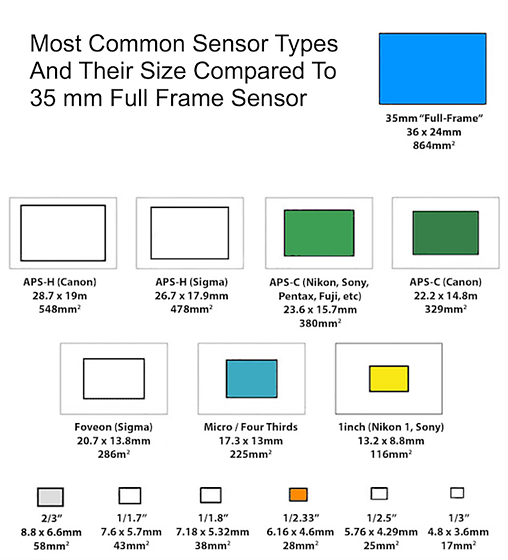
When it comes to Hybrid Superzooms or bridge cameras, sensor sizes shrink significantly to accommodate the large focal range zoom range. While a 1-Inch sensor is considered small in dedicated cameras, they are huge from a smartphone perspective.
At the time of writing this, we do not have many phones with a 1-inch sensor, but I suspect we will see more of these in the foreseeable future. So, let’s see our options.
Smartphones with 1-Inch Sensors:
-
Panasonic Lumix CM1
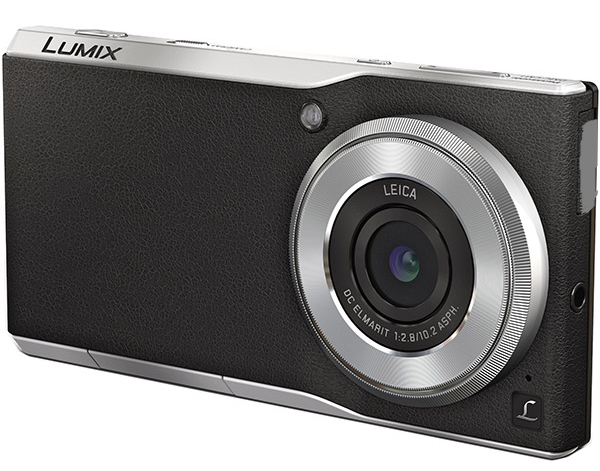
This was an expensive phone to being with. The retail price was estimated to be around $1000, and was technically a camera with an Android phone slapped onto it. The specs were considered high-end for 2014 and came with an IPS LCD, 2 GB of DDR3 RAM, and a Snapdragon 801 chip.
The primary shooter was a cool 20.1 MP, Leica branded f/2.8, 28mm (wide) lens, a 1.0″ sensor, 2.4µm pixel size, and AF. The fact that it supported 4K@15fps was mindblowing for the time (2014). It came preloaded with Android 4.4.2 (KitKat) and was later upgradable to 5.0 (Lollipop).
2. Sharp Aquos R6
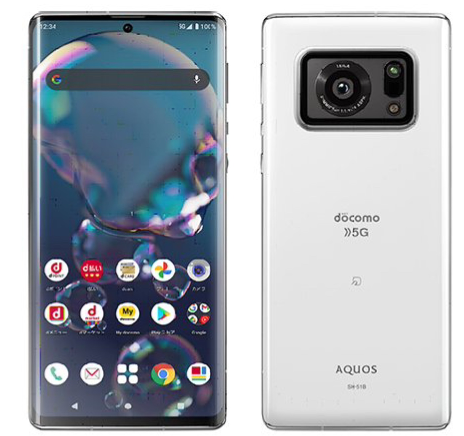
Sharp might not be a popular brand for most markets except for Japan. However, the company has a history of releasing phones with top-notch specs at any given point in time. Like the CM1, the Sharp Aquos R6 comes with Leica branded optics and a 1-Inch sensor and comes with a focal length of 19mm. This ultra-wide focal length is not conventional, though. The Summicron lens comes with an F/1.9 and is well into the ultra-wide category. The pixels in this 1-inch sensor measure 2.4um in size, which is large. Compared to traditional 1.4um pixels, these 2.4um pixels can collect 194% more light. In terms of scaling, compared to 0.8um, 2.4um pixels can collect 800% more light!
There is also a little magic happening in the Spectra 580 chip that does the image computation processing, and we expect the outputs to be stunning.
But, unlike the CM1, the R6 is a conventional phone with a 6.6″ OLED display and a Snapdragon 888 chip that is the 2021 flagship. Other specs include a 12GB LPDDR4x RAM, 128GB UFS storage, and a big 5000mAh battery. The other spec smacking feature is the Qualcomm 3D Sonic Max (20x30mm2) fingerprint sensor based on ultrasonic technology.
So, the question is, will other major manufacturers follow suit, or will this be yet another unconventional device written off in history? Time will tell.
Conclusion
Since most of us these days carry a phone around, it automatically becomes our primary shooter. As an enthusiast, we would like to see many more of these large sensor devices on conventional smartphones as our daily driver.
We hope you like our post. Feedback and suggestions are welcome in the comments section below. Thanks for visiting.
Footnotes
- *Sharp AQUOS R6 Features a massive 1-inch camera image sensor
- **Sharp’s new flagship phone has a giant 1-inch camera sensor and Leica branding
