

In the rapidly evolving world of action cameras, the Insta360 Go series has made a significant impact with its innovative design and advanced features. As we journey from the Insta 360 Go 3 vs Go 2 vs Go 1, each iteration brings with it notable enhancements and improvements. In this article, we’ll delve into a detailed comparison of the Insta360 Go 3, Go 2, and Go 1, examining their specifications and unique features to help you understand the evolution and make an informed choice.
Also Read: Differences Insta360 x3 vs Insta360 x2
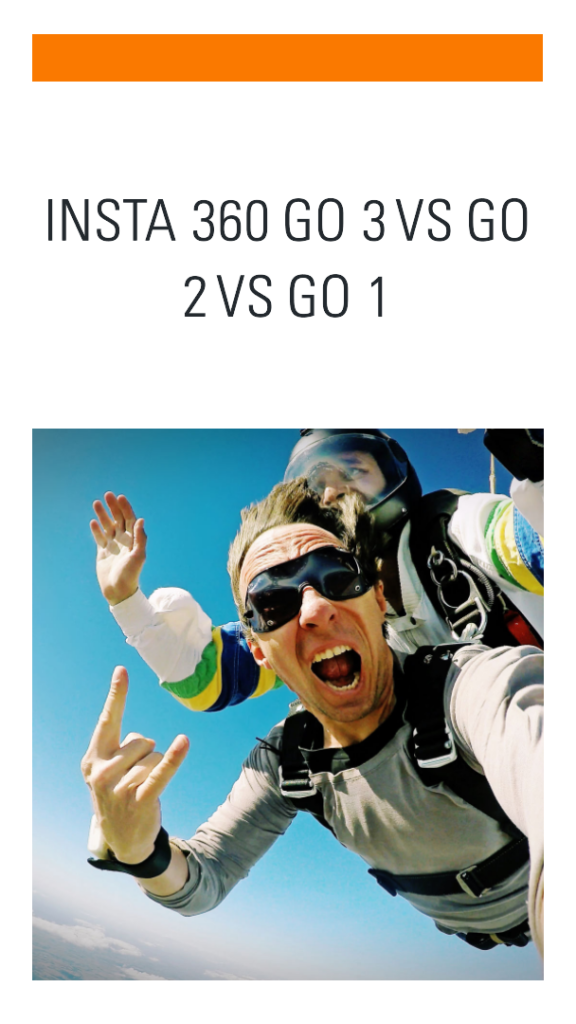
Insta360 has been a game-changer in the world of action cameras, offering compact, lightweight, and feature-packed devices that are perfect for capturing life’s adventures. The Insta360 Go series, in particular, has been a hit among consumers with its easy-to-use interface and high-quality video capabilities. In this blog post, we’ll delve into the specifications of the Insta360 Go 1, Go 2, and the latest Go 3, highlighting their differences and improvements over each generation.
Comparison table for the Insta 360 Go 3 vs Go 2 vs Go 1:
| Specification |
Insta360 Go 1
|
Insta360 Go 2
|
Insta360 Go 3
|
|---|---|---|---|
| Weight | 18.3g | 26.5g | 35.5g |
| Dimensions | 49.4 x 21.4 x 14.85 mm | 52.9 x 23.6 x 20.7 mm | 25.6 x 54.4 x 23.2 mm |
| Video Resolution | Up to 1080p | Up to 1440p | Up to 2.7K |
| Photo Resolution | 3040×3040 | 3040×3040 | Up to 2560×2560 |
| Video Modes | Standard, Interval Shooting | Standard, Pro Video, HDR Video, Timelapse, TimeShift | Video, FreeFrame Video, Timelapse, TimeShift, Slow Motion, Pre-Recording, Loop Recording |
| Photo Modes | Standard, Interval Shooting | Standard, HDR, Interval, Starlapse | Photo, HDR Photo, Interval, Starlapse |
| Battery Life | Up to 60 mins | Up to 150 mins | Up to 170 mins (with Action Pod) |
| Waterproof | IPX4 (splash-proof) | IPX8 (up to 4m) | IPX8 (up to 4m) |
| Storage | 8GB | 32GB | 32GB, 64GB, 128GB |
| Audio | Mono | Mono | Wind Reduction, Stereo, Direction Focus |
| Stabilization | FlowState (Basic) | FlowState (Pro) | FlowState (Pro) |
| Slow Motion | No | Yes | Yes |
| Charging Time | – | 35 mins | 35 mins (GO 3), 65 mins (Action Pod) |
| Bluetooth | Yes | Yes | BLE 5.0 |
| Wi-Fi | No | Yes | 5GHz, 802.11a/n/ac |
| Video Bitrate | 40Mbps | – | 80Mbps |
| Video Export Bitrate | 30Mbps | – | – |
| Use Environment | 0℃~50℃ | – | -4°F to 104°F |
| Color | White | White | White |
| Aperture | F2.2 | F2.2 | F2.2 |
| 35mm Equivalent Focal Length | 11.24mm | 11.24mm | 11.24mm |
| Video Coding | H.264 | H.264 | H.265 / H.264 |
| Exposure Value | ±4EV | ±4EV | ±4EV |
| ISO Range | 100-3200 | 100-3200 | 100-6400 |
| Shutter Speed | Photo: 1/8000 – 120s, Video: 1/8000 – to the limit of frames per second | Photo: 1/8000 – 120s, Video: 1/8000 – to the limit of frames per second | Photo: 1/8000 – 120s, Video: 1/8000 – to the limit of frames per second |
| White Balance | Auto, 2000 – 10000K | Auto, 2000 – 10000K | Auto, 2000 – 10000K |

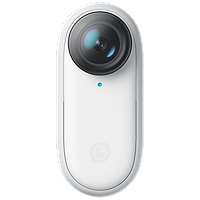
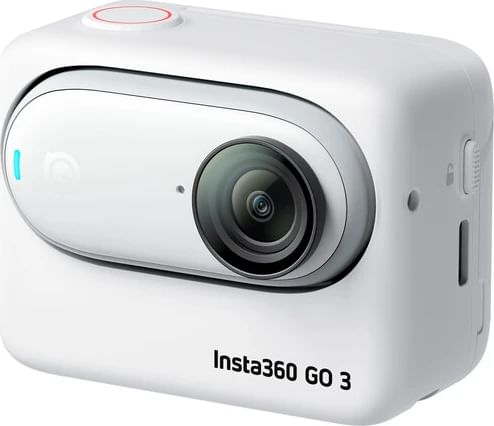
Please refer to the official Insta360 website or the detailed specifications provided above.
Insta360 Go 1
The Insta360 Go 1 was the first in the series, introducing a new form factor for action cameras. Weighing just 18.3g and measuring 49.4 x 21.4 x 14.85 mm, it was designed to be worn, not held. It offers video resolution of up to 1080p and a photo resolution of 3040×3040. The Go 1 was splash-proof with an IPX4 rating and had 8GB of storage. It did not have Wi-Fi but did offer Bluetooth connectivity. The Go 1 was equipped with FlowState stabilization for smooth footage.
Insta360 Go 2
The Go 2 built upon the success of the Go 1, offering significant improvements. It was slightly larger and heavier than the Go 1 but came with enhanced capabilities. The Go 2 offered video resolution up to 1440p and the exact photo resolution as the Go 1. It was waterproof up to 4m (IPX8) and had 32GB of storage. Unlike the Go 1, the Go 2 offered Wi-Fi connectivity. The Go 2 also featured an improved FlowState stabilization and introduced slow-motion video capture.
Insta360 Go 3
The latest in the series, the Go 3, takes things a step further. It’s heavier than its predecessors at 35.5g and has 25.6 x 54.4 x 23.2 mm dimensions. The Go 3 offers a video resolution of up to 2.7K and a photo resolution of up to 2560×2560. Like the Go 2, it’s waterproof up to 4m (IPX8) and offers Wi-Fi and Bluetooth connectivity. The Go 3 is available in three storage options: 32GB, 64GB, and 128 GB. It also features advanced audio modes, including wind reduction and stereo. The Go 3 maintains FlowState stabilization and offers a range of video modes, including slow motion, pre-recording, and loop recording.
Conclusion
Each generation of the Insta360 Go series has brought significant improvements, offering users better video quality, more storage, and advanced features. Whether you’re a vlogger, an adventurer, or someone who wants to capture life’s moments in high quality, there’s an Insta360 Go camera for you. As we wait for what Insta360 has in store for us next, the Go 3 stands as a testament to the company’s commitment to innovation and quality.
