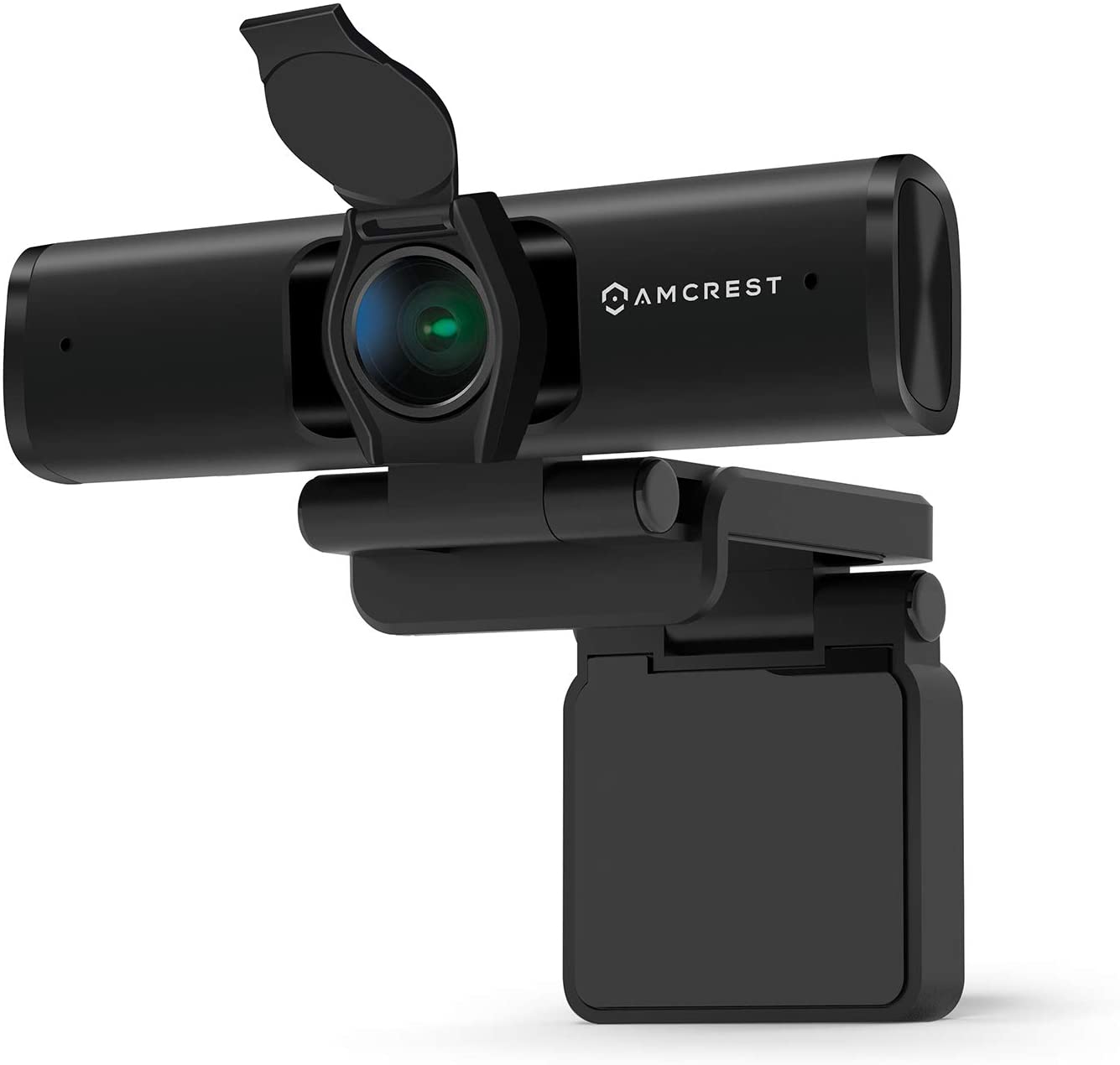
For nearly two decades, buying a webcam meant accepting grainy video and flat lighting. If you wanted genuine depth of field or clean low-light footage, you had to buy a DSLR and a capture card. That era is over. In 2026, hardware manufacturers have finally jammed massive 1/1.2-inch and 1/1.3-inch sensors directly into USB devices. This shift brings optical bokeh and professional dynamic range to plug-and-play peripherals, effectively challenging the dedicated camera market.
This report breaks down the physics behind the flagship models of the year—the YoloLiv YoloCam S3, Razer Kiyo Pro Ultra, and Insta360 Link 2—to see if a USB cable can finally match the quality of an HDMI rig.
The Optical Renaissance
Why 2026 is the year webcams finally caught up to mirrorless cameras.
By LensXP Research Team
Updated Jan 13, 2026
Personal imaging technology changed dramatically in the first half of the 2020s. We have arrived at a distinct hardware shift by early 2026. For nearly two decades, the device we call a “webcam” suffered from severe constraints. Manufacturers used tiny sensors and plastic lenses. They relied on heavy compression to manage limited bandwidth. Remote work infrastructures matured. High-fidelity live streaming democratized. The average consumer now demands better visuals.
The current market is defined by large-format imaging sensors. These range from 1/2-inch to 1/1.2-inch formats. We previously saw these sensors only in premium action cameras, drones, and entry-level DSLR cameras. This report analyzes this emerging category. We investigate the performance of flagship devices like the YoloLiv YoloCam S3, Razer Kiyo Pro Ultra, and the Insta360 Link 2 series.
The “Bridge” Category
Devices like the YoloCam S3 represent a “bridge” category. They offer the optical depth of field of mirrorless cameras with the simplicity of USB devices. This effectively renders entry-level capture card setups obsolete for most prosumers.
The Physics of Pixels
The 2026 premium webcam market centers on sensor size. To understand why this matters, we must look at photon collection. The standard webcam sensor was the 1/4-inch or 1/3-inch chip for years. The new standard for “premium” is the 1/1.8-inch sensor. “Ultra-premium” is defined by 1/1.3-inch and 1/1.2-inch sensors.
A 1/1.2-inch sensor has a diagonal of approximately 13.3mm. A traditional 1/3-inch sensor has a diagonal of just 6mm. The 1/1.2-inch sensor is roughly four times the area of a standard webcam sensor. This increase allows for two architectural advantages. First, it allows for larger individual pixels. Larger pixels act as larger buckets for photons. They collect more light before the shutter closes. Second, larger pixels have a deeper well capacity. They hold more electrons before saturation. This translates to higher dynamic range.
Interactive: Sensor Surface Area Comparison
Click the buttons to overlay sensor sizes relative to a standard webcam.
Figure 1.1: Relative Physical Dimensions (Responsive View)
Low Light: The Signal-to-Noise War
Webcams fail in low light because they lack the surface area to gather photons. To compensate, they increase electrical gain (ISO). This amplifies the signal but also amplifies the background interference, resulting in “digital noise” or grain.
Small Sensor
ISO 3200 (Gain +24dB)
Muddy details, chromatic noise in shadows.
Large Sensor
ISO 400 (Base Gain)
Clean shadows, retained skin texture.
A 1/1.2-inch sensor can maintain a clean image at ISO 400 in a dimly lit room, whereas a standard Logitech C920 would need to push to ISO 2500 for the same exposure, destroying detail.
2026 Flagship Analysis
YoloLiv YoloCam S3
The Mirrorless Killer
Targets the demographic that previously bought mirrorless cameras. Features a 1/1.3-inch CMOS sensor with 50MP resolution. The full aluminum alloy body acts as a continuous passive heatsink. It omits a built-in microphone entirely.
Razer Kiyo Pro Ultra
The Sensor King
Features the largest sensor in a mass-market webcam at 1/1.2-inch. The f/1.7 aperture captures roughly 3.9x more light than standard webcams. Includes a mechanical iris for privacy.
Insta360 Link 2
Computational Power
Prioritizes AI and mechanical tracking. Features a 1/2-inch sensor. The 2-axis gimbal physically pans and tilts to follow the user. This preserves full 4K resolution unlike digital crops.
Elgato Facecam Pro
The Speedster
Unique in offering 4K at 60fps. Essential for gamers where 30fps looks jarring against 60fps gameplay. Uses a 1/1.8-inch Sony STARVIS sensor optimized for speed.
Value Analysis: Price Per Pixel
We plotted the sensor surface area against the current retail price (INR equivalent). The sweet spot is where sensor size is high, but price remains moderate.
Figure 2.0: Sensor Area (mm²) vs. Price (₹)
Thermal Dynamics & Throttling
High-resolution sensors generate significant heat. Processing 8.3 million pixels (4K) sixty times a second creates a thermal load that plastic chassis often struggle to dissipate.
The Plastic Problem
Devices like the Facecam Pro use massive heatsinks hidden under plastic shells. In non-air-conditioned environments (common in Indian summers), these units can become hot to the touch (approx. 45°C). While safe, prolonged heat exposure can degrade sensor SNR (Signal-to-Noise Ratio) over time, introducing “hot pixel” noise.
The Alloy Solution
The YoloCam S3 uses an industrial approach. The entire body is CNC-machined aluminum alloy. It acts as one giant passive heatsink. It will feel warm, but this is intentional—it means the heat is moving away from the sensor. This design ensures sustained performance during 4+ hour streams without thermal shutdowns.
The Bandwidth Bottleneck
A 4K webcam is only as good as the pipe it travels through. USB 3.0 (5Gbps) is the absolute minimum requirement. However, even 5Gbps cannot carry raw, uncompressed 4K video at 60fps.
Data Rate Comparison (Mbps)
The Result: Most “Uncompressed” 4K webcams actually use color subsampling (NV12 4:2:0). They throw away 75% of the color data to fit the video down the USB cable. Only capture cards via HDMI can handle true 4:2:2 or 4:4:4 color. This is why a YoloCam S3 (USB) might still look slightly less vibrant than a Sony a6400 (HDMI) despite having a similar sensor—the bottleneck is the cable, not the glass.
The Color Science War
Standard webcams output a baked-in image (Rec.709) with high contrast and saturation. This looks fine for Zoom, but terrible for color grading. The new wave of sensors introduces professional color pipelines.
Standard Profile
High contrast. Highlights are blown out (white sky). Shadows are crushed (black hair). Cannot be edited.
Log / Flat Profile
Available on Link 2 and Razer via hacks. Low contrast. Looks gray initially. Preserves highlight detail for grading in OBS.
The “Software Tax”
Hardware specs only tell half the story. High-end webcams live or die by their control software. If the software crashes, your $300 camera is a paperweight.
The YoloCam S3 distinguishes itself here. It requires zero drivers. All processing—HDR, noise reduction, and color grading—happens on the device’s internal chip. You plug it in, and it remembers your settings. Conversely, the Razer Kiyo Pro Ultra is heavily dependent on Synapse 3. If Synapse fails to load (a common occurrence), the camera reverts to standard factory settings, losing your custom ISO and shutter values.
Autofocus: PDAF vs. ToF
Blurry video is worse than pixelated video. Hunting—the pulsing effect where the lens breathes in and out—destroys immersion.
- Contrast Detection (Old): The lens moves back and forth until contrast is highest. Slow and pulsates.
- Phase Detection (PDAF): Splits incoming light into pairs. It calculates exactly how far to move the lens instantly. Used by YoloCam S3 and Facecam Pro.
- Time of Flight (ToF): Used by the Insta360 Link 2. It fires an invisible laser to measure distance to the subject. This works perfectly in pitch darkness where PDAF struggles.
The Audio Reality Check
Do not buy these cameras for their microphones. Manufacturers assume if you are spending $200+ on a webcam, you own a dedicated USB microphone.
YoloCam S3: No Microphone (0/10)
Razer Kiyo Pro Ultra: Muffled, usable only for Zoom calls (4/10)
Insta360 Link 2: AI Noise cancelling is aggressive, sounds robotic (6/10)
Understanding Depth of Field
The “Cinematic Look” is simply a shallow depth of field. This separates the subject from the background. It is determined by aperture (f-stop) and sensor size.
Bokeh Simulator
Availability in India
Availability in the Indian market presents unique challenges. India relies on specialized distribution networks for pro-video gear. Tiyana Incorporation is a critical player for YoloLiv in India. Purchasing through authorized dealers ensures the unit is a legitimate import with a valid warranty.
Gray market imports often lack service support. High-end webcams with PDAF motors and complex sensors can fail. An authorized distributor provides a local service mechanism.
LensXP Scorecard
Quick Buy (India)
-
YoloCam S3Check on Amazon India
-
Razer Kiyo ProCheck on Amazon India
-
Insta360 Link 2CCheck on Amazon India
⚠️ Mounting Alert
These cameras are heavy. The Razer Kiyo Pro Ultra weighs 340g. Standard monitor clips may slip on bezel-less displays. Use a dedicated 1/4″ thread arm for stability.
Connectivity Guide
- USB-C 3.2 Gen 1 (Best)
- USB-C to A (3.0) (Good)
- USB Hubs (Avoid)
Always plug directly into the motherboard.
Which Cam Fits You?
| Model | Sensor | Resolution | Aperture | Best For |
|---|