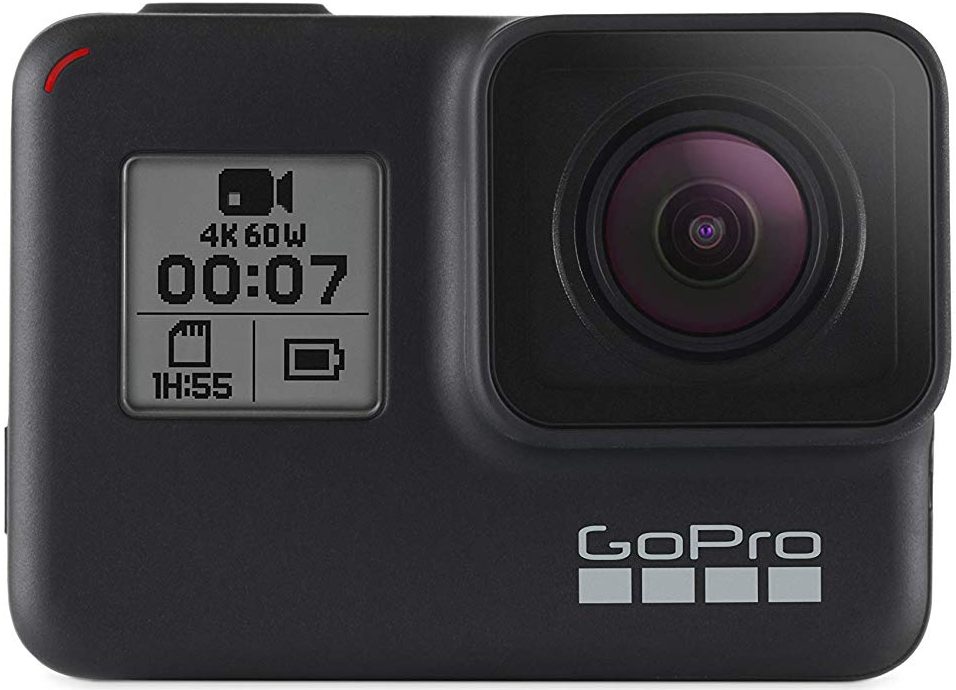
Choosing the right action camera in 2026 comes down to the GoPro Mission 1 Pro and the DJI Osmo Action 6. Both cameras introduce heavy hardware upgrades to the market.
The GoPro Mission 1 Pro packs a new 1-inch 50MP sensor, 8K 60fps recording, and a massive 240 Mbps bitrate for professional color grading. The DJI Osmo Action 6 answers with a versatile variable aperture, 50GB of built-in storage, and a much lower entry price.
This breakdown compares their real-world thermal performance, low-light capabilities, and technical specs so you know exactly which camera fits your shooting style.
Camera Review
GoPro Mission 1 Pro vs DJI Osmo Action 6 Specs Comparison
A detailed breakdown of the latest hardware from GoPro and DJI. Updated January 2026.
GoPro Mission 1 Pro
The GoPro Mission 1 Pro is the stronger camera for pure imaging. It combines a new 50MP 1-inch sensor, 8K/60 recording, 8K/30 open-gate 4:3 capture, and 4K/240 slow motion. The device features 10-bit GP-Log2, HLG HDR, a 240 Mbps bitrate ceiling, and 32-bit float audio.
In standardized indoor stress testing, it lasted longer than the Osmo Action 6 at 4K/60 without overheating. The Mission 1 Pro is the better pick for maximum grading latitude, native high-speed capture, and cleaner low-light performance in this class.
Target User:
Professionals needing high bitrates, 8K/60, and advanced audio workflows.
DJI Osmo Action 6
The DJI Osmo Action 6 is the better mainstream option. It offers a 1/1.1-inch CMOS sensor, a variable f/2.0 to f/4.0 aperture, 8K/30 video, 4K/120 capture in 16:9 and 4:3, and 1080p/240 slow motion.
The camera includes 50GB of usable built-in storage, up to 20 meters of waterproofing without a case, and reliable internal audio. Its main tradeoffs are a lower 120 Mbps bitrate cap, lower maximum frame rates compared to the GoPro, and thermal stoppages during stress testing at 4K/60.
Target User:
Travel creators needing low-light performance, built-in storage, and convenience.
Thermal Performance & Runtime
Battery endurance and heat management dictate real-world usability. The chart below illustrates continuous recording times at 4K/60 in a standardized indoor stress test before thermal shutdown occurs.
Data based on indoor 4K/60 recording tests. Longer continuous bars indicate better thermal management.
Technical Specifications
| Feature | GoPro Mission 1 Pro | DJI Osmo Action 6 |
|---|---|---|
| Sensor Size | 1-inch, 50MP | 1/1.1-inch CMOS |
| Lens & Aperture | Fixed lens, 15mm equiv., 159 degree FOV, f/2.8 | Fixed lens, 155 degree FOV, Variable f/2.0 to f/4.0 |
| Max Video Resolution | 8K/60 | 8K/30 |
| Open Gate Capture | 8K open gate 4:3 at up to 30 fps | No open-gate mode; 4K Custom 3840×3840 reframing |
| Native Slow Motion | 4K/240, 1080p/480 | 4K/120, 1080p/240 |
| Log Profile / HDR | GP-Log2 with LUT, HLG HDR | D-Log M, Film Tone |
| Max Official Bitrate | 240 Mbps | 120 Mbps |
| Waterproofing | 20m without housing | 20m without case, 60m with waterproof case |
| Storage | microSD only | 64 GB internal, 50 GB usable, plus microSD |
| Audio System | 4 mics, 32-bit float, USB audio, Bluetooth 5.3 | 3 mics, 48 kHz/16-bit AAC internal, direct connection for two DJI mics |
| Estimated Price | 699.99 USD MSRP | 329 GBP / 379 EUR Launch |
Image Quality & Low Light Performance
GoPro Dynamic Range
The Mission 1 Pro utilizes a 1-inch 50MP sensor with larger native and fused pixel behavior. It claims up to 14 stops of dynamic range. Testing shows its low-light footage is clean with strong shadow detail. The 240 Mbps bitrate ceiling gives it a massive advantage in complex motion scenes like water spray or dense foliage, preventing heavy compression artifacts.
DJI Variable Aperture
The Osmo Action 6 uses a variable f/2.0 to f/4.0 aperture on its 1/1.1-inch sensor. This makes it highly forgiving in real-world night shooting. Reviews indicate it is roughly a full stop brighter than its predecessors, making the SuperNight mode highly effective. Its primary limitation is the 120 Mbps bitrate cap during heavy motion.
Stabilization & Motion Handling
Both cameras are stabilization-first tools and both perform extremely well. GoPro utilizes HyperSmooth with 360-degree Horizon Lock. DJI provides RockSteady 3.0, RockSteady 3.0+, HorizonBalancing, and HorizonSteady.
Reviewers observe that stabilization is effectively a tie. GoPro offers slightly more confidence for the roughest motion and irons out high-frequency judder artifacts well. DJI remains excellent for almost all daily uses. Current testing lacks clear rolling-shutter measurements for either device, leaving that specific performance metric unresolved.
Workflow & Usability
GoPro Hardware & App
GoPro features a highly versatile body for rigging. The device includes built-in mounting fingers, 1/4-20 threads, and magnetic latch compatibility. This allows seamless transitions between legacy mounts and standard tripods.
The Quik app handles footage review, digital lens adjustments, and cloud backups. The Mission 1 Pro supports timecode synchronization and subject tracking. For audio, the camera packs four microphones, 32-bit float recording, and up to three audio tracks.
DJI Ecosystem
DJI holds the usability advantage with a highly intuitive menu interface and a fast, non-directional magnetic mount. The square sensor allows operators to crop footage easily for vertical or horizontal formats after capture.
Audio functionality includes three microphones capturing 48 kHz/16-bit AAC. The direct OsmoAudio connection links two DJI microphone transmitters without an external receiver, offering a highly convenient setup for vloggers.
Other Competitors and Options
The key point is that the Mission 1 Pro is not merely competing with normal action cameras anymore. With its 1-inch 50MP sensor, 8K60, 4K240, 10-bit log, 14-stop claimed dynamic range, and 20m waterproofing, it sits above the usual action-camera tier and overlaps with compact creator and cinema-oriented cameras.
DJI Osmo Action 6
The strongest mainstream rival. It has a 1/1.1-inch square CMOS sensor, variable f/2.0 to f/4.0 aperture, 4K120 recording, 20m waterproofing, 50GB internal storage, and up to four-hour rated battery life. It is the better choice for a smaller, more affordable action-first camera with flexible framing from its square sensor.
Insta360 Ace Pro 2
The closest alternative for vloggers and social-first creators. It offers an 8K30 mode, a 1/1.3-inch sensor, Leica optics, 50MP photos, and a 2.5-inch flip-up screen that is particularly useful for self-recording. It is less capable than the Mission 1 Pro for 8K60 and 4K240, but generally offers a more approachable creator workflow and lower entry price.
DJI Osmo Pocket 4P
Not a direct action-camera replacement, but a close competitor for cinematic travel and creator footage. Its mechanical 3-axis gimbal, 1-inch main camera, and 60mm telephoto module make it more suitable for walking shots, presentation-to-camera clips, and travel films. The Mission 1 Pro remains the better option for rugged mounting, water use, and fast action.
Insta360 X5
A workflow competitor rather than an image-quality equivalent. It is the better option when you need to capture everything first and reframe later for cycling, motorcycling, skiing, travel POV shots, and third-person invisible-stick perspectives. The Mission 1 Pro should produce more conventional, higher-quality single-lens action footage.
GoPro Mission 1 Pro ILS
Technically a sibling rather than a third-party competitor, but it is the upgrade path to consider. The Pro ILS adds a Micro Four Thirds mount for interchangeable lenses, shifting the product toward compact-cinema and specialist filmmaking use.
Practical Positioning
| Camera | Best reason to buy it instead of Mission 1 Pro |
|---|---|
| DJI Osmo Action 6 | Better value, variable aperture, square sensor for vertical/horizontal crops, compact adventure use |
| Insta360 Ace Pro 2 | Flip screen, vlogging convenience, Leica colour profile, lower-cost 8K option |
| DJI Osmo Pocket 4P | Real mechanical gimbal stabilisation and telephoto framing for travel and cinematic handheld footage |
| Insta360 X5 | 360 capture and reframe-later flexibility |
| Mission 1 Pro ILS | Interchangeable lenses and a more serious compact-cinema workflow |
Pros and Cons
GoPro Mission 1 Pro
Advantages
- 8K/60, 4K/240 native, and 240 Mbps bitrate capacity
- Larger 1-inch sensor provides strong low-light performance
- Superior thermal endurance and battery life at 4K/60
- Exceptional rigging flexibility with 1/4-20 threads
Drawbacks
- High price point estimated at 699 USD
- Larger and heavier body format reduces pocketability
- Lacks built-in internal storage
- Menu interface remains slightly less polished than competitors
DJI Osmo Action 6
Advantages
- Excellent value starting around 329 GBP or 379 EUR
- Highly intuitive menus and a compact physical footprint
- Strong low-light performance via a variable aperture
- 50GB of usable internal storage included
Drawbacks
- Lower capture ceiling limited to 8K/30 and 120 Mbps
- Codec limitations are more visible in complex motion scenes
- Earlier thermal shutdown experienced in indoor stress tests
- Requires external adapters to utilize standard GoPro mounts
Recommended Template Formats
Use these structured templates to configure your camera based on the shooting environment. These settings prioritize reliable performance and image quality.
Action Sports Template
Best for surfing, mountain biking, and fast motion.
- GoPro: 4K/60, Wide, HyperSmooth, 10-bit color. Switch to 4K/120 for specific slow-motion sequences.
- DJI: 4K/60, Wide, RockSteady 3.0+, auto aperture. Reserve 4K/120 for short clips to save storage.
Vlogging Template
Best for travel, talking heads, and handheld recording.
- GoPro: 4K/30, Linear lens. Connect a USB or Bluetooth microphone.
- DJI: 4K/30, 4K Custom ratio for vertical cropping. Use direct DJI mic pairing.
Frequently Asked Questions
Do either of these cameras capture 360-degree video?
Which camera is better for low light?
Does the DJI camera overheat easily?
Is the extra bitrate on the GoPro noticeable?
Final Recommendations & Pricing
Pricing Context
The pricing gap is meaningful. The GoPro Mission 1 Pro sits at a premium price point of approximately 699 USD MSRP. In contrast, the DJI Osmo Action 6 launched around 329 GBP or 379 EUR, making DJI the stronger value proposition.
The Verdict
Choose the GoPro Mission 1 Pro if you are a filmmaker, serious sports shooter, or production freelancer who will actually exploit 8K/60, open gate capture, 240 Mbps bitrates, and 32-bit float audio.
Choose the DJI Osmo Action 6 if you are a travel creator, everyday content creator, or casual sports enthusiast who wants excellent low-light performance, easy controls, built-in storage, and better price efficiency.
Unresolved Metric
The biggest genuine gap in current public testing is reliable lab-style rolling-shutter measurement. While thermal, low-light, and stabilization performance are well documented in accessible reviews, rolling-shutter behavior remains an open comparison point.